
Faith
Pakistan’s Christians Win Temporary Reprieve From Mass Eviction


Faith Facts
- Pakistan’s Federal Constitutional Court has ordered a temporary halt to the planned eviction of more than 25,000 Christians from informal settlements in Islamabad
- The court has given authorities four weeks to finalize regulations that could legalize these Christian communities
- This intervention represents a critical moment for religious minorities facing displacement in Pakistan’s Islamic republic
More than 25,000 Christians living in Pakistan’s capital city are breathing a cautious sigh of relief this week. The Federal Constitutional Court has stepped in to temporarily block their eviction from informal settlements where many have lived for years, serving as a vulnerable religious minority in an Islamic nation.
The court’s intervention comes as welcome news for these families who faced imminent displacement. Authorities have been ordered to halt eviction proceedings and develop proper regulations within four weeks that could provide a legal pathway for these communities to remain in their homes.
For these Pakistani Christians, the threat of eviction represents more than just a housing crisis — it’s a matter of survival for a religious minority that has long faced discrimination and persecution. The informal settlements, while lacking official recognition, have provided these believers with community, stability, and a place to worship freely alongside fellow Christians.
The four-week deadline now puts pressure on Pakistani officials to address a problem they have long ignored. These Christian families have existed in legal limbo, building lives and raising children in communities that authorities have refused to formally acknowledge until now.
Religious freedom advocates recognize this court decision as a temporary victory, but understand the battle is far from over. The next month will prove critical as regulations are drafted that could either provide lasting security for these Christian communities or leave them vulnerable to future displacement.
Pakistan’s treatment of religious minorities remains a concern for Christians worldwide. This case highlights the precarious position of believers living under governments that do not share or protect their faith values. The outcome will send a message about whether Pakistan’s legal system can provide equal protection for all its citizens, regardless of religious belief.
As these 25,000 Christians await their fate, they deserve the prayers and support of believers around the world. Their struggle for the simple right to have a home reminds us of the persecution and challenges faced by our brothers and sisters in Christ across the globe.
Let us know what you think, please share your thoughts in the comments below.

Faith Facts
- Renowned New Testament scholar N.T. Wright teaches that biblical glory centers on restored humanity rather than heavenly escape.
- Wright stresses that Scripture calls believers to serve as God’s image-bearing agents in a renewed creation.
- This understanding affirms traditional Christian teaching on the value of the physical world and human responsibility.
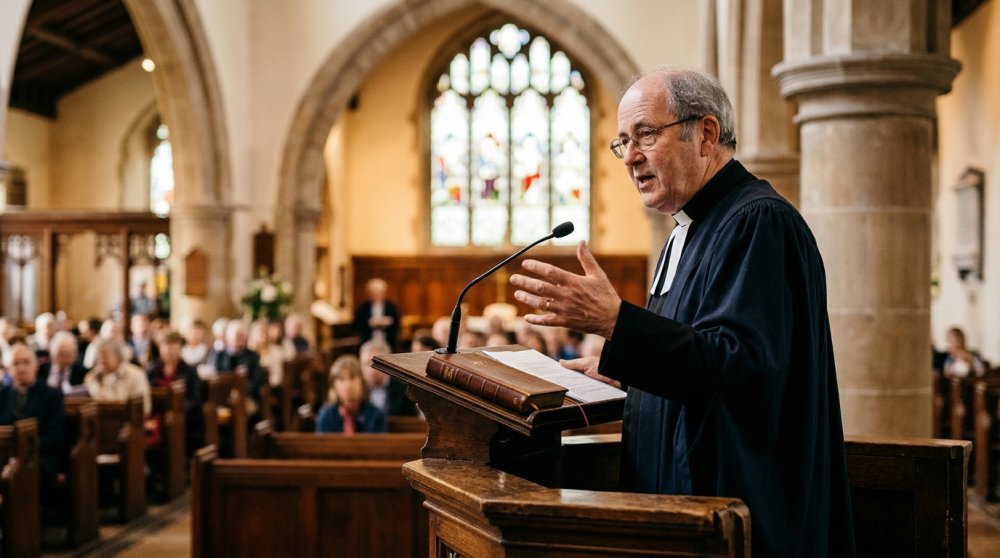
For renowned New Testament scholar N.T. Wright, the “glory” promised in the Bible doesn’t primarily mean “going to Heaven,” but the restoration of humanity’s role as God’s image-bearing agents in a renewed creation.
This perspective challenges modern assumptions that reduce the Christian hope to an otherworldly escape. Wright’s view instead highlights the biblical emphasis on God’s intention to redeem and restore His creation through faithful human stewardship.
“Glory doesn’t mean going to Heaven” but rather “becoming fully human,” says NT Wright
By framing glory as the fulfillment of humanity’s original calling, Wright invites believers to embrace their earthly responsibilities with renewed purpose. This message resonates with traditional Christian values that honor work, family, and community as sacred vocations.
Let us know what you think, please share your thoughts in the comments below.
Faith Facts
- Scripture calls believers to bear one another’s burdens and so fulfill the law of Christ (Galatians 6:2).
- Regular church attendance alone does not guarantee the deep fellowship God designed for His people.
- True Christian community requires honest vulnerability and genuine relationship, not merely surface-level conversation.
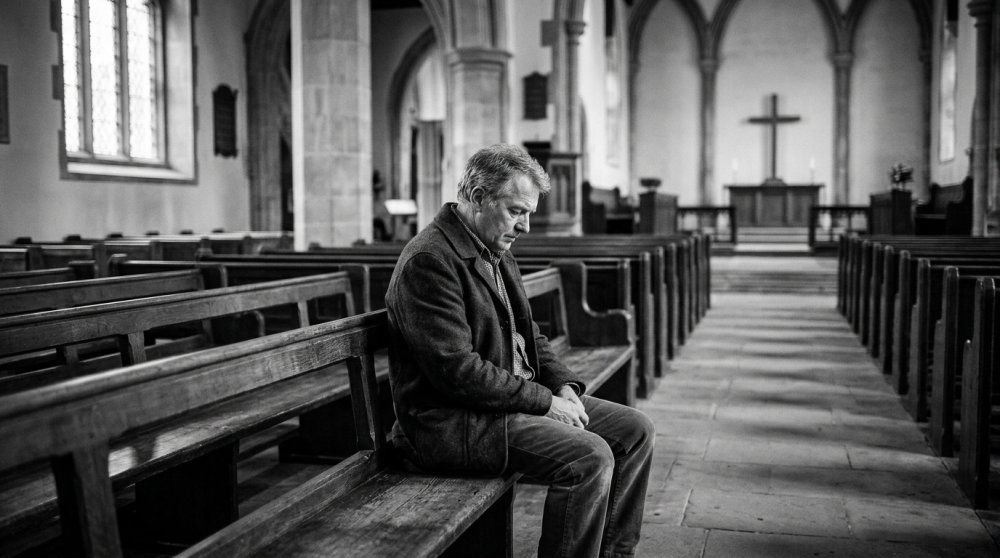
You can attend church every Sunday, know everyone by name and still feel desperately lonely. Derek Hughes knows what it’s like to hide behind small talk. Here’s why genuine Christian community requires more than simply showing up.
Many believers show up week after week, exchange polite greetings, and leave without ever being truly known. This pattern leaves hearts heavy even in crowded sanctuaries.
God never intended His church to function as a collection of isolated individuals who merely occupy the same space for an hour. He calls His people to live in deep, accountable, and loving community.
“You can attend church every Sunday, know everyone by name and still feel desperately lonely.”
Small talk serves as a convenient shield, allowing Christians to remain hidden even while surrounded by brothers and sisters in Christ. This kind of superficial interaction falls far short of the biblical vision for fellowship.
Authentic Christian community demands courage to step beyond pleasantries and share real struggles, prayer requests, and victories. When believers open their lives to one another, the body of Christ functions as God intended.
“Here’s why genuine Christian community requires more than simply showing up.”
Churches that prioritize depth over attendance numbers create spaces where lonely hearts find true belonging. Such fellowships reflect the love of Christ in practical, life-giving ways.
Believers who invest in meaningful relationships discover that church becomes more than a weekly obligation; it becomes a spiritual family where burdens are shared and hope is renewed.
Let us know what you think, please share your thoughts in the comments below.

Faith Facts
- More Americans are open to spiritual conversations than ever before according to recent surveys.
- Direct gospel presentations often meet resistance while natural dialogue keeps hearts open.
- Christians are called to speak the truth in love and make the most of every opportunity.
People across the country are showing new interest in spiritual matters after years of cultural confusion. Yet many believers still struggle when the moment arrives to speak about Jesus. Darin Stevens says the problem is not the message itself but the way many Christians shift the conversation.
Stevens encourages believers to recognize when a discussion is stalling and to change their approach quickly. Instead of pressing forward with the same line of questions or statements, he recommends listening first and then steering gently toward the hope found in Christ.
“People are increasingly open to spirituality,” Stevens notes, “but the way we talk about Jesus needs to change.”
One practical step is to ask thoughtful questions rather than delivering a prepared speech. A second step is to share a short personal story that connects the other person’s experience to Scripture. The third approach involves offering to pray right then and there for a specific need that has been mentioned. Finally, Stevens urges Christians to follow up later, showing that the relationship matters more than a single conversation.
“Here’s how to avoid stalling at the first stop and switch gears to keep the conversation moving.”
These four simple shifts help believers move past awkward silence and into genuine gospel witness. They also reflect the patience and compassion modeled by Jesus when He met people where they were.
Let us know what you think, please share your thoughts in the comments below.


-

 Self-Reliance2 years ago
Trump’s Bold Move Uncovers Massive Social Security Fraud
-

 Faith2 years ago
New Clues Emerge in Noah’s Ark Mystery
-

 News2 years ago
Governor Walz’s Rhetoric Sparks National Controversy
-

 News2 years ago
Mel Gibson’s ‘The Passion of the Christ’ Sequel Title Announced
-

 Family2 years ago
Texas Lawmaker Targets Furries in Schools
-

 Freedom2 years ago
Maine Lawmaker Challenges Sports Fairness Controversy
-

 Family1 year ago
Canada’s Controversial Policy Sparks Ethical Debate
-
Faith12 months ago
Congress Hears Pleas for Nigerian Christians