
Faith
What Happened When Five Major Religions Were Fed Into AI


Faith Facts
- A researcher tested five major world religions using AI analysis to evaluate their internal consistency and rational coherence
- Christianity emerged as the most logically consistent faith system when examined through artificial intelligence reasoning
- The experiment demonstrates how AI technology can be used to defend and validate Christian truth claims rather than threaten them
Artificial intelligence doesn’t have to be viewed as an enemy of faith. In fact, when applied properly, it can serve as a powerful tool to validate what Christians have known all along — that our faith stands on solid ground.
A fascinating experiment recently put five major world religions through an AI analysis engine to test their internal consistency, logical coherence, and rational foundations. The results may surprise skeptics but will likely affirm what believers already understand in their hearts.
Rather than approaching AI with fear or suspicion, Christians should recognize it as another instrument that can be used for Kingdom purposes. Just as the printing press revolutionized the spread of Scripture, modern technology offers new ways to demonstrate the truth of the Gospel.
The experiment evaluated Christianity, Islam, Hinduism, Buddhism, and Judaism by examining their core doctrines, historical claims, and philosophical frameworks. The AI assessed each religion’s ability to maintain logical consistency across its teachings and to provide coherent answers to life’s fundamental questions.
Christianity stood out for its unified narrative from Genesis to Revelation, its historical verifiability through archaeological evidence, and its rational explanation for humanity’s moral consciousness and spiritual longing. The resurrection of Jesus Christ, in particular, emerged as a historically defensible event that anchors the entire Christian worldview.
This doesn’t mean we place our faith in machines or algorithms. Our confidence remains in the living God who reveals Himself through Scripture, creation, and the person of Jesus Christ. But it does demonstrate that Christianity welcomes scrutiny and rational examination.
The other religions showed various inconsistencies when analyzed through logical frameworks. Islam’s internal contradictions regarding free will and divine sovereignty presented challenges. Eastern religions struggled with their circular reasoning about reality and illusion. These aren’t attacks on sincere believers of other faiths, but honest observations about theological coherence.
For too long, secular culture has portrayed faith as the enemy of reason. This experiment flips that narrative on its head. Christianity doesn’t fear the light of logical analysis because truth has nothing to hide.
The Apostle Paul used the philosophical frameworks of his day to present the Gospel in Athens. He engaged with the intellectual currents of Greek thought while remaining firmly rooted in revealed truth. Today’s Christians can do the same with artificial intelligence and other modern tools.
This should encourage believers who sometimes feel outmatched in debates with skeptics. The evidence supports our faith. The logic aligns with Scripture. The historical record validates the Biblical account. AI analysis simply confirms what the Holy Spirit has already testified to our hearts.
Of course, salvation doesn’t come through intellectual assent alone. We are saved by grace through faith in Jesus Christ. But that faith is not blind or irrational — it’s grounded in the solid rock of God’s revealed truth and confirmed by both historical evidence and personal experience.
As we navigate an increasingly technological age, Christians should embrace these tools with wisdom and discernment. AI can help us study Scripture more deeply, reach people with the Gospel more effectively, and defend our faith more persuasively.
The experiment’s results remind us that Christianity isn’t just emotionally satisfying or culturally meaningful — it’s also intellectually robust and logically sound. Our faith engages both the heart and the mind because the God we serve created both.
Rather than retreating from technological advancement, the Church should lead the way in using these tools for God’s glory. We have nothing to fear from honest inquiry because we serve the God of truth who invites us to “come now, let us reason together.”
Let us know what you think, please share your thoughts in the comments below.

Faith Facts
- Cambridge theologian James Orr has resigned from his policy leadership position with Reform UK following an undercover operation by climate activists
- The sting operation involved activists posing as energy company representatives offering donations to influence party policy
- Orr’s departure raises questions about activist tactics targeting conservative political movements in Britain
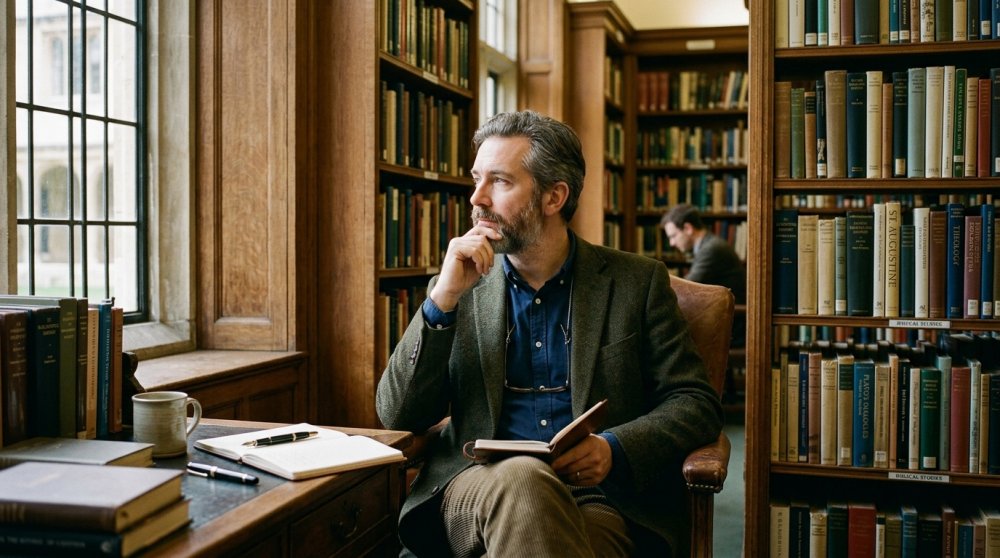
A respected Cambridge theologian has stepped down from a prominent political advisory role after becoming the target of an elaborate undercover operation conducted by climate activists. James Orr, who served as head of policy for Reform UK, resigned following the controversial sting that has sparked debate about the ethics of activist tactics against conservative political figures.
The operation involved climate activists posing as representatives from energy companies, reportedly offering donations in exchange for policy influence within the party. The incident highlights the increasingly aggressive strategies employed by left-wing activist groups to undermine conservative and reform-minded political movements across the United Kingdom.
Reform UK, a party that has positioned itself as an alternative to the established political order in Britain, now faces questions about its internal processes. However, the incident also raises serious concerns about the methods being used to target individuals associated with parties that challenge progressive orthodoxy on climate and energy policy.
Orr’s background as a theologian at one of the world’s most prestigious universities made him a notable figure within Reform’s policy apparatus. His involvement in politics represented the kind of intellectual engagement that many conservatives have called for in addressing Britain’s political challenges from a principled, values-based perspective.
The tactics employed in this case mirror similar operations conducted by activist organizations in the United States, where undercover stings have been used to embarrass or discredit conservative figures and organizations. These methods raise fundamental questions about journalistic ethics, political discourse, and the boundaries of legitimate advocacy.
For many Christians and conservatives, the incident serves as a reminder of the hostile environment facing those who dare to challenge the prevailing narratives on climate policy and energy independence. The willingness to employ deceptive tactics against political opponents reflects a deeper intolerance for dissenting views that has become increasingly common in Western democracies.
The impact of Orr’s departure on Reform UK’s policy direction remains to be seen. The party has been gaining ground among voters frustrated with both the Conservative and Labour establishments, particularly on issues related to national sovereignty, immigration, and economic policy.
As political divisions deepen across the Western world, incidents like this one underscore the challenges facing those who seek to advance conservative principles in the public square. The use of subterfuge and entrapment as political weapons represents a troubling development that threatens the integrity of democratic discourse itself.
Let us know what you think, please share your thoughts in the comments below.

Faith Facts
- Nicki Minaj publicly declared her Christian faith, stating she wants to ‘see my Jesus someday’ in reference to a gospel song
- The rapper has recently become an advocate for religious freedom while sharing Scripture with her massive social media following
- Her faith declaration comes as she accepts a role as judge in the Small Business Administration’s Million Dollar Pitch Competition
In a bold public affirmation of her Christian beliefs, rapper Nicki Minaj has once again demonstrated that her faith journey is continuing to deepen and become more visible to her millions of fans worldwide. The artist, known for her chart-topping music career, recently declared her desire to meet Jesus, invoking the powerful message of the gospel song “I’ve Got My Mind Made Up.”
Minaj’s statement—”I want to see my Jesus someday”—represents a significant spiritual declaration from one of the entertainment industry’s most influential figures. Her willingness to publicly embrace Christian faith stands in stark contrast to the often secular messaging that dominates mainstream entertainment and popular culture.
The rapper has increasingly positioned herself as an advocate for religious freedom, using her substantial platform to share Scripture and speak openly about matters of faith. This transformation represents a powerful testimony to the redemptive power of Christ and demonstrates that no one is beyond the reach of God’s love and calling.
Her public faith declarations come alongside her selection as a judge for the Small Business Administration’s Million Dollar Pitch Competition, showing that believers can maintain their Christian witness while engaging in secular professional opportunities. This balance reflects the biblical calling for Christians to be salt and light in the world, not withdrawn from it.
Minaj’s journey resonates with many Americans who value authentic faith expressions from public figures. In an era where Christianity is often marginalized or mocked in entertainment circles, her willingness to openly discuss Jesus and share biblical truth demonstrates courage and conviction.
The reference to “I’ve Got My Mind Made Up,” a beloved gospel song about determination to reach heaven and see Jesus face to face, carries deep spiritual significance. The song’s message about staying committed to faith despite worldly distractions aligns with the apostle Paul’s exhortation to “run with perseverance the race marked out for us” (Hebrews 12:1).
For Christian conservatives, Minaj’s faith journey serves as an encouraging reminder that God works in unexpected ways and unexpected lives. Her testimony may reach audiences that traditional ministry might never touch, fulfilling the Great Commission to make disciples of all nations.
As she continues to share Scripture and speak about her relationship with Jesus Christ, Minaj joins a growing number of entertainment figures who are refusing to hide their faith to maintain industry acceptance. This trend represents a hopeful sign that authentic Christianity can flourish even in spaces traditionally hostile to biblical values.
Let us know what you think, please share your thoughts in the comments below.
Faith Facts
- Catholic nuns in Illinois are suing the state over a law that forces them to inform patients about assisted suicide options, violating their deeply held religious beliefs.
- The law prohibits healthcare workers from advising patients against assisted suicide, even when such advice conflicts with their faith convictions.
- The lawsuit argues that Illinois is compelling religious healthcare providers to participate in actions they believe constitute the taking of innocent human life.
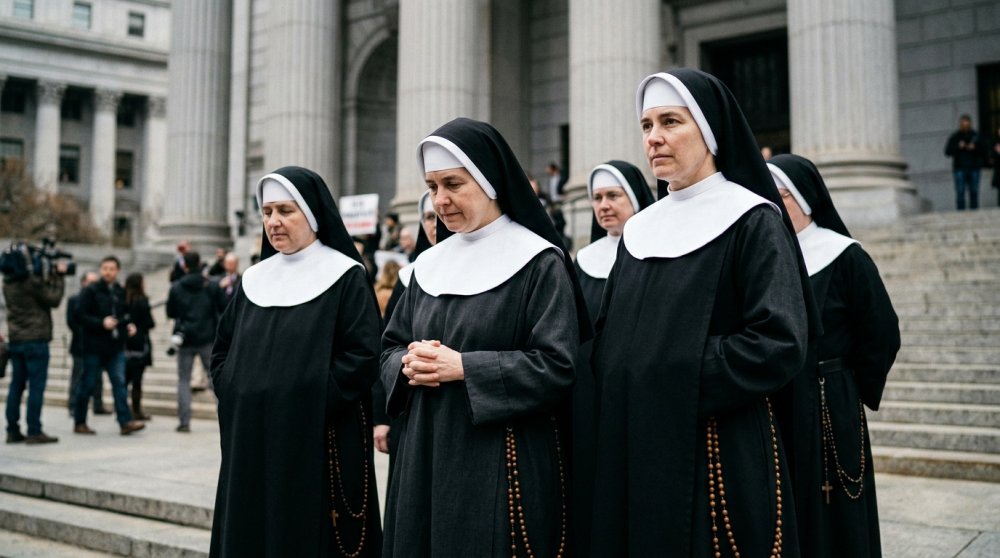
A group of Catholic nuns and a pharmacist have filed a lawsuit against the state of Illinois, challenging a provision in the state’s assisted suicide law that they say violates their fundamental religious freedoms. The legal action comes in response to requirements that force healthcare providers to inform patients about assisted suicide options and prevents them from counseling against the practice.
The plaintiffs argue that the Illinois law tramples on their constitutional rights by compelling them to promote a practice they view as morally wrong and contrary to their faith. For these Catholic healthcare workers, the sanctity of human life is a foundational principle that cannot be compromised, even under government mandate.
The lawsuit specifically challenges the provision that requires healthcare providers to inform patients about the state’s assisted suicide program. Even more troubling to the plaintiffs, the law prohibits them from advising patients against pursuing this option, effectively silencing their religious counsel at a critical moment in patient care.
This case represents the latest battleground in the ongoing conflict between religious liberty and state-mandated healthcare protocols. For people of faith, the ability to practice medicine in accordance with deeply held convictions about the sanctity of life is not negotiable.
The nuns and pharmacist involved in the lawsuit are seeking relief that would allow them to continue serving their patients without being forced to violate their conscience. They maintain that healthcare professionals should never be compelled to participate in or promote practices that fundamentally contradict their religious beliefs about the inherent dignity and value of every human life from conception to natural death.
Illinois joins a growing number of states that have legalized assisted suicide, often with provisions that create conflicts for healthcare workers who hold traditional religious views. These laws increasingly put faithful Christians in the position of choosing between their livelihood and their conscience.
The outcome of this lawsuit could have significant implications for religious liberty protections in healthcare settings across the nation. As more states consider or pass assisted suicide legislation, the question of conscience protections for healthcare workers remains a pressing concern for the faith community.
Let us know what you think, please share your thoughts in the comments below.


-

 Self-Reliance1 year ago
Trump’s Bold Move Uncovers Massive Social Security Fraud
-

 Faith1 year ago
New Clues Emerge in Noah’s Ark Mystery
-

 News1 year ago
Governor Walz’s Rhetoric Sparks National Controversy
-

 News1 year ago
Mel Gibson’s ‘The Passion of the Christ’ Sequel Title Announced
-

 Family1 year ago
Texas Lawmaker Targets Furries in Schools
-

 Freedom1 year ago
Maine Lawmaker Challenges Sports Fairness Controversy
-

 Family1 year ago
Canada’s Controversial Policy Sparks Ethical Debate
-
Faith10 months ago
Congress Hears Pleas for Nigerian Christians