Connect with us

Faith

Pakistan Court Sentences Muslim Extremist for Attacks on Christians

Published

on

Faith Facts

  • A Pakistani court sentenced one Muslim man to 10 years in prison for his role in the August 2023 attacks on churches in Jaranwala
  • Thirteen other defendants were acquitted due to flawed police investigations into the violent anti-Christian attacks
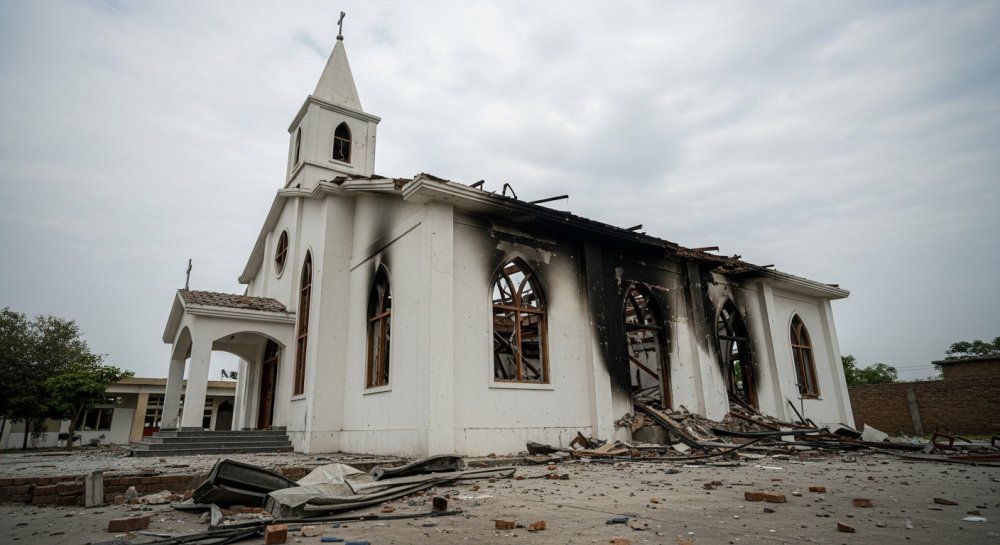
  • The Jaranwala attacks saw mobs destroy dozens of churches and Christian homes following blasphemy accusations

A court in Pakistan has delivered its first conviction related to the devastating August 2023 attacks against Christians in Jaranwala, sentencing one Muslim man to a decade behind bars. The ruling marks a rare instance of accountability in a nation where violence against religious minorities often goes unpunished.

However, the court acquitted 13 other defendants charged in connection with the violent mob attacks that terrorized the Christian community. The acquittals stemmed from what sources described as deeply flawed police investigations, raising concerns about Pakistan’s commitment to protecting its religious minorities.

The August 2023 attacks in Jaranwala shook Pakistan’s Christian community when Muslim mobs rampaged through Christian neighborhoods. Fueled by blasphemy allegations, the attackers set fire to churches and homes, leaving families homeless and congregations without places of worship. The violence underscored the dangerous consequences of Pakistan’s blasphemy laws, which are frequently weaponized against Christians and other religious minorities.

The single conviction, while a step toward justice, highlights the systemic challenges Christians face in Pakistan. With only one perpetrator held accountable while others walk free, many believers question whether the Pakistani justice system can adequately protect them from religious persecution.

For American Christians who cherish religious freedom as a foundational right, the situation in Pakistan serves as a sobering reminder of the persecution believers endure worldwide. The constitutional protections Americans enjoy stand in stark contrast to the daily threats faced by Pakistani Christians simply for practicing their faith.

The inadequate police work that led to the mass acquittals raises troubling questions about whether authorities deliberately undermined the cases or simply lack the resources and will to defend religious minorities. Either scenario points to a justice system that fails to deliver equal protection under the law—a principle American Christians hold dear.

As persecution of Christians intensifies globally, the Jaranwala attacks and their aftermath demonstrate the urgent need for international pressure on countries that fail to protect religious minorities. Faith communities in the United States can play a vital role through prayer, advocacy, and support for persecuted believers abroad.

Let us know what you think, please share your thoughts in the comments below.

Continue Reading
Click to comment

Leave a Reply

Your email address will not be published. Required fields are marked *

Faith

Church of England Leaders Abandon Biblical Truth on Israel

Published

on

Faith Facts

  • Church of England leaders have rejected biblical promises regarding Israel in favor of politically motivated accusations
  • Historical evidence and facts on the ground contradict claims of genocide, revealing a departure from Anglican theological roots
  • The abandonment of scriptural truth on Israel represents a dangerous theological shift within the historic denomination

The Church of England, once a bastion of biblical Christianity, has strayed far from its theological moorings. In a troubling development that should concern all believers who hold Scripture as authoritative, leaders within this historic denomination have embraced a narrative about Israel that contradicts both biblical truth and historical reality.

These church leaders have chosen to align themselves with political accusations of genocide against Israel, despite overwhelming evidence to the contrary. This represents not merely a political miscalculation, but a fundamental rejection of God’s covenant promises to the Jewish people as recorded throughout Scripture.

The facts on the ground tell a dramatically different story than the one being promoted by these Anglican officials. Israel has repeatedly demonstrated restraint even while defending its citizens from terrorist attacks. The nation has provided humanitarian aid, issued warnings before military operations, and consistently sought to minimize civilian casualties — actions incompatible with any legitimate definition of genocide.

History reveals the absurdity of these charges. The Jewish people have experienced actual genocide within living memory during the Holocaust. To apply this term to Israel’s defensive military operations trivializes genuine genocide and dishonors the memory of those who suffered under true systematic extermination.

What makes this theological departure even more troubling is its contradiction of Anglican roots. The Church of England historically maintained a strong connection to biblical Israel, recognizing God’s ongoing covenant with the Jewish people. This tradition drew directly from Scripture’s clear teaching about God’s faithfulness to His promises.

The biblical record leaves no room for ambiguity regarding God’s commitment to Israel. From Genesis through Revelation, Scripture affirms God’s special relationship with the Jewish people and the land He promised to Abraham, Isaac, and Jacob. These are not merely historical footnotes but eternal covenants that cannot be nullified by human opinion or political fashion.

By abandoning this biblical foundation, Church of England leaders have placed themselves in opposition to God’s revealed Word. They have chosen contemporary political correctness over eternal truth, prioritizing approval from secular authorities over faithfulness to Scripture.

This situation serves as a sobering reminder for all Christians. When church leaders begin interpreting world events through the lens of popular opinion rather than biblical truth, the entire foundation of faith becomes unstable. The Church’s authority rests not in cultural relevance but in faithful proclamation of God’s unchanging Word.

Believers must remain vigilant against similar theological drift in their own denominations and churches. The pressure to conform to worldly narratives about Israel and the Jewish people will only intensify. Standing firm on biblical truth may invite criticism, but faithfulness to God’s Word must always take precedence over human approval.

The Church of England’s embrace of anti-Israel rhetoric also reveals a deeper spiritual blindness. Throughout history, nations and institutions that have set themselves against the Jewish people have ultimately faced God’s judgment. Scripture warns clearly that those who curse Israel will themselves be cursed.

True Christian love for all people, including Palestinians, does not require abandoning truth or embracing false accusations. Genuine compassion seeks justice, truth, and peace for all parties — something impossible to achieve when built on a foundation of lies.

The path forward for faithful believers is clear: we must continue proclaiming biblical truth about Israel regardless of cultural pressure. We must stand with the Jewish people while pointing all nations, including Israel, to their Messiah. And we must pray for church leaders who have lost their way, that they would return to the firm foundation of God’s Word.

This controversy within the Church of England ultimately points to a larger battle between biblical Christianity and a false gospel of political appeasement. The choice facing Christians today remains the same as it has always been: will we stand on the authority of Scripture, or will we bow to the shifting sands of contemporary opinion?

Let us know what you think, please share your thoughts in the comments below.
Continue Reading

Faith

What Scripture Reveals About Overcoming Loneliness

Published

on

Faith Facts

  • Loneliness is a common human experience addressed throughout Scripture, from Genesis to the New Testament
  • Biblical figures including David, Elijah, and Jesus Himself experienced profound isolation during their earthly journeys
  • Christians are called to community through the body of Christ while finding ultimate comfort in God’s promise to never leave or forsake His people

Loneliness strikes at the heart of the human condition, yet many Christians struggle in silence with this painful reality. Understanding how Scripture addresses isolation can provide a pathway through this difficult season.

The biblical narrative acknowledges loneliness from the very beginning. In Genesis, God Himself declared that it was not good for man to be alone, establishing the fundamental human need for companionship and community.

Throughout the Old Testament, faithful servants of God wrestled with profound isolation. The prophet Elijah, after his great victory on Mount Carmel, fled into the wilderness where he expressed his despair to the Lord.

King David, described as a man after God’s own heart, penned numerous psalms that reveal his deep struggles with loneliness and abandonment. His honest prayers demonstrate that loneliness does not disqualify us from God’s presence.

Even Jesus Christ experienced the ultimate loneliness on the cross when He cried out, asking why God had forsaken Him. This moment reveals that our Savior understands the depths of human isolation.

The New Testament provides clear instruction for believers facing loneliness. The early church gathered regularly for fellowship, breaking bread together and sharing their lives in authentic community.

Scripture repeatedly emphasizes God’s faithful presence with His people. Promises like “I will never leave you nor forsake you” from Hebrews 13:5 anchor believers in the unchanging character of God.

Christian community serves as God’s primary provision for combating loneliness. The body of Christ functions when members actively engage, bear one another’s burdens, and practice biblical hospitality.

Prayer becomes essential during seasons of isolation. Following the example of biblical saints, believers can bring their loneliness honestly before God, trusting in His compassionate response.

The distinction between solitude and loneliness matters significantly. Jesus regularly withdrew to solitary places for prayer, demonstrating that time alone with the Father differs from the pain of unwanted isolation.

For those experiencing chronic loneliness, seeking godly counsel through pastors, elders, or Christian counselors reflects biblical wisdom. The church exists to provide support during every season of life.

Modern culture often exacerbates loneliness through digital connections that replace genuine fellowship. Christians must resist the temptation to substitute online interaction for the face-to-face community Scripture prescribes.

The hope of the gospel speaks directly to loneliness. Through Christ, believers are adopted into God’s family, granted an eternal identity that transcends earthly circumstances.

Loneliness can serve as God’s instrument to draw His people closer to Him. Sometimes isolation strips away distractions, creating space for deeper spiritual intimacy with the Father.

Taking practical steps matters alongside spiritual disciplines. Joining Bible studies, serving in ministry, attending church consistently, and opening your home for fellowship all combat isolation through obedience.

Remember that loneliness represents a temporary earthly condition. The Bible promises a future where God dwells with His people, wiping away every tear and making all things new.

Let us know what you think, please share your thoughts in the comments below.

Continue Reading

Faith

Pakistan’s Supreme Court Acquits Final Killers in Christian Couple’s Lynching

Published

on

Faith Facts

  • Pakistan’s Supreme Court overturned the death sentences of three men convicted of burning a Christian couple alive in 2014
  • The victims were falsely accused of blasphemy and lynched by a mob at a brick kiln where they worked
  • This acquittal represents the latest failure of Pakistan’s justice system to protect persecuted Christians

In a devastating blow to religious freedom and justice, Pakistan’s Supreme Court has acquitted the final three men convicted of murdering a Christian couple in one of the nation’s most horrific cases of religious persecution. The victims were burned alive in a brick kiln after being falsely accused of blasphemy.

The 2014 lynching shocked the international community. A mob attacked the Christian couple, beating them and then throwing them into the flames of a brick kiln where they worked as bonded laborers.

The Supreme Court’s decision to overturn the death sentences comes years after lower courts had convicted the perpetrators. This reversal highlights the ongoing crisis facing Pakistan’s Christian minority, who live under constant threat from the country’s strict blasphemy laws.

Pakistan’s blasphemy laws carry severe penalties, including the death sentence, and are frequently weaponized against religious minorities. False accusations often lead to mob violence before cases ever reach the courts, creating a climate of fear for Christians and other minority communities.

The acquittal sends a chilling message to Pakistan’s approximately 2.5 million Christians, who make up less than 2% of the population. It demonstrates the near impossibility of achieving justice when violence is committed in the name of defending Islam, even when accusations are proven false.

Religious freedom advocates have long criticized Pakistan’s failure to protect its Christian citizens. The brick kiln case was considered a potential turning point, with initial convictions suggesting the justice system might finally hold perpetrators accountable for anti-Christian violence.

Instead, the Supreme Court’s reversal reinforces a pattern of impunity that emboldens future attacks. Christian communities throughout Pakistan remain vulnerable to false accusations, mob violence, and a legal system that consistently fails to deliver justice.

The couple’s murder represented the brutal intersection of religious persecution and economic exploitation. As bonded laborers, they were trapped in a system of debt servitude that kept them working in dangerous conditions with little recourse.

International human rights organizations have consistently ranked Pakistan among the worst violators of religious freedom. This latest court decision will likely further damage the country’s already troubled reputation on human rights.

For Pakistan’s Christians, the acquittal confirms their status as second-class citizens in their own country. The failure to hold anyone accountable for such a heinous crime leaves them without protection or hope for justice through legitimate legal channels.

Let us know what you think, please share your thoughts in the comments below.

Continue Reading

Trending