
Faith
Pacific Youth Sail for Creation Stewardship

Faith Facts
- A traditional vaka voyage united Pacific youth to advocate stewardship of God’s creation at the Pacific Islands Forum.
- The Most Rev. Sione Uluilakepa led a prayerful blessing, seeking divine guidance for their journey and mission.
- The crew called for a fossil fuel free Pacific and honored their maritime heritage as a faith-driven witness.
Young Christian leaders from Polynesia embarked on a canoe journey to the Solomon Islands, calling for care of God’s oceans during the Pacific Islands Forum. Their mission highlights protection of creation, unity rooted in faith, and the bold involvement of Pacific youth in shaping a godly future.
Archbishop Sione Uluilakepa, a steadfast servant of Christ, blessed the voyage, committing it to God’s protection and wisdom as a testimony of faith.
“This vaka carries with it not only the hopes of its crew but also the prayers of our Pacific peoples,” said Archbishop Sione at the ceremony.
“We are reminded by the psalmist that those who sail the seas witness the wonders of God’s creation, and they are called to give thanks for His steadfast love. May this voyage be a testimony of faith, of unity across our ocean, and of our shared responsibility to safeguard creation.”
The crew spoke boldly about their pledge to end pollution and destructive practices, embracing their identity as stewards called by faith.
Their voyage, joined in prayer by Christian communities, underscores the importance of partnering in faith to honor God’s masterpiece and ensure a legacy of hope and responsibility for generations to come.


Faith Facts
- Twenty-two Christian women were criminally charged in Maharashtra, India, accused of attempting to convert an 18-year-old student
- The charges were filed days before Maharashtra’s new anti-conversion law officially took effect
- Religious freedom advocates warn that anti-conversion laws are increasingly being weaponized against Christian communities across India
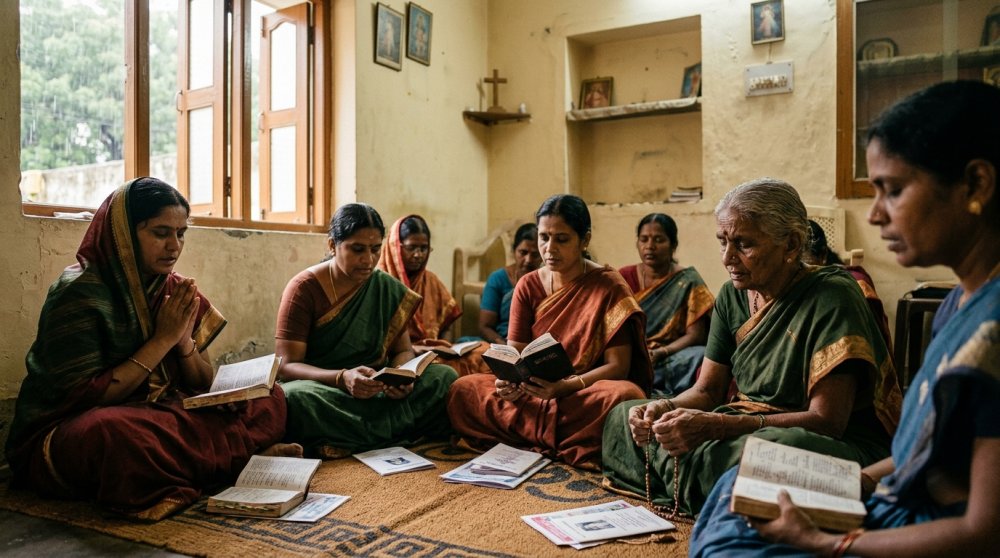
A troubling case out of India highlights the growing persecution faced by Christians in the world’s largest democracy. Twenty-two Christian women are now facing serious criminal charges after police in Maharashtra accused them of attempting to convert an 18-year-old student—just days before a stringent new anti-conversion law officially took effect in the state.
The timing of these charges raises serious concerns about the selective enforcement of laws designed to restrict religious freedom. The women were targeted under existing statutes before the new legislation could even be applied, suggesting a coordinated effort to intimidate Christian communities.
Maharashtra’s anti-conversion law is part of a broader pattern across India, where multiple states have enacted similar legislation ostensibly aimed at preventing “forced” conversions. However, religious freedom advocates have consistently warned that these laws are being weaponized against Christians and other religious minorities who peacefully share their faith.
The case involving the 22 women centers around allegations that they attempted to convert a young student. Details remain scarce, but the sheer number of individuals charged suggests a gathering or group Bible study that may have been mischaracterized as coercion.
For Christians in India, such laws create an atmosphere of fear and uncertainty. Sharing one’s faith—a fundamental tenet of Christianity—becomes criminalized when authorities can arbitrarily determine what constitutes “force” or “allurement.” The vague language in these statutes leaves the door wide open for abuse and persecution.
The broader context is equally alarming. Christian communities across India have reported increasing incidents of harassment, false accusations, and violence. Churches have been attacked, pastors beaten, and believers imprisoned on dubious charges. These anti-conversion laws provide a legal veneer to what many observers describe as systematic persecution.
American Christians should take note of what is happening to our brothers and sisters in India. Religious freedom is a God-given right, not a privilege granted by the state. When governments assume the power to regulate belief and the sharing of faith, tyranny inevitably follows.
The United States has long championed religious liberty both at home and abroad. As believers, we must continue to pray for persecuted Christians worldwide and support efforts to hold governments accountable when they violate fundamental human rights.
The situation in Maharashtra serves as a stark reminder that freedom of religion cannot be taken for granted. What begins as restrictions on “forced” conversion often escalates into comprehensive suppression of religious expression and assembly.
Let us know what you think, please share your thoughts in the comments below.
Faith Facts
- Polling data on religious decline may be significantly skewed by methodological issues and uncounted believers
- A massive group labeled “Others” in surveys represents millions of faithful Americans whose beliefs aren’t properly measured
- Religious “switching” often reflects denominational changes rather than abandonment of Christian faith
For years, headlines have proclaimed the death of American Christianity, pointing to rising numbers of “Nones” — those who claim no religious affiliation — as proof that faith is fading from our nation. But what if the story we’ve been told is incomplete, or even misleading?
A closer examination of the data reveals that America’s religious landscape is far more nuanced than the narrative of inevitable decline suggests. The truth is that polling methods may be obscuring the real picture of faith in America.
The so-called “Nones” category has indeed grown in recent decades, but this classification masks important distinctions. Many who check “no religious affiliation” on surveys still hold spiritual beliefs, pray regularly, and identify with Christian values. They may have left institutional churches without abandoning their faith in God.
Even more significant is a massive group that researchers label “Others” — Americans whose religious beliefs don’t fit neatly into pollsters’ predetermined categories. This group includes millions of believers whose faith is very real but simply isn’t captured by conventional survey questions designed for traditional denominational affiliations.
Religious “switching” presents another misunderstood phenomenon. While pollsters count every denominational change as evidence of instability, the reality is often quite different. A Baptist who becomes Presbyterian, or a Methodist who joins a nondenominational church, hasn’t abandoned Christianity — they’ve simply found a different expression of the same faith.
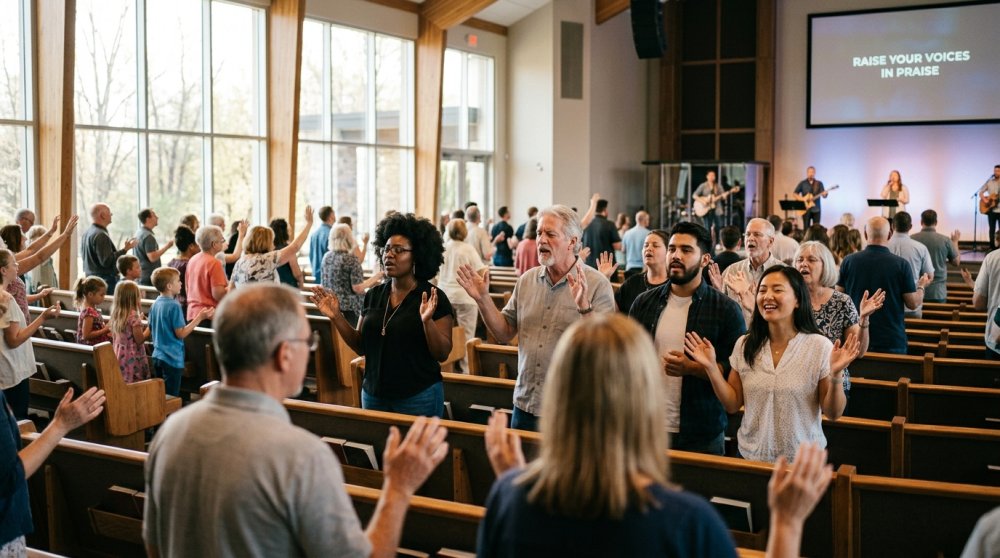
The data also fails to account for the vitality of faith communities that exist outside traditional structures. Home churches, online congregations, and informal fellowship groups have exploded in recent years, particularly among younger believers who value authentic community over institutional affiliation. These believers are deeply committed to their faith, but they’re often invisible to pollsters who equate religious commitment with membership in established denominations.
Furthermore, survey methodology itself introduces bias. Phone surveys increasingly miss younger Americans who rely solely on cell phones and are less likely to participate in lengthy interviews. Online surveys skew toward those with particular demographic characteristics. In-person surveys face their own challenges in an era of declining response rates.
The questions themselves can be problematic. When surveys offer limited options for religious identification, many faithful Americans are forced into categories that don’t accurately represent their beliefs. A charismatic Christian who attends a nondenominational church might not know how to answer questions designed for Lutheran, Catholic, or Baptist respondents.
Immigration patterns also complicate the picture. America continues to welcome immigrants from Latin America, Africa, and Asia — regions where Christian faith remains vibrant and central to daily life. These new Americans bring a strong religious commitment that enriches the nation’s spiritual landscape, yet their contributions are often underrepresented in surveys that focus on traditional American denominational categories.
The evidence suggests that reports of American Christianity’s demise have been greatly exaggerated. While the religious landscape has certainly changed, change doesn’t necessarily mean decline. The faith that has sustained this nation since its founding remains alive and active, even if it looks different than it did in previous generations.
Americans of faith should take heart that the narrative of religious collapse may be built on shaky statistical ground. The polling industry’s methods, designed for a different era, struggle to capture the full complexity of modern American spirituality. The reality is that millions of Americans continue to trust in God, seek His guidance, and live according to biblical principles — even if they don’t fit neatly into pollsters’ boxes.
As we move forward, it’s crucial to look beyond simplistic headlines and examine the deeper realities of American faith. The story is not one of inevitable decline, but of transformation and adaptation as believers find new ways to live out timeless truths in a changing world.
Let us know what you think, please share your thoughts in the comments below.
Faith Facts
- Britain’s new guidance explicitly tells asylum seekers that rape and abuse are wrong, sparking debate about universal moral truths
- The backlash against the booklet reveals deep confusion about whether right and wrong are objective or merely cultural preferences
- The controversy underscores the Christian teaching that moral law is written on every human heart by God, not invented by societies
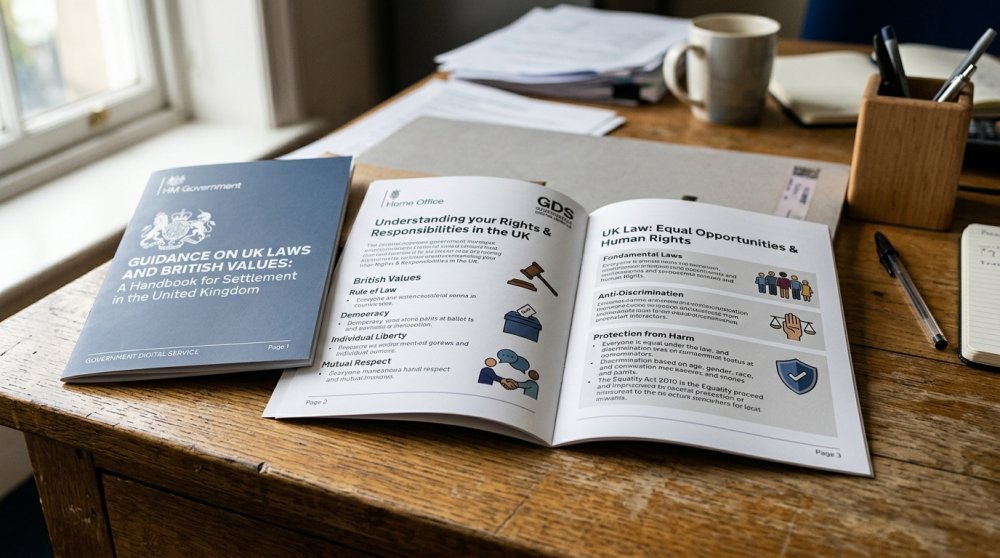
A new British government booklet aimed at asylum seekers has ignited fierce debate—not because it says anything controversial, but because it states what should be obvious: rape and abuse are wrong.
The guidance, designed to help newcomers understand British laws and values, explicitly tells asylum seekers that sexual violence, forced marriage, and abuse have no place in the United Kingdom. For many, this seems like common sense worth communicating clearly to those arriving from cultures with different norms.
But the backlash has been swift. Critics have denounced the booklet as offensive, condescending, or even racist—suggesting that stating such moral absolutes implies some cultures don’t already know these things. The outrage reveals something far more significant than a policy dispute: it exposes the West’s deep confusion about the very nature of right and wrong.
For centuries, Christian teaching has held that certain moral truths are universal—not because any government declares them, but because God has written His law on human hearts. The Apostle Paul described this in Romans 2:14-15, explaining that even those without Scripture show “the work of the law written on their hearts, their conscience also bearing witness.”
This is the doctrine of natural law: the idea that human beings, made in God’s image, have an innate sense of justice, mercy, and basic morality. Murder is wrong not merely because Britain says so, but because it violates the divine design for human life. Rape is evil not because of cultural preference, but because it desecrates the dignity God grants every person.
Yet modern secularism has systematically dismantled this foundation. If there is no Creator, then there is no created moral order—only competing preferences and power struggles. Right and wrong become matters of opinion, subject to cultural negotiation rather than divine decree.
This philosophical shift has profound consequences. If morality is merely cultural, then who are we to tell newcomers that their practices are wrong? If truth is relative, then insisting rape is universally evil becomes an act of cultural imperialism rather than moral clarity.
The controversy over Britain’s booklet thus becomes a window into our civilization’s spiritual crisis. We want to maintain moral standards—to say that some things really are wrong—but we’ve abandoned the only foundation that makes such claims coherent.
Christians have long understood what secular philosophy cannot explain: that conscience is real because God is real. We can recognize evil across cultures because evil is an objective reality, not a social construct. We recoil at injustice because we are made for justice by a just Creator.
The truth is that there are things we “can’t not know”—moral realities so fundamental that no honest person can entirely escape them. C.S. Lewis called this the “Tao” or natural law, the basic moral framework common to civilizations throughout history. Even those who deny God’s existence still appeal to concepts like fairness, dignity, and rights—borrowing from a moral capital they claim doesn’t exist.
Britain’s decision to explicitly teach asylum seekers that rape is wrong shouldn’t be controversial—it should be obvious. The fact that it has become a flashpoint reveals how far our culture has drifted from its moral moorings.
We live in a time when stating moral absolutes is considered offensive, yet we still expect people to behave as if those absolutes exist. We reject the idea of God-given conscience while demanding that everyone follow their conscience. We deny natural law while appealing to human rights that make no sense without it.
This incoherence cannot hold indefinitely. A society that refuses to name the source of its moral convictions will eventually lose those convictions altogether. Without the anchor of divine truth, we drift toward a world where might makes right and the powerful define morality for everyone else.
The Christian response is not to retreat from moral clarity but to ground it where it belongs—in the character of God Himself. Right and wrong are not arbitrary rules imposed by governments or cultures. They reflect the eternal nature of a holy, loving Creator who designed human beings for goodness and holds us accountable when we choose evil.
Britain’s booklet may seem like a small administrative matter, but the debate surrounding it touches the deepest questions of human existence. Where does morality come from? Is conscience real? Can we truly say anything is wrong?
The answers matter—not just for policy, but for the soul of civilization itself. And the Christian tradition offers what secular philosophy cannot: a coherent foundation for the moral truths we can’t not know, rooted in the God we can’t finally escape.
Let us know what you think, please share your thoughts in the comments below.


-

 Self-Reliance1 year ago
Trump’s Bold Move Uncovers Massive Social Security Fraud
-

 Faith1 year ago
New Clues Emerge in Noah’s Ark Mystery
-

 News1 year ago
Governor Walz’s Rhetoric Sparks National Controversy
-

 News1 year ago
Mel Gibson’s ‘The Passion of the Christ’ Sequel Title Announced
-

 Family1 year ago
Texas Lawmaker Targets Furries in Schools
-

 Freedom1 year ago
Maine Lawmaker Challenges Sports Fairness Controversy
-

 Family1 year ago
Canada’s Controversial Policy Sparks Ethical Debate
-
Faith9 months ago
Congress Hears Pleas for Nigerian Christians