
Faith
America’s Faith May Be Stronger Than Pollsters Admit

Faith Facts
- Polling data on religious decline may be significantly skewed by methodological issues and uncounted believers
- A massive group labeled “Others” in surveys represents millions of faithful Americans whose beliefs aren’t properly measured
- Religious “switching” often reflects denominational changes rather than abandonment of Christian faith
For years, headlines have proclaimed the death of American Christianity, pointing to rising numbers of “Nones” — those who claim no religious affiliation — as proof that faith is fading from our nation. But what if the story we’ve been told is incomplete, or even misleading?
A closer examination of the data reveals that America’s religious landscape is far more nuanced than the narrative of inevitable decline suggests. The truth is that polling methods may be obscuring the real picture of faith in America.
The so-called “Nones” category has indeed grown in recent decades, but this classification masks important distinctions. Many who check “no religious affiliation” on surveys still hold spiritual beliefs, pray regularly, and identify with Christian values. They may have left institutional churches without abandoning their faith in God.
Even more significant is a massive group that researchers label “Others” — Americans whose religious beliefs don’t fit neatly into pollsters’ predetermined categories. This group includes millions of believers whose faith is very real but simply isn’t captured by conventional survey questions designed for traditional denominational affiliations.
Religious “switching” presents another misunderstood phenomenon. While pollsters count every denominational change as evidence of instability, the reality is often quite different. A Baptist who becomes Presbyterian, or a Methodist who joins a nondenominational church, hasn’t abandoned Christianity — they’ve simply found a different expression of the same faith.
The data also fails to account for the vitality of faith communities that exist outside traditional structures. Home churches, online congregations, and informal fellowship groups have exploded in recent years, particularly among younger believers who value authentic community over institutional affiliation. These believers are deeply committed to their faith, but they’re often invisible to pollsters who equate religious commitment with membership in established denominations.
Furthermore, survey methodology itself introduces bias. Phone surveys increasingly miss younger Americans who rely solely on cell phones and are less likely to participate in lengthy interviews. Online surveys skew toward those with particular demographic characteristics. In-person surveys face their own challenges in an era of declining response rates.
The questions themselves can be problematic. When surveys offer limited options for religious identification, many faithful Americans are forced into categories that don’t accurately represent their beliefs. A charismatic Christian who attends a nondenominational church might not know how to answer questions designed for Lutheran, Catholic, or Baptist respondents.
Immigration patterns also complicate the picture. America continues to welcome immigrants from Latin America, Africa, and Asia — regions where Christian faith remains vibrant and central to daily life. These new Americans bring a strong religious commitment that enriches the nation’s spiritual landscape, yet their contributions are often underrepresented in surveys that focus on traditional American denominational categories.
The evidence suggests that reports of American Christianity’s demise have been greatly exaggerated. While the religious landscape has certainly changed, change doesn’t necessarily mean decline. The faith that has sustained this nation since its founding remains alive and active, even if it looks different than it did in previous generations.
Americans of faith should take heart that the narrative of religious collapse may be built on shaky statistical ground. The polling industry’s methods, designed for a different era, struggle to capture the full complexity of modern American spirituality. The reality is that millions of Americans continue to trust in God, seek His guidance, and live according to biblical principles — even if they don’t fit neatly into pollsters’ boxes.
As we move forward, it’s crucial to look beyond simplistic headlines and examine the deeper realities of American faith. The story is not one of inevitable decline, but of transformation and adaptation as believers find new ways to live out timeless truths in a changing world.
Let us know what you think, please share your thoughts in the comments below.

Faith Facts
- Research from the Institute for Family Studies shows couples with different last names divorce at a 50% higher rate.
- A shared family name reflects the biblical call for husband and wife to become one flesh in covenant marriage.
- Taking a husband’s last name serves as a visible sign of leaving, cleaving, and surrender within Christian marriage.
New research is shining a light on a simple yet profound tradition many Christian couples continue to embrace.
Couples who choose to keep separate last names after marriage face a divorce rate 50% higher than those who share one name, according to findings from the Institute for Family Studies.
“A shared name is an outward sign of the leaving, cleaving and covenantal surrender at the heart of biblical marriage,” the report notes.
This practice aligns with Scripture’s description of marriage as a lifelong union where two become one, both in spirit and in name.
Christian wives who adopt their husband’s surname often see it as an act of unity and humility that strengthens their household witness.
Let us know what you think, please share your thoughts in the comments below.

Faith Facts
- The Message Bible paraphrase author Eugene Peterson passed away this week in Christian history.
- The Edict of Nantes, which granted religious freedom to French Protestants, was revoked in the seventeenth century.
- Christian history continues to record both faithful perseverance and grave setbacks for believers.
Christian history is filled with moments that shaped the Church, from milestones and triumphs to tragedies and controversies, as well as the lasting impact of influential believers. These events remind believers of the enduring cost of standing for the faith once delivered to the saints.
Each week brings fresh reminders that the Church has weathered storms and celebrated victories for centuries. Remembering these milestones helps strengthen the resolve of Christians today to hold fast to biblical truth.
Let us know what you think, please share your thoughts in the comments below.
Faith Facts
- Tony Dungy has consistently spoken about his Christian faith throughout his NFL coaching career and broadcasting work.
- Dungy has been a vocal advocate for pro-life causes, aligning with traditional Christian teachings on the sanctity of life.
- His commitment to living out biblical principles publicly has been a hallmark of his career in professional sports.
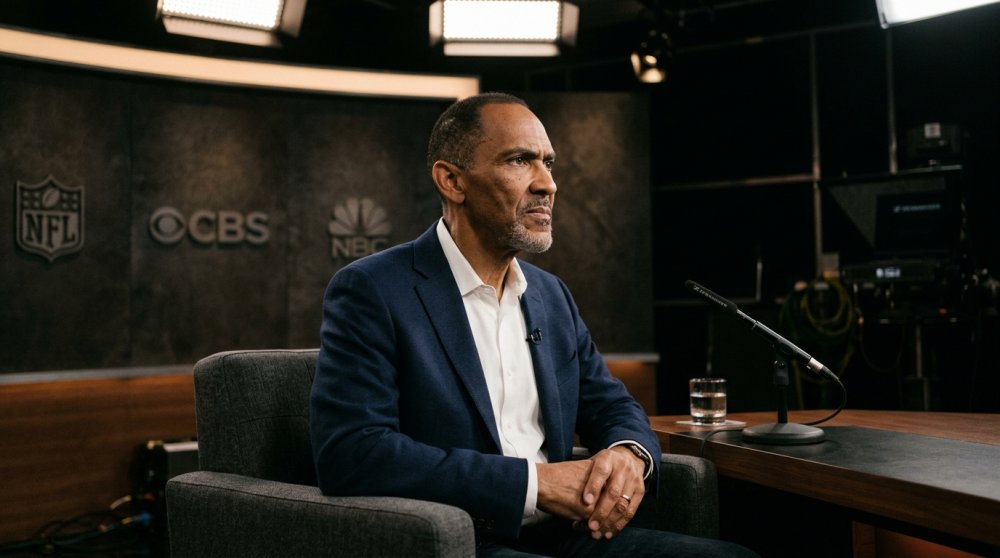
Former NFL coach and longtime sportscaster Tony Dungy suggested his pro-life activism and willingness to speak publicly about his Christian faith may have contributed to his departure from NBC Sports, though he said he cannot be certain.
Though Dungy did not accuse NBC of discrimination, his comments raised questions about how networks value employees who openly share their faith. He indicated that networks sometimes prefer commentators who keep their beliefs private.
“They don’t always appreciate you speaking about your faith,” Dungy said.
His departure comes as more Christian athletes and coaches face pressure to remain silent about their beliefs in mainstream media. Dungy’s experience highlights the tension between personal conviction and corporate expectations in today’s sports broadcasting landscape.
“It’s something that I’ve always tried to do,” he added, referring to his habit of sharing his faith when opportunities arise.
Let us know what you think, please share your thoughts in the comments below.


-

 Self-Reliance2 years ago
Trump’s Bold Move Uncovers Massive Social Security Fraud
-

 Faith2 years ago
New Clues Emerge in Noah’s Ark Mystery
-

 News2 years ago
Governor Walz’s Rhetoric Sparks National Controversy
-

 News2 years ago
Mel Gibson’s ‘The Passion of the Christ’ Sequel Title Announced
-

 Family2 years ago
Texas Lawmaker Targets Furries in Schools
-

 Freedom2 years ago
Maine Lawmaker Challenges Sports Fairness Controversy
-

 Family1 year ago
Canada’s Controversial Policy Sparks Ethical Debate
-
Faith11 months ago
Congress Hears Pleas for Nigerian Christians