
Faith
OnlyFans Star’s Baptism Reveals Dangerous Misunderstanding of Grace


Faith Facts
- Recently baptized OnlyFans creator Lily Phillips claims Christianity’s message of grace permits her to continue her lifestyle of sexual promiscuity
- Christian leaders emphasize that biblical grace is not permission to continue in sin, but power to turn away from it
- The fundamental misunderstanding of Christian doctrine highlights the urgent need for clear gospel teaching on repentance and transformation
A recently baptized OnlyFans star has ignited controversy within Christian circles by claiming that the grace of Christianity allows her to continue her lifestyle of extreme sexual promiscuity. Lily Phillips, who has made headlines for sleeping with thousands of men as part of her adult content business, argues that because Christianity emphasizes “non-judgement,” she can maintain both her faith and her career.
This troubling interpretation of Christian doctrine reveals a fundamental misunderstanding of what the gospel actually teaches about grace, repentance, and transformation. While it’s true that Christianity offers radical grace and forgiveness, this grace is never presented in Scripture as permission to continue living in deliberate sin.
The apostle Paul addressed this exact misconception in his letter to the Romans, asking rhetorically:
“What shall we say, then? Shall we go on sinning so that grace may increase? By no means! We are those who have died to sin; how can we live in it any longer?”
Throughout the New Testament, grace is consistently portrayed not as license for continued sin, but as the power to be freed from sin’s bondage. When Jesus encountered the woman caught in adultery, He offered her forgiveness and protection from condemnation—but His final words to her were clear:
“Go now and leave your life of sin.”
This is the pattern of biblical grace: unconditional love paired with a call to transformation. Christ meets us where we are, but His love is too powerful to leave us there. True Christian freedom isn’t the freedom to do whatever we want; it’s freedom from the slavery of sin to live according to God’s good design.
Phillips’ claim that Christianity is fundamentally about “non-judgement” also misrepresents the faith. While Christians are indeed called not to condemn others—recognizing our own sin and need for grace—the faith absolutely requires moral discernment and the ability to identify sin for what it is. Jesus Himself spoke extensively about sin, holiness, and the narrow path that leads to life.
The Christian message has always included both mercy and repentance. John the Baptist prepared the way for Jesus by preaching “a baptism of repentance for the forgiveness of sins.” When Jesus began His public ministry, His message was:
“Repent, for the kingdom of heaven has come near.”
Repentance—a genuine turning away from sin—has always been inseparable from authentic Christian faith. Baptism itself symbolizes dying to the old life and being raised to walk in newness of life. It represents a clean break with the past, not simply adding Jesus to an unchanged lifestyle.
This isn’t to say that Christians achieve instant perfection or never struggle with sin. The Christian life involves ongoing sanctification—a lifelong process of becoming more like Christ. But there’s a vast difference between struggling against sin while desiring to honor God, and willfully continuing in sin while claiming God’s grace as a cover.
The biblical concept of grace is revolutionary precisely because it offers both complete forgiveness and complete transformation. God’s love is powerful enough to forgive the worst sins and to change the hardest hearts. But receiving that grace requires acknowledging our sin, not justifying it.
Phillips’ misunderstanding is unfortunately not unique in contemporary culture. Many have embraced a version of Christianity that emphasizes God’s love while dismissing His holiness, that celebrates His mercy while ignoring His call to righteousness. This selective reading of Scripture creates a false gospel that can neither save nor transform.
The truth is that God’s standards for sexual morality haven’t changed. Throughout Scripture, from Genesis to Revelation, God’s design is clear: sexual intimacy is reserved for the covenant relationship of marriage between one man and one woman. Any sexual activity outside this context—whether fornication, adultery, or prostitution—is identified as sin.
But here’s the beautiful reality of the gospel: no sin is beyond God’s forgiveness, and no sinner is beyond His reach. The same grace that can forgive sexual sin can also free someone from it. The same power that raised Jesus from the dead is available to raise us from our spiritual death and give us new life.
What Phillips needs—what we all need—is not a watered-down Christianity that makes peace with sin, but the full gospel that offers both forgiveness and freedom. She needs to understand that God’s grace is not indifference to her choices, but His loving desire to bring her into the abundant life He designed for her.
True Christianity calls us to count the cost and follow Jesus wholeheartedly. It demands that we surrender our lives completely to Him, trusting that His ways are better than our ways. This isn’t burdensome legalism; it’s the pathway to genuine freedom and joy.
For those who have been living in sexual sin—whether in the sex industry or any other context—the message of Christianity is one of hope. You are not defined by your past. You are not beyond redemption. God’s grace is sufficient to forgive you completely and His power is sufficient to transform you entirely.
But that transformation requires genuine repentance—not just regret for consequences, but a heartfelt turning away from sin and toward God. It requires submitting every area of life, including sexuality, to Christ’s lordship.
The church must speak this truth with both clarity and compassion. We must reject the false choice between truth and love, recognizing that the most loving thing we can do is speak the truth clearly. We must welcome sinners as Jesus did, while also calling them to transformation as Jesus did.
Phillips’ public statements reveal how desperately our culture needs clear, biblical teaching on the nature of grace, repentance, and Christian discipleship. Too many people have heard a gospel without cost, a Christianity without cross-bearing, a grace without transformation.
The real gospel is far more challenging—and far more beautiful—than this counterfeit. It demands everything and offers everything. It calls us to die to ourselves and promises us resurrection life. It requires us to turn from sin and empowers us to walk in holiness.
This is the message Phillips needs to hear, and it’s the message our entire culture needs to hear. Grace is not permission to keep sinning. Grace is the power to stop.
Let us know what you think, please share your thoughts in the comments below.


Faith Facts
- Vice President JD Vance credits his faith for guiding his political service and life decisions.
- Vance says he has not yet felt a divine call to pursue the presidency in 2028.
- He remains open to the possibility that God may lead him toward a future presidential campaign.
Vice President JD Vance has stated that his faith remains central to his decision-making as he weighs a potential 2028 presidential campaign. The Ohio senator-turned-vice president spoke candidly about how he continues to seek God’s direction before making major political moves.
Vance emphasized that he has not yet sensed a clear calling from God regarding a presidential run. He noted that this could change in time but stressed the importance of waiting for divine guidance.
“I haven’t yet felt God’s call for a presidential run in 2028,”
“Maybe that’ll change.”
Vance’s comments reflect a growing trend among conservative leaders who publicly acknowledge their dependence on prayer and Scripture when facing major career decisions. His approach resonates with many Americans who value leaders willing to submit their ambitions to God’s will.
The vice president also reflected on how his conversion to Christianity has shaped his worldview and public service. Vance has often spoken about the transformative power of faith in both his personal life and his political philosophy.
Let us know what you think, please share your thoughts in the comments below.

Faith Facts
- Vice President JD Vance led rally attendees in reciting the Lord’s Prayer when a woman collapsed nearby.
- The moment highlighted the continued presence of Christian faith in American public life and political gatherings.
- Vance personally left the stage to check on the woman after leading the prayer.
Vice President JD Vance paused a Nebraska campaign rally to lead the crowd in the Lord’s Prayer after a woman collapsed in the audience.
The incident took place during a live event where Vance addressed supporters and addressed policy issues.
“Pray as the Lord taught us to pray,” Vance said before leading the audience in the traditional prayer.
After finishing the prayer, Vance stepped down from the stage and made his way into the stands to personally check on the woman who had collapsed.
The spontaneous act of faith and compassion drew praise from attendees who witnessed the moment.
Let us know what you think, please share your thoughts in the comments below.
Faith Facts
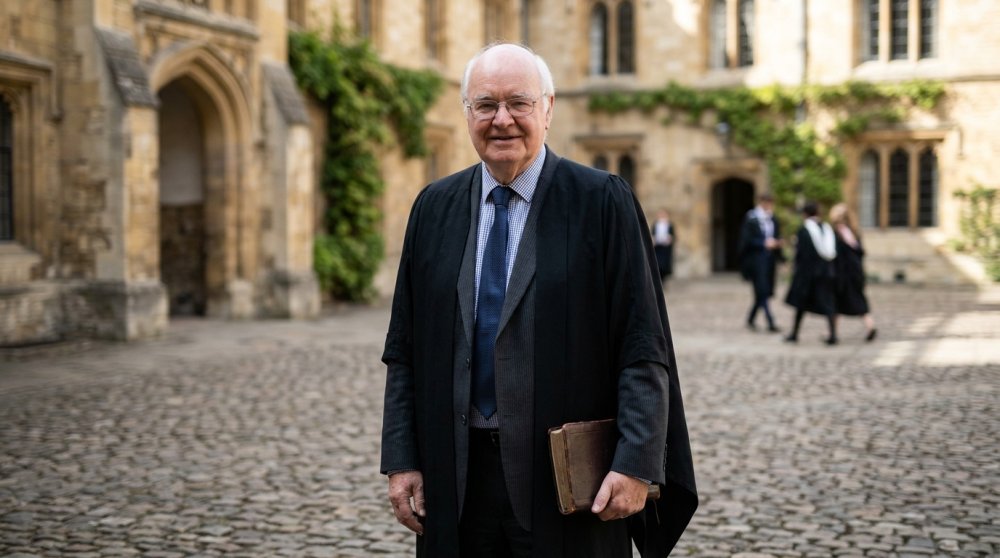
- Oxford mathematician and Christian apologist Professor John Lennox encourages believers to share their faith with confidence.
- Lennox stresses that evangelism is not reserved only for preachers, theologians, or those with extensive biblical knowledge.
- Every Christian is called to be a witness for Christ in daily life.
Oxford mathematician and Christian apologist Professor John Lennox is urging believers everywhere to share their faith with greater boldness and confidence. He reminds Christians that the call to witness is not limited to pastors or scholars but belongs to every follower of Christ.
“We’re all called to be witnesses,” Lennox declares. This simple truth challenges the idea that only trained experts can effectively share the gospel.
Professor Lennox emphasizes that evangelism is not about having every theological answer or delivering polished sermons. Instead, it is about living out and speaking the truth of Christ wherever God places His people.
His words come as a timely encouragement to Christians who may feel hesitant or unqualified to speak about their faith. Lennox points to the biblical calling that every believer is a witness, empowered by the Holy Spirit to share the hope within them.
Let us know what you think, please share your thoughts in the comments below.


-

 Self-Reliance2 years ago
Trump’s Bold Move Uncovers Massive Social Security Fraud
-

 Faith2 years ago
New Clues Emerge in Noah’s Ark Mystery
-

 News2 years ago
Governor Walz’s Rhetoric Sparks National Controversy
-

 News2 years ago
Mel Gibson’s ‘The Passion of the Christ’ Sequel Title Announced
-

 Family2 years ago
Texas Lawmaker Targets Furries in Schools
-

 Freedom2 years ago
Maine Lawmaker Challenges Sports Fairness Controversy
-

 Family1 year ago
Canada’s Controversial Policy Sparks Ethical Debate
-
Faith11 months ago
Congress Hears Pleas for Nigerian Christians