
Faith
One Pastor Discovered What Christians Have Forgotten About Rest


Faith Facts
- Derek Hughes, burnt out from years of church leadership, struggled to keep the Sabbath holy through individual effort and technique alone
- Biblical Sabbath rest is designed to be practiced in community, not as a solitary discipline or performance metric
- Hughes and his small group found transformation when they began observing Sabbath together, rediscovering a foundational Christian practice often neglected in modern church culture
For too many Christian leaders today, burnout has become an epidemic. The constant demands of ministry, coupled with the culture’s relentless pace, leave pastors and church workers exhausted and spiritually depleted. Derek Hughes knows this reality all too well.
After years of faithful service in church leadership, Hughes found himself utterly burnt out. Like many driven Christians, he approached his need for rest the same way he approached every other challenge in life: as a problem to solve through determination and the right techniques.
But God had a different lesson in store. Hughes tried every method and strategy he could find to observe the Sabbath properly. He read books, implemented systems, and worked hard at resting—an irony that wasn’t lost on him. Yet true rest remained elusive when pursued as just another item on his spiritual to-do list.
The breakthrough came not through a new technique or a better plan, but through an ancient biblical truth: we were never meant to rest alone.
When Hughes’s small group made the decision to practice Sabbath together, everything changed. What had been a burdensome obligation transformed into life-giving community. The Sabbath stopped being about individual performance and became about collective worship, shared rest, and mutual encouragement in honoring God’s design for our lives.
This discovery points to a broader issue in American Christianity. In our individualistic culture, we’ve reduced the faith to a private relationship with God, forgetting that Scripture consistently presents the Christian life as a communal experience. From the Old Testament community of Israel to the New Testament church, God’s people have always been called to live out their faith together.
The fourth commandment to remember the Sabbath and keep it holy wasn’t given merely to individuals—it was given to a community. The day of rest was meant to be observed together, creating a rhythm of shared worship and mutual care that strengthened the entire body of believers.
In modern America, where productivity is worshipped and busyness is a status symbol, the practice of Sabbath rest stands as a countercultural witness. It declares that our worth is not determined by our output, that God’s economy operates on grace rather than grinding effort, and that true rest comes from trusting in His provision rather than our own striving.
Hughes’s journey offers a powerful reminder for churches and Christian families across the nation. Perhaps we’ve been failing at Sabbath not because we lack discipline or proper techniques, but because we’ve been trying to practice it in isolation from the very community that makes it sustainable and meaningful.
The early church understood this. They gathered on the Lord’s Day not merely as individuals seeking private spiritual experiences, but as a family unified in worship, fellowship, and rest. They shared meals, encouraged one another, and found in their togetherness the strength to live faithfully in a hostile culture.
Today’s believers face different challenges but the same need. In a society that never stops, that measures worth by achievement, and that isolates people despite constant digital connectivity, the practice of communal Sabbath rest becomes both a spiritual necessity and a prophetic act.
When Christians gather intentionally to rest together—to set aside the demands of work, to silence the noise of entertainment, and to focus on worship and relationship—they bear witness to a different way of being human. They demonstrate that life abundant comes not from endless activity but from trusting the God who calls us to rest in Him.
For pastors and church leaders facing burnout, Hughes’s experience offers hope. The answer isn’t found in better time management or more efficient ministry strategies. The answer is found in returning to the biblical pattern of life lived in authentic community, where the burdens are shared, where rest is protected, and where the Sabbath is observed not as a legalistic requirement but as a joyful gift.
Families, too, can rediscover this lost treasure. Instead of treating Sunday as just another day to catch up on tasks or pursue individual entertainment, Christian households can intentionally create space for shared rest, worship, and fellowship—both within their own homes and with their church family.
The practice won’t look identical for everyone. Different communities and families will find different rhythms that honor God and serve their particular circumstances. But the principle remains constant: Sabbath rest is a communal practice that flourishes in relationship, not a solitary achievement earned through personal discipline.
As America continues its breakneck pace and the pressures on Christian leaders and families intensify, the wisdom of Sabbath rest becomes increasingly vital. It’s not a luxury or an optional spiritual discipline for the especially devout. It’s a commandment rooted in God’s creative design, a gift that sustains faith, family, and community.
Derek Hughes stopped failing at Sabbath when he stopped trying alone. His testimony challenges every believer to consider: Are we missing the blessing of rest because we’ve forgotten it was never meant to be practiced in isolation? Perhaps it’s time for Christians across this nation to rediscover what our spiritual ancestors knew—that rest, like faith itself, is best experienced together.
Let us know what you think, please share your thoughts in the comments below.


Faith Facts
- India’s Parliament is advancing a bill that would severely restrict foreign funding for Christian ministries, including hospitals, schools, and churches
- The proposed law targets faith-based organizations providing food, medical care, and education to impoverished communities across India
- Religious freedom advocates are urging lawmakers to reject the legislation amid mounting concerns about persecution of Christians
A sweeping new bill moving through India’s Parliament threatens to shut down thousands of Christian ministries serving the nation’s most vulnerable populations. The legislation would impose severe restrictions on foreign funding for faith-based organizations operating throughout the country.
The proposed law targets a wide range of Christian charitable work, including media outlets, food ministries, schools, clinics, hospitals and churches that serve Christian communities. These organizations have long provided critical services to impoverished Indians who often have nowhere else to turn for help.
Religious freedom advocates are sounding the alarm about the legislation’s potential impact. They are calling on Indian lawmakers to reject the bill, warning that it would devastate humanitarian efforts across the country.
Christian ministries in India have historically relied on support from believers around the world to fund their operations. The new restrictions would cut off this lifeline, forcing many organizations to close their doors. Schools educating children in poverty, clinics treating the sick, and food programs feeding hungry families would all face elimination.
The bill represents the latest challenge facing India’s Christian minority, which comprises approximately 2.3% of the nation’s 1.4 billion people. Faith-based organizations have expressed deep concern about their ability to continue serving communities if the legislation becomes law.
Critics argue the measure unfairly targets religious organizations while allowing secular groups to operate with fewer restrictions. They contend the bill violates fundamental principles of religious freedom and charitable work.
India’s Christian community has long contributed to the nation’s social fabric through extensive humanitarian efforts. The threatened shutdown of these ministries would leave a massive gap in services for millions of Indians who depend on faith-based assistance.
As the bill advances through the legislative process, international observers are watching closely. The outcome will have significant implications for religious liberty and humanitarian work throughout one of the world’s most populous nations.
Let us know what you think, please share your thoughts in the comments below.
Faith Facts
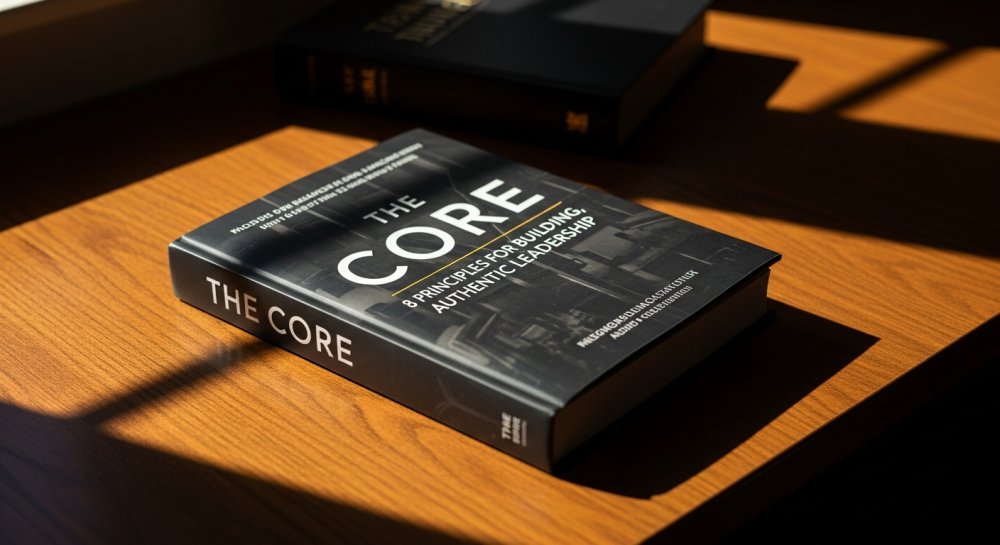
- Oklahoma Christian University President Ken Jones and leadership expert Matt Paden have released a new faith-based leadership book centered on biblical principles from the story of Esther and Mordecai
- “The Core: 8 Principles for Building Strong, Authentic Leadership” focuses on internal character and personal practices rather than external management techniques as the foundation of effective leadership
- The book uniquely combines a leadership fable with practical narrative chapters, offering Christian leaders in both church and marketplace settings a Scripture-based approach to everyday leadership challenges
True leadership isn’t just about managing people or running effective meetings. The most important leadership skills often have nothing to do with our outward interactions with others.
A groundbreaking new book is challenging conventional leadership wisdom by returning to timeless biblical principles. “The Core: 8 Principles for Building Strong, Authentic Leadership” by Matt Paden and Ken Jones offers a distinctly faith-centered approach to a topic that secular culture has tried to divorce from its spiritual roots.
Jones serves as president of Oklahoma Christian University in Oklahoma City. Paden is president of Great Days Leadership and formerly served as vice president at Lipscomb University in Nashville, Tennessee. Together, they’ve crafted a leadership resource that speaks directly to Christians seeking to lead with authenticity and biblical integrity.
The book opens with a compelling leadership fable featuring Clint, a college student interning at a local hospital, and Dr. Bill Jackson, the hospital’s longtime CEO. This narrative approach allows readers to experience leadership lessons through Clint’s eyes, making the principles both relatable and memorable.
The storytelling strategy proves particularly effective as readers witness how Jackson’s leadership directly impacts Clint as both a recipient of that leadership and a student learning to lead himself. This dual perspective reinforces how Christian leadership should simultaneously serve and teach those under our care.
Following the fable, Paden and Jones transition to detailed explanations of their eight Core principles. These aren’t just management tips—they’re foundational truths rooted in Scripture, specifically drawing from the biblical account of Esther and Mordecai.
The authors make a crucial distinction that many secular leadership books miss entirely: they focus on the “Leadership Core,” a set of internal ideas and personal practices that serve as the ultimate driver of a leader’s success or failure. Character comes before competence.
One chapter in particular stands out for its practical wisdom: “Leading with Your Ears.” This powerful reflection on the importance of listening in leadership reminds us that our greatest impact often comes not from what we say, but from the space we create for others to feel genuinely heard and valued.
The authors challenge readers to recognize that a failure to listen isn’t an ear issue—it’s a heart issue. This kind of honest, biblical assessment cuts through the superficial advice found in most secular leadership literature.
While some readers might wish for a mnemonic device or more structured progression to help memorize the Core principles, and perhaps more frequent connections between the fable and the teaching sections, these minor suggestions don’t diminish the book’s overall value.
What makes “The Core” particularly valuable isn’t necessarily that every idea is revolutionary or unprecedented. Rather, it’s the fresh presentation and creative packaging of timeless truths, enhanced by the authors’ compelling storytelling and refreshing vulnerability about their own leadership journeys.
This book is highly recommended for any Christian leader—whether serving in ministry or the marketplace—who wants to view everyday leadership through the lens of faith and Scripture. It’s especially valuable for those who share Paden and Jones’ foundational belief that leadership is fundamentally about “speaking up for others and working for the good of the people.”
In a culture that increasingly demands leaders compromise their values or separate their faith from their professional lives, “The Core” offers a much-needed alternative. It demonstrates that the most effective leadership flows from biblical principles that have guided God’s people for millennia.
“The Core: 8 Principles for Building Strong, Authentic Leadership” by Matt Paden and Ken Jones is published by Forefront Books, 240 pages, $28.
Let us know what you think, please share your thoughts in the comments below.

Faith Facts
- Christian funding charity Stewardship recorded a historic 49% surge in donations, reaching £161 million ($209 million) in 2025
- The record-breaking year reflects growing commitment among believers to support Christian ministries and charitable causes
- The organization’s annual report demonstrates the strength of faith-based generosity during challenging economic times
A Christian funding charity has announced a historic milestone in charitable giving that demonstrates the enduring generosity of the faithful. Stewardship, a leading Christian funding organization, recorded an unprecedented surge in donations during 2025, marking a significant moment for faith-based philanthropy.
According to the organization’s annual report released Monday, incoming donations jumped 49% to reach a record £161 million, equivalent to approximately $209 million. The remarkable increase reflects a growing commitment among Christians to support ministries and charitable causes aligned with their values.
The surge in giving comes at a time when many believers are seeking meaningful ways to put their faith into action through stewardship and generosity. The record-breaking year demonstrates that despite economic uncertainties, Christians remain dedicated to supporting organizations that advance the Gospel and serve communities in need.
This historic achievement underscores the vital role that faith-based charitable organizations play in channeling resources to Christian ministries, missionaries, and charitable initiatives around the world. The significant increase in donations suggests a renewed emphasis on biblical principles of stewardship and generosity among believers.
The report highlights how Christian donors are increasingly recognizing the importance of strategic giving that aligns with their values and supports causes rooted in traditional faith principles. This trend reflects a broader movement among Christians to ensure their charitable contributions make a lasting impact for the Kingdom.
As churches and ministries continue to navigate changing cultural landscapes, the record level of giving through organizations like Stewardship provides crucial support for spreading the Gospel and serving others in Jesus’ name. The historic year demonstrates that faithful stewardship remains a cornerstone of Christian practice in America and beyond.
Let us know what you think, please share your thoughts in the comments below.


-

 Self-Reliance1 year ago
Trump’s Bold Move Uncovers Massive Social Security Fraud
-

 Faith1 year ago
New Clues Emerge in Noah’s Ark Mystery
-

 News1 year ago
Governor Walz’s Rhetoric Sparks National Controversy
-

 News1 year ago
Mel Gibson’s ‘The Passion of the Christ’ Sequel Title Announced
-

 Family1 year ago
Texas Lawmaker Targets Furries in Schools
-

 Freedom1 year ago
Maine Lawmaker Challenges Sports Fairness Controversy
-

 Family1 year ago
Canada’s Controversial Policy Sparks Ethical Debate
-
Faith8 months ago
Congress Hears Pleas for Nigerian Christians