
Faith
Nigerian Christians Under Siege Issue Urgent Easter Plea

Faith Facts
- Fulani terrorists attacked two predominantly Christian villages in Nigeria’s Plateau state days before Easter
- Nigerian church leaders issued an urgent appeal for international help to protect persecuted Christians
- President of Nigeria pledged to curb escalating violence against Christian communities
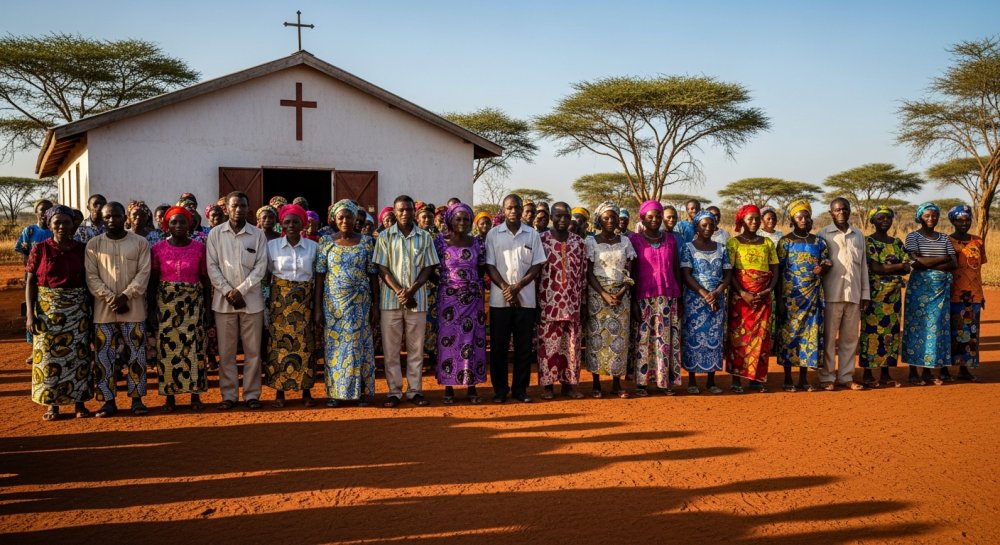
In the shadow of brutal attacks on Christian communities, church leaders in Nigeria are making an urgent Easter appeal for international assistance as persecution intensifies. The plea comes just days after Fulani terrorists launched deadly assaults on two predominantly Christian villages in Plateau state, a region that has become a focal point of religious violence.
The Nigerian president has pledged to take action against the escalating violence targeting Christian populations. However, church leaders remain concerned about the ongoing threats facing believers throughout the country.
Nigeria ranks among the most dangerous places in the world for Christians, with thousands killed in recent years. Fulani militants, often described as herdsmen, have carried out systematic attacks on Christian farming communities across the Middle Belt and northern regions of the country.
The timing of these latest attacks—occurring during the most sacred season of the Christian calendar—underscores the intentional targeting of believers. Church leaders are calling on the international community to recognize the severity of the crisis and provide tangible support for protection and humanitarian relief.
Christian advocacy organizations have long documented the pattern of violence against Nigerian believers, noting that many attacks go unreported or are mischaracterized as ethnic conflicts rather than religious persecution. The reality on the ground reveals a coordinated campaign against Christian communities that threatens their very existence in ancestral homelands.
The Easter appeal represents a desperate cry for help from a church under siege. Nigerian Christians continue to demonstrate remarkable faith and resilience despite facing existential threats, but they cannot stand alone against well-armed terrorist groups.
As American Christians celebrate Easter in safety and freedom, the plight of Nigerian believers serves as a sobering reminder of the cost of discipleship in many parts of the world. The call for help demands a response rooted in Christian solidarity and the defense of religious liberty as a fundamental human right.
Let us know what you think, please share your thoughts in the comments below.


Faith Facts
- Scripture reveals specific patterns that mark nations under divine judgment, patterns visible throughout history from Babylon to Rome
- America shows troubling parallels to biblical warnings including moral decay, rejection of God’s law, and corruption of justice
- Recognizing these warning signs offers an opportunity for national repentance and spiritual renewal before judgment becomes irreversible
Throughout Scripture, God establishes clear patterns that signal when a nation has crossed the threshold from divine blessing to divine judgment. These biblical warning signs have appeared consistently across fallen empires throughout history, from ancient Babylon to Rome.
The sobering truth every generation must face is simple: there is no such thing as a permanent empire — only a permanent God. Nations rise and fall according to their faithfulness or rebellion against His statutes.
The first warning sign appears when a nation abandons the God who established it. When public acknowledgment of the Almighty is systematically removed from government, education, and culture, judgment looms. Scripture makes clear that “blessed is the nation whose God is the Lord” (Psalm 33:12), and the inverse holds equally true.
Second, widespread moral decay signals impending collapse. When sexual immorality becomes normalized and celebrated rather than condemned, when marriage is redefined, and when innocent life is devalued through abortion, a nation stands on precarious ground.
Third, the corruption of justice systems indicates advanced spiritual deterioration. Isaiah 5:20 warns: “Woe to those who call evil good and good evil, who put darkness for light and light for darkness.” When courts twist law to serve political agendas rather than righteousness, judgment approaches.
Fourth, economic oppression and the exploitation of the poor mark a nation ripe for divine intervention. Amos condemned Israel specifically for this sin. When wealth becomes concentrated among elites who crush the vulnerable, God takes notice.
Fifth, pride and arrogance signal a nation’s downfall. Proverbs 16:18 declares that “pride goes before destruction.” When a people believe their military might, technological advancement, or economic power makes them invincible, they forget their dependence on God’s providence.
Sixth, the persecution or silencing of God’s messengers reveals a hardened heart. From Jeremiah to John the Baptist, nations under judgment have consistently attacked those who call for repentance and speak truth.
Seventh, the embrace of idolatry — whether ancient golden calves or modern materialism, entertainment, and self-worship — demonstrates a nation has exchanged truth for lies. Romans 1 describes the progression of judgment that follows such exchange.
Eighth, family breakdown and the rejection of God-ordained roles within the home undermine the fundamental building block of civilization. When children are not raised in “the discipline and instruction of the Lord” (Ephesians 6:4), societal collapse follows within a generation.
Ninth, widespread violence and bloodshed cry out for divine justice. Genesis 6:11 notes the earth was “corrupt in God’s sight and full of violence” before the flood. When human life becomes cheap and violence pervades the culture, God will not remain silent indefinitely.
Tenth, the failure to heed prophetic warnings seals a nation’s fate. God sent prophet after prophet to Israel and Judah before judgment fell. His patience is great, but not infinite. The opportunity for repentance has limits.
Recognizing these warning signs in our own nation should drive believers to their knees in intercessory prayer. Second Chronicles 7:14 offers hope: “If my people, who are called by my name, will humble themselves and pray and seek my face and turn from their wicked ways, then I will hear from heaven, and I will forgive their sin and will heal their land.”
History demonstrates that God’s judgment is both certain and preventable through genuine national repentance. The question facing America today is whether we will heed these biblical warning signs or ignore them to our peril. The window for turning back remains open, but it will not remain so forever.
Every Christian must understand these patterns not to promote fear, but to sound the alarm and call God’s people to renewed faithfulness. Our responsibility is to be salt and light, to stand firm in truth, and to proclaim the gospel that transforms individuals, families, and ultimately nations.
Let us know what you think, please share your thoughts in the comments below.
Faith Facts
- Nine relatives of Nigerian Pastor Ezekiel Dachomo were brutally murdered in recent attacks in Nigeria’s Middle Belt region
- The pastor had previously warned that “fear has become a way of life” for Christians living under constant threat of violence
- The United States has officially condemned the killings, highlighting the ongoing persecution of Christians in the region
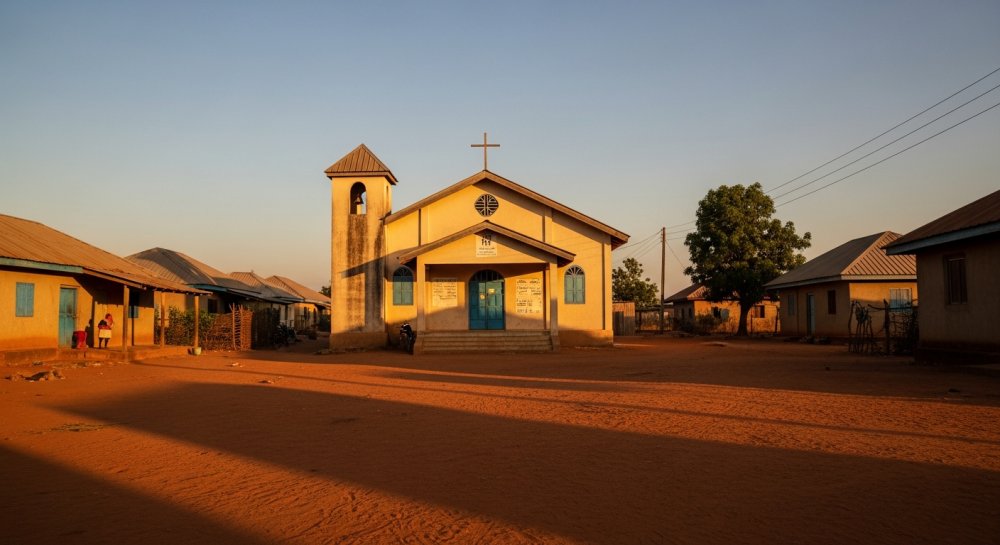
The brutal murder of nine family members belonging to a Nigerian pastor has drawn international condemnation and renewed attention to the escalating violence against Christians in Africa’s most populous nation. Rev. Ezekiel Dachomo had previously sounded the alarm about the deteriorating security situation facing believers in Nigeria’s Middle Belt.
The United States government issued a formal condemnation of the killings, which targeted the family of Pastor Dachomo in what has become a tragically common pattern of violence in the region. The pastor’s earlier warnings have proven prophetic as Christian communities continue to face relentless attacks.
“Fear has become a way of life,” Pastor Dachomo had warned before the massacre of his own relatives, describing the daily reality for Christians in Nigeria’s Middle Belt region. His words now carry the weight of devastating personal loss.
The Middle Belt of Nigeria has become a dangerous flashpoint where Christian farming communities face ongoing attacks from militant groups. These attacks have resulted in thousands of deaths and displaced countless families who are forced to flee their ancestral lands. The violence has created a humanitarian crisis that international observers have increasingly characterized as a systematic campaign against Christian populations.
Religious freedom advocates have long called for greater international pressure on the Nigerian government to protect vulnerable Christian communities. The killing of Pastor Dachomo’s family members represents yet another tragedy in what many describe as a persecution crisis that demands urgent global attention and action.
The attack on the pastor’s family underscores the personal cost of speaking out about Christian persecution. Despite the risks, faithful leaders like Rev. Dachomo continue to raise their voices, calling the world’s attention to the suffering of their communities. Their courage in the face of such threats stands as a testament to unwavering faith under fire.
American Christian leaders and human rights organizations are calling on the U.S. government to take stronger action to protect religious minorities in Nigeria. They argue that condemnations, while important, must be followed by meaningful diplomatic and economic pressure to compel the Nigerian government to fulfill its responsibility to protect all its citizens regardless of their faith.
Let us know what you think, please share your thoughts in the comments below.
Faith Facts
- July 25th marks the Feast of St. James, honoring James the Greater, one of Jesus Christ’s original twelve apostles
- Santiago de Compostela in Galicia, Spain is believed to be the burial site of St. James and has been a Christian pilgrimage destination for over 1,000 years
- The region of Galicia offers faithful travelers a chance to walk in the footsteps of ancient Christian pilgrims while experiencing authentic Spanish culture
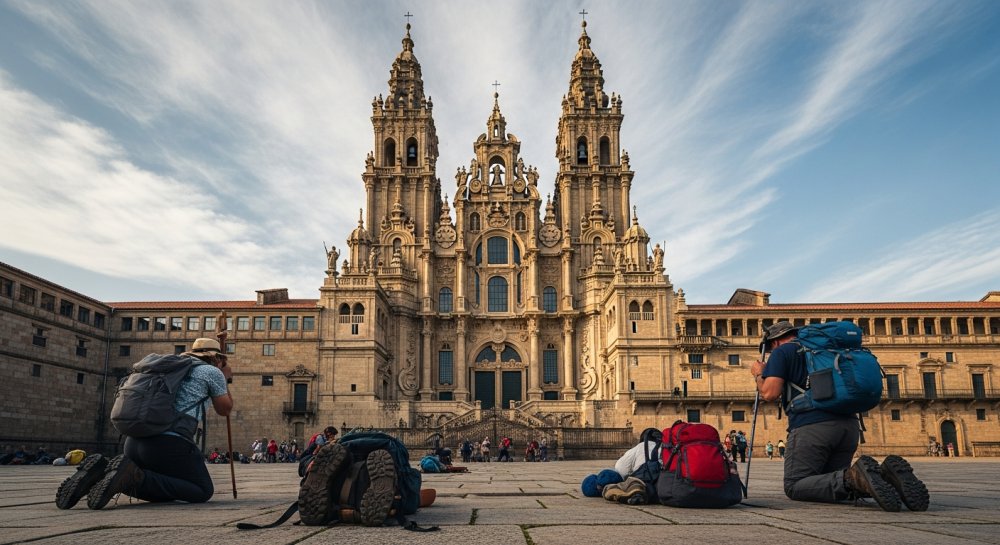
For centuries, faithful Christians have journeyed to Santiago de Compostela, the legendary resting place of St. James the Greater. But while this sacred city draws millions of pilgrims each year, the broader Galicia region remains a treasure waiting to be discovered by believers seeking a deeper connection to Christian history.
The Feast of St. James, celebrated yesterday by many Christians worldwide, honors one of Jesus Christ’s closest followers. James the Greater walked alongside our Lord during His earthly ministry, witnessed the Transfiguration, and ultimately gave his life for the Gospel, becoming the first apostle to be martyred.
According to Christian tradition, after his martyrdom in Jerusalem around 44 A.D., St. James’s remains were transported to the northwestern corner of Spain. This act of devotion established Galicia as one of Christianity’s most important pilgrimage sites, alongside Jerusalem and Rome.
Today, the famous Camino de Santiago draws pilgrims from around the world who walk hundreds of miles to reach the saint’s shrine. Yet many travelers miss the opportunity to explore the surrounding Galician countryside, where ancient churches, monasteries, and Christian communities have preserved the faith for generations.
The region’s rugged coastline, Celtic heritage, and traditional values offer Christian families an alternative to Europe’s increasingly secularized tourist destinations. Small villages throughout Galicia maintain strong ties to their Catholic roots, with local festivals and traditions centered around the Christian calendar.
For American Christians planning a faith-based journey, Galicia presents an opportunity to step beyond the well-trodden tourist paths. The region’s commitment to preserving its Christian heritage stands as a reminder of Europe’s once-strong faith foundations.
From the stunning Ribeira Sacra with its canyon monasteries to the coastal town of Finisterre—once believed to be the “end of the world”—Galicia invites believers to reflect on the sacrifice of St. James and the countless Christians who have walked these paths before.
Whether walking the Camino or exploring the region’s historic churches, visitors can experience a living connection to the apostolic age when men like James the Greater carried the Gospel to the ends of the earth, often at the cost of their lives.
Let us know what you think, please share your thoughts in the comments below.


-

 Self-Reliance1 year ago
Trump’s Bold Move Uncovers Massive Social Security Fraud
-

 Faith1 year ago
New Clues Emerge in Noah’s Ark Mystery
-

 News1 year ago
Governor Walz’s Rhetoric Sparks National Controversy
-

 News1 year ago
Mel Gibson’s ‘The Passion of the Christ’ Sequel Title Announced
-

 Family1 year ago
Texas Lawmaker Targets Furries in Schools
-

 Freedom1 year ago
Maine Lawmaker Challenges Sports Fairness Controversy
-

 Family1 year ago
Canada’s Controversial Policy Sparks Ethical Debate
-
Faith8 months ago
Congress Hears Pleas for Nigerian Christians