
News
New Poll Reveals Deep Public Concerns Over Assisted Suicide Safeguards


Faith Facts
- A leading polling expert has declared there is no genuine ‘public consent’ for the current assisted suicide legislation under consideration in the UK Parliament.
- Public opinion data reveals widespread concern about inadequate safeguards in the proposed bill, challenging claims of majority support.
- The findings underscore the sanctity of life concerns that Christian and conservative voices have raised about the dangerous precedent of state-sanctioned death.
A prominent polling expert has issued a stark warning about the assisted suicide bill currently being debated in the United Kingdom, stating that there is no genuine ‘public consent’ for the legislation as currently drafted. The assessment challenges previous claims that the British public broadly supports so-called ‘assisted dying’ measures.
According to the expert analysis, while superficial polling may suggest support for the concept, deeper examination reveals significant public unease about the specific provisions and safeguards contained in the proposed law. Citizens across the political spectrum have expressed concerns that vulnerable individuals could be pressured into ending their lives prematurely.
The polling data indicates that when respondents are informed about the actual details of the legislation—including who would qualify, what protections exist, and how the process would be administered—support drops considerably. This gap between general sentiment and informed opinion raises serious questions about the democratic legitimacy of pushing forward with such consequential legislation.
Christian leaders and pro-life advocates have consistently warned that assisted suicide laws, regardless of stated intentions, place society on a slippery slope that devalues human life. The sanctity of life principle, rooted in Biblical teaching that every person is created in God’s image, stands in direct opposition to government-facilitated death.
Critics of the bill point to experiences in other jurisdictions where assisted suicide laws have expanded far beyond their original parameters. What begins as an option for the terminally ill with months to live often evolves to include those with chronic conditions, mental illness, and even minors—a disturbing trajectory that defenders of life find morally unconscionable.
The polling expert’s assessment emphasizes that genuine public consent requires more than a simple yes-or-no question. It demands that citizens understand the full implications of the policy change, including potential for abuse, the impact on medical ethics, and the message it sends about the value of elderly and disabled lives.
Traditional values supporters argue that a compassionate society focuses resources on palliative care and support for those facing terminal illness, not on facilitating their deaths. Quality end-of-life care that manages pain and provides dignity offers a life-affirming alternative that honors both patient autonomy and the inherent worth of every human being.
The findings come at a critical moment as lawmakers prepare to vote on legislation that would fundamentally alter the relationship between medicine, the state, and individual lives. Pro-family organizations have mobilized to ensure elected representatives understand the depth of constituent concerns about rushing into such a profound societal change.
Faith communities have been particularly vocal in their opposition, emphasizing that suffering, while difficult, can have meaning and that the role of society is to accompany and comfort the dying, not to expedite their departure. This perspective, grounded in centuries of Christian teaching and practice, offers a countercultural witness in an age increasingly uncomfortable with mortality.
The polling expert’s declaration that public consent is lacking adds empirical weight to the moral and theological objections that have characterized the opposition movement. It suggests that proponents of the bill may be overreading their mandate and underestimating the public’s thoughtful concerns about safeguards.
As the debate continues, defenders of life remain committed to protecting the most vulnerable members of society from a legal framework that could turn medical care into a mechanism for death. The stakes could not be higher for a nation’s moral foundation and its commitment to the principle that all life has intrinsic value.
Let us know what you think, please share your thoughts in the comments below.

Faith Facts
- The Aberfan disaster claimed the lives of 116 children and 28 adults when a coal slag heap collapsed on October 21, 1966.
- Survivors and families found strength through prayer, Scripture, and the support of local churches during the aftermath.
- Welsh Christian communities continue to honor the dead and comfort the living through annual memorial services and charitable works.
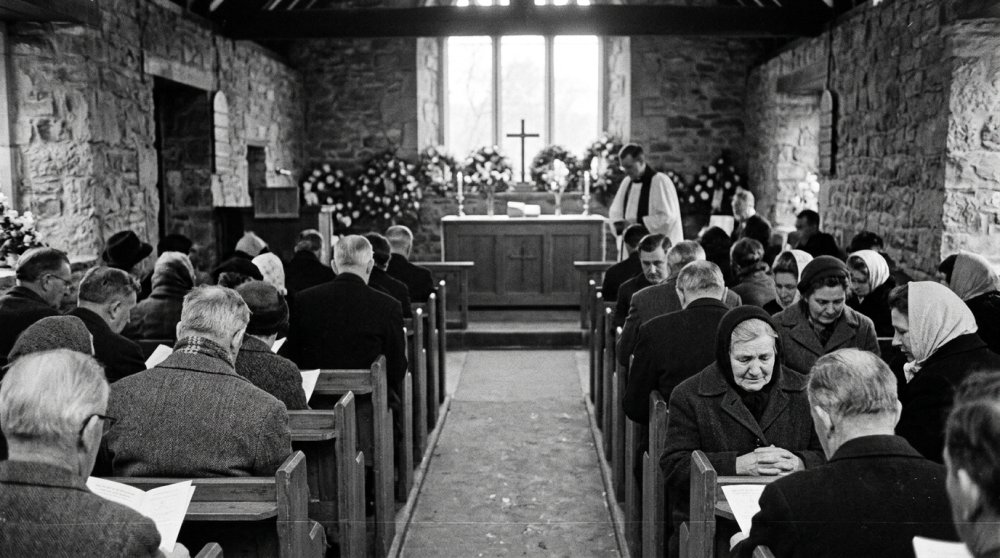
The small Welsh village of Aberfan is marking six decades since a devastating landslide that buried a school and took the lives of 144 people, most of them children. On that fateful day, a mountain of coal waste gave way and swept into Pantglas Junior School, leaving a nation in mourning.
One survivor described the overwhelming grief that followed as “the ministry of tears.” That phrase captures the deep sorrow shared by families, neighbors, and churches that rallied together in the months and years afterward.
Local congregations offered prayer meetings, counseling, and practical help as the community struggled to rebuild. Many found comfort in passages such as Psalm 34:18, which promises that the Lord is near to the brokenhearted.
Sixty years on, memorial services continue to draw believers who remember the lost and give thanks for the resilience rooted in faith. Each year, hymns and Scripture readings remind attendees that hope endures even in the face of tragedy.
Let us know what you think, please share your thoughts in the comments below.
Faith Facts
- The priest was celebrating Mass when a crucifix fell on him, killing him instantly.
- The incident occurred during a livestreamed evening service in Guayaquil, Ecuador.
- The faithful gathered in the church witnessed the tragedy in real time.
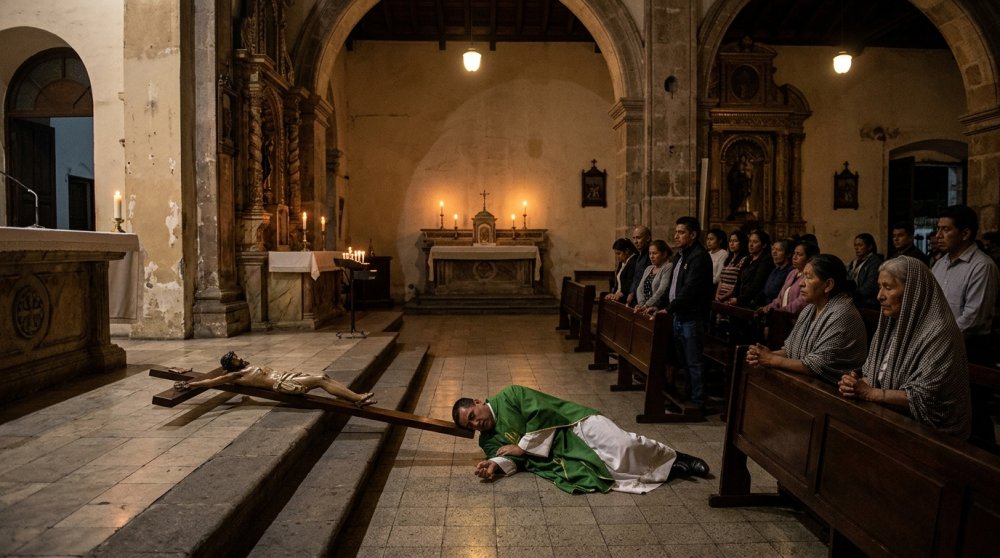
A priest in Guayaquil, Ecuador, has died after a crucifix fell on him during an evening Mass on Saturday. The incident happened while the priest was celebrating the liturgy in front of the congregation. The Mass was being livestreamed, allowing many viewers to witness the tragic event as it unfolded.
Let us know what you think, please share your thoughts in the comments below.
Faith Facts
- Malcolm Guite is a poet, priest, and Cambridge University scholar who draws on Christian literary tradition to address cultural questions.
- Guite identifies a crisis of masculinity and imagination in contemporary society and points to classic Christian-influenced literature as a remedy.
- King Arthur, as portrayed in British legend, embodies the chivalric virtues of courage, service, and self-sacrifice that align with biblical manhood.
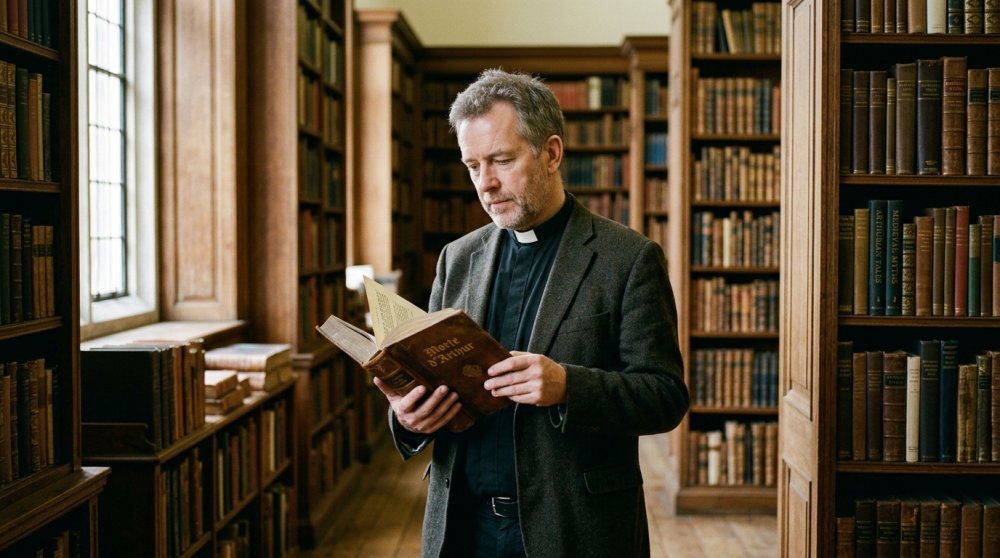
British poet, priest and Cambridge University scholar Malcolm Guite believes society is facing a crisis of masculinity and imagination, and he’s turning to one of literature’s oldest heroes to help address it: King Arthur.
Guite argues that the legendary king provides a compelling image of ordered strength and sacrificial leadership rooted in the Christian heritage of the West.
“King Arthur offers an antidote to toxic masculinity,” Guite stated in a recent interview.
The scholar notes that Arthur’s knights were trained not merely in combat but in courtesy, justice, and the defense of the weak, virtues he believes are needed again.
Guite connects the Arthurian ideal to the broader Christian story, suggesting that recovering a sense of noble purpose can counter both cultural confusion and moral decline.
“We need stories that teach boys and men how to wield strength in service of others rather than for domination,” he explained.
Let us know what you think, please share your thoughts in the comments below.


-

 Self-Reliance2 years ago
Trump’s Bold Move Uncovers Massive Social Security Fraud
-

 Faith2 years ago
New Clues Emerge in Noah’s Ark Mystery
-

 News2 years ago
Governor Walz’s Rhetoric Sparks National Controversy
-

 News2 years ago
Mel Gibson’s ‘The Passion of the Christ’ Sequel Title Announced
-

 Family2 years ago
Texas Lawmaker Targets Furries in Schools
-

 Freedom2 years ago
Maine Lawmaker Challenges Sports Fairness Controversy
-

 Family1 year ago
Canada’s Controversial Policy Sparks Ethical Debate
-
Faith11 months ago
Congress Hears Pleas for Nigerian Christians