
Faith
Former Pastor Creates Lifeline for Ministers Facing Hidden Crisis


Faith Facts
- Former minister Darrel Sears experienced severe burnout in 2019, initially mistaking it for depression or spiritual unfaithfulness
- Sears created the THRIVE Cohort in January 2026 to provide community and support for ministers at all stages of their calling
- The cohort emphasizes staying connected to Christ while serving, helping ministers ‘thrive through the Spirit, not just surviving’
YORK, NEB. — After nearly two decades of faithful ministry across the Midwest, Darrel Sears began experiencing troubling symptoms in 2019 that he couldn’t quite identify. As a youth minister and preaching minister who had served since 2001, Sears found himself struggling in ways he’d never anticipated.
“I didn’t even know what to call it at the time,” Sears explained. “I thought I might be depressed or just unfaithful.”
What Sears was experiencing turned out to be burnout — a crisis affecting ministers across America that often goes unrecognized and unsupported. His own struggle would eventually lead him to create a solution that’s now helping other ministers avoid the same painful path.
“Even though I had to write all those papers that stressed me out, I had a great network of minister friends in school,” Sears recalled of his time at York University and Oklahoma Christian University, both institutions associated with Churches of Christ. “I didn’t realize how much I missed that until I was out of it.”
That realization became the catalyst for change. After beginning doctoral studies at Lipscomb University in Nashville, Tennessee, Sears focused his dissertation on minister burnout, completing it in 2023. He then made the difficult decision to leave full-time ministry to teach at York University.
“Part of the reason that I got out of full-time preaching was I wanted to be a person that got to help train students going into ministry,” Sears said. “But I also felt a calling in my heart from God to be some kind of lifeline for ministers that are in the field.”
That calling led Sears to approach York’s Kite Center for Ministry with an offer to serve as a resource, though he wasn’t sure exactly what form that would take. The answer came in January 2026 with the launch of the THRIVE Cohort — a support network bringing together Sears and seven ministers who meet online eight times throughout the year.
“It’s called THRIVE because we’re not supposed to just survive in ministry or in our Christian life, but God made us to flourish,” Sears explained. “I want ministers to really love what they’re doing and thrive in ministry.”
While Sears’ research focused on burnout, he emphasized that preventing exhaustion isn’t the cohort’s only purpose. The program offers community and support for ministers at every stage — from those just beginning their calling to veterans navigating decades of service.
Rion Curtis, preaching minister for the Clearwater Church of Christ in Kansas, is early in his ministry journey. But he said the THRIVE Cohort has already equipped him to recognize warning signs and prevent burnout before it takes root.
“We make sure we know we’re not alone as ministers because it’s not an easy job,” Curtis said.
Connor Lewis, preacher for Trinity Baptist Church in Douglas, Wyoming, joined the cohort just months into his ministry. At 26, he’s the youngest member and has found tremendous value in learning from more experienced ministers in the group.
“I look forward to learning more from their experience and their wisdom,” Lewis said. “And for this cohort to be a safe place to have other ministers to rely on.”
The cohort meetings provide more than just professional development — they offer a rare space where ministers can be authentic without the pressure of always being “on.” During gatherings, members check in with one another and share struggles that only fellow ministers truly understand.
“I have lots of good friends in the church, but there’s something that only ministers will understand,” Sears said. “They know what it’s like to always be ‘on.'”
Maintaining work-life balance proved especially challenging during Sears’ time in full-time ministry.
“I was always ‘Preacher Darrel’ or ‘Youth Minister Darrel,’ but I needed spaces for myself where I could just be ‘Darrel,'” he explained. “So I’m trying to create a space for these guys where they don’t have to be ‘preacher’ or ‘teacher,’ but they’re just ‘disciple of Jesus’ — and hopefully that’s what makes this cohort lifegiving for them.”
Through reading, learning, practicing spiritual disciplines together, and honest conversation, Sears works to ensure cohort members remain connected to their ultimate source of strength. His goal is straightforward: ministers cannot give life to their churches if they’re disconnected from the source of life themselves.
“I just feel like there’s far too many of us in ministry that are disconnected from the vine,” he said, referencing Jesus’ teaching in John 15.
Sears described a troubling pattern he recognized in his own ministry — one that many pastors will find uncomfortably familiar.
“We preach and we teach all the time, but I’ve realized I would go an entire day of doing ministry without thinking about Jesus,” Sears said. “How did that happen?”
“I want us to be connected to the vine and thinking about Jesus. I want us to be able to give life to our congregants, but we also have to have life within us. I’m just passionate about making sure we’re thriving through the Spirit, not just surviving.”
Sears plans to continue launching new cohorts annually, as long as the program continues serving ministers effectively. For those in ministry feeling isolated, exhausted, or disconnected, the THRIVE Cohort represents both a warning and a hope — that the crisis of minister burnout can be addressed before it destroys calling, and that thriving in ministry remains possible when rooted in Christ and supported by community.
Let us know what you think, please share your thoughts in the comments below.

Faith Facts
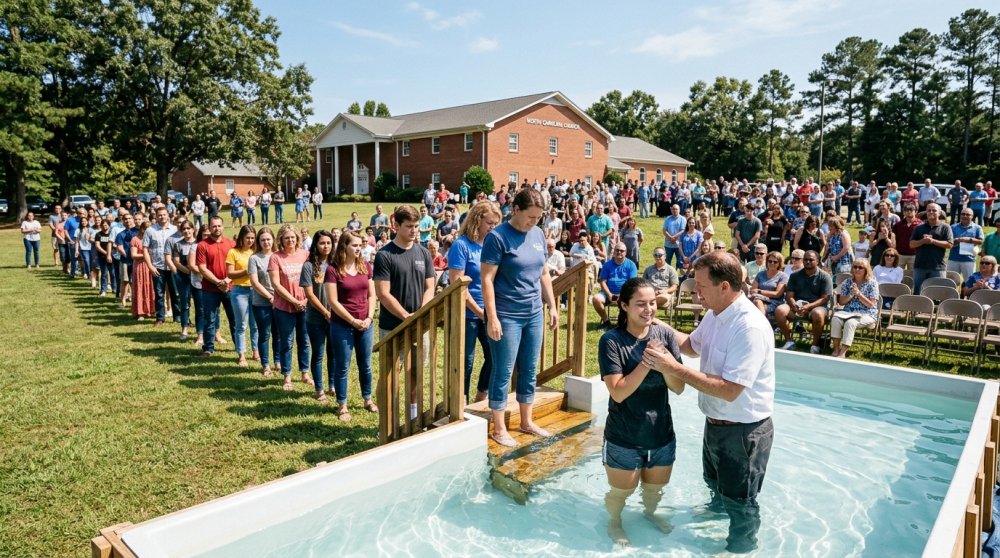
- A North Carolina church baptized 458 people in one day.
- This event marks the largest single-day baptism in the congregation’s 137-year history.
- The congregation attributes the record turnout to God at work in their community.
A multisite church in North Carolina baptized 458 people in a single day. This remarkable turnout set a new record for the congregation.
The milestone surpasses any previous single-day baptism in the church’s 137-year history. Church leaders say the outpouring reflects God’s active work among their members and surrounding communities.
Let us know what you think, please share your thoughts in the comments below.
Faith Facts
- Dylan Mandell, a Christian social media influencer, has received his fourth cancer diagnosis in four years.
- Mandell publicly declares he is standing on God’s promise of long life despite the repeated health trials.
- The influencer’s testimony highlights unwavering faith and reliance on Scripture amid suffering.
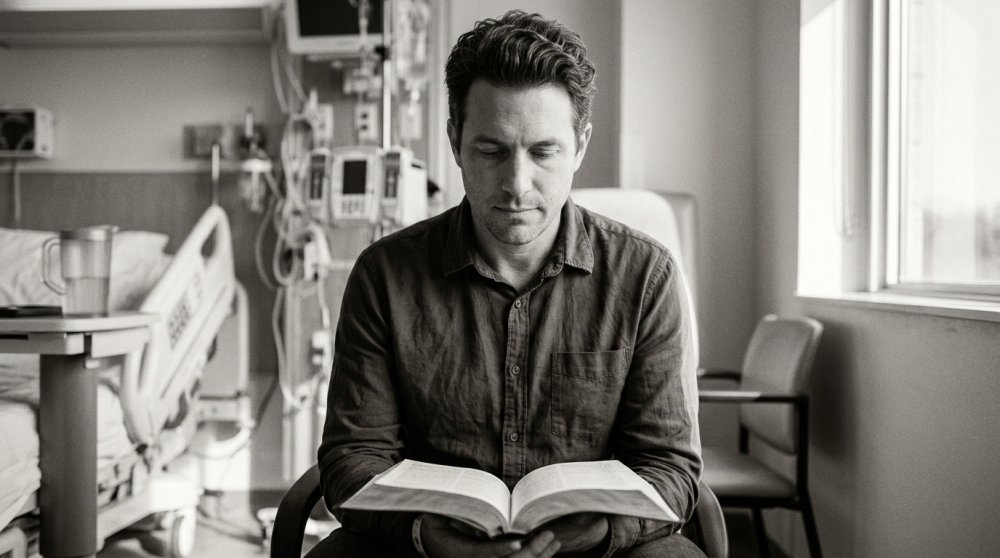
Christian social media influencer Dylan Mandell has been diagnosed with cancer for the fourth time in four years. Yet he refuses to let fear define his story. Instead, he is clinging to the biblical promise of long life.
“I am holding on to God’s promise of long life,” Mandell said. The statement reflects his determination to trust Scripture even when circumstances appear grim.
Family, friends, and followers have rallied around Mandell as he faces this latest battle. His transparency about his health has encouraged many believers to strengthen their own faith during trials.
Through every diagnosis, Mandell has pointed others back to the Word of God. He continues to share messages of hope grounded in Scripture rather than statistics.
Let us know what you think, please share your thoughts in the comments below.
Faith Facts
- Frank Turek continues sharing the Gospel on college campuses despite the trauma of witnessing Charlie Kirk’s assassination.
- Turek credits his faith in Christ for helping him process the violence and remain committed to truth.
- The Christian apologist warns that America is engaged in a spiritual battle over reality itself.
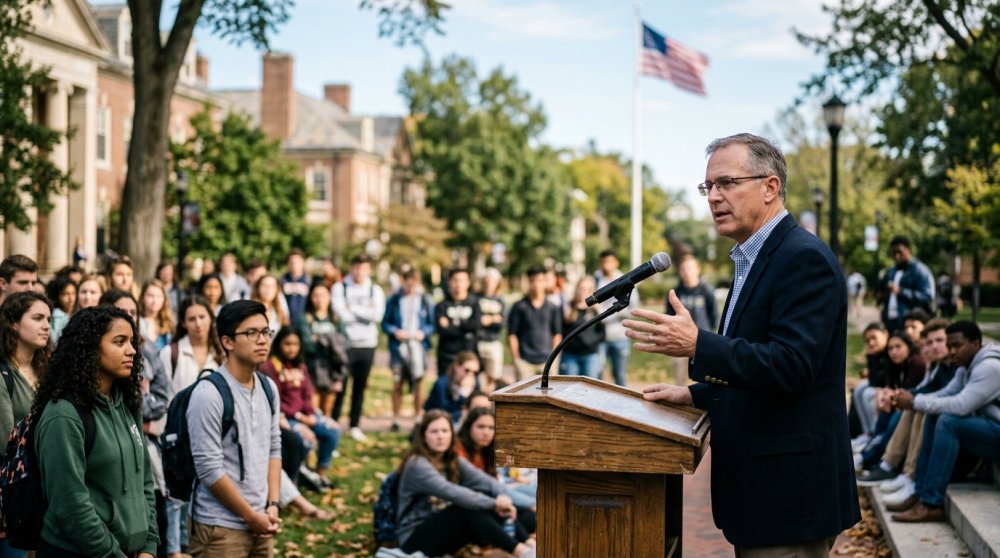
Christian apologist Frank Turek has spoken candidly about the profound effect of watching Charlie Kirk’s assassination unfold before his eyes. The shocking act of violence has not silenced his message. Instead, it has strengthened his resolve to continue proclaiming the Gospel on university campuses across the nation.
Turek explained that his faith has been the anchor keeping him steady through the aftermath of the tragedy. He described turning to Scripture and prayer as he grappled with the reality of what he witnessed. That same faith now fuels his determination to keep engaging students with biblical truth.
“The war on reality is real, and it is spiritual,” Turek stated.
He emphasized that the same cultural forces celebrating the murder of Charlie Kirk are the forces actively opposing biblical Christianity on campuses and in the public square. Turek refused to retreat in the face of such hostility, insisting that the Gospel must still be proclaimed even when the cost is high.
“I refuse to back down,” he declared.
Turek’s commitment reflects a broader pattern among Christian leaders who view current cultural battles as part of an ongoing spiritual conflict. He continues to equip believers with apologetics while urging them to stand firm in the face of increasing opposition to traditional values and religious liberty.
Let us know what you think, please share your thoughts in the comments below.


-

 Self-Reliance1 year ago
Trump’s Bold Move Uncovers Massive Social Security Fraud
-

 Faith1 year ago
New Clues Emerge in Noah’s Ark Mystery
-

 News2 years ago
Governor Walz’s Rhetoric Sparks National Controversy
-

 News1 year ago
Mel Gibson’s ‘The Passion of the Christ’ Sequel Title Announced
-

 Family2 years ago
Texas Lawmaker Targets Furries in Schools
-

 Freedom2 years ago
Maine Lawmaker Challenges Sports Fairness Controversy
-

 Family1 year ago
Canada’s Controversial Policy Sparks Ethical Debate
-
Faith10 months ago
Congress Hears Pleas for Nigerian Christians