
Freedom
Navy Alters Policy on Reproductive Health Benefits


In a move that underscores a commitment to traditional values and the sanctity of life, the United States Navy has recently halted the provision of leave and travel reimbursements for those seeking abortions. This decision marks a significant departure from the previous administration’s policy and aligns with the values cherished by many Americans who hold life in high regard.
This policy change is a reflection of a broader shift towards supporting family-centric and life-affirming practices within the military. While the Navy has chosen to extend support for certain reproductive services such as in vitro fertilization and sperm collection, abortion is notably excluded from the list of services eligible for leave or travel expense coverage. This decision is a testament to the Navy’s dedication to upholding life and supporting family-building efforts.
The new policy applies to both active and reserve sailors and Marines, allowing them to take administrative absences for up to three weeks for non-covered reproductive care. This approach not only respects the sanctity of life but also emphasizes the importance of family and the creation of new life, which are core values for many Americans.
The policy shift comes in the wake of the Supreme Court’s decision to overturn Roe v. Wade, a landmark ruling that has reignited the national conversation on the sanctity of life and the rights of the unborn. Former Secretary of Defense Lloyd Austin had previously directed the creation of travel and transportation allowances for reproductive healthcare, including abortion services. However, the Navy’s recent decision reflects a growing recognition of the importance of life-affirming policies.
The decision has not been without its critics, particularly from those who support broader access to abortion services. However, it has been met with approval from pro-life advocates and elected officials who have long championed the protection of the unborn. U.S. Senator Tommy Tuberville, a staunch defender of life, expressed his concerns over the previous administration’s policies, stating, “We tried to stand up for the taxpayers of this country.”
In a move that further underscores the commitment to life, an executive order titled “Enforcing the Hyde Amendment” was signed to curb federal funding of elective abortion, reflecting a “longstanding consensus that American taxpayers should not be forced to pay for that practice.”
“For nearly five decades, the Congress has annually enacted the Hyde Amendment and similar laws that prevent Federal funding of elective abortion,” the order stated, highlighting the enduring commitment to life and the protection of the unborn.
As the nation continues to navigate complex moral and ethical issues, it is heartening to see policies that align with the values of faith, family, and freedom. The Navy’s decision is a step in the right direction, affirming the importance of life and the foundational principles that have long guided our great nation.
Let us know what you think, please share your thoughts in the comments below.


Faith Facts
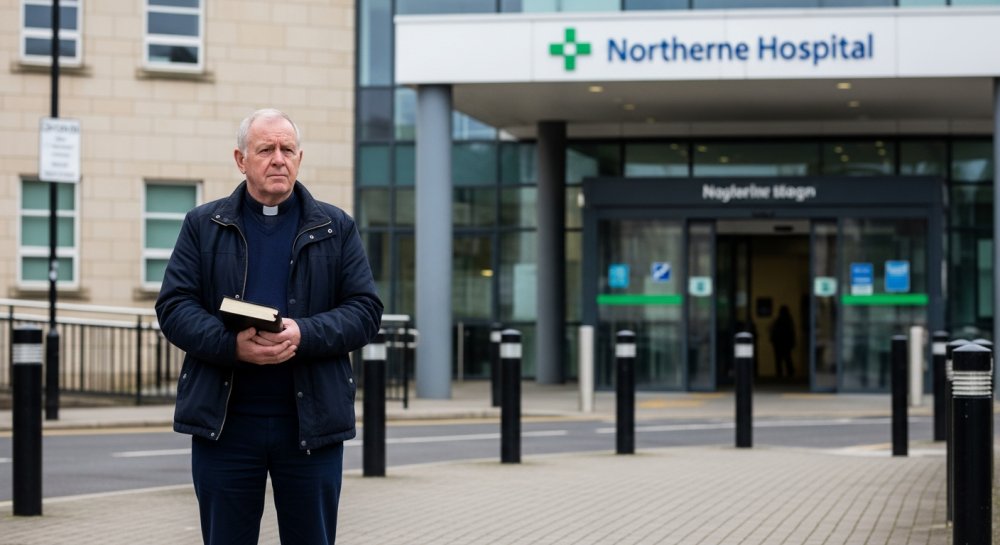
- A retired pastor in Northern Ireland was prosecuted for preaching John 3:16 outside a hospital
- The case has drawn attention to religious freedom concerns in the United Kingdom
- The pastor now awaits a judge’s ruling that could have broader implications for street preaching
A retired pastor in Northern Ireland is facing an anxious wait as he anticipates a judge’s ruling in a case that has raised serious concerns about religious liberty in the United Kingdom. The pastor was prosecuted after delivering a sermon outside a hospital, where he shared the Gospel message of John 3:16.
The case has become a flashpoint in the ongoing debate over religious freedom and the rights of Christians to publicly share their faith. Street preaching has been a cornerstone of Christian evangelism for centuries, and many believers view the prosecution as a troubling sign of growing hostility toward public expressions of faith in Western nations.
The pastor’s legal situation highlights the challenges facing Christians who seek to fulfill the Great Commission in an increasingly secular culture. What was once considered a normal part of public life — sharing the message of salvation through Jesus Christ — is now being treated as potentially criminal behavior in some jurisdictions.
Religious freedom advocates have been monitoring the case closely, recognizing that the outcome could set a precedent for how authorities treat street preachers and public evangelism throughout the United Kingdom. The verdict could either affirm the right of Christians to share their faith openly or further restrict religious expression in public spaces.
For American Christians, this case serves as a reminder of the precious nature of First Amendment protections and the importance of defending religious liberty at home and abroad. The freedoms we sometimes take for granted are under threat in other Western democracies, underscoring the need for constant vigilance in protecting constitutional rights.
As the pastor awaits the judge’s decision, believers around the world are praying for a just outcome that upholds the fundamental right to share the Gospel freely. The case represents more than just one man’s situation — it speaks to the broader question of whether Christians will remain free to proclaim their faith in the public square.
Let us know what you think, please share your thoughts in the comments below.
Faith Facts
- The FACE Act was signed into law in 1994 to protect both abortion facilities and pro-life pregnancy centers from violence and intimidation
- Since 2022, over 400 attacks on pro-life pregnancy centers and churches have been documented, yet few prosecutions have occurred under the FACE Act
- Meanwhile, pro-life activists have faced aggressive federal prosecution under the same statute, raising questions about equal application of justice
A federal law meant to protect everyone appears to be enforcing justice selectively. The Freedom of Access to Clinic Entrances (FACE) Act was designed to shield both abortion facilities and pro-life pregnancy centers from violence and obstruction. Yet its application tells a troubling story about unequal treatment under the law.
Since its passage in 1994, the FACE Act promised equal protection for all facilities providing reproductive health services. That commitment now rings hollow for many Americans of faith who have watched their churches and crisis pregnancy centers targeted with minimal federal response.
The statistics reveal a troubling pattern. Beginning in 2022, following the Dobbs decision that returned abortion policy to the states, pro-life pregnancy centers and churches experienced a dramatic surge in attacks. Vandalism, arson, and intimidation became routine occurrences across the nation.
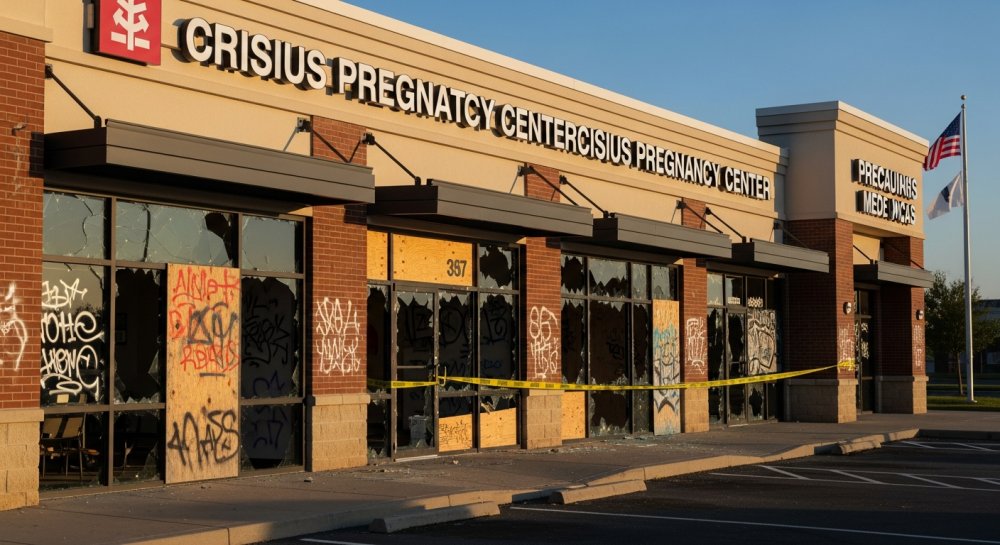
More than 400 documented incidents targeted pro-life facilities and houses of worship. Windows were shattered, threatening messages spray-painted on walls, and fire damage inflicted on buildings serving vulnerable women. Yet federal prosecutions under the FACE Act for these crimes remain remarkably rare.
The contrast with enforcement against pro-life activists could not be starker. Federal authorities have pursued FACE Act charges aggressively against those accused of blocking access to abortion facilities, even in cases involving peaceful protest. Some defendants have faced years in federal prison for non-violent civil disobedience.
This disparity raises fundamental questions about justice in America. When federal law enforcement agencies choose which victims deserve protection and which perpetrators merit prosecution, the rule of law itself suffers. Equal protection under the law is not a suggestion—it is a constitutional guarantee.
For Christian Americans who operate pregnancy centers, the message seems clear: your safety matters less. These centers provide free ultrasounds, material support, and counseling to women facing unexpected pregnancies. They serve their communities without government funding, motivated by faith and compassion. Yet when extremists target them with violence, the federal response has been largely silent.
The broken promise of the FACE Act extends beyond statistics. It touches the lives of volunteers who now serve with heightened security concerns, donors who watch their charitable investments literally go up in smoke, and women in crisis who lose access to services because centers cannot afford to rebuild.
Churches have not been spared either. Houses of worship have been vandalized with threatening slogans, their sanctuaries defaced, their congregations intimidated. These are not merely property crimes—they are attacks on religious freedom itself. Yet prosecutions remain scarce.
The path forward requires courage from federal law enforcement. Equal access to reproductive health services, as the FACE Act promises, cannot exist without equal protection for all facilities providing those services. Selective enforcement undermines both justice and public trust.
Congress may need to examine whether the FACE Act requires clarification or whether the problem lies purely in its application. Americans of all perspectives should agree that violence and intimidation have no place in our public discourse, regardless of the target.
Until federal authorities demonstrate genuine commitment to protecting all facilities equally, the FACE Act’s promise remains broken. True justice demands that those who firebomb a pregnancy center face the same federal scrutiny as those who block an abortion clinic’s entrance. Anything less betrays the fundamental American principle of equal justice under law.
The crisis pregnancy centers and churches that have been attacked are not asking for special treatment. They are simply asking for the protection that federal law already promises them. That should not be controversial—it should be guaranteed.
Let us know what you think, please share your thoughts in the comments below.

Faith Facts
- Pastor Steve Maile of Oasis City Church was arrested while preaching in Watford.
- He said he was left in pain during the encounter but remains committed to sharing the Gospel.
- The incident has raised concerns about religious liberty and the treatment of Christian speech in public spaces.
Watford police recently suppressed the Great Commission by arresting Pastor Steve Maile of Oasis City Church while he proclaimed the Gospel. Footage reveals three officers detaining the senior pastor despite his repeated assertions that no offense had been committed.
Maile reported being victimized and left in excruciating pain by the authorities during the encounter.
He remains resolute in his calling to share the Word of God regardless of opposition.


-

 Self-Reliance1 year ago
Trump’s Bold Move Uncovers Massive Social Security Fraud
-

 Faith1 year ago
New Clues Emerge in Noah’s Ark Mystery
-

 News1 year ago
Governor Walz’s Rhetoric Sparks National Controversy
-

 News1 year ago
Mel Gibson’s ‘The Passion of the Christ’ Sequel Title Announced
-

 Family1 year ago
Texas Lawmaker Targets Furries in Schools
-

 Freedom1 year ago
Maine Lawmaker Challenges Sports Fairness Controversy
-

 Family11 months ago
Canada’s Controversial Policy Sparks Ethical Debate
-
Faith5 months ago
Congress Hears Pleas for Nigerian Christians