
Faith
MLB Player Sparks Movement to Reclaim Biblical Symbol During Pride Events


Faith Facts
- San Francisco Giants pitcher Landen Roupp shared Genesis 9:13 on social media during Pride Month, reclaiming the rainbow as God’s covenant symbol
- Multiple MLB players joined the movement, posting the same Bible verse about God’s promise to Noah
- The rainbow originally represented God’s covenant never to destroy the earth by flood again, as recorded in Scripture
In a bold stand for biblical truth, San Francisco Giants pitcher Landen Roupp has sparked a movement among Major League Baseball players to reclaim the rainbow’s original meaning during Pride Month. The young athlete shared Genesis 9:13 on his social media platform, reminding followers of the symbol’s sacred origin.
The verse reads: “I have set my rainbow in the clouds, and it will be the sign of the covenant between me and the earth.” This passage references God’s promise to Noah after the flood, establishing the rainbow as a divine symbol of His faithfulness and mercy.
Roupp’s post quickly gained traction among fellow believers in professional baseball. Several other MLB players followed his lead, posting the same Scripture passage as teams across the league hosted Pride Night events at their stadiums.
The movement represents a growing willingness among Christian athletes to speak truth in love, even when cultural pressures push against biblical values. These players are not attacking anyone but simply standing firm on what Scripture teaches about God’s design and the true meaning of the rainbow.
For Christians, the rainbow has always held deep theological significance. After the worldwide flood in Noah’s time, God placed the rainbow in the sky as a permanent reminder of His covenant promise. Genesis 9:15 records God saying, “Never again will the waters become a flood to destroy all life.”
This biblical symbol of hope, promise, and divine faithfulness has been appropriated by secular culture for very different purposes. By sharing Genesis 9:13, these MLB players are gently but firmly reminding the world of the rainbow’s true origin and meaning.
The timing is significant. As Pride Month celebrations proliferate across sports leagues and corporate America, many Christians feel their values are being marginalized or even attacked. These athletes are demonstrating that believers can engage culture with grace while refusing to compromise on biblical truth.
Landen Roupp and his fellow players are not alone in their convictions. Millions of American Christians hold fast to traditional biblical teaching on marriage, sexuality, and God’s design for human flourishing. These athletes are giving voice to those shared values on a national stage.
The response from fans has been overwhelmingly positive among Christian communities. Social media erupted with support for the players’ willingness to take a stand, with many praising their courage in an increasingly hostile cultural environment.
This is not the first time Christian athletes have used their platforms to share their faith. Throughout sports history, believers have found creative ways to point people to Jesus Christ and biblical truth, whether through post-game interviews, Scripture verses on eye black, or public testimonies.
What makes this movement particularly noteworthy is its gentle approach. Rather than engaging in heated rhetoric, these players simply shared Scripture and let God’s Word speak for itself. This approach reflects the biblical mandate to speak truth in love, remaining firm in conviction while showing respect for all people.
As our nation continues to grapple with questions of identity, morality, and truth, these athletes remind us that God’s Word remains unchanging. The rainbow belongs to God, and its meaning is rooted in His character and promises, not in cultural redefinition.
For Christian families, this story provides an excellent opportunity to discuss with children the true meaning of the rainbow and God’s faithfulness throughout history. It also demonstrates how believers can stand firm in their convictions while participating in secular institutions.
The rainbow controversy highlights a broader cultural battle over symbols, language, and truth itself. Christians must continue reclaiming what belongs to God, always doing so with grace and unwavering commitment to Scripture.
Let us know what you think, please share your thoughts in the comments below.


Faith Facts
- Pakistan’s only church-run chartered university is fighting government attempts to repossess a century-old historic hostel building
- Christian leaders, rights advocates, and heritage conservationists have united in widespread criticism of the Punjab government’s actions
- The dispute centers on ownership rights, heritage preservation, and the protection of minority religious institutions in Pakistan
A historic battle is unfolding in Pakistan as the nation’s only church-operated chartered university confronts government efforts to seize control of a 100-year-old hostel building. The conflict has sparked widespread outcry from Christian leaders, human rights advocates, heritage conservationists, and university alumni who see the move as an attack on religious freedom and cultural preservation.
The century-old hostel, which has served generations of Christian students, represents more than just physical infrastructure. It stands as a symbol of Christian educational heritage in a nation where religious minorities face increasing pressure and discrimination.
HRCP is deeply concerned by reports of the forcible takeover of Ewing Hall, a building of historical, educational, and cultural significance in Lahore long associated with @FCCollege. The college authorities allege that they were issued an abrupt deadline by the Punjab government…
— Human Rights Commission of Pakistan (@HRCP87) June 13, 2026
I strongly condemn the forcible takeover of Ewing Hall by the Punjab Government, a historic hostel & an integral part of Forman Christian College since 1916
For More than a century, Ewing Hostel has provided thousands of students with a home that has nurtured academic excellence. pic.twitter.com/92V9HoCMON— Rev. Reuben Qamar (@QamarRev) June 13, 2026
The Punjab government’s attempt to repossess the historic property has drawn sharp criticism from multiple quarters. Christian leaders view the action as part of a broader pattern of encroachment on minority religious institutions, while heritage conservationists warn about the loss of irreplaceable historical architecture.
Alumni of the university have been particularly vocal in their opposition, many citing the hostel’s role in their own educational journeys and spiritual formation. The building has housed countless Christian students over the decades, providing not just accommodation but a safe haven for minority students pursuing higher education.
Following the intense backlash, the Punjab government has publicly stated it will not demolish the historic structure. However, the underlying dispute over ownership and control remains unresolved, leaving the future of the property uncertain.
This controversy highlights the ongoing challenges faced by Christian institutions in Pakistan, where the Constitution guarantees religious freedom but minorities often struggle to maintain their properties and educational establishments. The church-run university’s chartered status makes it unique in Pakistan’s higher education landscape, representing a vital resource for the Christian community’s educational and spiritual development.
The outcome of this dispute will likely have far-reaching implications for other Christian institutions in Pakistan and could set precedents for how the government handles minority-owned properties and educational facilities in the future.
Let us know what you think, please share your thoughts in the comments below.
Faith Facts
- Two major Kenyan Christian organizations are calling for urgent amendments to the Finance Bill 2026
- Church leaders warn the proposed legislation could increase economic hardship for families and businesses
- The bill’s measures are seen as undermining economic growth and burdening already struggling households
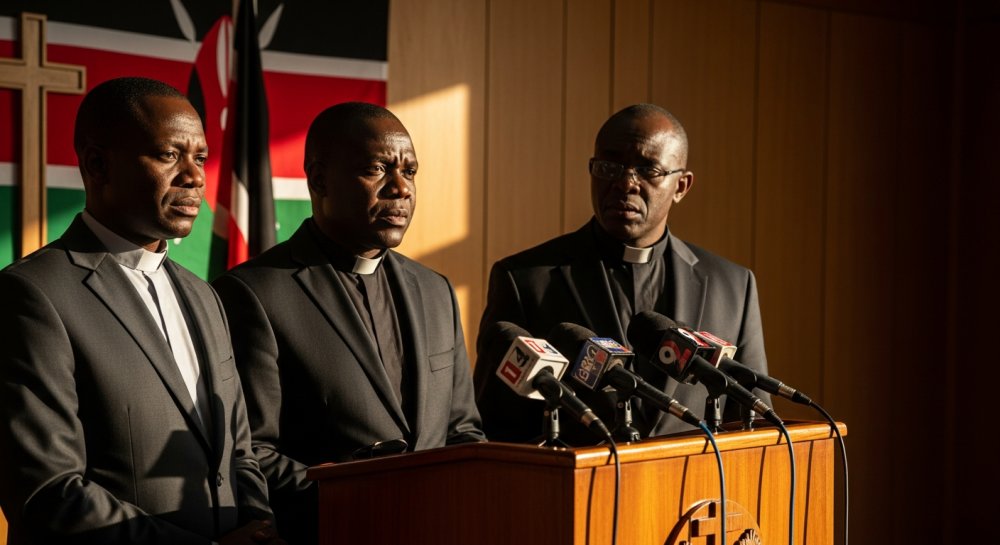
Christian leaders in Kenya are raising serious concerns about proposed legislation they say could devastate families and businesses across the nation. Two of the country’s most prominent Christian organizations have issued a joint call for lawmakers to reconsider the Finance Bill 2026, citing grave risks to economic stability and household welfare.
The church leaders warn that several provisions in the bill would impose new financial burdens on Kenyan citizens at a time when many are already struggling to make ends meet. Their statement emphasizes the moral imperative for government policies to protect the vulnerable rather than add to their difficulties.
The proposed legislation has sparked widespread debate about the proper balance between government revenue needs and the economic wellbeing of ordinary citizens. Christian organizations have positioned themselves as advocates for families and small business owners who would bear the brunt of the new measures.
Church leaders are particularly concerned that the bill’s economic impact could undermine Kenya’s recovery efforts and stifle the entrepreneurial spirit that drives local economies. They argue that legislators must reconsider provisions that could discourage business investment and job creation.
The intervention by these respected Christian institutions reflects a growing trend of faith-based organizations speaking out on economic justice issues that directly affect their congregations. Their influence in Kenyan society gives significant weight to their call for legislative amendments.
As the debate over the Finance Bill 2026 continues, Christian leaders are urging their members to engage with their elected representatives and make their voices heard in the democratic process. They emphasize that faithful stewardship extends to holding government accountable for policies that impact families and communities.
The church organizations have pledged to continue monitoring the legislation as it moves through the parliamentary process. They’ve indicated they will provide detailed analysis of specific provisions they believe require modification to protect the interests of ordinary Kenyans.
Let us know what you think, please share your thoughts in the comments below.
Faith Facts
- America’s Founding Fathers held diverse religious beliefs ranging from orthodox Christianity to Deism, yet all acknowledged divine providence in the nation’s founding
- Key founders like George Washington, John Adams, and Thomas Jefferson had varying relationships with traditional Christian doctrine, particularly regarding Christ’s divinity
- The religious landscape of Revolutionary America included devout believers, rational Christians, and Enlightenment-influenced deists who reshaped traditional faith through reason
The question of America’s spiritual foundation has never been more relevant than today. As our nation grapples with questions of religious liberty and the role of faith in public life, understanding what our Founding Fathers actually believed about Jesus Christ offers crucial insight into the American experiment.
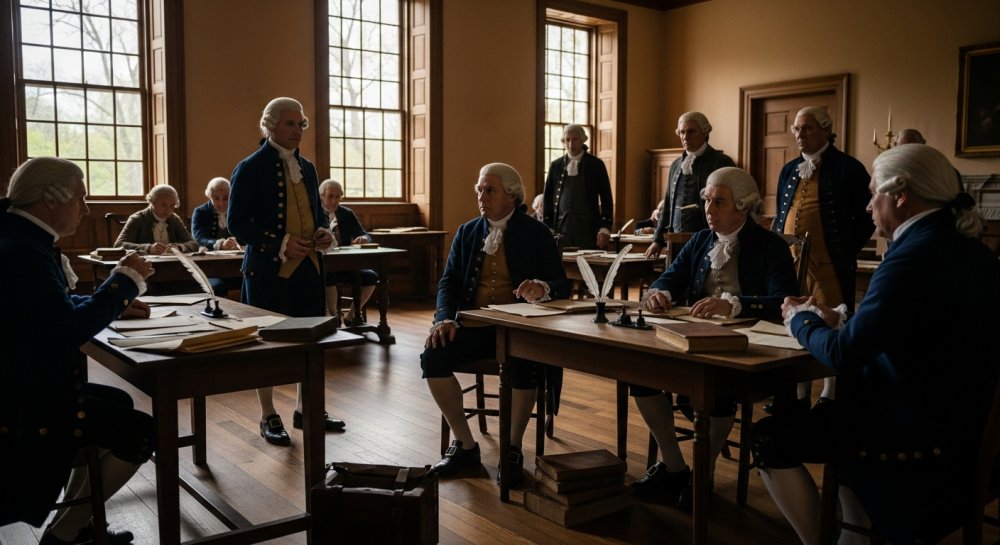
While it’s clear the Founders acknowledged God’s hand in establishing this nation, their personal convictions about Christ varied dramatically. Some embraced traditional Christian orthodoxy with fervor, while others approached faith through the lens of Enlightenment rationalism.
George Washington, the father of our country, attended Episcopal services regularly and spoke frequently of divine providence. Yet he carefully avoided using Christ’s name in public addresses and private correspondence, preferring terms like “the Almighty” or “Providence.” His personal faith remains a subject of historical debate, though his public actions supported the church.
John Adams, our second president, grew up in the Congregationalist tradition but later embraced Unitarianism. He rejected the Trinity and Christ’s divinity, yet maintained a deep respect for Christian moral teaching and the Bible’s wisdom. Adams believed religion essential for maintaining public virtue and ordered liberty.
Thomas Jefferson took rationalism further, creating his own version of the Gospels that removed miracles and supernatural elements. Jefferson admired Jesus as a moral teacher but denied His divine nature, resurrection, and atoning sacrifice. His “Jefferson Bible” reflected Deist principles that sought to strip Christianity of what he viewed as corruptions.
In stark contrast, founders like John Jay, Samuel Adams, and Patrick Henry held firmly to orthodox Christian beliefs. John Jay, the first Chief Justice, was a devout Episcopalian who served as president of the American Bible Society. He advocated for Christian influence in government and society without hesitation.
Patrick Henry, famous for “Give me liberty or give me death,” was an evangelical Christian who fought to preserve religious freedom while promoting Christian values. He understood that the moral foundation necessary for self-government came from biblical truth.
Benjamin Franklin presents perhaps the most complex case. Raised in Puritan Boston, he drifted toward Deism in youth but later acknowledged the importance of Christian virtue. Near the end of the Constitutional Convention, Franklin called for prayer, recognizing that human wisdom alone could not forge a lasting republic.
The Founding generation understood that faith and freedom were intertwined. Even those who questioned traditional Christian doctrines recognized that biblical morality provided the ethical framework necessary for republican government. They knew that without virtuous citizens, no constitution could preserve liberty.
What united these diverse believers was not theological uniformity but shared conviction that rights come from the Creator, not government. Whether they personally embraced Christ’s divinity or not, they built a system acknowledging God’s authority over human affairs.
This diversity of belief among the Founders actually strengthens rather than weakens the case for America’s Christian heritage. They created a nation where orthodox believers and rational theists could coexist, united by commitment to transcendent truth and natural law grounded in divine creation.
The real question isn’t whether every Founder was an evangelical Christian by today’s standards. The question is whether they recognized God’s sovereignty, human sinfulness, and the need for virtue rooted in religious truth. On these points, the historical record speaks clearly.
Today’s secular revisionists who claim America was founded as a purely secular nation ignore the overwhelming evidence that our Founders saw divine providence at work. Even the most rationalist among them acknowledged that faith must undergird freedom.
Understanding the Founders’ diverse yet God-centered worldviews helps us navigate modern debates about faith’s role in the public square. They showed us that religious conviction and political liberty aren’t enemies but essential partners in the American experiment.
Let us know what you think, please share your thoughts in the comments below.


-

 Self-Reliance1 year ago
Trump’s Bold Move Uncovers Massive Social Security Fraud
-

 Faith1 year ago
New Clues Emerge in Noah’s Ark Mystery
-

 News1 year ago
Governor Walz’s Rhetoric Sparks National Controversy
-

 News1 year ago
Mel Gibson’s ‘The Passion of the Christ’ Sequel Title Announced
-

 Family1 year ago
Texas Lawmaker Targets Furries in Schools
-

 Freedom1 year ago
Maine Lawmaker Challenges Sports Fairness Controversy
-

 Family1 year ago
Canada’s Controversial Policy Sparks Ethical Debate
-
Faith7 months ago
Congress Hears Pleas for Nigerian Christians