
Faith
Medieval Woman’s Faith Revelation Still Speaks to Christians Today


Faith Facts
- Mother Julian of Norwich wrote the first known book in English by a woman, a Christian spiritual classic still read today
- She received divine visions on May 8, 1373, while seriously ill, recording detailed revelations of Christ’s love
- Her famous declaration ‘All shall be well’ reflects unwavering trust in God’s sovereignty during England’s darkest plague years
May 8th marks the traditional remembrance day for Mother Julian of Norwich, a medieval English mystic whose writings continue to inspire Christian believers more than six centuries after her death. Her profound spiritual insights and unwavering faith during one of history’s darkest periods offer timeless wisdom for Christians navigating today’s uncertain world.
Born around 1342 in Norwich, England, Julian lived through the devastating Black Death plague that killed nearly half of Europe’s population. Despite witnessing unimaginable suffering and loss, her faith never wavered—a testament to the sustaining power of genuine Christian devotion.
On May 8, 1373, while gravely ill and believed to be dying at age 30, Julian experienced a series of sixteen divine revelations, or “showings,” centered on Christ’s Passion and God’s boundless love for humanity. These visions became the foundation for her book “Revelations of Divine Love,” making her the first woman known to have written a book in the English language.
Julian chose to live as an anchoress, enclosed in a small room attached to St. Julian’s Church in Norwich, dedicating her life entirely to prayer and contemplation. From her cell, she served as a spiritual counselor to countless seekers who came to her window for guidance, demonstrating that faithful service doesn’t require worldly prominence.
Her most famous words have echoed through Christian history:
“All shall be well, and all shall be well, and all manner of thing shall be well.”
This declaration wasn’t naive optimism but profound theological confidence in God’s ultimate sovereignty and redemptive plan. Julian understood that regardless of temporal circumstances—plague, war, suffering—God’s purposes would prevail.
Her writings emphasize the motherhood of God, Christ’s tender compassion, and the complete reliability of divine love. Julian’s theology affirms that sin is ultimately overcome by grace and that God’s mercy infinitely exceeds human failure.
What makes Mother Julian particularly relevant for contemporary Christians is her ability to maintain joy and certainty in God’s goodness while surrounded by catastrophe. She didn’t deny suffering’s reality but refused to let it define her understanding of God’s character or obscure His promises.
Julian wrote two versions of her revelations—a short text soon after her visions and a longer, more theologically developed account written twenty years later after extended meditation on what God had shown her. This demonstrates the value of long, faithful reflection on Scripture and spiritual truth rather than seeking only immediate answers.
Her work predates the printing press, yet “Revelations of Divine Love” has never gone out of circulation, copied by hand for centuries and now translated into multiple languages. This enduring influence testifies to the timeless power of authentic Christian mystical experience grounded in biblical truth.
For modern believers facing cultural upheaval, political division, and threats to religious freedom, Julian’s example offers encouragement. She lived during the Hundred Years’ War, devastating plague outbreaks, church corruption, and social breakdown—yet found unshakeable peace in Christ.
Her life reminds Christians that withdrawal from worldly chaos into focused prayer and Scripture meditation isn’t escapism but preparation for effective witness. Julian’s enclosed life produced fruit that has nourished millions of believers across seven centuries.
Mother Julian of Norwich stands as a powerful example of faithful Christian womanhood, theological depth, and enduring spiritual legacy. Her writings continue to call believers to trust completely in God’s love, even when circumstances seem to contradict His goodness.
In an age of anxiety and uncertainty, her conviction that “all shall be well” because of Christ’s finished work on the cross remains as relevant and necessary as it was in medieval England.
Let us know what you think, please share your thoughts in the comments below.


Faith Facts
- Israel’s Foreign Ministry is forming a special task force to prepare for the 2,000th anniversary of Jesus’ baptism in 2030
- The historic milestone is expected to draw millions of Christian pilgrims to the Holy Land
- A special envoy to the Christian world will lead the coordination efforts for this once-in-two-millennia event
In a move that acknowledges the profound significance of the Holy Land to believers worldwide, Israel’s Foreign Ministry has announced the formation of a dedicated task force to prepare for one of Christianity’s most momentous anniversaries.
The group, led by Israel’s special envoy to the Christian world, will coordinate preparations for the 2,000th anniversary of Jesus’ baptism, anticipated to occur in 2030. This historic milestone represents a once-in-two-millennia opportunity for Christians to connect with the physical location where Jesus’ public ministry began, as recorded in the Gospels of Matthew, Mark, Luke, and John.
The baptism of Jesus in the Jordan River marks a pivotal moment in Christian faith — the moment when God the Father proclaimed Jesus as His beloved Son, and the Holy Spirit descended like a dove. For two thousand years, this event has been commemorated by believers as the beginning of Christ’s earthly ministry and a model for Christian baptism.
Israeli officials anticipate that millions of Christian pilgrims from around the world will journey to the baptismal site during the anniversary period. This projection underscores the enduring connection between Christian faith and the physical geography of Scripture, a connection that draws hundreds of thousands of believers to Israel annually even in non-anniversary years.
The formation of this special task force demonstrates Israel’s recognition of the economic and diplomatic importance of Christian tourism, while also providing an unprecedented opportunity for believers to walk where Jesus walked at a historically significant moment. The coordination effort will likely involve infrastructure improvements, security arrangements, and logistical planning to accommodate what could be the largest gathering of Christian pilgrims in modern history.
For American Christians and believers worldwide, the 2030 anniversary represents more than a historical commemoration — it offers a tangible connection to the foundations of their faith. The Jordan River baptismal site has long been a destination for those seeking to deepen their spiritual walk by experiencing the landscapes of Scripture firsthand.
The six-year preparation period allows churches, ministries, and individual believers ample time to plan pilgrimages that could become defining spiritual experiences. This initiative also highlights the complex relationship between modern Israel and the Christian world, where shared historical connections to the land create opportunities for cooperation despite theological differences.
As the world approaches this significant anniversary, the event serves as a reminder that the Gospel accounts describe real events that occurred in real places — places that can still be visited today. For believers who hold Scripture as the inspired Word of God, the opportunity to stand at the Jordan River in 2030 carries profound meaning that transcends mere tourism.
Let us know what you think, please share your thoughts in the comments below.
Faith Facts
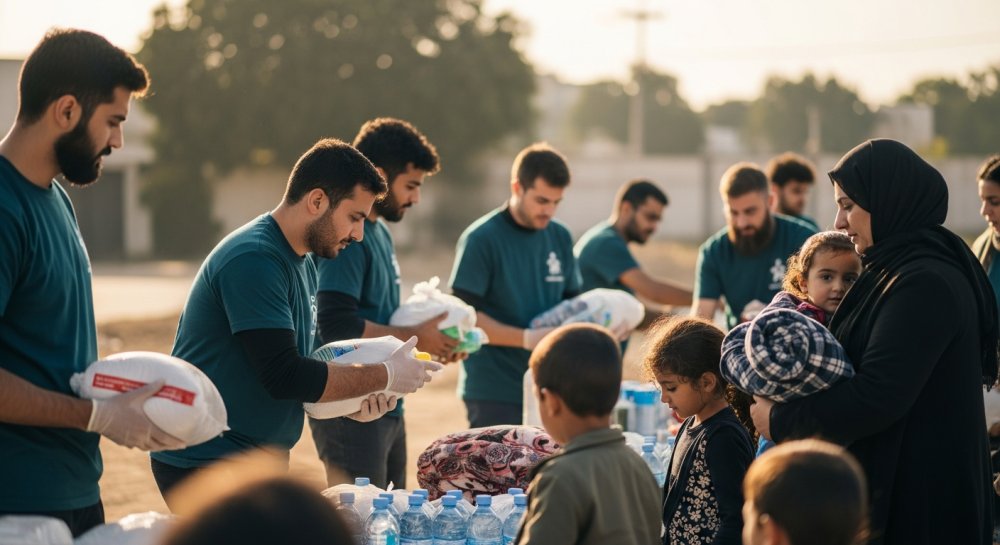
- The United Nations Refugee Convention celebrates 75 years on July 28, prompting reflection on Christian engagement with global institutions
- Biblical wisdom calls believers to work within imperfect systems rather than withdraw from them
- Christian voices remain essential in shaping humanitarian policies that reflect God’s call to care for the vulnerable
As the United Nations Refugee Convention reaches its 75th anniversary this July 28, believers across America face a critical question about their role in the public square. When institutions appear ineffective, unresponsive, or disconnected from the concerns of faith communities, should Christians disengage or continue to engage?
This question resonates deeply in our current cultural moment. Many faithful Americans feel increasingly alienated from international bodies and domestic institutions that seem hostile to traditional values and Christian principles.
Yet the answer, grounded in Scripture and Christian tradition, points toward continued engagement rather than retreat. Throughout biblical history, God’s people have worked within imperfect systems to bring light into darkness and advocate for the vulnerable.
The United Nations Refugee Convention represents one such institution where Christian voices remain desperately needed. Despite its flaws and the legitimate critiques of international bureaucracy, this framework has provided protection for millions fleeing persecution, war, and violence over the past three-quarters of a century.
From Joseph serving in Pharaoh’s court to Daniel advising Babylonian kings, Scripture provides clear precedent for believers engaging with institutions that do not share their faith. These biblical examples demonstrate that withdrawal is not the answer when systems fall short of God’s standards.
The call to care for refugees and strangers runs throughout Scripture, from Old Testament commands to New Testament teachings. This mandate does not change based on the imperfection of the institutions through which such care is delivered.
Christian engagement with international humanitarian frameworks offers opportunities to advocate for policies that reflect biblical principles of compassion, justice, and human dignity. When believers step back, secular voices fill the void, often pushing agendas that conflict with traditional values.
The Church’s responsibility extends beyond critique to active participation in shaping better solutions. This means bringing Christian wisdom to bear on complex questions of refugee protection, asylum policies, and humanitarian assistance.
American Christians, in particular, have both the freedom and the platform to influence these conversations in ways believers in many other nations cannot. This privilege comes with responsibility to steward our voice wisely and effectively.
Engagement does not mean uncritical acceptance of every policy or position. Rather, it requires discernment to distinguish between an institution’s foundational purpose and its current failings, working to reform rather than abandon.
The alternative—complete disengagement—cedes the field to those who may have little regard for the sanctity of life, religious freedom, or the family structures that faith communities hold dear. It surrenders influence at precisely the moment when Christian perspective is most needed.
As we mark 75 years of the Refugee Convention, believers should recommit to principled engagement with institutions that serve the vulnerable. This engagement must be rooted in biblical truth, guided by wisdom, and motivated by love for our neighbors, including those forced to flee their homes.
The path forward requires Christians to be both faithful to our convictions and present in the institutions that shape our world. We must resist the temptation to retreat into isolation while also refusing to compromise core biblical principles.
Let us know what you think, please share your thoughts in the comments below.

Faith Facts
- Four thousand young Christian leaders from across Asia will converge on Manila, Philippines, for the Arise Asia 2026 Congress from July 27–31
- Rev. Dr. David Ro co-founded Arise Asia to mobilize Generation Z for long-term mission work throughout the Asian continent
- The movement aims to transform passionate short-term youth involvement into sustained, lifelong commitment to spreading the Gospel across Asia
A remarkable convergence of faith and youth is set to take place in the heart of the Philippines. Thousands of young Christians are preparing to gather with a singular mission: transforming their generation’s passion for Christ into a lasting force for the Gospel across Asia.
The Arise Asia 2026 Congress, scheduled for July 27–31 in Manila, represents far more than a conference. It embodies a strategic vision to mobilize Generation Z for the Great Commission in one of the world’s most spiritually diverse regions.
Rev. Dr. David Ro, co-founder and executive director of Arise Asia, sees this gathering as a pivotal moment in a broader journey. His organization has been working to channel the enthusiasm of young believers into sustained missionary engagement rather than fleeting short-term experiences.
The timing of this congress could not be more significant. As traditional Christian strongholds in the West face declining church attendance and growing secularization, Asia presents both unprecedented challenges and extraordinary opportunities for evangelism. The continent is home to billions who have never heard the Gospel, alongside vibrant and rapidly growing Christian communities in nations like South Korea, the Philippines, and parts of China.
What distinguishes Arise Asia from other youth gatherings is its explicit focus on long-term commitment. Rather than cultivating brief missionary tourism, the organization seeks to develop a generation of dedicated workers who will invest their lives in Asia’s spiritual transformation.
The choice of Manila as the host city carries symbolic weight. The Philippines stands as a bastion of Christian faith in Southeast Asia, with a population that is overwhelmingly Catholic and Protestant. This makes it an ideal launching point for equipping young missionaries who will carry the light of Christ to neighboring nations where Christianity remains a minority faith or faces outright persecution.
Generation Z has demonstrated remarkable passion for social justice, environmental causes, and humanitarian work. Arise Asia seeks to redirect that same energy and commitment toward the eternal work of sharing the Gospel. The congress will bring together young people who refuse to accept that their faith should be compartmentalized or privatized, instead embracing a biblical call to make disciples of all nations.
For Christian families who have raised their children in the faith, movements like Arise Asia offer hope that the next generation will not abandon biblical truth but will carry it forward with courage and conviction. The gathering represents an investment in ensuring that Christianity in Asia continues to grow and flourish despite opposition from secular governments, other religious systems, and cultural pressures.
The convergence of four thousand young leaders also demonstrates the power of unity across denominational and national lines. When believers gather around the central truths of Scripture and the mission Christ gave His church, secondary differences fade in importance. This kind of gospel-centered cooperation models what the global church should look like.
As these young people prepare to gather in Manila, they carry with them the prayers and support of Christian communities worldwide. Their willingness to dedicate their lives to mission work stands in stark contrast to the self-centered consumerism that dominates much of modern youth culture. They have chosen the narrow path, and their faithfulness should inspire believers of all ages.
The Arise Asia 2026 Congress may well be remembered as a turning point—the moment when Generation Z in Asia answered God’s call not with temporary enthusiasm but with lifelong commitment to the greatest cause in human history.
Let us know what you think, please share your thoughts in the comments below.


-

 Self-Reliance1 year ago
Trump’s Bold Move Uncovers Massive Social Security Fraud
-

 Faith1 year ago
New Clues Emerge in Noah’s Ark Mystery
-

 News1 year ago
Governor Walz’s Rhetoric Sparks National Controversy
-

 News1 year ago
Mel Gibson’s ‘The Passion of the Christ’ Sequel Title Announced
-

 Family1 year ago
Texas Lawmaker Targets Furries in Schools
-

 Freedom1 year ago
Maine Lawmaker Challenges Sports Fairness Controversy
-

 Family1 year ago
Canada’s Controversial Policy Sparks Ethical Debate
-
Faith8 months ago
Congress Hears Pleas for Nigerian Christians