
News
Lutheran Minister Running for Congress Defends Past Satanist Wedding Ceremony


Faith Facts
- Iowa State Senator Sarah Trone-Garriott, a Lutheran minister running for Congress, confirmed she officiated a satanist wedding ceremony 20 years ago
- In a 2023 speech, she defended the ceremony and her decision to perform Wiccan prayers in the Iowa Senate
- The revelations have sparked renewed concerns among Christian conservatives about her fitness for federal office
An Iowa state senator and ordained Lutheran minister seeking a seat in Congress is facing renewed scrutiny after resurfaced remarks revealed she officiated a wedding ceremony for two satanists and has defended performing Wiccan prayers in the state legislature.
State Senator Sarah Trone-Garriott, who represents parts of suburban Des Moines, made the admission during a 2023 speech where she recounted officiating the satanist wedding approximately 20 years ago. The Democratic candidate is now running to represent Iowa’s 3rd Congressional District.
In her speech, Trone-Garriott described the ceremony as part of her ministerial duties and appeared to show no regret for the decision. She framed the incident as an example of religious tolerance and inclusivity, values she says guided her actions both as a minister and as a state legislator.
The controversy deepens with her defense of offering Wiccan prayers during Iowa Senate proceedings. Trone-Garriott has argued that diverse religious expressions, including pagan practices, deserve equal representation in public forums traditionally dominated by Christian prayer.
“I believe in religious freedom for all,” Trone-Garriott reportedly stated in her 2023 remarks, defending both the satanist wedding and the Wiccan prayers as consistent with her understanding of separation of church and state.
The revelations have troubled many Christians and conservative voters in Iowa’s 3rd District, who question how a Lutheran minister could reconcile officiating satanist ceremonies with Christian teaching. Traditional Christian doctrine views satanism as antithetical to the faith, rooted in opposition to God and biblical values.
Critics argue that Trone-Garriott’s actions represent a troubling departure from orthodox Christian ministry and raise serious questions about her theological beliefs. They point out that while religious freedom is a constitutional right, a minister’s willingness to participate in ceremonies celebrating satanism suggests a fundamental confusion about the exclusive claims of Christianity.
The Lutheran tradition, rooted in the Protestant Reformation, has historically maintained clear theological boundaries regarding spiritual warfare and the reality of evil. Martin Luther himself wrote extensively about spiritual combat and the importance of discerning between godly and ungodly influences.
Trone-Garriott’s congressional campaign has not backed away from her previous statements. Her team has characterized the criticism as an attack on religious pluralism and has suggested that voters should focus on her legislative record rather than her ministerial activities from two decades ago.
However, for many Christian conservatives, the issue goes beyond a single incident. They view her defense of both satanist and Wiccan religious expressions as evidence of a broader worldview that relativizes truth claims and places all spiritual paths on equal footing—a position fundamentally at odds with biblical Christianity.
The controversy arrives at a critical moment in Iowa politics, as Republicans seek to maintain control of the state’s congressional delegation. Iowa’s 3rd District has been competitive in recent cycles, making Trone-Garriott’s candidacy a significant test of whether progressive candidates can gain ground in traditionally conservative areas.
Faith leaders and Christian voters across Iowa are now grappling with what Trone-Garriott’s ministerial choices mean for her potential service in Congress. Some argue that her past actions disqualify her from representing a state where Christian values remain deeply influential in public life.
The incident also raises broader questions about the direction of mainline Protestant denominations, many of which have embraced increasingly progressive theological positions in recent decades. Critics contend that such openness has led to doctrinal confusion and a weakening of Christian witness in the public square.
As the 2026 congressional race takes shape, Trone-Garriott’s religious background—once potentially an asset in a state with strong church attendance—has become a flashpoint in debates over faith, values, and what kind of leadership Iowans want representing them in Washington.
Let us know what you think, please share your thoughts in the comments below.

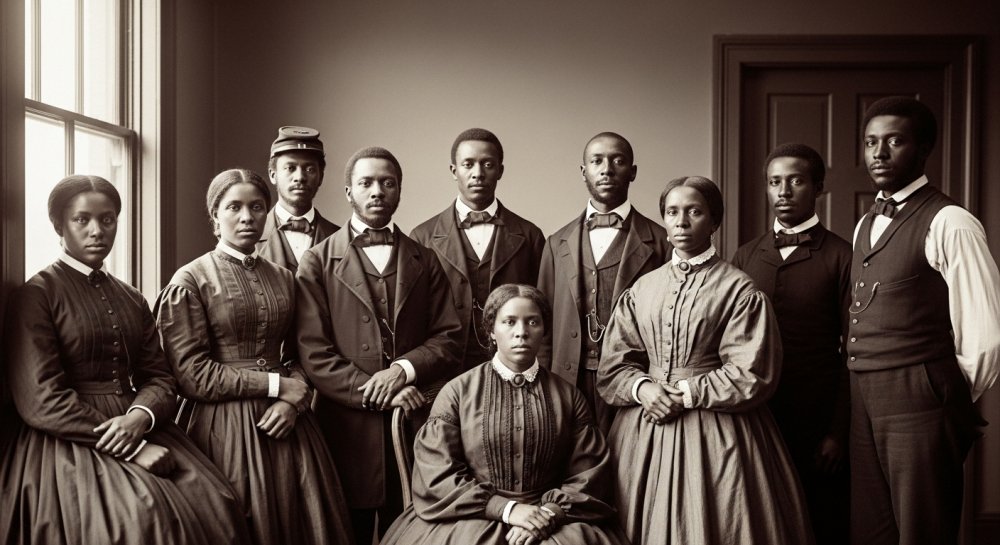
Faith Facts
- Juneteenth commemorates the end of slavery in America, a victory made possible by courageous abolitionists of all races who fought for freedom.
- Many African-American abolitionists risked their lives to end the evil institution of slavery, driven by deep Christian faith and conviction.
- These seven lesser-known heroes demonstrated extraordinary courage and faith in their fight for liberty and human dignity.
As our nation observes Juneteenth, celebrating the end of slavery in America, it’s important to remember the faithful men and women who fought tirelessly to end this grave moral evil. While names like Frederick Douglass and Harriet Tubman are well-known, countless other African-American abolitionists risked everything for freedom.
These seven remarkable individuals deserve recognition for their courage and unwavering commitment to justice. Their stories remind us that faith and determination can overcome even the darkest chapters of our history.
Many of these brave souls were motivated by deep Christian conviction, believing that all people are created in God’s image and deserving of liberty. Their legacy continues to inspire those who fight for human dignity and freedom today.
By honoring their memory, we remember that America’s greatest strength has always been our commitment to the principles of freedom and equality under God. These abolitionists helped our nation live up to its founding ideals.
Their sacrifices paved the way for the freedom we celebrate on Juneteenth, a testament to the power of faith-driven activism and moral courage. We owe them a debt of gratitude for helping to end one of history’s greatest injustices.
Let us know what you think, please share your thoughts in the comments below.

Faith Facts
- A conservative Christian conference recently came under fire for allowing a controversial vendor in its exhibition hall
- The incident has sparked debate within Christian circles about event vetting procedures and ideological boundaries
- Church leaders and attendees expressed shock and concern upon discovering the vendor’s materials promoting extremist ideology
A conservative Protestant conference found itself at the center of controversy this week after attendees and online observers discovered that the event’s vendor hall included a table hosted by what has been identified as a well-known publisher of extremist materials. The booth displayed materials that glorified Adolf Hitler and promoted Nazi ideology.
The discovery sent shockwaves through the Christian community, with many believers expressing outrage that such content would be allowed at a faith-based gathering. Social media erupted with criticism as photos and reports from the conference circulated online.
The incident raises serious questions about the vetting processes used by Christian conference organizers when selecting vendors and exhibitors. Many attendees expressed confusion about how such a vendor could have been approved to participate in an event designed to strengthen and encourage believers.
Christian leaders and commentators have been quick to point out that Nazi ideology stands in complete opposition to biblical teaching. The Christian faith affirms the inherent dignity and worth of every human being, created in the image of God, which directly contradicts the hateful and murderous philosophy of National Socialism.
The controversy highlights the ongoing challenge facing Christian organizations as they navigate an increasingly polarized cultural landscape. While believers are called to engage with difficult cultural and political questions, there remains a clear line between legitimate conservative Christian discourse and extremist ideologies that have no place in the church.
Conference organizers have not yet issued a public statement addressing how the vendor was approved or what steps will be taken to prevent similar incidents in the future. Many in the Christian community are calling for greater transparency and accountability in the planning of future events.
This incident serves as a reminder of the importance of discernment and vigilance within Christian spaces. Believers must be watchful to ensure that events and organizations claiming to represent Christian values actually uphold the teachings of Scripture and honor the name of Christ.
The broader Christian conservative movement has long stood against totalitarianism in all its forms, recognizing that human rights and dignity flow from our creation in God’s image. Any ideology that diminishes human worth or promotes hatred stands in direct opposition to the Gospel message.
Let us know what you think, please share your thoughts in the comments below.

Faith Facts
- The Episcopal Church is pursuing a long-term ground lease for its $52 million Manhattan headquarters at 815 2nd Avenue
- The church has been discussing relocation from the midtown property for decades
- The proposed deal would convert the 12-story building into affordable housing
After years of internal discussions about the future of their presence in New York City, the Episcopal Church has announced plans to pursue a ground lease arrangement for their Manhattan headquarters. The move would transform the valuable midtown property into much-needed affordable housing for the city’s residents.
The Episcopal Church owns the 12-story building at 815 2nd Avenue, valued at nearly $52 million. Rather than selling the property outright, church leadership is exploring a long-term ground lease that would allow them to retain ownership of the land while enabling redevelopment of the structure itself.
Under the proposed arrangement, a development group would take control of the building and convert it into affordable housing units. This approach represents a creative solution that addresses both the church’s need to optimize its real estate holdings and the city’s ongoing housing affordability crisis.
The decision comes after decades of deliberation within the Episcopal Church about whether to maintain their prominent Manhattan location. The lengthy consideration period reflects the significant symbolic and practical importance of the headquarters to the denomination’s national presence.
Ground lease agreements have become increasingly popular among religious institutions and other non-profit organizations seeking to unlock the value of their real estate while maintaining long-term ownership. These arrangements typically span 50 to 99 years and provide steady income to the property owner while allowing developers to pursue projects that might not be financially viable with traditional property purchases.
For the Episcopal Church, the transaction would provide capital that could be redirected toward ministry initiatives while ensuring the property serves a beneficial community purpose. The affordable housing component aligns with many religious organizations’ social mission priorities.
New York City has faced mounting pressure to increase affordable housing stock as market-rate rents continue to rise beyond the reach of many working families. Religious properties, often located in prime urban locations, have increasingly been viewed as potential solutions to this housing shortage.
The Episcopal Church has not yet announced a timeline for finalizing the ground lease arrangement or identified the development partner who would undertake the affordable housing conversion. Church officials also have not disclosed where the denomination’s headquarters operations would relocate once the transaction is completed.
Let us know what you think, please share your thoughts in the comments below.


-

 Self-Reliance1 year ago
Trump’s Bold Move Uncovers Massive Social Security Fraud
-

 Faith1 year ago
New Clues Emerge in Noah’s Ark Mystery
-

 News1 year ago
Governor Walz’s Rhetoric Sparks National Controversy
-

 News1 year ago
Mel Gibson’s ‘The Passion of the Christ’ Sequel Title Announced
-

 Family1 year ago
Texas Lawmaker Targets Furries in Schools
-

 Freedom1 year ago
Maine Lawmaker Challenges Sports Fairness Controversy
-

 Family1 year ago
Canada’s Controversial Policy Sparks Ethical Debate
-
Faith7 months ago
Congress Hears Pleas for Nigerian Christians