
News
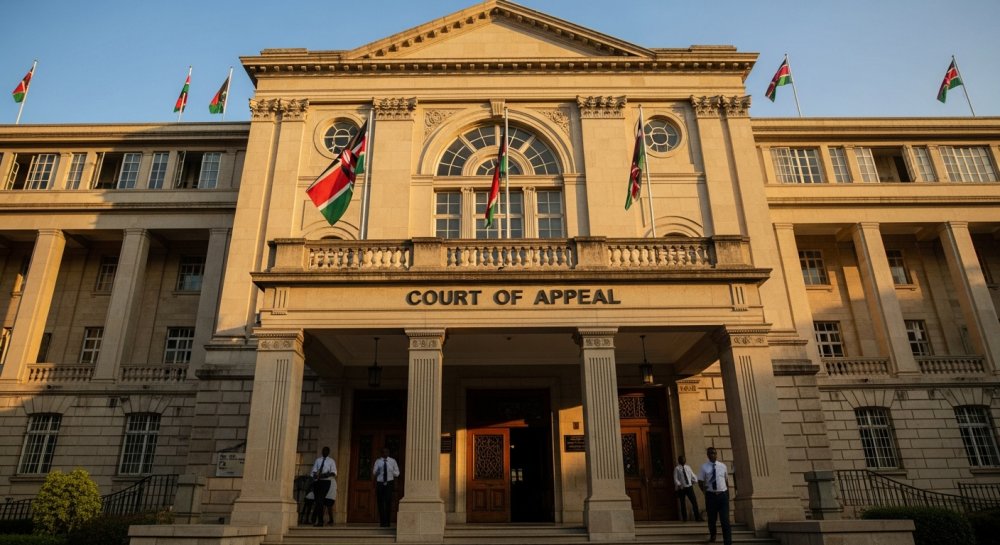
Kenya Court Delivers Major Victory for the Unborn

Faith Facts
- Kenya’s Court of Appeal has overturned a 2022 ruling that had expanded abortion access, affirming that abortion is not a constitutional right.
- The court ruled that abortion is only permitted under strict constitutional conditions, delivering a significant victory for pro-life advocates in the nation.
- The decision reverses a lower court ruling that had attempted to create broader abortion access in the predominantly Christian East African country.
In a landmark decision that has energized pro-life advocates across East Africa, Kenya’s Court of Appeal has struck down a controversial 2022 High Court ruling that had sought to expand access to abortion. The appellate court ruled definitively that termination of pregnancy is not a constitutional right in Kenya.
The ruling represents a major victory for those who defend the sanctity of life from conception. It reaffirms that abortion is only permitted under the limited conditions explicitly outlined in Kenya’s Constitution, rejecting attempts to create a broader “right” to abortion through judicial activism.
Kenya, a nation where Christianity plays a central role in public life, has long maintained protections for the unborn. The 2022 High Court decision had alarmed faith leaders and pro-life organizations who saw it as an attempt to impose Western-style abortion-on-demand policies on a society that values life and family.
The Court of Appeal’s decision restores the constitutional framework that recognizes the fundamental right to life. Under Kenya’s Constitution, abortion is only permitted in emergency situations where the life or health of the mother is genuinely at risk, and such determinations must be made by trained health professionals.
This ruling comes at a time when Western governments and international organizations have increasingly pressured African nations to liberalize abortion laws. Kenya’s judiciary has now sent a clear message that such external pressures will not override the nation’s constitutional protections for the unborn.
Pro-life advocates in Kenya and around the world are celebrating the decision as a triumph for human rights and the rule of law. The ruling demonstrates that courts can uphold traditional values and protect innocent life even in the face of intense pressure from abortion advocacy groups.
The decision also highlights the importance of an independent judiciary willing to correct lower court decisions that overstep constitutional boundaries. By overturning the 2022 ruling, the Court of Appeal has reinforced the principle that judges should interpret the law as written, not rewrite it to advance a particular social agenda.
Let us know what you think, please share your thoughts in the comments below.

Faith Facts
- Iran’s 60-day deadline to halt nuclear escalation has expired with no compliance, marking a critical failure in international diplomacy.
- The expired deadline represents a direct challenge to American leadership and raises questions about the strength of current U.S. foreign policy.
- Conservative Christians are concerned about Iran’s destabilizing influence in the Middle East and threats to Israel, America’s key ally in the region.
A critical 60-day deadline with Iran has quietly passed without resolution, leaving American leaders facing serious questions about the nation’s foreign policy strength and commitment to protecting our interests abroad. The expiration of this ultimatum signals a troubling pattern of weakness that could embolden one of the world’s most dangerous regimes.
The deadline was established to pressure Iran into halting its nuclear escalation and aggressive posturing in the Middle East. Yet the regime in Tehran has chosen defiance over compliance, testing American resolve at a moment when strong leadership is desperately needed.
For Christian conservatives who understand the biblical significance of Israel and the Middle East, Iran’s continued aggression represents more than a geopolitical challenge. It’s a direct threat to our closest ally in the region and to the stability that allows religious freedom to flourish.
The silence surrounding this expired deadline is perhaps most concerning. While Americans focus on domestic issues, a rogue nuclear regime continues its march toward weapons capability with apparently little consequence. This raises fundamental questions about whether our current leadership has the will to enforce the red lines it draws.
Iran has long been a sponsor of terrorism, an enemy of Israel, and a destabilizing force throughout the region. The Islamic regime’s pursuit of nuclear weapons capability threatens not only Middle Eastern stability but American security interests worldwide. A nuclear-armed Iran would fundamentally alter the balance of power in one of the world’s most volatile regions.
Political observers note that the quiet expiration of this deadline may signal a broader retreat from American strength on the world stage. When deadlines pass without consequence, adversaries take note. The message sent by inaction resonates far beyond Tehran, reaching Moscow, Beijing, and Pyongyang.
Conservative faith leaders have consistently advocated for policies that protect Israel and counter Iranian aggression. They understand that America’s commitment to our allies isn’t just strategic — it’s rooted in our nation’s founding principles and biblical values that call us to stand with those who share our commitment to freedom.
The domestic political fallout from this failed deadline may prove significant. American voters who prioritize national security and strong foreign policy leadership are watching closely. They remember the strength that comes from peace through deterrence, not appeasement through silence.
As this deadline passes unmarked, the question becomes what happens next. Will American leadership reassert itself, or will Iran continue to operate without meaningful consequences? The answer will shape not only Middle Eastern stability but America’s credibility on the world stage for years to come.
Let us know what you think, please share your thoughts in the comments below.
Faith Facts
- Ambassador Mike Huckabee warned Israeli settlers against seizing Palestinian American properties, calling it a violation of the commandment ‘Thou shalt not steal’
- Huckabee stated that stealing property is ‘a violation of God’s law’ and warned of potential U.S. sanctions
- The former pastor and Arkansas governor is applying biblical principles to diplomatic policy in the West Bank
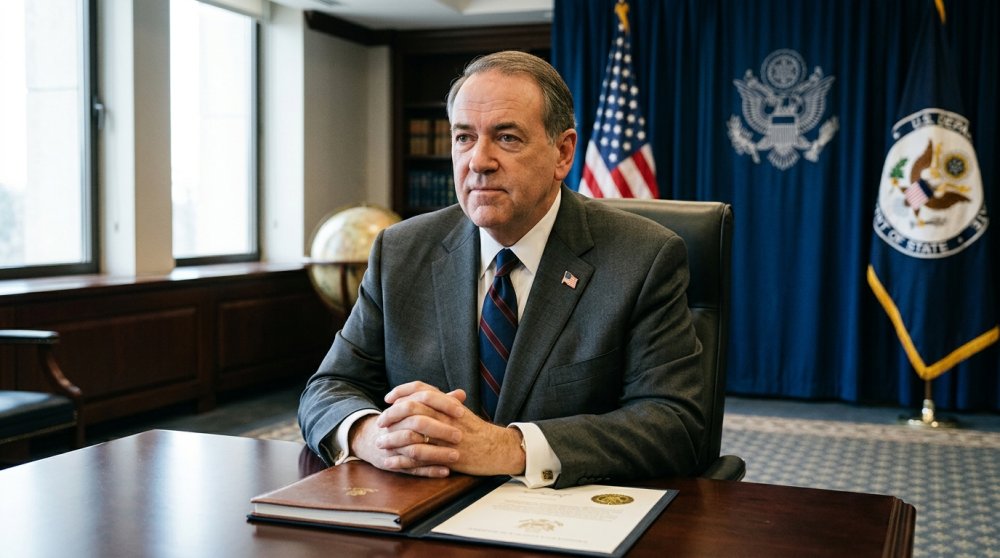
U.S. Ambassador to Israel Mike Huckabee has issued a stern warning to militant Israeli settlers in the occupied West Bank, grounding his position in biblical law. The former Arkansas governor and Baptist minister made clear that seizing properties owned by Palestinian Americans violates fundamental principles of God’s commandments.
Huckabee invoked the Eighth Commandment in his rebuke of the property seizures, making a direct appeal to biblical authority. His statement represents a rare intersection of scriptural principle and diplomatic policy in one of the Middle East’s most contentious regions.
“Thou shalt not steal,” Huckabee declared, emphasizing that such actions constitute “a violation of God’s law.”
The ambassador’s warning carries significant weight, as he raised the possibility of U.S. sanctions against those responsible for illegally taking property from American citizens. This represents a principled stance that protects the property rights of Americans while acknowledging the biblical foundation for such protections.
Huckabee’s approach reflects his background as a pastor and his long-standing commitment to applying biblical values to governance. His willingness to cite Scripture directly in a diplomatic context demonstrates how faith-based principles can guide policy decisions, even in complex international situations.
The West Bank remains one of the most disputed territories in the Israeli-Palestinian conflict. Huckabee’s position seeks to balance strong U.S.-Israel relations with the protection of American citizens’ property rights and adherence to biblical commandments that transcend political boundaries.
By framing the issue in terms of God’s law rather than purely political considerations, Huckabee has elevated the conversation to one of moral principle. The biblical prohibition against theft applies universally, regardless of the political complexities surrounding the West Bank.
Let us know what you think, please share your thoughts in the comments below.
Faith Facts
- Highland Park United Methodist Church in Dallas remains in conflict with its regional conference over changes to the church’s governing documents
- The church’s pastor compared the denominational dispute to the biblical story of Cain and Abel, warning against division among brothers
- The standoff reflects broader tensions within the United Methodist Church as congregations navigate theological differences and organizational authority
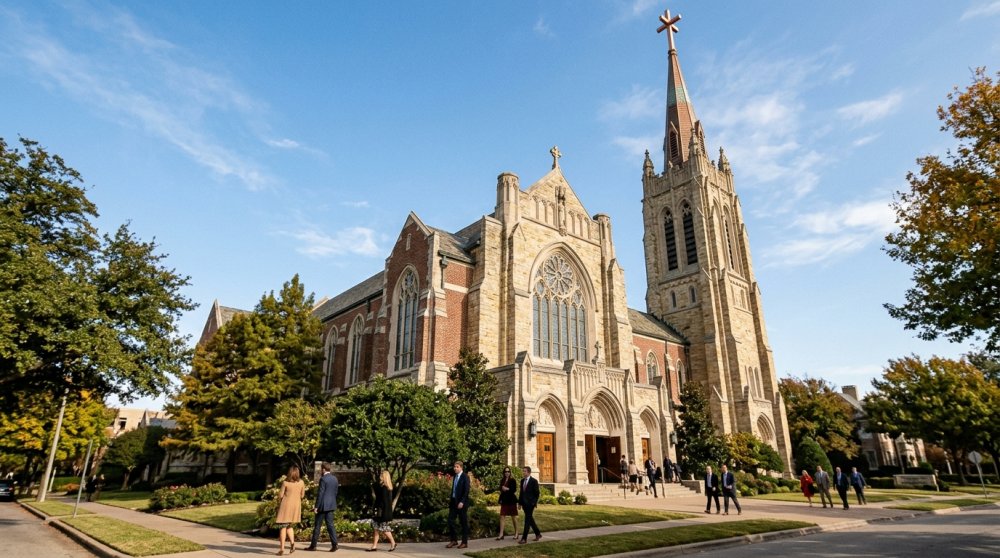
A prominent Dallas megachurch continues its public dispute with regional United Methodist leadership over fundamental questions of church governance and autonomy. Highland Park United Methodist Church finds itself at odds with the denomination’s regional body as both sides dig in over proposed changes to the congregation’s foundational documents.
The controversy has escalated to the point where the church’s pastor invoked one of Scripture’s most sobering examples of fraternal discord. By comparing the situation to Cain and Abel, the biblical brothers whose relationship ended in tragedy, church leadership signaled the seriousness of the rift and the spiritual stakes involved in the denominational standoff.
The dispute centers on Highland Park UMC’s attempts to modify its governing documents, a move that has drawn resistance from regional conference officials. Such conflicts have become increasingly common within the United Methodist Church as local congregations assert greater independence amid the denomination’s ongoing theological divisions.
For many traditional Christians, the standoff represents a microcosm of larger debates about denominational authority versus congregational autonomy. Churches across America face similar tensions as they balance accountability to broader church structures with responsiveness to their local communities and theological convictions.
The biblical reference to Cain and Abel serves as a powerful reminder of what can happen when brothers in faith allow disagreement to devolve into destructive conflict. The story from Genesis 4 recounts how jealousy and anger led to fratricide, establishing a pattern of division that would plague humanity throughout Scripture and history.
Highland Park United Methodist Church, located in one of Dallas’s most affluent neighborhoods, has long been a influential voice within Texas Methodism. The church’s size and prominence make this dispute particularly significant for observers watching how the United Methodist Church navigates its ongoing realignment.
The United Methodist Church has experienced unprecedented upheaval in recent years as congregations nationwide grapple with fundamental disagreements over biblical interpretation, sexuality, and marriage. Thousands of conservative churches have departed the denomination, seeking to maintain traditional Christian teaching on these issues.
This latest conflict in Dallas demonstrates that even among churches remaining within the UMC, questions of governance and authority continue to generate friction. Regional conferences hold significant power over member churches under Methodist polity, creating potential flashpoints when local congregations seek to chart independent courses.
For Christians committed to biblical authority and traditional doctrine, these disputes often reveal deeper questions about the nature of Christian unity and the proper relationship between individual congregations and denominational structures. Scripture calls believers to both truth and unity, but navigating that balance becomes challenging when fundamental disagreements arise.
The invocation of Cain and Abel suggests Highland Park’s leadership views the dispute as more than mere administrative disagreement. It signals concern that the conflict could inflict lasting damage on relationships and witness, much as Cain’s action forever marked human history with the stain of brother harming brother.
As the standoff continues, both sides face questions about how to pursue their convictions while maintaining Christian charity. The outcome may influence how other UMC congregations approach similar tensions between local autonomy and denominational accountability in an era of widespread church realignment.
Let us know what you think, please share your thoughts in the comments below.


-

 Self-Reliance1 year ago
Trump’s Bold Move Uncovers Massive Social Security Fraud
-

 Faith1 year ago
New Clues Emerge in Noah’s Ark Mystery
-

 News1 year ago
Governor Walz’s Rhetoric Sparks National Controversy
-

 News1 year ago
Mel Gibson’s ‘The Passion of the Christ’ Sequel Title Announced
-

 Family1 year ago
Texas Lawmaker Targets Furries in Schools
-

 Freedom1 year ago
Maine Lawmaker Challenges Sports Fairness Controversy
-

 Family1 year ago
Canada’s Controversial Policy Sparks Ethical Debate
-
Faith9 months ago
Congress Hears Pleas for Nigerian Christians