
Faith
Israeli Prison Finally Grants Bible After Two-Year Wait, But Still Blocks Pastor


Faith Facts
- A Palestinian Christian prisoner held in Israel’s Negev desert waited two years before prison officials approved his request for a Bible
- Israeli authorities have denied the prisoner access to clergy visitation despite approving access to Scripture
- The case highlights ongoing concerns about religious freedom protections for Christian prisoners in the region
After a two-year struggle, a Palestinian Christian prisoner detained in Israel’s Negev desert has finally been granted access to a Bible. However, Israeli prison officials continue to deny his request for pastoral visitation, raising serious questions about religious liberty in the region.
The prolonged delay in providing basic religious materials to a Christian prisoner is troubling for those who value religious freedom as a fundamental human right. Scripture access is a cornerstone of Christian faith practice, and denying it for such an extended period represents a significant infringement on religious exercise.
While Israeli prison officials have now provided the Bible, their continued refusal to allow clergy visitation compounds concerns about religious liberty protections. Access to spiritual counsel and pastoral care is essential for Christian prisoners seeking to maintain their faith during incarceration.
The case underscores the challenges faced by Christian minorities in the Middle East, where religious freedom is often restricted or denied outright. For a Christian prisoner, access to both Scripture and clergy represents not merely a privilege but a fundamental aspect of practicing one’s faith.
The denial of clergy visitation rights particularly stands out as inconsistent with international standards for religious accommodation in detention facilities. Many faith traditions, including Christianity, emphasize the importance of spiritual guidance and sacramental ministry that can only be provided through personal pastoral visitation.
This situation calls attention to the broader need for consistent religious freedom protections across the Middle East. Christians throughout the region face varying degrees of persecution and discrimination, making it essential that basic religious rights be protected even in prison settings.
The two-year delay in providing a Bible raises questions about the bureaucratic processes and priorities within the Israeli prison system regarding religious accommodation. Such extended delays suggest either systematic barriers or a lack of priority given to religious liberty concerns.
As Americans who cherish religious freedom as a foundational principle, we must advocate for these same freedoms abroad. The right to access Scripture and receive pastoral care should not be subject to indefinite delay or arbitrary denial, regardless of one’s nationality or the nature of one’s detention.
The international community, including Christian organizations and human rights advocates, should continue to monitor this case and press for full religious accommodation. Half-measures that provide Scripture but deny pastoral care fall short of genuine religious freedom.
Let us know what you think, please share your thoughts in the comments below.

Faith Facts
- Leading atheist scholar Bart Ehrman and Christian columnist Ross Douthat recently debated the historical evidence for Christ’s resurrection on The New York Times podcast
- The discussion centered on whether eyewitness testimony and historical documentation provide credible proof of Jesus rising from the dead
- Both participants acknowledged the debate’s respectful tone, though fundamental disagreements about faith and evidence remained unresolved
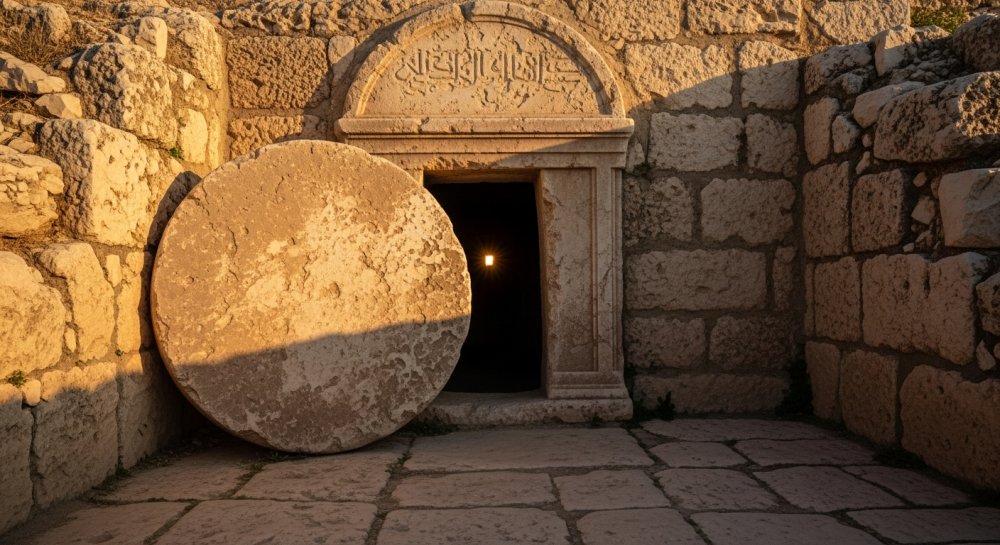
In a rare moment of civil discourse on one of Christianity’s most foundational claims, New York Times columnist Ross Douthat and renowned skeptic Bart Ehrman engaged in a thoughtful exchange about the resurrection of Jesus Christ. The conversation, hosted on a Times podcast, tackled head-on what believers have proclaimed for two millennia: that Jesus physically rose from the dead three days after His crucifixion.
Douthat, a practicing Catholic and author, defended the historical credibility of the resurrection accounts found in the Gospels. Ehrman, a former evangelical Christian turned agnostic scholar specializing in the New Testament, presented the skeptical case that has made him a leading voice among those who question Christianity’s central miracle.
The debate centered on how we evaluate ancient testimony and whether the eyewitness accounts recorded in Scripture meet the standard of historical evidence. For millions of American Christians, this isn’t merely an academic question—it’s the bedrock of their faith and the foundation upon which Western civilization was built.
What made this exchange particularly valuable was its respectful tone in an era when discussions about faith often devolve into mockery or dismissal. Both men engaged seriously with the evidence and with each other’s positions, demonstrating that profound disagreements need not result in personal attacks.
Yet as observer Andy Kind noted, the conversation ultimately left the biggest questions unresolved. This shouldn’t surprise us. The resurrection of Christ has always required a step of faith—not blind faith divorced from reason, but faith informed by historical testimony, personal experience, and the witness of billions across two thousand years.
For Christians, the evidence is compelling: the empty tomb, the transformed disciples willing to die for what they claimed to have seen, the explosion of the early church despite brutal persecution, and the consistent testimony of multiple eyewitness accounts. These aren’t fairy tales passed down through generations of telephone—they’re recorded testimonies from people who claimed to have encountered the risen Christ.
The skeptic demands different standards of proof, often ones that no ancient event could satisfy. Yet the same historical methods that validate other ancient claims are dismissed when applied to the resurrection. This reveals that the debate is often less about evidence and more about whether one is willing to accept that God can intervene in human history.
As we approach Easter, when Christians worldwide celebrate the resurrection, this conversation reminds us why this question matters. If Christ rose from the dead, everything changes. Death is defeated, sin is conquered, and hope is assured. If He didn’t, as Paul himself acknowledged, our faith is in vain.
The Douthat-Ehrman exchange demonstrates that reasonable people can examine the same evidence and reach different conclusions. But it also shows that the question refuses to go away. Generation after generation returns to it because the implications are too profound to ignore.
For American Christians navigating an increasingly secular culture, respectful engagement with skeptics like Ehrman is valuable. It sharpens our understanding, tests our reasoning, and reminds us that faith and intellect need not be enemies. It also demonstrates to a watching world that Christianity can defend itself in the marketplace of ideas.
The resurrection isn’t a claim that requires us to check our brains at the church door. It’s a historical assertion open to investigation, supported by testimony, and ultimately confirmed in the lives of those who encounter the risen Christ personally.
Let us know what you think, please share your thoughts in the comments below.

Faith Facts
- Christian care homes across the UK rely heavily on immigrant workers who have left their families to serve elderly residents
- Pilgrims’ Friend Society leader highlights the vital contribution these caregivers make to Christian eldercare missions
- Church communities are called to welcome and support those who have answered the call to care for vulnerable seniors
While immigration debates often highlight challenges and controversies, a Christian care home leader is drawing attention to an overlooked blessing: foreign-born workers who have sacrificed proximity to their own families to serve the elderly in faith-based facilities. Helen Nathan of Pilgrims’ Friend Society emphasizes that these dedicated caregivers are making an indispensable contribution to Christian ministry.
The testimony challenges believers to look beyond political rhetoric and recognize the human faces behind immigration statistics. Many of these workers have left their homes, children, and communities to answer what they view as a calling to serve vulnerable seniors in their final years.
Christian care homes throughout the United Kingdom face an ongoing staffing crisis, making the contributions of immigrant workers not just helpful but essential to continuing their mission. Without these committed individuals, many faith-based facilities would struggle to maintain the level of compassionate, personalized care that sets them apart from secular alternatives.
The situation presents a challenge to American Christians as well, as similar dynamics play out in faith-based eldercare facilities across the United States. The question becomes not whether immigration exists, but how the Church responds to those who come seeking to serve rather than merely seeking benefits.
Nathan’s call for welcoming these workers reflects biblical principles of hospitality and recognizing service regardless of national origin. The apostle Paul wrote that in Christ there is neither Jew nor Greek—a principle that applies when evaluating the character and contribution of those who care for our most vulnerable.
The reality facing Christian care homes demonstrates that immigration policy cannot be reduced to simple slogans. When foreign-born believers leave everything familiar to serve God by caring for elderly strangers, they embody the very values that faith communities claim to cherish: sacrifice, service, and compassion.
For churches and Christian families with loved ones in care facilities, this presents an opportunity to practice the hospitality Scripture commands. These workers often face isolation, cultural barriers, and separation from their own families while providing round-the-clock care to ours.
The testimony also highlights the inadequacy of secular workforce solutions to fill these critical roles. Many native-born workers have proven unwilling to accept the demanding, often emotionally taxing work of eldercare, creating vacancies that threaten the sustainability of Christian care missions.
As the population ages and the need for quality Christian eldercare grows, the church must grapple with practical realities alongside ideological positions. The workers Nathan describes are not statistics or policy abstractions—they are individuals performing the corporal works of mercy that Christ himself commanded.
The call to welcome these caregivers does not require abandoning concerns about border security or immigration enforcement. Rather, it asks believers to recognize and honor sacrificial service when they encounter it, regardless of where the servant was born.
Let us know what you think, please share your thoughts in the comments below.
Faith Facts
- April 24 marks Armenian Genocide Remembrance Day, commemorating the systematic extermination of 1.5 million Armenian Christians by the Ottoman Empire beginning in 1915
- Christians worldwide have a moral obligation to remember and advocate for genocide victims and their descendants
- The Armenian genocide represents the first major genocide of the 20th century and set a tragic precedent for future atrocities
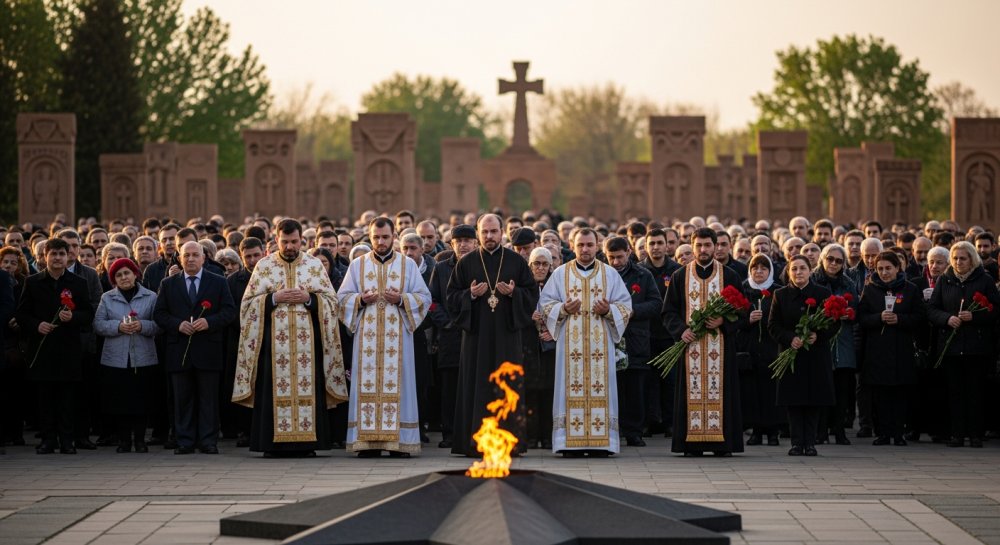
Today, Armenians around the world gather in churches and public squares to remember the first genocide of the 20th century. As Christians committed to truth, justice, and the dignity of all people made in God’s image, we must not remain silent about this historical atrocity or its ongoing implications.
The systematic extermination of 1.5 million Armenian Christians by the Ottoman Empire beginning in 1915 stands as one of history’s darkest chapters. Yet more than a century later, the struggle for recognition and justice continues.
1. Demand Historical Truth and Recognition
Christians must insist on the full recognition of the Armenian Genocide by all nations, including those that continue to deny this historical reality for political convenience. Truth is not negotiable, and historical facts cannot be subject to diplomatic bargaining.
The deliberate killing of Armenian Christians—men, women, and children—through death marches, starvation, and mass executions was a calculated attempt to eliminate an entire people. Denying this truth dishonors the victims and enables future atrocities.
2. Stand Against Modern Persecution of Christians
The spirit that drove the Armenian Genocide has not disappeared. Christians in the Middle East, Africa, and Asia face escalating persecution today. We must connect the dots between historical genocide and contemporary attacks on Christian communities.
Recent conflicts have demonstrated that ancient Christian populations remain vulnerable. Our remembrance of 1915 must translate into active advocacy for persecuted believers worldwide.
3. Support Armenian Christians and Their Heritage
Armenian Christians have preserved their faith and culture despite genocide, exile, and ongoing threats. Supporting Armenian churches, cultural institutions, and communities honors the resilience of genocide survivors and their descendants.
The Armenian Church represents one of the oldest Christian traditions in the world, tracing its roots to the apostles. Defending Armenian heritage means defending a precious part of Christian history.
4. Advocate for Justice and Prevention
Christians must demand accountability for genocide and ethnic cleansing wherever they occur. This includes supporting international efforts to prevent genocide, protect vulnerable populations, and hold perpetrators accountable.
Our faith calls us to be voices for the voiceless and defenders of the oppressed. Genocide remembrance without action becomes mere sentimentality. We must advocate for policies that protect religious minorities and prevent the repetition of such horrors.
As we remember the Armenian Genocide, we also acknowledge ongoing concerns about ethnic cleansing and the displacement of Armenian populations in contested regions. The protection of Christian communities cannot be a secondary concern in American foreign policy.
The Armenian Genocide teaches us that evil unchecked and truth denied lead to unspeakable suffering. As followers of Christ, we bear witness to truth, stand with the persecuted, and work to ensure that “never again” becomes more than a slogan—it becomes a sacred commitment.
Let us know what you think, please share your thoughts in the comments below.


-

 Self-Reliance1 year ago
Trump’s Bold Move Uncovers Massive Social Security Fraud
-

 Faith1 year ago
New Clues Emerge in Noah’s Ark Mystery
-

 News1 year ago
Governor Walz’s Rhetoric Sparks National Controversy
-

 News1 year ago
Mel Gibson’s ‘The Passion of the Christ’ Sequel Title Announced
-

 Family1 year ago
Texas Lawmaker Targets Furries in Schools
-

 Freedom1 year ago
Maine Lawmaker Challenges Sports Fairness Controversy
-

 Family11 months ago
Canada’s Controversial Policy Sparks Ethical Debate
-
Faith5 months ago
Congress Hears Pleas for Nigerian Christians