Connect with us

Faith

Indian Pastors Endure Persecution With Faith

Published

on

Faith Facts

  • Pastors in India have reportedly been beaten by jailers while in custody, raising grave concerns for religious freedom.
  • The Christian community is turning to prayer and steadfast faith amid increasing persecution and violence.
  • These incidents highlight the urgent need to protect believers’ rights and religious liberty worldwide.

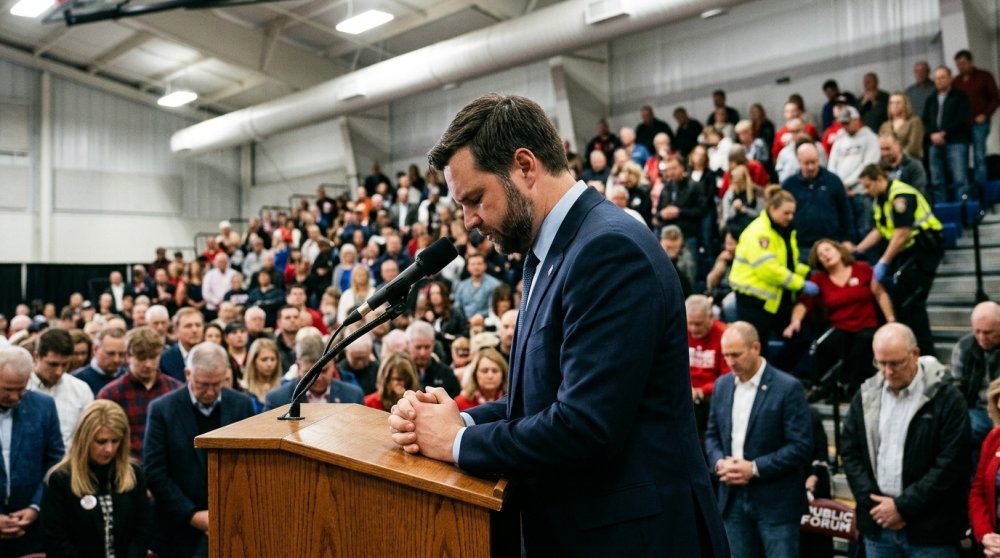
Religious freedom is under assault in parts of India, as recent reports tell of pastors being mistreated behind bars.

Faith leaders and believers are encouraged to stand firm in the face of oppression, trusting in God’s sovereignty and protection.

“Blessed are those who are persecuted because of righteousness, for theirs is the kingdom of heaven.” (Matthew 5:10)

Support our brothers and sisters in prayer, asking God to strengthen the church and restore justice in every nation.

Read the full report at Christian Today

Continue Reading
Click to comment

Leave a Reply

Your email address will not be published. Required fields are marked *

Faith

Swiss Churches Quietly Serve Millions While Others Turn Away

Published

on

Faith Facts

  • Evangelical free churches in Switzerland provide social services valued at hundreds of millions of francs annually through volunteer efforts
  • Tens of thousands of Christian volunteers dedicate their time to serving their communities without government support
  • Swiss evangelical leaders emphasize the church’s vital role in maintaining the nation’s social fabric through faith-driven service

While secular institutions increasingly struggle to meet community needs, evangelical Christians in Switzerland are stepping up in remarkable ways. The free churches across the nation are quietly contributing social services worth hundreds of millions of francs each year, all powered by the faithful dedication of tens of thousands of volunteers.

These findings, reported by Swiss evangelical outlet Livenet.ch, reveal a powerful truth that often goes unnoticed in modern society: when faith is lived out authentically, entire communities are transformed. The work being done represents far more than statistics on a spreadsheet—it reflects the heart of Christian service that has always been at the core of strong, healthy societies.

The scale of this volunteer effort demonstrates what happens when believers take seriously the biblical call to love their neighbors as themselves. From feeding the hungry to caring for the elderly, from mentoring youth to providing shelter for those in need, these evangelical communities are living out their faith in tangible, measurable ways.

What makes this even more significant is that these services are being provided without the massive government bureaucracies and taxpayer funding that typically accompany social programs. Instead, it’s individuals motivated by their Christian faith, giving freely of their time and resources because they believe it’s what God has called them to do.

The economic value alone—hundreds of millions of francs—speaks to the extraordinary impact of faith-based volunteerism. But the true value extends far beyond what can be quantified in currency. These volunteers are building relationships, restoring dignity, and offering hope in ways that government programs simply cannot replicate.

This model of community care represents the best of Christian tradition—believers taking responsibility for their neighbors rather than expecting distant institutions to solve every problem. It’s a reminder that strong families and strong churches create strong communities, and that faith in action has always been more effective than faith in government.

As societies across the West grapple with fractured communities and declining social cohesion, the Swiss evangelical example offers a roadmap. When Christians commit to serving others as an expression of their faith, they don’t just meet immediate needs—they strengthen the very foundations of civilization.

The tens of thousands of volunteers engaged in this work aren’t doing it for recognition or compensation. They’re answering a higher call, one that transcends political ideology or social trends. Their service reflects an understanding that true Christianity is about self-sacrifice, not self-promotion.

This quiet revolution of service stands in stark contrast to the often-loud demands for government solutions to every social ill. While secular voices call for more taxes and more programs, these Christian volunteers are simply rolling up their sleeves and getting to work—demonstrating that faith, properly lived, is the most powerful social force in human history.

Let us know what you think, please share your thoughts in the comments below.
Continue Reading

Faith

Parliament Launches Probe Into How Churches Protect Children

Published

on

Faith Facts

  • The All-Party Parliamentary Group on Safeguarding in Faith Communities has launched a formal inquiry into child protection practices across churches, mosques, temples, and other faith-based organizations.
  • The investigation will examine current safeguarding protocols and seek to identify improvements needed to better protect children in religious settings.
  • The inquiry represents a significant step in ensuring faith communities maintain the highest standards of child safety and protection.

A parliamentary investigation is now underway to examine how faith communities across the United Kingdom protect children within their congregations and programs. The All-Party Parliamentary Group on Safeguarding in Faith Communities has initiated a comprehensive inquiry that will scrutinize child protection measures in churches, mosques, temples, and other religious organizations.

The inquiry comes at a crucial time when faith communities are under increasing scrutiny to ensure robust safeguarding practices. Churches and other religious institutions play vital roles in the lives of millions of families, making the protection of children within these settings a matter of paramount importance.

For Christian communities, the biblical mandate to protect the vulnerable takes on special significance in this context. Scripture calls believers to care for children with the utmost diligence, making safeguarding not just a legal obligation but a spiritual one.

The parliamentary group will examine existing protocols, identify gaps in current practices, and develop recommendations to strengthen child protection across all faith traditions. This investigation represents an opportunity for churches to demonstrate their commitment to maintaining the highest standards of safety and accountability.

Faith leaders across denominations have long emphasized that protecting children must be a top priority. The inquiry will likely explore how religious organizations can balance their mission of spiritual nurture with the practical requirements of modern safeguarding standards.

As the investigation proceeds, churches and other faith communities will have the opportunity to contribute their perspectives and share best practices. The outcome could shape safeguarding policies for years to come, ensuring that houses of worship remain safe havens for families and children.

This parliamentary action underscores the importance society places on child welfare, a value deeply rooted in Christian teaching and traditional moral principles. The church has both a biblical and civic duty to ensure that those entrusted to its care are protected from harm.

Let us know what you think, please share your thoughts in the comments below.
Continue Reading

Faith

When Rome Fell and Faith Endured: Three Pivotal Moments That Shaped Christian History

Published

on

Faith Facts

  • The sack of Rome in 1527 by troops of Holy Roman Emperor Charles V marked one of Christianity’s darkest hours, yet the faith persevered
  • Tiyo Soga became the first ordained black minister in South Africa, bringing the Gospel to his Xhosa people in the 19th century
  • Saint Theodosius of the Caves founded monastic traditions that would influence Eastern Orthodox Christianity for centuries

Throughout history, the Christian faith has endured through triumph and tragedy, persecution and persecution overcome. This week marks the anniversaries of three significant events that demonstrate the resilience and spread of Christianity across different cultures and eras.

Each of these moments — from the violent sack of Rome to the peaceful baptism of a future African minister — reveals God’s hand at work even in the darkest times. These stories remind us that the Church has always been refined through trials and expanded through faithful servants.

The Sack of Rome: Christianity’s Dark Day in 1527

On May 6, 1527, troops serving Holy Roman Emperor Charles V descended upon Rome in one of the most devastating attacks on Christendom’s heart. The forces, consisting largely of German Lutheran mercenaries and Spanish soldiers, pillaged the Eternal City for months.

Pope Clement VII took refuge in the Castel Sant’Angelo as churches were desecrated and treasures looted. The attack represented not just a political conflict but a spiritual crisis, as Christian soldiers violated the seat of the papacy.

Despite this catastrophe, the Catholic Church rebuilt and continued its mission. The event ultimately contributed to the Catholic Counter-Reformation, demonstrating how God can bring renewal even from destruction.

Tiyo Soga: Pioneer of African Christianity

In December 1848, Tiyo Soga was baptized, beginning a journey that would make him the first ordained black minister from South Africa. Born into the Xhosa nation, Soga embraced Christianity and dedicated his life to bringing the Gospel to his people.

Soga traveled to Scotland for theological training, where he not only completed his studies but also married a Scottish woman — a controversial decision at the time. He returned to South Africa to minister among his own people, translating Christian texts into Xhosa.

His life exemplifies how the Great Commission transcends cultural boundaries. Soga’s ministry proved that the Gospel message was not confined to European Christianity but belonged to all nations and peoples, as Scripture promises.

Saint Theodosius: Builder of Orthodox Monasticism

Saint Theodosius of the Caves died on May 3, 1074, leaving behind a monastic legacy that would shape Eastern Orthodox Christianity for generations. As co-founder of the Kyiv Pechersk Lavra monastery in Ukraine, he established strict communal living rules based on Byzantine traditions.

Theodosius emphasized prayer, fasting, and service to the poor. His monastery became a spiritual and cultural center, producing clergy, scholars, and saints who spread Orthodox Christianity throughout Eastern Europe.

The monastic tradition he fostered preserved Christian learning and practice through centuries of political upheaval. His dedication to disciplined spiritual life reminds modern believers of the importance of commitment and community in the faith.

Lessons for Today’s Church

These three events from Christian history offer valuable lessons for contemporary believers. The sack of Rome demonstrates that even when the Church faces assault, God’s purposes cannot be thwarted.

Tiyo Soga’s baptism and ministry show that the Gospel breaks down racial and cultural barriers, fulfilling Christ’s command to make disciples of all nations. Saint Theodosius reminds us that structured spiritual discipline and community strengthen faith across generations.

In an era when Christianity faces challenges both from without and within, these historical examples encourage us to remain faithful. The Church has survived worse trials and emerged stronger, always advancing the Kingdom of God.

Let us know what you think, please share your thoughts in the comments below.

Continue Reading

Trending