
Faith
How Foreign Mission Fields Shaped Modern Megachurches—And What Was Lost Along the Way

Faith Facts
- The church growth movement originated from mission field principles developed in India before being adapted to American megachurch culture.
- Modern church growth strategies have shifted focus from discipleship and relationships toward attendance metrics and program expansion.
- Missiologists warn that importing non-indigenous church methods can undermine the health and authenticity of local congregations.
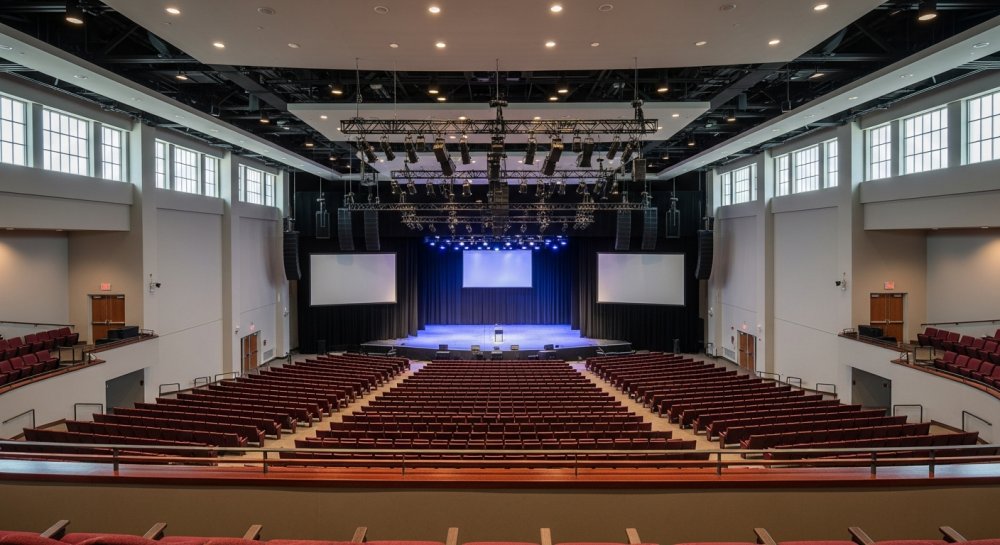
The evolution of America’s megachurch phenomenon traces its roots to an unexpected source: the mission fields of India. What began as evangelistic principles designed for cross-cultural ministry has transformed into a consumer-driven model that many faith leaders now question.
This transformation has fundamentally altered how many American churches operate, prioritizing measurable growth metrics over the deeper work of spiritual formation.
The church growth movement emerged from missionary contexts where reaching the unreached required innovative approaches. However, when these methods crossed back into American soil, they underwent a significant metamorphosis. The focus shifted from making disciples to counting attendees, from fostering genuine community to managing programs, and from multiplying believers to simply adding names to membership rolls.
This approach mirrors a consumer marketplace more than the biblical model of church life. Churches began competing for attendees much like businesses compete for customers, often emphasizing entertainment value and convenience over the challenging call to discipleship that Jesus modeled.
Missionaries working in foreign contexts have long understood a critical principle: what works in one culture doesn’t automatically translate to another. Indigenous churches thrive when they’re rooted in local culture and led by local believers who understand their community’s unique needs and character. Imposing outside systems, even well-intentioned ones, can stifle organic growth and authentic faith expression.
The same principle applies when missionary methods developed for one context are imported wholesale into American churches. The unintended consequence has been churches that may draw crowds but struggle to produce committed disciples who live out their faith daily.
Traditional Christian values emphasize depth over breadth, character over numbers, and genuine transformation over surface-level commitment. The early church grew exponentially not through slick marketing or impressive facilities, but through changed lives that testified to the power of the Gospel. Believers devoted themselves to teaching, fellowship, breaking bread, and prayer—priorities that can be overshadowed in program-heavy, attendance-focused models.
The challenge facing American Christianity today is whether churches will return to these foundational priorities. Can we reclaim a vision of church that values making disciples over attracting attendees? Can we build communities where relationships trump programs and where spiritual multiplication becomes more important than numerical addition?
This isn’t a call to abandon all innovation or reject thoughtful approaches to church growth. Rather, it’s a recognition that methods matter, and that importing strategies without considering their cultural fit can produce unintended consequences. What works on foreign mission fields may need significant adaptation—or complete rethinking—before application in American contexts.
The path forward requires church leaders to critically examine their priorities and methods. Are we building churches that reflect biblical values of discipleship, community, and spiritual maturity? Or have we adopted a consumer-driven model that ultimately undermines the very transformation we seek to foster?
As American churches navigate these questions, the lessons from the mission field remain relevant: authentic, sustainable church growth happens when methods align with biblical principles and fit the cultural context. Anything less risks creating institutions that look successful by worldly metrics while failing to fulfill the Great Commission’s true mandate—making disciples of all nations.
Let us know what you think, please share your thoughts in the comments below.

Faith Facts
- Disciple-making movements emphasize serious commitment to following Christ and making other disciples
- Traditional churches and new movements both have valid concerns about how the other approaches ministry
- Church planting movement principles have shown limited growth in Western contexts compared to other parts of the world
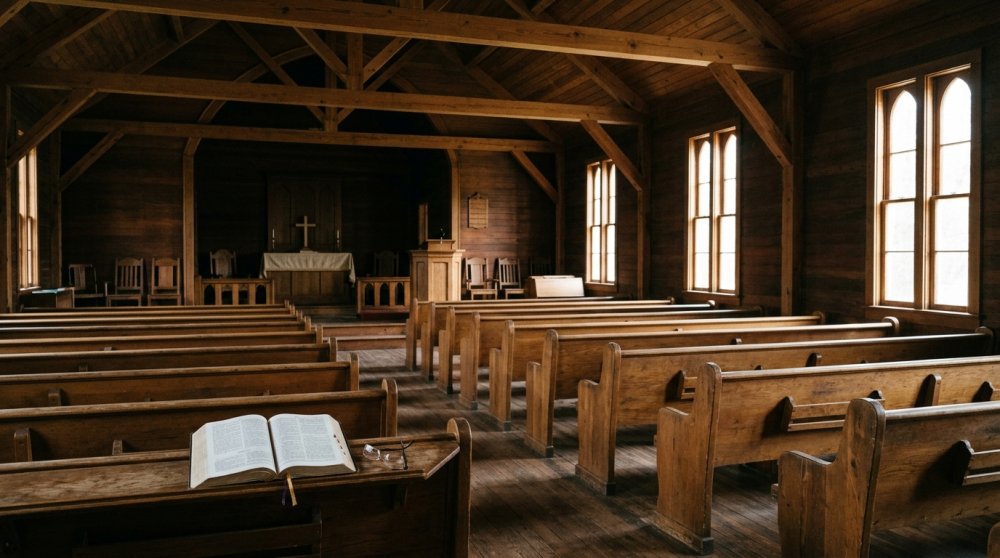
Disciple-making movements have raised important questions about how churches in the West are making followers of Jesus. These movements point to a genuine desire for deeper commitment to the Great Commission. Their critique of traditional structures comes from a concern that many established churches have lost focus on personal discipleship.
At the same time, traditional churches have raised concerns about the sustainability and doctrinal depth of newer movements. Both perspectives reflect a shared burden for reaching people with the gospel. The tension between these approaches reveals a broader question facing American Christianity.
Church planting movement principles that have seen dramatic growth in other parts of the world have struggled to produce similar results in Western nations. Cultural differences, established religious traditions, and societal attitudes toward faith all play a role in this disparity. The challenges are complex and require thoughtful examination rather than quick solutions.
This reality challenges established churches to consider whether new approaches might be needed. The call is not to abandon biblical truth but to examine whether current methods are effectively making disciples. Many traditional congregations are beginning to ask hard questions about their own fruitfulness in fulfilling Christ’s command.
Let us know what you think, please share your thoughts in the comments below.

Faith Facts
- Gateway Seminary, a California-based Southern Baptist Convention theology school, reported record enrollment for the fall semester.
- Leaders at the seminary say students are actively seeking deeper study of Scripture.
- The growth reflects a renewed hunger among believers for sound biblical training and Christian service.
Gateway Seminary announced record enrollment numbers for its fall semester, continuing a trend of growth for the Southern Baptist-affiliated institution based in California.
The seminary’s leadership noted that students are expressing a strong desire to engage with the Bible and prepare for ministry roles across the nation.
“Students are hungry for God’s Word,” seminary officials stated.
The increase in enrollment comes at a time when many traditional seminaries are facing declining numbers, making Gateway’s growth stand out within the broader landscape of theological education.
School leaders attribute the surge to a growing interest in faithful biblical teaching and the desire among younger believers to serve local churches and communities with clarity and conviction.
Let us know what you think, please share your thoughts in the comments below.

Faith Facts
- Dinesh D’Souza has written a new book titled The Stones Cry Out examining biblical archaeology and end times prophecy.
- The author asserts that archaeological evidence supports the historical accuracy of Scripture.
- D’Souza connects these discoveries to biblical prophecies concerning the last days.
Author and filmmaker Dinesh D’Souza has joined Christian Post to discuss his latest work, The Stones Cry Out: Biblical Archaeology, Prophecy, and the Last Days.
The book examines how recent archaeological findings confirm the reliability of biblical accounts. D’Souza argues that these discoveries strengthen the case for the literal fulfillment of prophecy in our time.
“The Stones Cry Out is about how the ground itself testifies to the truth of Scripture and the nearness of the last days,”
he explained during the interview.
D’Souza highlights specific sites and artifacts that align with Scripture’s historical claims. He presents these findings as evidence that the Bible is not merely spiritual literature but a trustworthy historical record.
“When archaeology confirms what the prophets foretold, it becomes harder for skeptics to dismiss the Word of God,”
he stated.
The author also explores how current events appear to line up with prophetic patterns described in Scripture. He encourages believers to study both the physical evidence and the biblical text with renewed attention.
“God is not silent, and the stones continue to speak,”
D’Souza concluded.
Let us know what you think, please share your thoughts in the comments below.


-

 Self-Reliance2 years ago
Trump’s Bold Move Uncovers Massive Social Security Fraud
-

 Faith2 years ago
New Clues Emerge in Noah’s Ark Mystery
-

 News2 years ago
Governor Walz’s Rhetoric Sparks National Controversy
-

 News2 years ago
Mel Gibson’s ‘The Passion of the Christ’ Sequel Title Announced
-

 Family2 years ago
Texas Lawmaker Targets Furries in Schools
-

 Freedom2 years ago
Maine Lawmaker Challenges Sports Fairness Controversy
-

 Family1 year ago
Canada’s Controversial Policy Sparks Ethical Debate
-
Faith11 months ago
Congress Hears Pleas for Nigerian Christians