
Faith
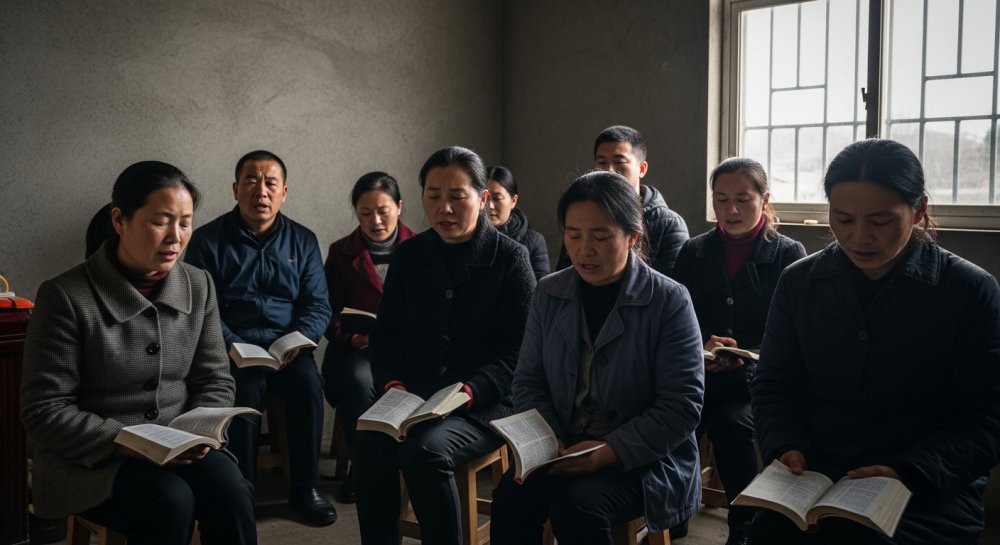
How China’s Underground Church Survived Seven Decades of Communist Persecution

Faith Facts
- The Christian Church in mainland China has endured dramatic persecution, near destruction, and martyrdom since the Communist takeover in 1949
- Despite systematic attempts to eliminate Christianity, the faith has experienced unexpected revival under hostile government conditions
- China’s house church movement continues to grow even as the Communist regime intensifies religious oppression
The story of Christianity in mainland China since 1949 stands as one of the most powerful testimonies of faith enduring under persecution in modern history. What began as a calculated effort by Communist authorities to eradicate the Church has instead become a remarkable account of spiritual resilience and divine providence.
When Mao Zedong’s Communist Party seized control of China in 1949, the nation’s Christians faced an uncertain and dangerous future. The new regime viewed Christianity as a foreign ideology incompatible with Communist doctrine and set about systematically dismantling the institutional Church.
The Cultural Revolution of the 1960s and 1970s brought particularly severe trials. Churches were shuttered, Bibles were burned, and believers faced imprisonment, torture, and execution for their faith. Many Western observers believed Christianity in China had been completely destroyed.
Yet underground, in homes and secret gatherings, Chinese believers continued to worship, pray, and share the Gospel. These house churches became the lifeline of Chinese Christianity, operating in defiance of government prohibitions and at great personal risk to participants.
The post-Mao era brought modest improvements in religious freedom, though the Communist Party has never relinquished its fundamental hostility toward independent Christian expression. The government established official, state-controlled churches while continuing to persecute unregistered congregations.
Today, despite ongoing crackdowns under President Xi Jinping’s administration, Christianity continues to grow in China. Estimates suggest tens of millions of Chinese believers worship in house churches, refusing to submit their faith to government control.
This seven-decade journey reveals a profound truth: persecution cannot extinguish genuine faith. The Chinese Church’s survival and growth under the world’s most powerful atheist regime demonstrates that God’s purposes cannot be thwarted by earthly authorities, no matter how determined or brutal.
The resilience of Chinese Christians offers both inspiration and instruction to believers worldwide, particularly as religious freedom faces new threats in the West. Their witness reminds us that the gates of hell cannot prevail against Christ’s Church.
Let us know what you think, please share your thoughts in the comments below.


Faith Facts
- Leading Bible scholar N.T. Wright argues that Paul’s letter to the Ephesians deserves the same sustained attention Christians give to Romans and Galatians
- The church is called to be a “small working model” of God’s promised new creation, serving as an advance sign of redeemed creation
- Paul describes believers as God’s “poetry” or artwork, meant to embody and enact the new creation here and now
At Crowley’s Ridge College in Paragould, Arkansas, where history professor Shannon Beasley teaches, each class begins with a verse of the day to encourage students and give them a grounding, reorienting start to the morning. Then they turn to the news of the day, the top stories shaping their world.
Beasley notes how often the verse of the day illuminates the news of the day. She is also struck by how frequently, when she asks students to name their favorite Bible verses, something from Ephesians appears — such as Ephesians 3:20.
While Romans and Galatians tend to dominate church conversations, leading Bible scholar N.T. Wright believes Ephesians deserves equally sustained attention. Wright, a senior research fellow at Wycliffe Hall, Oxford, has written “The Vision of Ephesians: The Task of the Church and the Glory of God.”
The letter to the Ephesians is generally accepted as having been written by the apostle Paul, a conclusion Wright defends while giving little weight to arguments against Pauline authorship. Importantly, Wright emphasizes that Ephesians was likely a circular letter — written not to address a single congregation’s local concerns, but to be read aloud among several house churches in and around Ephesus in modern-day western Turkey.
These were small communities — perhaps five to 30 people each — largely poor rather than wealthy, hearing this letter read while Paul himself was imprisoned.
Wright moves through the letter section by section rather than adhering rigidly to the chapter-and-verse divisions added to our Bibles some five centuries ago. Because the original Greek lacked punctuation, determining where sentences begin and end is an act of interpretation.
Wright’s remarkable facility with the language allows these interpretive decisions to yield fresh insights and renewed perspective. One striking example appears in Ephesians 2:10: “autou gar esmen poiēma.”
Wright renders “poiēma” not merely as “workmanship,” but as “poetry.”
“We are to be Renaissance-people, demonstrating the birth of the new world,”
Wright writes. We, the church, are God’s artwork — his sculpture, his poem.
This leads to the central theme of Wright’s reading of Ephesians: The church is called to be a small working model of God’s promised new creation — a heaven-and-earth community that serves as an advance sign of what redeemed creation looks like. The church is meant not only to announce this new creation, but to embody and enact it here and now.
What, then, does Paul call the Ephesian Christians — and us — to be? A people motivated by God’s glory as their goal; a praising people and a praying people; a peaceful and unified people; Spirit-filled, marked by self-giving love and clothed in the armor of God.
Read through this lens, “The Vision of Ephesians” offers rich insight for any teacher, student or reader of Scripture seeking to understand not only what the church believes but also what it is meant to be. In an age of cultural division and confusion about the church’s role in society, Paul’s letter provides a timeless blueprint for Christian community and witness.
Wright’s work stands as a reminder that Scripture speaks powerfully to contemporary challenges when we take the time to understand its original context and meaning. For Christians seeking to live out their faith authentically in today’s world, Ephesians offers a vision of the church as God’s masterpiece — a living demonstration of His transforming power.
Let us know what you think, please share your thoughts in the comments below.

Faith Facts
- Church scandals often stem from failures in governance and leadership structure, not just moral lapses
- Proactive safeguards protect congregations, preserve ministry integrity, and honor biblical standards of accountability
- Implementing these five protections strengthens a church’s witness and shields it from preventable crises
Church scandals continue to make headlines across America, and the attention is warranted. But understanding the nature of these failures is essential for prevention. While some stem from moral collapse, many originate from inadequate leadership structures, poor governance, and a lack of biblical accountability.
The good news is that churches don’t have to wait for disaster to strike. There are concrete, actionable steps that can be implemented immediately to protect congregations, preserve the integrity of ministry, and uphold the high standards Scripture calls us to maintain.
These aren’t just administrative suggestions—they’re spiritual safeguards that reflect our commitment to stewarding God’s people well. Here are five critical protections every church should adopt before a crisis emerges.
1. Establish Clear Financial Accountability
Financial transparency isn’t optional—it’s biblical. Churches must implement robust financial controls including multiple signatories on accounts, regular external audits, and transparent reporting to congregation members. When money is handled with integrity and oversight, it removes both temptation and accusation.
2. Create Strong Leadership Accountability Structures
No pastor or church leader should operate without accountability. This means active elder boards or leadership teams with real authority, not rubber-stamp committees. Biblical eldership requires mutual submission, honest evaluation, and the courage to speak truth in love when concerns arise.
3. Implement Comprehensive Background Checks and Safety Policies
Protecting the vulnerable is a Gospel imperative. Every person working with children, youth, or vulnerable adults must undergo thorough background screening. Clear safety protocols, two-adult rules, and regular training create environments where abuse cannot take root.
4. Establish Clear Boundaries and Conduct Policies
Moral failures often begin with boundary violations that seem small at first. Churches need explicit policies governing counseling relationships, social media interactions, travel arrangements, and one-on-one meetings. These aren’t signs of distrust—they’re guardrails that protect everyone involved.
5. Develop Crisis Communication and Response Plans
Hope for the best, but prepare for difficulties. Churches need predetermined plans for how to respond when allegations arise, who speaks on behalf of the church, and how to care for victims while pursuing truth. Swift, compassionate, and transparent responses demonstrate Christian character in challenging moments.
The church is called to be a city on a hill, a light to the world. That light dims when preventable scandals damage our witness and harm God’s people. These safeguards aren’t about legalism or suspicion—they’re about wisdom, stewardship, and loving our neighbors well.
Implementing these protections communicates that we take seriously our responsibility to guard the flock. They demonstrate that we value integrity over convenience and people over institutional preservation. Most importantly, they reflect our commitment to honoring Christ in every dimension of church life.
The time to act is now, before crisis strikes. Church leaders who proactively implement these safeguards position their ministries to thrive with integrity, credibility, and spiritual health for generations to come.
Let us know what you think, please share your thoughts in the comments below.

Faith Facts
- New census data reveals fewer than half of adults in England and Wales are now in opposite-sex marriages, marking a historic decline in the institution
- Dr. Tony Rucinski calls for the Church to boldly defend and celebrate marriage amid cultural erosion of traditional family values
- The shift reflects broader societal abandonment of biblical principles that have anchored Western civilization for centuries
A troubling milestone has been reached across the Atlantic, one that should serve as a wake-up call for Christians everywhere. New census figures from England and Wales reveal that fewer than half of adults are now in opposite-sex marriages, signaling a dramatic retreat from an institution that has served as the bedrock of society for millennia.
Dr. Tony Rucinski is sounding the alarm, urging the Church to respond with courage and conviction. In a cultural moment when traditional values are increasingly dismissed or openly attacked, he argues that people of faith cannot afford to remain silent about God’s design for marriage and family.
The data represents more than mere statistics—it reflects a fundamental shift in how Western societies view commitment, family formation, and the raising of children. For generations, marriage between one man and one woman provided stability for communities, protected the vulnerable, and created the optimal environment for children to flourish.
Yet Britain’s trajectory away from marriage mirrors trends seen across much of Europe and, increasingly, in parts of America. Cohabitation without commitment has become normalized, divorce remains commonplace, and many young people have grown up without witnessing healthy marital relationships in their own homes.
Dr. Rucinski’s call for the Church to be “bolder in defending and celebrating marriage” speaks to a critical need. Too often, Christian leaders have adopted a defensive posture, afraid to articulate timeless truths about marriage for fear of cultural backlash. But silence in the face of society’s drift has only accelerated the decline.
The biblical model of marriage—a covenant relationship between one man and one woman, designed by God for companionship, mutual support, and the raising of godly children—remains as relevant today as it was when Scripture was written. This is not merely tradition for tradition’s sake; it reflects divine wisdom about human flourishing.
Churches must reclaim their prophetic voice on this issue. This means not only teaching biblical truth about marriage from the pulpit but also providing practical support for couples—premarital counseling, marriage enrichment programs, and mentoring relationships that help struggling marriages survive and thrive.
The consequences of marriage’s decline are already visible: increased poverty, particularly among single-parent households; emotional and behavioral problems among children who lack stable two-parent homes; and a loneliness epidemic affecting people across all age groups. Society pays a heavy price when it abandons God’s blueprint for family life.
For American Christians, Britain’s experience offers both warning and opportunity. The warning is clear: cultural transformation happens gradually, then suddenly. What seems unthinkable in one generation becomes accepted in the next. The opportunity lies in choosing a different path—recommitting to marriage, supporting families, and boldly proclaiming truth in love.
This is not about judgment or condemnation of those whose lives have not followed the traditional path. The Church must always extend grace and compassion to the divorced, the single parent, and those struggling in difficult relationships. But grace and truth must go together; we can offer unconditional love while still upholding God’s ideal.
The good news is that marriage, rightly understood and practiced, remains deeply appealing. Young people hunger for lasting commitment, even if they’ve rarely seen it modeled. Couples who invest in their marriages report greater happiness and life satisfaction than those who cohabit or divorce. Children raised by married parents consistently demonstrate better outcomes across virtually every measurable category.
What’s needed now is courage—courage for pastors to preach the whole counsel of God, courage for Christian couples to model faithful marriages before a watching world, and courage for the broader Church to invest resources in strengthening families rather than simply managing the fallout from family breakdown.
Britain may be giving up on marriage, but the Church cannot afford to follow suit. The stakes are too high, the consequences too severe, and the biblical mandate too clear. As Western culture continues its experiment with redefining or discarding marriage, Christians must stand firm, offering both truth and hope to a generation desperately in need of both.
Let us know what you think, please share your thoughts in the comments below.


-

 Self-Reliance1 year ago
Trump’s Bold Move Uncovers Massive Social Security Fraud
-

 Faith1 year ago
New Clues Emerge in Noah’s Ark Mystery
-

 News1 year ago
Governor Walz’s Rhetoric Sparks National Controversy
-

 News1 year ago
Mel Gibson’s ‘The Passion of the Christ’ Sequel Title Announced
-

 Family1 year ago
Texas Lawmaker Targets Furries in Schools
-

 Freedom1 year ago
Maine Lawmaker Challenges Sports Fairness Controversy
-

 Family1 year ago
Canada’s Controversial Policy Sparks Ethical Debate
-
Faith9 months ago
Congress Hears Pleas for Nigerian Christians