Faith
House Speaker Stands Firm Against Label Used to Silence Believers
Faith Facts
- Speaker Mike Johnson rejects ‘Christian nationalism’ as a pejorative designed to silence Christians in public life
- Johnson defends the constitutional right of Christians to participate fully in American civic discourse
- The Louisiana Republican calls attempts to marginalize Christian voices ‘wildly inappropriate’
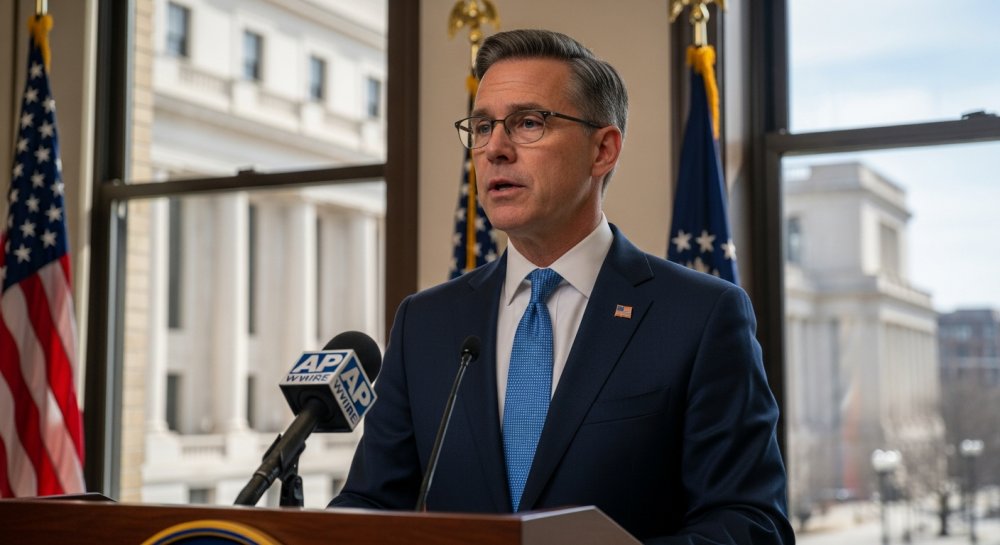
House Speaker Mike Johnson is pushing back against efforts to marginalize Christian voices in American public life. The Louisiana Republican has dismissed the term “Christian nationalism” as a deliberate attack on believers who seek to participate in civic affairs.
Johnson characterized the label as “wildly inappropriate,” arguing that it represents a broader strategy to silence Christians and exclude them from the public square. His remarks come amid growing cultural tensions over the role of faith in American political discourse.
Mike Johnson: “The naysayers who have created this new term ‘Christian nationalism’ as a pejorative, a derogatory term, are trying to silence the influence and voices of Christians, and I think that’s wildly inappropriate.” pic.twitter.com/KbCqDHHN2Q
— Aaron Rupar (@atrupar) May 17, 2026
The Speaker’s defense of Christian engagement in politics reflects a longstanding American tradition. From the nation’s founding through the civil rights movement, people of faith have played central roles in shaping public policy and advocating for justice based on religious convictions.
Johnson’s position resonates with many Christians who feel increasingly marginalized in contemporary political debates. The accusation of “Christian nationalism” has become a common refrain from progressive activists seeking to delegitimize traditional values in policy discussions.
The Speaker’s willingness to confront this trend directly signals a growing confidence among conservative Christians. Rather than retreating from public engagement, leaders like Johnson are affirming the constitutional right of believers to bring their faith-informed perspectives into the democratic process.
This debate touches on fundamental questions about religious freedom and pluralism in America. The First Amendment protects both the free exercise of religion and the right to petition government—principles that Johnson argues are being undermined by those who weaponize terms like “Christian nationalism.”
For many traditional Christians, the controversy reflects a double standard in public discourse. While secular ideologies openly influence policy debates, religious perspectives are often dismissed as illegitimate or dangerous when they challenge progressive orthodoxy.
Johnson’s leadership on this issue comes at a critical moment for American Christians. As cultural institutions increasingly embrace views at odds with biblical teaching, the Speaker’s defense of Christian participation in public life offers encouragement to believers navigating hostile terrain.
Let us know what you think, please share your thoughts in the comments below.
Faith
Texas Senate Runoff Puts Faith Voters at Center of Political Storm
Faith Facts
- U.S. Sen. John Cornyn and Texas Attorney General Ken Paxton are competing in a closely watched Republican primary runoff for the U.S. Senate seat.
- Evangelical voters represent a decisive voting bloc that could determine the outcome of the May runoff election.
- The winner will face Democratic state Rep. James Talarico in the November general election.
As Texas voters prepare for one of the nation’s most closely watched Senate primary runoffs, two prominent Republican figures are making direct appeals to the faith community. The contest between U.S. Sen. John Cornyn and Texas Attorney General Ken Paxton has placed Evangelical voters at the heart of a high-stakes political battle that will shape the state’s representation in Washington.
The May runoff election represents a critical moment for Texas Republicans. Both candidates understand that Evangelical voters — a cornerstone of the conservative coalition in the Lone Star State — will likely determine who advances to face the Democratic nominee in November.
Cornyn, who has served in the Senate since 2002, brings decades of legislative experience and a track record of conservative votes. Paxton, meanwhile, has built a national profile as a combative attorney general willing to challenge federal overreach and defend religious liberty in the courts.
The Democratic nominee, state Rep. James Talarico, represents a stark contrast to both Republican candidates. His progressive policy positions have energized the Democratic base but face significant headwinds in a state where traditional values and limited government remain dominant political forces.
For Evangelical voters, this primary runoff offers more than a choice between two Republican candidates. It represents an opportunity to shape the direction of their party and ensure that their values are championed in the halls of Congress.
The outcome of this race will send ripples far beyond Texas borders. With control of the Senate potentially hanging in the balance, national political observers are watching closely to see which vision of conservative leadership will prevail in America’s second-largest state.
Texas has long served as a bellwether for the national conservative movement. The state’s Evangelical community has played a pivotal role in shaping Republican politics, from school board elections to presidential primaries. This Senate runoff continues that tradition, placing people of faith squarely at the center of the political conversation.
As the runoff election approaches, both campaigns are intensifying their outreach to churches and faith-based organizations across the state. The candidate who can most effectively communicate a vision grounded in Biblical values and constitutional principles will likely emerge victorious.
Let us know what you think, please share your thoughts in the comments below.
Faith
Christian Employee Says Chick-fil-A Franchisee Denied Sabbath Request
Faith Facts
- A Chick-fil-A franchisee in Austin, Texas is being sued by the EEOC for allegedly refusing to accommodate an employee’s Saturday Sabbath observance
- The employee was reportedly fired after declining a demotion following her religious accommodation request
- Federal law requires employers to reasonably accommodate religious practices unless it causes undue hardship
A federal lawsuit has been filed against a Chick-fil-A franchise operator in Austin, Texas, alleging religious discrimination after an employee was denied her request to observe the Saturday Sabbath. The case raises important questions about religious freedom protections in the workplace and the responsibility of employers to honor the sincerely held beliefs of their workers.
According to the Equal Employment Opportunity Commission (EEOC), the franchisee allegedly violated federal civil rights law by refusing to accommodate the employee’s religious observance. The situation reportedly escalated when the employee was offered a demotion instead of a schedule adjustment to honor her Sabbath observance, which she declined, leading to her termination.
Religious accommodation in the workplace is a fundamental right protected under Title VII of the Civil Rights Act of 1964. Employers are required to make reasonable accommodations for employees’ sincerely held religious beliefs unless doing so would create an undue hardship on business operations. For many Americans of faith, including Christians, Jews, and Seventh-day Adventists, observing the Sabbath is a central tenet of their religious practice and conscience.
The irony of this case is not lost on many observers, given Chick-fil-A’s well-known corporate stance on religious values. The fast-food chain has long been celebrated in conservative Christian circles for closing all its locations on Sundays to allow employees to worship and rest, a policy rooted in founder Truett Cathy’s Christian convictions. While this lawsuit involves a franchisee rather than the corporate office, it highlights tensions that can arise even within faith-friendly businesses when individual religious practices differ from established operational norms.
The EEOC’s involvement signals the federal government’s enforcement of workplace religious protections. The commission investigates and litigates cases where employers allegedly fail to respect employees’ constitutional and statutory rights to practice their faith. In recent years, religious accommodation disputes have become more common as workplaces grow more diverse and employees of various faith traditions seek to balance professional responsibilities with religious commitments.
This case serves as a reminder of the ongoing need to defend religious liberty in all areas of American life, including the workplace. While businesses have legitimate operational needs, the law recognizes that accommodating sincere religious beliefs is not only a legal obligation but a reflection of the values upon which our nation was founded. When employers dismiss or demote employees for seeking to honor God through Sabbath observance, they undermine the very freedoms that make America exceptional.
For Christians and people of faith across the country, this lawsuit underscores the importance of vigilance in protecting religious freedom. Whether it involves prayer, worship attendance, dietary restrictions, or Sabbath observance, employers should view religious accommodation not as a burden but as an opportunity to respect the dignity and conscience of every worker.
Let us know what you think, please share your thoughts in the comments below.
Faith
Supreme Court Leaves California Churches Without Protection From State Daycare Mandate
Faith Facts
- The U.S. Supreme Court declined to hear a religious liberty challenge from three California churches over state daycare regulations
- California law mandates that children in church-run daycares must be allowed to choose whether to attend religious activities
- The churches argued the regulation violates their First Amendment rights to direct religious instruction and raise children in faith
The U.S. Supreme Court on Monday declined to hear an appeal from three California churches challenging a state daycare rule requiring children to be allowed to choose whether to attend religious activities. The decision leaves in place a regulation that Christian leaders warn undermines parental rights and religious freedom.
The case involved three churches operating daycare facilities in California. These ministries argued that the state’s requirement—forcing them to give young children the option to opt out of religious activities—directly conflicts with their religious mission and the explicit wishes of parents who enrolled their children in faith-based programs.
The regulation at issue prevents church-operated daycares from making participation in prayer, Bible stories, or worship mandatory, even when parents have specifically chosen a Christian environment for their children. This stands in stark contrast to the traditional understanding that parents, not the state, hold primary authority over their children’s moral and religious education.
By refusing to take up the case, the Supreme Court allowed a lower court ruling to stand. That ruling sided with California, effectively prioritizing the state’s regulatory authority over the religious convictions of faith communities and the choices of Christian parents.
Religious liberty advocates have expressed deep concern about the implications of this decision. When the government dictates how religious instruction can be offered—even in explicitly faith-based settings—it crosses a constitutional line that the Founders intended to protect.
The case represents a growing tension across America between state regulatory power and the freedoms guaranteed under the First Amendment. Churches and religious organizations increasingly find themselves navigating a legal landscape where their core missions are subject to government approval or restriction.
For Christian parents who deliberately choose faith-based childcare to ensure their children are raised in a godly environment, California’s regulation undermines that fundamental right. It inserts the state’s judgment between parent and child on matters of spiritual formation—a role the government was never intended to play.
The three churches involved in the case have not yet announced whether they will seek alternative legal remedies or how they will adapt their programs under the state mandate. Many faith leaders worry this decision could embolden other states to impose similar restrictions on religious education and childcare ministries.
This outcome comes at a time when religious freedom cases are receiving heightened scrutiny nationwide. While the Supreme Court has sided with religious liberty in several recent high-profile cases, Monday’s decision to pass on this appeal signals that not every challenge will receive a hearing—leaving some questions unresolved and some faithful ministries unprotected.
Let us know what you think, please share your thoughts in the comments below.
-
Self-Reliance1 year agoTrump’s Bold Move Uncovers Massive Social Security Fraud
-

Faith1 year agoNew Clues Emerge in Noah’s Ark Mystery
-

News1 year agoGovernor Walz’s Rhetoric Sparks National Controversy
-

News1 year agoMel Gibson’s ‘The Passion of the Christ’ Sequel Title Announced
-

Family1 year agoTexas Lawmaker Targets Furries in Schools
-

Freedom1 year agoMaine Lawmaker Challenges Sports Fairness Controversy
-

Family12 months agoCanada’s Controversial Policy Sparks Ethical Debate
-
Faith6 months ago
Congress Hears Pleas for Nigerian Christians