
Faith
Supreme Court Leaves California Churches Without Protection From State Daycare Mandate


Faith Facts
- The U.S. Supreme Court declined to hear a religious liberty challenge from three California churches over state daycare regulations
- California law mandates that children in church-run daycares must be allowed to choose whether to attend religious activities
- The churches argued the regulation violates their First Amendment rights to direct religious instruction and raise children in faith
The U.S. Supreme Court on Monday declined to hear an appeal from three California churches challenging a state daycare rule requiring children to be allowed to choose whether to attend religious activities. The decision leaves in place a regulation that Christian leaders warn undermines parental rights and religious freedom.
The case involved three churches operating daycare facilities in California. These ministries argued that the state’s requirement—forcing them to give young children the option to opt out of religious activities—directly conflicts with their religious mission and the explicit wishes of parents who enrolled their children in faith-based programs.
The regulation at issue prevents church-operated daycares from making participation in prayer, Bible stories, or worship mandatory, even when parents have specifically chosen a Christian environment for their children. This stands in stark contrast to the traditional understanding that parents, not the state, hold primary authority over their children’s moral and religious education.
By refusing to take up the case, the Supreme Court allowed a lower court ruling to stand. That ruling sided with California, effectively prioritizing the state’s regulatory authority over the religious convictions of faith communities and the choices of Christian parents.
Religious liberty advocates have expressed deep concern about the implications of this decision. When the government dictates how religious instruction can be offered—even in explicitly faith-based settings—it crosses a constitutional line that the Founders intended to protect.
The case represents a growing tension across America between state regulatory power and the freedoms guaranteed under the First Amendment. Churches and religious organizations increasingly find themselves navigating a legal landscape where their core missions are subject to government approval or restriction.
For Christian parents who deliberately choose faith-based childcare to ensure their children are raised in a godly environment, California’s regulation undermines that fundamental right. It inserts the state’s judgment between parent and child on matters of spiritual formation—a role the government was never intended to play.
The three churches involved in the case have not yet announced whether they will seek alternative legal remedies or how they will adapt their programs under the state mandate. Many faith leaders worry this decision could embolden other states to impose similar restrictions on religious education and childcare ministries.
This outcome comes at a time when religious freedom cases are receiving heightened scrutiny nationwide. While the Supreme Court has sided with religious liberty in several recent high-profile cases, Monday’s decision to pass on this appeal signals that not every challenge will receive a hearing—leaving some questions unresolved and some faithful ministries unprotected.
Let us know what you think, please share your thoughts in the comments below.

Faith Facts
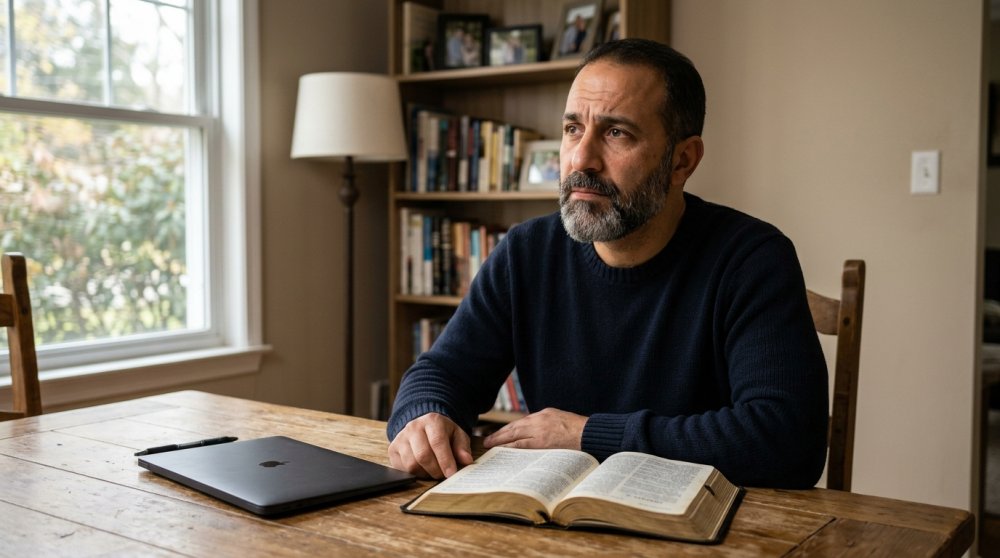
- A former Muslim who spent nearly ten years studying Christianity has publicly warned that artificial intelligence carries spiritual risks rooted in Scripture.
- The convert identifies AI’s promise of godlike power as the same temptation the serpent offered in the Garden of Eden.
- Christian teaching holds that true wisdom and authority come from God alone, not from human-made technology.
A man who left Islam for Christ after nearly a decade of searching says the rapid rise of artificial intelligence revives an ancient spiritual danger.
He argues that AI’s appeal to “become like God” directly echoes the serpent’s words in Genesis 3:5.
“The enticement to become God is the same lie that was in the garden,” the convert stated.
The former Muslim explained that after years of comparing Islam and Christianity he found the gospel alone offered both truth and grace.
Now he sees AI as a modern tool that can draw hearts away from dependence on the Lord.
He urged believers to test every new technology against the unchanging Word of God.
“We must remember that wisdom begins with the fear of the Lord, not with faster machines,” he said.
Let us know what you think, please share your thoughts in the comments below.

Faith Facts
- Christians are called to steward creation responsibly, including the environmental impact of new technologies.
- Scripture teaches that genuine human relationships reflect God’s design for community and love.
- Believers affirm that life and moral agency are gifts from God that must not be surrendered to machines.
Artificial intelligence promises remarkable advances, yet its rapid growth raises serious questions for people of faith.
Stephen Jenkins, a Christian AI engineer, has laid out three specific ethical concerns that he believes demand the church’s attention.
Energy demands for training large models already rival the yearly consumption of small nations, threatening the very creation believers are commanded to protect.
At the same time, increasingly human-like chatbots are being marketed as companions, risking the replacement of real relationships with digital simulations.
Artificial Intelligence is everywhere and has enormous potential for good. But how should Christians respond to concerns about its impact on the environment, human relationships and, ultimately, on the survival of the human race?
Jenkins warns that once systems gain the ability to improve themselves, humanity could lose meaningful control over its own future.
He urges fellow believers to bring biblical wisdom into every stage of AI development rather than leaving these decisions to secular engineers alone.
Let us know what you think, please share your thoughts in the comments below.
Faith Facts
- Pornography is not merely a personal moral failing but operates as a spiritual system that undermines faith and family.
- Traditional Christian teaching identifies pornography as both sin and spiritual bondage that requires deliverance through Christ.
- The Church must confront pornography as a cultural and spiritual threat rather than simply a private issue.
Two responses dominate the Church’s approach to pornography. One says it’s a sin to resist, and the other says it’s a compulsion to treat. Both describe something real, and both fall short, because neither can see what the Church is actually fighting.
Scripture teaches that believers wrestle not against flesh and blood but against principalities and powers in high places. This biblical framework reveals pornography as more than individual weakness or medical diagnosis. It operates as a coordinated spiritual assault on marriage, purity, and the image of God in humanity.
The traditional Christian understanding of sin recognizes that pornography violates God’s design for human sexuality within the covenant of marriage. This view maintains that individuals bear responsibility for their choices and can find freedom through repentance and the power of the Holy Spirit.
At the same time, many faithful Christians acknowledge that pornography creates patterns of bondage that require both spiritual deliverance and practical accountability. The Church has always recognized that some struggles require ongoing support and community, not merely one-time decisions.
Yet viewing pornography solely through the lens of personal sin or clinical addiction misses its broader spiritual dimensions. The proliferation of pornography represents a systematic attack on the foundations of family life that have sustained American society for generations.
Christian leaders have consistently warned that pornography distorts God’s gift of sexuality and leads to objectification rather than covenant love. This teaching remains as relevant today as when the apostles first addressed sexual immorality in the early Church.
The spiritual system behind pornography promotes values directly opposed to biblical truth about human dignity and the sanctity of marriage. It promises fulfillment while delivering isolation and shame that damage relationships with God and others.
Recovery from pornography’s influence requires both the forgiveness available through Christ and the renewing of the mind that Scripture describes. Churches that address this issue comprehensively offer hope to those caught in its grip while maintaining the truth that freedom is possible.
Let us know what you think, please share your thoughts in the comments below.


-

 Self-Reliance2 years ago
Trump’s Bold Move Uncovers Massive Social Security Fraud
-
 Faith1 year ago
New Clues Emerge in Noah’s Ark Mystery
-

 News2 years ago
Governor Walz’s Rhetoric Sparks National Controversy
-

 News2 years ago
Mel Gibson’s ‘The Passion of the Christ’ Sequel Title Announced
-

 Family2 years ago
Texas Lawmaker Targets Furries in Schools
-

 Freedom2 years ago
Maine Lawmaker Challenges Sports Fairness Controversy
-

 Family1 year ago
Canada’s Controversial Policy Sparks Ethical Debate
-
Faith11 months ago
Congress Hears Pleas for Nigerian Christians