
Faith
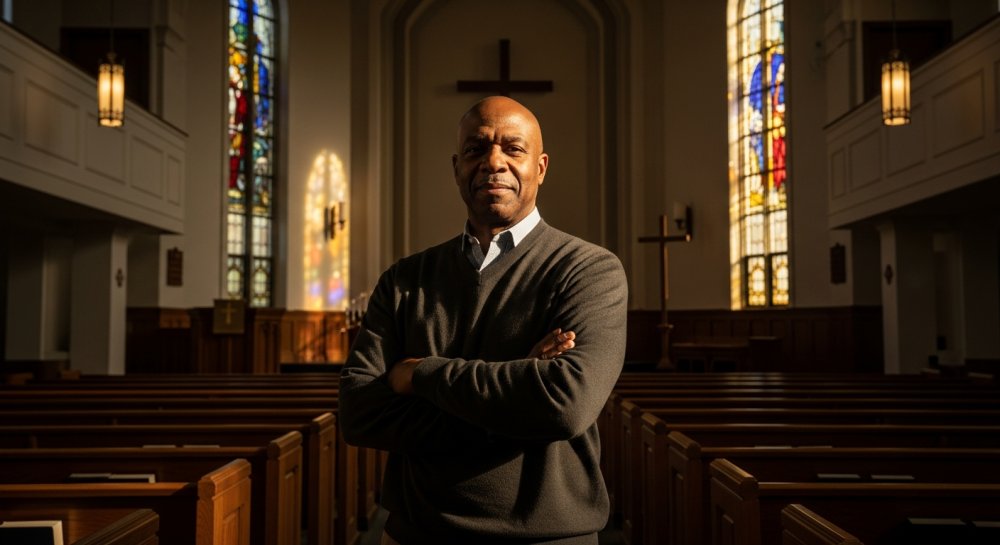
Hollywood Actor Issues Urgent Warning About What Churches Are Missing

Faith Facts
- Cameron Arnett stars in “Soul Snatchers,” a supernatural thriller designed to awaken Christians to spiritual warfare realities
- The actor urges churches to stop avoiding discussions about spiritual warfare and demonic forces
- Arnett emphasizes that Christians must reject fear and reclaim God’s supernatural power over evil
A prominent Christian actor is sounding the alarm about a critical gap in modern church teaching, calling on congregations across America to confront the reality of spiritual warfare head-on. Cameron Arnett, star of the new faith-based supernatural thriller “Soul Snatchers,” believes the Church has largely abandoned one of its most essential missions: equipping believers to recognize and combat demonic forces.
In an era when many pulpits shy away from discussing the supernatural realm, Arnett sees his latest film as a wake-up call. The movie deliberately employs the thriller genre not for entertainment’s sake alone, but as a vehicle to challenge Christians who have grown comfortable ignoring the spiritual battle raging around them.
“Soul Snatchers uses the supernatural thriller genre to challenge Christians to reject fear, embrace the reality of spiritual warfare and rediscover God’s supernatural power over evil,” Arnett explained.
The veteran actor’s message comes at a time when traditional Christian teaching on spiritual warfare has diminished in many congregations. Where previous generations of believers were taught to recognize demonic influence and stand against it through prayer and Scripture, today’s church-goers often receive little instruction on the subject.
Arnett’s emphasis on rejecting fear resonates with biblical teaching that repeatedly commands believers not to be afraid. From Joshua’s call to be strong and courageous to Paul’s reminder that God has not given us a spirit of fear, Scripture consistently affirms that Christians possess authority over evil through Christ.
The actor’s call for churches to reclaim supernatural power isn’t about sensationalism or charismatic excess. Rather, it reflects a return to New Testament Christianity, where believers routinely engaged spiritual forces and witnessed God’s power breaking demonic strongholds. The Book of Ephesians explicitly states that “we do not wrestle against flesh and blood, but against principalities, against powers, against the rulers of the darkness of this age.”
“Soul Snatchers” represents a growing trend in faith-based entertainment that refuses to sanitize Christianity’s supernatural elements. While some Christian films focus exclusively on feel-good messages or romance, this project tackles darker spiritual realities that many believers face but few discuss openly in church.
Arnett’s background in Hollywood gives him unique insight into how entertainment can shape worldview and spiritual awareness. By choosing to work in faith-based projects that address spiritual warfare, he’s using his platform to fill a void left by churches that have become overly focused on self-help messages and cultural relevance.
The timing of this message proves particularly significant as American culture becomes increasingly hostile to Christian values. Many believers report feeling spiritually attacked yet lack the theological framework or practical teaching to respond effectively. Arnett’s call challenges churches to recover biblical truth about the spiritual realm and equip their congregations accordingly.
His emphasis on God’s supernatural power serves as a reminder that Christianity is not merely a moral philosophy or self-improvement program. At its core, the faith involves a real spiritual kingdom engaged in ongoing conflict with forces of darkness—a reality that demands more than positive thinking or good intentions.
For Christians willing to engage this teaching, the implications are profound. Recognizing spiritual warfare transforms how believers pray, understand trials, and approach evangelism. It restores a sense of divine authority and power that secular culture desperately tries to suppress.
Let us know what you think, please share your thoughts in the comments below.

Faith Facts
- Former world champion boxer Manny Pacquiao has called on Christians to set annual soul-winning goals and track conversions
- Critics warn that numerical evangelism targets may reduce people to statistics and create performance anxiety among believers
- The debate highlights tensions between measurable ministry outcomes and relationship-focused gospel sharing
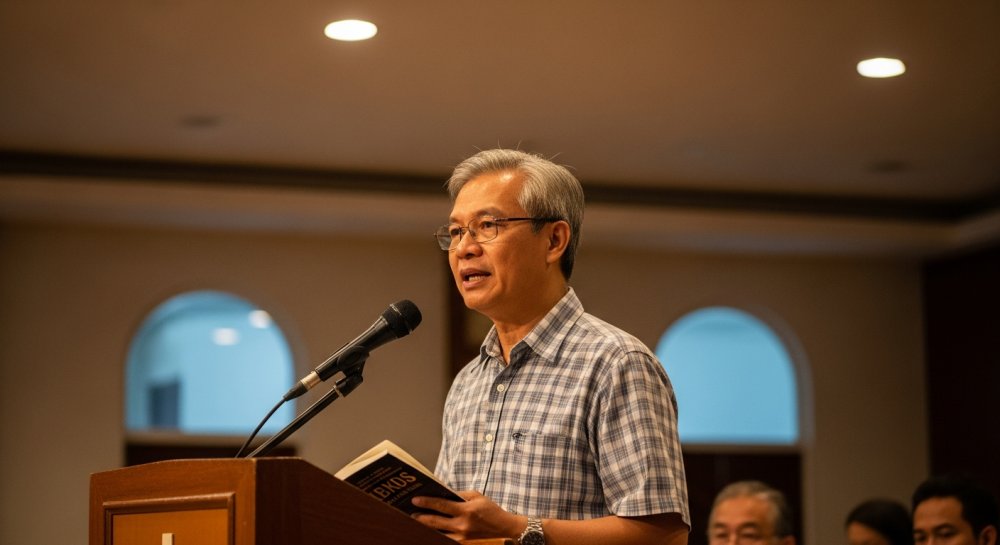
Boxing icon Manny Pacquiao, who transitioned from world champion fighter to Christian evangelist and politician, has issued a challenge to believers worldwide: set specific annual goals for winning souls to Christ. The call has sparked thoughtful discussion within Christian communities about the nature of evangelism and our responsibility to share the gospel.
Pacquiao’s approach reflects a business-minded strategy to the Great Commission, encouraging Christians to quantify their evangelistic efforts with concrete targets. For some, this represents accountability and intentionality in fulfilling Christ’s command to make disciples of all nations.
However, ministry leader Tim Yearsley raises important concerns about this metrics-driven approach to sharing faith. He questions whether numerical targets risk reducing precious souls to mere statistics and transforming the joy of evangelism into anxious performance.
The tension centers on a fundamental question: Can we measure kingdom work the same way we measure earthly success? While accountability certainly has biblical precedent, there’s wisdom in remembering that conversion is ultimately the work of the Holy Spirit, not human effort.
“We are called to be faithful witnesses, but we must remember that only God can change hearts,” notes one pastor who preferred to remain unnamed. “Our responsibility is to plant and water seeds, but God alone gives the growth.”
Pacquiao’s heart for evangelism is admirable and reflects his genuine transformation since accepting Christ. His platform as a global sports figure provides unprecedented opportunities to share the gospel with millions who might never enter a church building.
Yet the concern remains valid: when evangelism becomes primarily about hitting targets, we risk treating people as projects rather than precious souls created in God’s image. The gospel invitation should flow from love and relationship, not quota-driven urgency.
This doesn’t mean Christians shouldn’t be intentional about sharing their faith. Scripture clearly calls believers to be ready to give an answer for the hope within us and to go into all the world with the good news. The question is whether numerical goals help or hinder that mission.
Some argue that setting specific evangelism goals creates healthy accountability and prevents complacency. Others counter that it can lead to manipulation, pressure tactics, or superficial conversions that don’t produce lasting fruit.
The biblical model appears to emphasize faithfulness over results. Jesus told parables about sowers scattering seed broadly, knowing much would fall on hard ground. Paul planted, Apollos watered, but God gave the increase. Success was measured in obedience, not outcomes.
Perhaps the better approach combines intentionality with dependence on God’s sovereignty. Christians should actively seek opportunities to share the gospel while trusting the Holy Spirit to do the work only He can do in human hearts.
This also reminds us that evangelism isn’t separate from living out our faith authentically. The most powerful witness often comes through consistent Christian character, sacrificial love, and genuine relationships where the gospel naturally flows from our daily walk with Christ.
Pacquiao’s challenge, whatever its potential pitfalls, does highlight an important truth: too many Christians never share their faith at all. If numerical goals help some believers move from silence to speaking up about Jesus, that has value even if the approach isn’t perfect.
The key may be holding these twin truths in tension: be intentional about evangelism while avoiding the trap of treating souls as numbers. Set goals if helpful, but let those goals serve love rather than replace it.
As we navigate these questions, let’s remember that our ultimate accountability is to Christ Himself, who commissioned us to make disciples. Whether we track our evangelistic conversations or simply remain prayerfully attentive to divine appointments, the heart of the matter is faithful obedience motivated by love for God and others.
Let us know what you think, please share your thoughts in the comments below.
Faith Facts
- Foundations School in rural Idaho opened three years ago with 18 students and has now grown to 60, offering Bible-based education with practical trade skills
- The school meets on property that was formerly a greenhouse and garden center, transforming it into a K-12 Christian institution serving families within 40 miles
- Five baptisms have taken place in the Kootenai River through Sunday worship gatherings hosted at the school
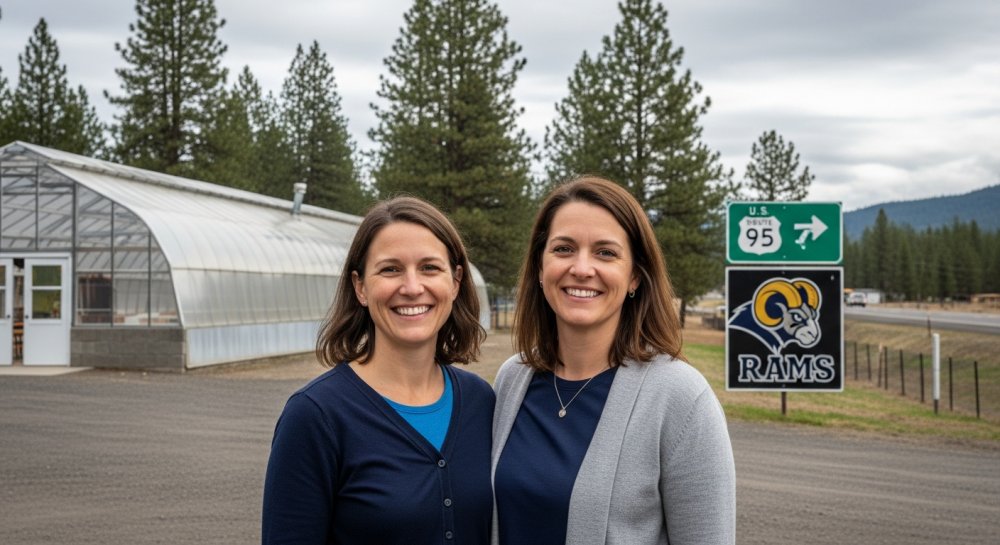
An eye-catching sign featuring a Christian school’s Rams mascot greets logging trucks along heavily traveled U.S. 95, about 40 miles south of the Canadian border. Just off the highway, tamarack and ponderosa pine trees dot the landscape as K-12 students gather outside each morning to pray and recite the Pledge of Allegiance and the pledge of Foundations School.
“We pledge to serve God first in everything that we do, be a friend to people and live a life worthy of our calling,” the campus community vows.
While missionaries often move around the globe to fulfill their calling, Charli Turner, 48, found her mission field right here in rural North Idaho — at the site of a former greenhouse and garden center known as Moose Valley Farms.
“Our community has faced challenges — church scandals, splits and growing disinterest in faith — but we are committed to showing Christ to children and planting seeds of hope,” said Turner, founder and executive director of Foundations School, which is associated with Churches of Christ.
As she describes it, the Bible-based, trade-focused school equips students with practical skills and spiritual roots. Launched three years ago with 18 students, the educational institution emphasizes individualized learning plans tailored to each child.
The school has tripled in size to about 60.
A year after the K-12 opening, Turner persuaded Julie Montgomery, 44 — the founder’s longtime friend and fellow Christian — to relocate from Texas and serve as Foundations’ principal. Five teachers, two fundraisers and a maintenance/security person join Turner and Montgomery on the staff.
“We believe the mission field in our own backyard is as vital, and often more personal, than distant fields,” Turner said, “as we witness generational trauma and dysfunction play out every day.”
A Deeper Meaning
The Rams mascot reflects the school’s location in Idaho’s northernmost Boundary County — bordered by Washington to the west, Montana to the east and the Canadian province of British Columbia to the north. Indeed, Rocky Mountain bighorn sheep inhabit the area.
But for the faith-based institution, the symbol carries a deeper meaning.
“When you talk about Christian education, a lot of people have Lions or Eagles” as their mascot, Montgomery said. “We thought about Genesis 22.”
In that Bible chapter, Abraham demonstrates his faith by taking his son Isaac up a mountain to offer as a sacrifice. Instead, God provides a ram for the burnt offering.
Besides the spiritual application, Foundations adapted RAMS as an acronym for its “Right Attitudes Make Success” motto. The school also emblazoned “The Lord will provide” on its cross logo.
“Our kids all know the story of the ram,” Montgomery said, “and they are proud of its meaning.”
We Had This Funny Vision
Turner grew up alongside Montgomery’s future husband, Levi, a friend of her family. Through that connection, the two women first met a quarter-century ago.
However, they didn’t become BFFs — best friends forever — until later when both lived in Montana and attended the Great Falls Church of Christ. Shanlee, the youngest of Turner’s three biological children, was an infant at the time.
She’s now 20.
Montgomery was pregnant with Brenna, the oldest of her three children. She’s now 19.
At the same time, Montgomery was caring for her mother, who was extremely ill and died nine months after her daughter’s arrival in Great Falls.
“Charli just kind of took me under her wings,” Montgomery said. “Just between the coffee dates and friendship and just raising our kids together, it was exactly what I needed at that moment.”
That’s when the two first discussed the idea of starting a school that could serve as a Christian mission.
“We had this funny vision that we were going to take in all the lost, hurting kids,” Turner said.
But life took them in different directions. Turner spent eight years working for Mountain States Children’s Home in Longmont, Colorado.
Montgomery taught sixth-grade science and fifth-grade math in Texas before moving into school administration.
While Turner served as a housemother for teenage girls at Mountain States Children’s Home, Montgomery kept opening her own Bertram, Texas, home to little ones in need.
“Unofficially, I have a half-dozen bonus kids who were just friendly neighborhood kids who showed up and didn’t leave,” Montgomery said.
On the Move
As a child, Turner moved often as her father’s work — including military service — meant frequent address changes. Before turning 18, she lived in Colorado, Idaho, Kentucky, Montana, Oklahoma, Oregon, Texas and Washington.
Turner attended her final two years of high school in Bonners Ferry, Idaho, the county seat of Boundary County. The summer after her 1996 graduation, she lived with a friend’s parents, Clint and Mary Kimball.
The Kimballs later started Moose Valley Farms.
In 2016, a traumatic divorce caused Turner to leave Colorado. She returned to North Idaho.
“I knew I would be safe with my daughters, and this is where I came,” she said. “That’s it in a nutshell.
My son was finishing his senior year, and he moved here shortly after.”
In Bonners Ferry, Turner rebuilt her life and met her second husband, Lucas Turner. Her journey to provide a faith-based educational outlet for area children began in 2020 amid COVID-19.
She first started a daycare. Then — concerned about students struggling academically and emotionally after the pandemic — she saw a need for the school.
But finding a suitable location proved difficult.
“We felt like maybe God was shutting the doors,” she said, “and it wasn’t going to be a thing.”
Then Clint Kimball called.
“I heard you’re looking for a place to have school,” he said. “We’re trying to get Mrs. Mary to retire from the greenhouse.
Maybe we could come up with a plan.”
They did.
Retooling and Rebirths
In spring 2023, the 10-acre property, about 10 miles south of Bonners Ferry, became the home of Foundations School and Turner Plumbing, owned by Lucas Turner. The plumbing company operates in a separate building from Foundations and serves as the school’s main financial sponsor.
For three-plus years, Charli Turner has worked to retool and refurbish the former greenhouse and garden center into classrooms and other instructional space. Moreover, the school is developing the Idaho Mercantile and 9Beans Coffee Co. at the plumbing building.
The retail space will sell Idaho-made products and coffee.
Besides generating funds for the school, the mercantile will house a student nutrition program and provide a hands-on environment for culinary education, Charli Turner said. The “9B” refers to Idaho license plates, which use that designation for vehicles registered in Boundary County.
Along with its educational offerings, the school hosts a Lord’s Day worship gathering that has resulted in five baptisms in the Kootenai River.
“Our mission really is those people that have been rejected or are hurting,” Charli Turner said, “so we have about 35 coming out here on Sunday morning.”
The Moose’s Role
As Turner developed the school, she demonstrated multiple strengths — from a knack for organization to an ability to cast a compelling vision. She lacked nuts-and-bolts expertise, though, in areas such as curriculum, grading and academic transcripts.
So she called Montgomery.
“Come run this school with me,” Turner urged her friend.
“Sister, I’m so proud of you,” Montgomery responded. “But I’m not doing it.
I’m on a path here in Texas.”
But Turner kept calling. After about a year, she told Montgomery, “It’s OK that you’re not coming.
Why don’t you just travel up here and just give me some advice on the school?”
Montgomery agreed.
During that trip, the two friends enjoyed an outing on Brush Lake, close to the Canadian border.
“We’re out on kayaks,” Montgomery recalled, “and a bull moose walks out among the lily pads.”
Montgomery took the moose’s appearance as divine intervention. The message: She’d never experience such a view in Central Texas.
“I knew she was coming the whole time,” Turner said with a chuckle. “I was very persistent and very convincing.
I needed her.”
A Mixed Bag of Nuts
Foundations draws students from as far as 30 to 40 miles away, all the way from Sandpoint — the seat of Bonner County, just south of Boundary County — to Canada. The school serves a region known for its independent-minded, self-reliant approach to life.
President Donald Trump overwhelmingly carried both counties in the 2016, 2020 and 2024 elections.
Besides learning reading, writing and arithmetic, students gain insight into potential trades — touring meat packing plants, granite shops, sawmills and other potential future employers. Foundations has an annual tuition price of $6,000 per year but works to raise money to help families who can’t afford that amount.
A few families receive assistance through Idaho’s $50 million Parental Choice Tax Credit.
“In North Idaho, spiritual roots often struggle to grow deep,” Charli Turner said. “We see this firsthand in the lives of the children we serve.”
These students include teens in need of rehabilitation and children whose parents battle addiction, she said. One boy’s father died of a fentanyl overdose.
One sibling group’s father, hurt in a debilitating accident, has endured five surgeries.
In some cases, parents push children to enroll at Foundations. In others, relatives or community supporters nudge families to consider the faith-based option.
“Everybody here is like a mixed bag of nuts,” said Aspen Graham, a 17-year-old senior who drives her 2016 Mazda CX-5 about 20 miles each way to Foundations. “We get along really well, but we’re all just very different.”
After struggling at her public high school, Graham enrolled at Foundations a year and a half ago.
“I’m definitely like a social butterfly, and I’m kind of all over the place, so it was kind of hard to learn,” she said of her previous school.
With Foundations, Graham knew she was choosing a Christian school. But she was satisfied that participating — or not — in religious activities would be up to her.
“I used to not really be” a person of faith, she said. “Here, it was never shoved down my throat or anything.
But like, I started being more interested in it. And I did end up starting my own teen girls’ Bible study, just to understand it more with other girls my age and stuff.
So I’m leaning more that way.”
Graham wore a cross necklace as she spoke. Asked about it, she explained: “It’s new.
I got it a few months ago. I never felt like I should actually be able to wear one until I was actually leaning that way.
I didn’t grow up with a family that really went to church or anything, so I’m kind of on my own path. I didn’t want to be like a poser or anything.”
Who Can Come and Help Us?
For both Turner and Montgomery, Foundations School has become a family affair. Turner’s son Payton Chaffin, 27, serves as director of fundraising, and his wife, Caitlin, is a school nutritionist.
Daughter Cassidy McKee, 23, and her husband, Tim, an Army veteran, both teach classes.
Daughter Shanlee Chaffin works with the 9B Family Foundations daycare, which is associated with the school, while stepdaughter Anna Rae Turner, 15, is a Foundations student. Stepson Colton, 19, is an apprentice at Turner Plumbing.
Montgomery’s sons, 17-year-old Colter and 14-year-old Sawyer, attend the school.
“Charli’s done such a fantastic job of putting this school together and recruiting very passionate, enthusiastic people, but we’re always looking for other partnerships,” Montgomery said.
They’d love to partner with churches and other Christian schools across the nation, she emphasized. Foundations could provide “a mission opportunity where a student is coming and getting some teaching experience,” she said.
“But maybe it’s a mission where the church is willing to pay half her salary to allow us to afford them.”
Montgomery attends the Boundary County Church of Christ in Bonners Ferry, where Wade Purdom preaches. Purdom and his wife, Leah, homeschool their children, but he praised the positive change he’s seen in Foundations students he knows.
“It’s remarkable,” he said. “There’s not a lot of students, but they’re really pouring into each one of them, and it’s beautiful to see.”
Like her friend, Turner voiced a desire to involve more Christians in the domestic mission work.
“It’s like, who can come and help us?” she said. “Who can come and intern here?
Who can come and get their student teaching out of the way and also pour into this community for a minute — and maybe fall in love and stay?”
Let us know what you think, please share your thoughts in the comments below.

Faith Facts
- Manchester City winger Jeremy Doku released a video reflecting on how God worked through his World Cup experience in unexpected ways
- The young soccer star emphasized that his tournament success was measured not by athletic performance but by spiritual growth
- Doku’s testimony highlights lessons on pride, character, family, and forgiveness that transcended the sport
Manchester City winger Jeremy Doku has opened up about his World Cup experience in a powerful new video that puts faith above football. The talented athlete’s candid reflection reveals how God used one of soccer’s biggest stages to teach him lessons that had nothing to do with the scoreboard.
For many professional athletes, success at the World Cup is measured in goals, assists, and victories. But for Doku, the tournament became something far more meaningful—a spiritual journey that challenged his character and deepened his relationship with God.
The young soccer star’s testimony offers a refreshing perspective in a sports world often dominated by ego and self-promotion. Instead of boasting about his athletic achievements, Doku chose to share how the World Cup humbled him and revealed areas where he needed to grow in faith.
Doku’s reflections touch on four key areas where God worked in his life during the tournament: pride, character, family, and forgiveness. Each of these themes represents a battle that many Christians face, whether they’re competing on the world stage or navigating everyday life.
The issue of pride stands out as particularly relevant in professional sports, where fame and success can easily inflate the ego. Doku’s willingness to acknowledge this struggle demonstrates the kind of humility that Scripture calls believers to embrace. In an industry that celebrates self-promotion, his transparency is countercultural and commendable.
His emphasis on character reveals an understanding that who we are matters more than what we accomplish. This biblical principle often gets lost in a culture obsessed with achievement and recognition. Doku’s focus on character development shows a maturity beyond his years and a commitment to living out his faith authentically.
The family aspect of Doku’s testimony reminds us that our relationships with loved ones matter deeply to God. Too often, athletes sacrifice family on the altar of career advancement. Doku’s reflection suggests he’s learning to maintain that crucial balance, recognizing that success in sport means little if we lose those closest to us.
Perhaps most powerful is Doku’s discussion of forgiveness. This Christian principle lies at the heart of the Gospel, yet it’s one of the most difficult to practice, especially in competitive environments where grudges and rivalries can fester. His willingness to address this topic suggests genuine spiritual growth.
What makes Doku’s witness particularly effective is that it came through actions and attitude rather than merely words. His testimony demonstrates that sometimes the most powerful evangelism happens when we live out our faith authentically in challenging circumstances. The World Cup stage magnified both his struggles and his reliance on God.
In a sports culture that often marginalizes faith or treats it as a private matter, Doku’s public testimony stands as a bold declaration that God belongs in every area of life. His message challenges both athletes and fans to reconsider what truly matters and where real success is found.
The Manchester City player’s reflection also serves as an encouragement to young believers navigating their own journeys. His honesty about struggles with pride and the ongoing work of sanctification shows that spiritual growth is a process, not an instant transformation. This realistic portrayal of the Christian life can help others feel less alone in their own battles.
Doku’s story illustrates a biblical truth: God often uses unexpected circumstances to refine our character. What the world saw as a sporting event, God used as a classroom for spiritual formation. This perspective transforms how we view both success and failure, seeing them as opportunities for growth rather than final verdicts on our worth.
The video’s release demonstrates Doku’s commitment to using his platform for something greater than personal glory. In an age when many athletes leverage their fame for commercial gain, his choice to share a spiritual message stands out as genuinely countercultural and worthy of respect.
For Christian parents raising children in competitive sports environments, Doku’s testimony provides a valuable teaching moment. It offers a framework for discussing how to maintain faith and character in high-pressure situations where worldly values often dominate. His example shows young athletes that it’s possible to compete at the highest level while keeping God first.
The emphasis on what happened off the pitch rather than on it challenges our culture’s obsession with visible achievement. Doku’s witness suggests that the most important victories often occur in the unseen places of the heart, where God works to transform us into the image of Christ.
As the sports world continues to celebrate physical prowess and competitive success, testimonies like Doku’s provide a necessary corrective. They remind us that we are more than our accomplishments, and that God’s purposes extend far beyond the games we play or the careers we build.
Jeremy Doku’s World Cup reflection stands as a powerful reminder that God can use any circumstance—even a global sporting event—to accomplish His purposes in our lives. His willingness to share these lessons publicly offers hope and encouragement to believers everywhere who are seeking to live out their faith authentically in whatever arena God has placed them.
Let us know what you think, please share your thoughts in the comments below.


-

 Self-Reliance1 year ago
Trump’s Bold Move Uncovers Massive Social Security Fraud
-

 Faith1 year ago
New Clues Emerge in Noah’s Ark Mystery
-

 News1 year ago
Governor Walz’s Rhetoric Sparks National Controversy
-

 News1 year ago
Mel Gibson’s ‘The Passion of the Christ’ Sequel Title Announced
-

 Family1 year ago
Texas Lawmaker Targets Furries in Schools
-

 Freedom1 year ago
Maine Lawmaker Challenges Sports Fairness Controversy
-

 Family1 year ago
Canada’s Controversial Policy Sparks Ethical Debate
-
Faith9 months ago
Congress Hears Pleas for Nigerian Christians