
Faith
Why This World Cup Star Says Faith Mattered More Than the Game


Faith Facts
- Manchester City winger Jeremy Doku released a video reflecting on how God worked through his World Cup experience in unexpected ways
- The young soccer star emphasized that his tournament success was measured not by athletic performance but by spiritual growth
- Doku’s testimony highlights lessons on pride, character, family, and forgiveness that transcended the sport
Manchester City winger Jeremy Doku has opened up about his World Cup experience in a powerful new video that puts faith above football. The talented athlete’s candid reflection reveals how God used one of soccer’s biggest stages to teach him lessons that had nothing to do with the scoreboard.
For many professional athletes, success at the World Cup is measured in goals, assists, and victories. But for Doku, the tournament became something far more meaningful—a spiritual journey that challenged his character and deepened his relationship with God.
The young soccer star’s testimony offers a refreshing perspective in a sports world often dominated by ego and self-promotion. Instead of boasting about his athletic achievements, Doku chose to share how the World Cup humbled him and revealed areas where he needed to grow in faith.
Doku’s reflections touch on four key areas where God worked in his life during the tournament: pride, character, family, and forgiveness. Each of these themes represents a battle that many Christians face, whether they’re competing on the world stage or navigating everyday life.
The issue of pride stands out as particularly relevant in professional sports, where fame and success can easily inflate the ego. Doku’s willingness to acknowledge this struggle demonstrates the kind of humility that Scripture calls believers to embrace. In an industry that celebrates self-promotion, his transparency is countercultural and commendable.
His emphasis on character reveals an understanding that who we are matters more than what we accomplish. This biblical principle often gets lost in a culture obsessed with achievement and recognition. Doku’s focus on character development shows a maturity beyond his years and a commitment to living out his faith authentically.
The family aspect of Doku’s testimony reminds us that our relationships with loved ones matter deeply to God. Too often, athletes sacrifice family on the altar of career advancement. Doku’s reflection suggests he’s learning to maintain that crucial balance, recognizing that success in sport means little if we lose those closest to us.
Perhaps most powerful is Doku’s discussion of forgiveness. This Christian principle lies at the heart of the Gospel, yet it’s one of the most difficult to practice, especially in competitive environments where grudges and rivalries can fester. His willingness to address this topic suggests genuine spiritual growth.
What makes Doku’s witness particularly effective is that it came through actions and attitude rather than merely words. His testimony demonstrates that sometimes the most powerful evangelism happens when we live out our faith authentically in challenging circumstances. The World Cup stage magnified both his struggles and his reliance on God.
In a sports culture that often marginalizes faith or treats it as a private matter, Doku’s public testimony stands as a bold declaration that God belongs in every area of life. His message challenges both athletes and fans to reconsider what truly matters and where real success is found.
The Manchester City player’s reflection also serves as an encouragement to young believers navigating their own journeys. His honesty about struggles with pride and the ongoing work of sanctification shows that spiritual growth is a process, not an instant transformation. This realistic portrayal of the Christian life can help others feel less alone in their own battles.
Doku’s story illustrates a biblical truth: God often uses unexpected circumstances to refine our character. What the world saw as a sporting event, God used as a classroom for spiritual formation. This perspective transforms how we view both success and failure, seeing them as opportunities for growth rather than final verdicts on our worth.
The video’s release demonstrates Doku’s commitment to using his platform for something greater than personal glory. In an age when many athletes leverage their fame for commercial gain, his choice to share a spiritual message stands out as genuinely countercultural and worthy of respect.
For Christian parents raising children in competitive sports environments, Doku’s testimony provides a valuable teaching moment. It offers a framework for discussing how to maintain faith and character in high-pressure situations where worldly values often dominate. His example shows young athletes that it’s possible to compete at the highest level while keeping God first.
The emphasis on what happened off the pitch rather than on it challenges our culture’s obsession with visible achievement. Doku’s witness suggests that the most important victories often occur in the unseen places of the heart, where God works to transform us into the image of Christ.
As the sports world continues to celebrate physical prowess and competitive success, testimonies like Doku’s provide a necessary corrective. They remind us that we are more than our accomplishments, and that God’s purposes extend far beyond the games we play or the careers we build.
Jeremy Doku’s World Cup reflection stands as a powerful reminder that God can use any circumstance—even a global sporting event—to accomplish His purposes in our lives. His willingness to share these lessons publicly offers hope and encouragement to believers everywhere who are seeking to live out their faith authentically in whatever arena God has placed them.
Let us know what you think, please share your thoughts in the comments below.


Faith Facts
- Planned Parenthood has expanded services to include gender-affirming care, marking a strategic shift in its organizational focus
- Christian leaders identify a common ideological thread between abortion advocacy and gender-affirming care that contradicts biblical truth about human identity
- Both movements prioritize subjective feelings over the objective biological reality established by God at creation
A troubling pattern has emerged in America’s cultural landscape, one that Christian conservatives recognize as a continuation of a decades-long battle over the very nature of human identity and dignity.
Planned Parenthood’s recent expansion into gender-affirming care reveals more than a simple organizational pivot. It exposes the deeper ideological foundation connecting two seemingly separate movements that have reshaped American society.
At the heart of both abortion advocacy and the gender-affirming care movement lies a fundamental rejection of God’s created order. Rather than accepting the biological reality that God establishes at conception and birth, these movements elevate subjective internal feelings as the ultimate authority on human identity.
This represents a spiritual battlefield that Christians cannot ignore. When organizations that have long championed the taking of unborn life now champion the alteration of God-given biology, the connection becomes unmistakable.
The biblical worldview stands in stark contrast to this ideology. Scripture teaches that God creates each person with intention and purpose, knitting them together in their mother’s womb (Psalm 139:13-14). Gender is not assigned arbitrarily but reflects God’s creative design from the moment of conception.
For believers, this isn’t about being unkind or unloving toward those struggling with their identity. Rather, it’s about upholding the truth that sets people free—the truth that our worth and identity are found in being made in God’s image, not in our fluctuating emotions or cultural trends.
The expansion of Planned Parenthood into gender-affirming care should serve as a wake-up call for Christian Americans. The same organization responsible for millions of abortions now seeks to profit from another form of bodily destruction, this time targeting children and young adults confused about their God-given identity.
Traditional values and biblical truth teach us that compassion doesn’t mean affirming every feeling or desire. True love sometimes means speaking difficult truths and pointing people toward the reality of who God created them to be.
As this cultural battle intensifies, Christians must remain grounded in Scripture while extending genuine love and support to those caught in the confusion of our age. The answer to identity confusion isn’t found in hormones or surgeries, but in the unchanging truth of God’s Word and His design for humanity.
Let us know what you think, please share your thoughts in the comments below.
Faith Facts
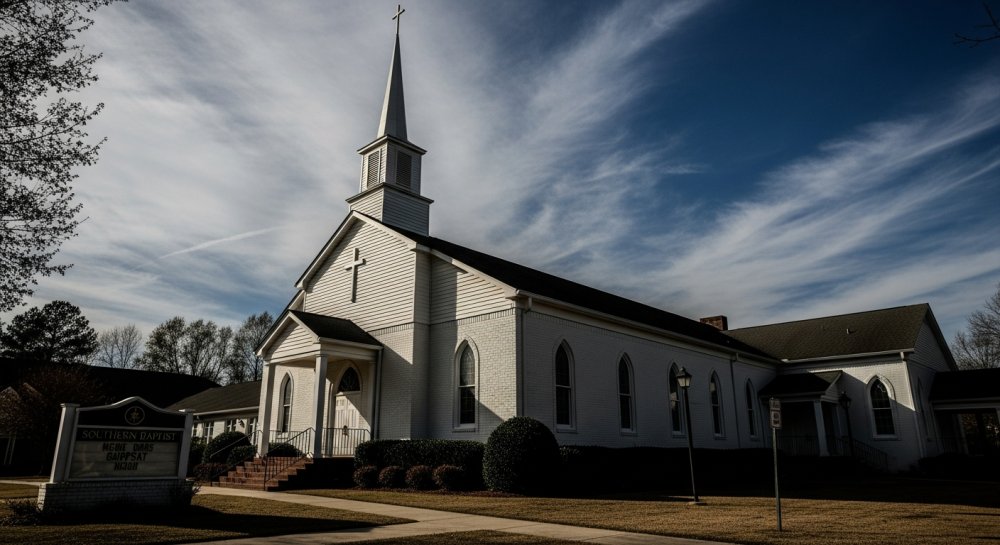
- The Southern Baptist Convention and its Executive Committee have been named as defendants in a class-action lawsuit involving a South Carolina church that allegedly allowed a convicted sex offender to volunteer near children.
- Church leaders at the South Carolina congregation face criminal charges related to the case, raising questions about institutional oversight and child protection policies.
- The lawsuit represents growing legal pressure on denominational bodies to ensure member churches maintain proper safeguards for the most vulnerable members of their congregations.
A troubling case out of South Carolina has placed the Southern Baptist Convention at the center of serious legal action. The denomination and its Executive Committee now stand as defendants in a class-action lawsuit connected to failures at a member church.
The case involves a South Carolina congregation whose leadership allegedly permitted a convicted sex offender to volunteer in proximity to children for an extended period. This stunning breach of basic child safety protocols has resulted in criminal charges against church leaders.
The inclusion of the SBC and its Executive Committee in the lawsuit raises significant questions about denominational accountability. While Southern Baptist churches maintain local autonomy, plaintiffs apparently believe the broader organization bears some responsibility for ensuring member congregations maintain appropriate safeguards.
Child protection in churches has become an urgent priority for congregations across America. Christian communities have a sacred duty to protect the innocent and vulnerable, making failures in this area particularly grievous.
The case highlights the tension between congregational independence—a hallmark of Baptist polity—and the need for denominational oversight on critical matters of safety and integrity. Churches must balance their autonomy with accountability to broader standards that protect children.
For families who trust their churches with their children’s spiritual formation and physical safety, such allegations represent a devastating breach of faith. The church is called to be the safest place for children, not a venue where known dangers are permitted access.
The criminal charges against the South Carolina church’s leadership indicate prosecutors believe laws were violated. When church leaders fail to protect children from known threats, they not only betray their spiritual calling but may face serious legal consequences.
This lawsuit adds to mounting pressure on the Southern Baptist Convention regarding child safety issues within its network of churches. The denomination has faced increasing scrutiny in recent years over how sexual abuse allegations have been handled across its member congregations.
Christian conservatives have long emphasized the importance of protecting children and maintaining high moral standards in religious institutions. When churches fail in this fundamental responsibility, it damages the witness of the Gospel and erodes public trust in Christian ministry.
The outcome of this case may have implications for how denominational bodies approach oversight and accountability with member churches. While respecting congregational autonomy remains important, ensuring child safety must be non-negotiable.
Churches across America should view this case as a reminder to review their own child protection policies. Background checks, proper training, clear procedures, and vigilant oversight are essential elements of faithful stewardship of the children entrusted to church care.
The biblical mandate to protect the vulnerable could not be clearer. Jesus himself warned that anyone who causes harm to children would face severe judgment, saying it would be better for them to have a millstone hung around their neck and be drowned in the sea.
Let us know what you think, please share your thoughts in the comments below.

Faith Facts
- Canadian evangelicals are mobilizing to oppose government plans to extend assisted suicide to individuals suffering from mental illness
- Faith leaders are urging believers to contact their Members of Parliament to voice concerns over the proposed expansion of euthanasia eligibility
- The push reflects growing alarm among Christians over the sanctity of life and the dangerous precedent of allowing mental health conditions to qualify for state-assisted death
Faith communities across Canada are raising their voices in defense of the vulnerable as the nation moves closer to allowing people with mental illness to access physician-assisted suicide. Evangelical leaders are calling on believers to take immediate action by contacting their local representatives in Parliament.
The proposed expansion of Canada’s Medical Assistance in Dying (MAiD) program has sparked deep concern among Christians who view it as a dangerous erosion of the value of human life. What began as a provision for those with terminal physical illnesses now threatens to include Canadians whose suffering is psychological rather than physiological.
For Christians, the issue strikes at the heart of biblical teaching on the sanctity of life and the responsibility to protect the most vulnerable members of society. Mental illness, by its very nature, can impair judgment and distort one’s view of hope and future possibilities. Allowing such individuals access to state-sanctioned death raises profound moral and ethical questions that cannot be ignored.
Church leaders are emphasizing that this is not merely a political issue but a spiritual one that demands the engagement of every believer. The call to action is clear: Christians must make their voices heard in the halls of government before this policy becomes entrenched in Canadian law.
The expansion of assisted suicide eligibility represents a troubling shift in how society values human life, particularly those experiencing mental health challenges. Rather than investing in comprehensive mental health care, suicide prevention, and community support, the government appears poised to offer death as a solution to suffering.
This development in Canada serves as a warning to believers across North America about the slippery slope of euthanasia laws. What begins with supposedly narrow criteria inevitably expands to encompass broader categories of people, ultimately devaluing life itself.
The mobilization of evangelical Christians on this issue demonstrates the vital role faith communities play in defending life and upholding traditional values in an increasingly secular society. Their voices represent not only religious conviction but also a profound concern for the common good and the protection of society’s most vulnerable members.
As the debate continues, Christians are reminded that their engagement in the public square is both a civic duty and a faithful witness to the value God places on every human life, regardless of circumstance or condition.
Let us know what you think, please share your thoughts in the comments below.


-

 Self-Reliance1 year ago
Trump’s Bold Move Uncovers Massive Social Security Fraud
-

 Faith1 year ago
New Clues Emerge in Noah’s Ark Mystery
-

 News1 year ago
Governor Walz’s Rhetoric Sparks National Controversy
-

 News1 year ago
Mel Gibson’s ‘The Passion of the Christ’ Sequel Title Announced
-

 Family1 year ago
Texas Lawmaker Targets Furries in Schools
-

 Freedom1 year ago
Maine Lawmaker Challenges Sports Fairness Controversy
-

 Family1 year ago
Canada’s Controversial Policy Sparks Ethical Debate
-
Faith9 months ago
Congress Hears Pleas for Nigerian Christians