
News
Heroic Acts Thwart Tragedy at Michigan Church


In a world where faith, family, and freedom face constant challenges, the recent events at CrossPointe Community Church in Wayne, Michigan, serve as a powerful testament to the enduring strength of Christian values and the courage of individuals committed to protecting their community. Deacon Richard Pryor and Ron Amann, a dedicated member of the church’s security team, are now rightfully celebrated as heroes for their decisive actions in thwarting a potential mass shooting during a Sunday worship service.
The incident unfolded when 31-year-old Brian Browning, armed with an AR-15-style rifle and 500 rounds of ammunition, approached the church with malicious intent. Thanks to the quick thinking of Deacon Pryor, who courageously drove his truck towards the shooter, the church’s security team gained crucial seconds to respond. “Richard was in the parking lot and saw the shooter walking towards the door. In a moment of quick thinking and incredible bravery Richard sped towards the man, hitting him with his truck,” recounted Steven Lewellyn on a GoFundMe campaign that has raised over $24,000 to support Pryor and his family.
Pryor’s truck, which was totaled in the process, took several rounds, underscoring the gravity of the situation and the selfless nature of his actions. Despite the danger, Pryor’s humility shines through, as church member Dustin Fuoco noted, “He is one of the most humble guys I’ve ever seen, and he is 100% giving all the glory to God.”
Meanwhile, Ron Amann, who was shot in the leg during the confrontation, displayed remarkable bravery as well. Despite his injuries, Amann’s faith remains unshaken, as highlighted by the words of Kate Dunphy, the organizer of a GoFundMe campaign that has raised over $38,000 for his recovery. “God spared Ron’s life and was mighty in His protection over the security team and congregation,” she wrote, emphasizing the divine intervention that played a role in safeguarding the church community.
Amann, who had recently undergone training at a shooting range, recounted the harrowing moments of the attack. “I heard a popping, a pop, pop, pop, pop, pop, pop, noise that I couldn’t quite identify,” he recalled. Despite the chaos, Amann prioritized his family’s safety and bravely confronted the shooter. His actions, along with those of fellow church safety member Jay Trombley, who ultimately neutralized the threat, exemplify the importance of preparedness and vigilance in safeguarding our communities.
This incident also serves as a poignant reminder of the power of prayer and the strength derived from faith-based communities. As Psalm 37:23-24 reminds us, “The steps of a man are established by the LORD, when he delights in his way; though he fall, he shall not be cast headlong, for the LORD upholds his hand.” The unwavering faith and courage displayed by Pryor, Amann, and the entire CrossPointe Community Church stand as a beacon of hope and resilience in the face of adversity.
In these challenging times, let us continue to uphold the values of faith, family, and freedom that define our great nation. The heroes of CrossPointe Community Church exemplify the best of America, demonstrating that with God’s guidance, we can overcome any challenge and emerge stronger than ever.
Let us know what you think, please share your thoughts in the comments below.


Faith Facts
- Dolly Parton, legendary country singer and devoted Christian, passed away at age 80 in Nashville, Tennessee
- The beloved entertainer carried hymns from her small Tennessee mountain church throughout her decades-long career
- Parton achieved No. 1 hits on Christian radio, using her platform to share her faith with millions
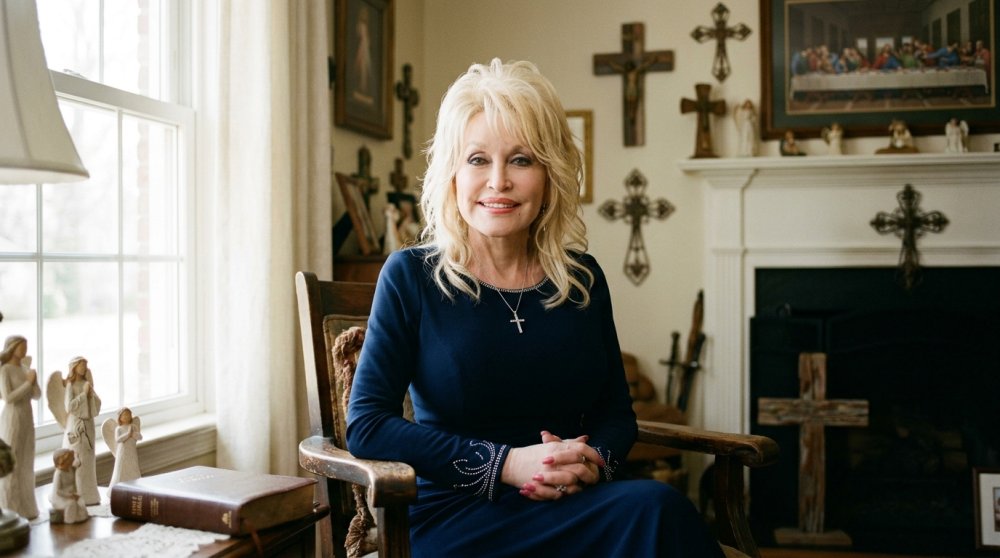
The nation is in mourning following the passing of Dolly Parton, a treasured American icon whose faith in Jesus Christ remained at the heart of everything she did. The country music legend died Tuesday in Nashville, Tennessee, at the age of 80.
Parton’s journey began in the humble setting of a small mountain church in Tennessee, where the hymns and spiritual songs she learned as a child would shape not only her musical style but her entire life’s mission. She never forgot those roots, and her commitment to sharing the Gospel through her music touched countless lives across generations.
Throughout her remarkable career, Parton used her God-given talents to bring hope and inspiration to millions. Her success on Christian radio charts demonstrated that her faith was not just a private matter, but a public testimony she was eager to share with the world.
The singer-songwriter’s life exemplified what it means to be a faithful steward of the blessings God provides. From her humble beginnings in the Smoky Mountains to becoming one of America’s most beloved entertainers, Parton never wavered in her devotion to Christ or her love for traditional American values.
Her passing marks the end of an era, but her legacy of faith, family values, and service to others will continue to inspire Christians and Americans for generations to come. Dolly Parton now rests in the arms of Jesus, the Savior she served so faithfully throughout her life.
Let us know what you think, please share your thoughts in the comments below.
Faith Facts
- Dolly Parton, who attended the Radnor Church of Christ in Nashville with her husband Carl Dean, passed away at age 80
- A 1966 church directory photograph documented the newlywed couple as active members of the congregation
- Parton’s family announced her passing on Tuesday, August 25, 2026, following her husband’s death in March 2025
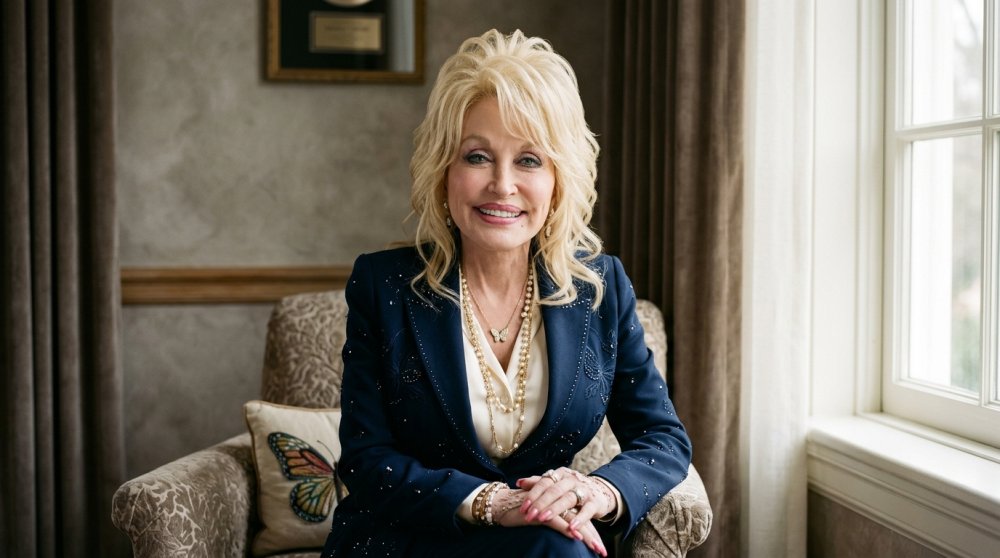
The black-and-white photograph labeled “Mr. & Mrs. Carl Dean” appeared in a 1966 directory of the Radnor Church of Christ in Nashville. It captured a moment when one of America’s most beloved entertainers was simply known as Mrs. Dean, a young bride attending worship alongside her husband.
Mrs. Dean, who met her future husband on the day she moved to Music City after her 1964 high school graduation, became known to the world as country music superstar Dolly Parton. Her family announced her passing Tuesday, August 25, 2026, at age 80.
A message from the family of Dolly Parton. pic.twitter.com/9DNRgRx0uH
— Dolly Parton (@DollyParton) August 25, 2026
The legendary singer’s connection to Churches of Christ represented an important chapter in her life story, one that reflected the faith values she carried throughout her remarkable career. Carl Dean, her husband of nearly 60 years, died March 3, 2025, at age 82.
Parton’s ties to the Church of Christ community remained a testament to her roots and the values that shaped her character. Her marriage to Carl Dean, documented in that simple church directory photograph, endured through decades of fame and fortune—a rarity in the entertainment industry.
The country music icon’s life reflected traditional American values of faith, family, and hard work. From her humble beginnings in rural Tennessee to international stardom, Parton maintained connections to the church community that welcomed her as a young bride in Nashville.
Her legacy extends far beyond her musical achievements, encompassing her charitable work, her commitment to literacy through the Imagination Library, and her steadfast devotion to her husband and family values. These principles aligned with the Christian foundation evident in her early years attending the Radnor Church of Christ.
Let us know what you think, please share your thoughts in the comments below.
Faith Facts
- More than 200 Ghanaian Christians gathered in Toronto for a five-day gospel meeting focused on building stronger congregations
- A Church of Christ in Malawi grew from 30 to 380 members through sustainable agriculture workshops and business training programs
- Churches across Nigeria, Kenya, and Croatia are expanding through evangelism, biblical education, and community service ministries
Churches of Christ around the world are witnessing remarkable growth through faithful evangelism and servant leadership. From gospel meetings drawing hundreds in Canada to new Christian schools serving orphans in Kenya, believers are advancing the Kingdom through dedication to Scripture and service to their communities.
CANADA
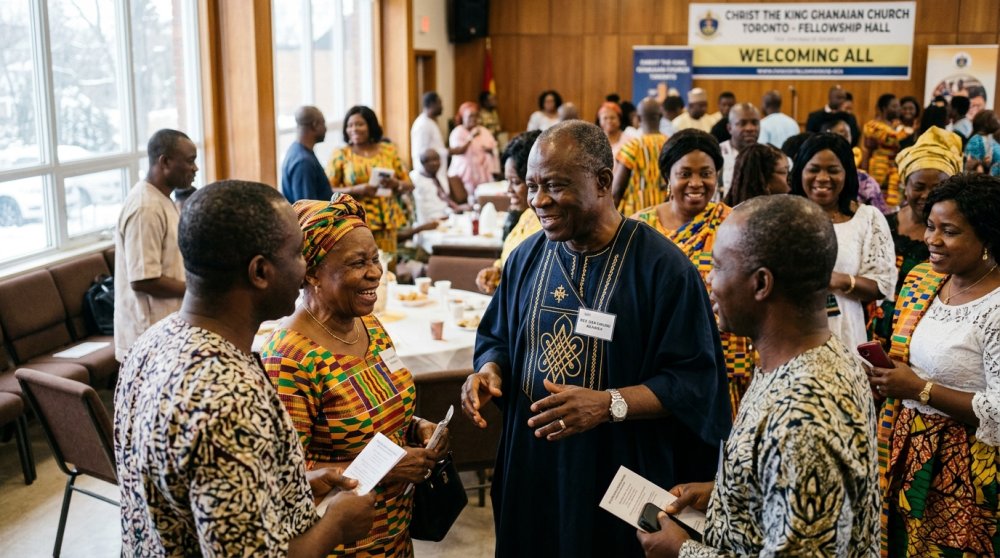
TORONTO — More than 200 expatriates from the West African nation of Ghana gathered for a five-day gospel meeting. Evangelist Dan Owusu Asiamah spoke on “Building and Growing a Stronger Congregation.” The Church of Christ, Toronto Ghanaian sponsored the event.
Asiamah also spoke at recent events hosted by the Central Bronx Church of Christ in New York and the Northland Church of Christ Ghanaian Congregation in Columbus, Ohio. The meetings reflect the growing vitality of African Christian communities in North America, as believers maintain strong ties to biblical teaching while ministering to immigrant populations.
CROATIA
RIJEKA — Ervin Budiselić recently traveled to this coastal Adriatic city on a kind of book tour. The director of the Biblical Institute, Zagreb, spoke about a Croatian translation of “Sitting at the Feet of Rabbi Jesus” by Ann Spangler and Lois Tverberg.
Churches and individuals in Croatia financed the entire cost of publishing the book, a rarity in Croatia, Budiselić said. When Budiselić spoke to the Church of Christ in Rijeka, a woman he hadn’t seen in 10 years told him that she appreciated the institute’s focus on reading the Bible “as one unified story.”
Since his previous visit, the woman has been using this approach in her work with other women, Budiselić said.
“She also mentioned that she currently gathers a group of women in Rijeka (some of whom are not believers) and teaches them the Bible in this way. Hearing this deeply encouraged and humbled me.”
KENYA
KERICHO — Christians in this rural East African community recently launched the Coulter McCall Memorial Christian School for children in kindergarten and elementary grades.
“No child will remain at home or drop out of school because of school fees,” said Harrison Kirui, minister for the Church of Christ Kipsotet and director of Acts of Charity, a ministry focused on child development.
Orphans Lifeline International, a Montana-based nonprofit, offers child sponsorships for students at the school. The school represents a commitment to providing Christ-centered education accessible to all children, regardless of economic circumstances.
MALAWI
TOMBOLOMBO — Raphael Chirwa planted a Church of Christ in this southern African village in 1968, and it birthed other churches in the decades that followed. But when Chirwa’s son, Mbwenu, returned to Tombolombo in 2012 after studying at African Christian College in Eswatini, growth had dwindled. Church attendance was about 30.
“After a few years, I began to notice growth,” Mbwenu Chirwa said.
One reason: the sustainable agriculture workshops he led based on what he learned in college from Healing Hands International. Workers with the nonprofit dug a water well for the community, and the church offered Women of Hope business training programs. Now 380 Christians meet in Tombolombo, Mbwenu Chirwa said.
The dramatic growth demonstrates how practical ministry addressing physical needs opens hearts to spiritual truth. By serving their neighbors with agricultural training and clean water, believers earned the trust and attention of their community.
NIGERIA
ESSIEN UDIM — Members of Churches of Christ in this southern Nigerian community did house-to-house evangelism on the topic “Saved in Christ” from Romans 8:1-4. They handed out gospel material provided by Fayetteville, Ark.-based Gospel Tracts International. The effort resulted in at least four baptisms, said evangelist Anameti Akpan.
OKOPEDI — A Church of Christ in this town in southern Nigeria taught communication skills to families at a recent conference. Women of Worth Worldwide, a ministry founded by church member Victoria Essien, provided the curriculum, based in part on lessons from New Life Behavior International.
“God designed the family to be man’s most important social unit,” event organizers said.
“Learning to communicate effectively within the family should therefore be one of our major goals.”
The ministry is an outgrowth of Essien’s Bible studies with non-Christian women. In 2025, she expanded the work to include health screenings, a microloan program and vocational training for disadvantaged women.
“Women who are beneficiaries of the loan program have shared powerful testimonies,” Essien said.
“Before… they had to borrow money from outside sources and pay high interest rates to sustain their businesses. Now… they are able to buy goods weekly, sell them quickly and make a good profit.”
These ministries reflect biblical principles of stewardship and compassion, empowering women to support their families with dignity while introducing them to the gospel. By addressing both spiritual and practical needs, Nigerian churches are transforming entire communities.
Let us know what you think, please share your thoughts in the comments below.


-

 Self-Reliance1 year ago
Trump’s Bold Move Uncovers Massive Social Security Fraud
-

 Faith1 year ago
New Clues Emerge in Noah’s Ark Mystery
-

 News1 year ago
Governor Walz’s Rhetoric Sparks National Controversy
-

 News1 year ago
Mel Gibson’s ‘The Passion of the Christ’ Sequel Title Announced
-

 Family1 year ago
Texas Lawmaker Targets Furries in Schools
-

 Freedom1 year ago
Maine Lawmaker Challenges Sports Fairness Controversy
-

 Family1 year ago
Canada’s Controversial Policy Sparks Ethical Debate
-
Faith9 months ago
Congress Hears Pleas for Nigerian Christians