
News
Harry Potter Author’s Shocking Take on Assisted Suicide Sparks National Debate


Faith Facts
- J.K. Rowling publicly compared assisted suicide to choosing salted caramel, sparking controversy over the trivialization of life-and-death decisions
- The Christian perspective affirms that human life is sacred and created in God’s image, making it a gift to be treasured, not a consumer choice
- The assisted suicide debate continues to challenge America’s foundation of Judeo-Christian values that recognize the inherent dignity and worth of every person
The beloved author of the Harry Potter series has waded into dangerous waters with a recent social media post that has left many Americans — particularly those who cherish the sanctity of human life — deeply troubled.
J.K. Rowling recently took to social media platform X to share her thoughts on assisted suicide, making a comparison that has sparked outrage among faith communities and pro-life advocates across the nation. In her post, she appeared to frame the decision to end one’s life through assisted suicide as simply another personal choice, likening it to selecting a flavor at an ice cream shop.
This casual approach to matters of life and death stands in stark contrast to the foundational Christian belief that every human life bears the image of God and possesses inherent, immeasurable worth from conception to natural death. The comparison trivializes what should be recognized as a profound moral and spiritual decision with eternal consequences.
For Christians, the issue of assisted suicide isn’t about personal autonomy or individual preference. It’s about recognizing that our lives are not ultimately our own — they are gifts from our Creator, entrusted to us for His purposes and glory.
Scripture is clear on this matter. Psalm 139 tells us that God knit us together in our mother’s womb and ordained all our days before one of them came to be. Job declared that “the Lord gave, and the Lord has taken away.” These aren’t merely poetic phrases — they’re theological truths that define how believers understand the value and purpose of human existence.
The assisted suicide movement, which has gained troubling momentum in several states and countries, fundamentally rejects this biblical worldview. It replaces God’s sovereignty over life and death with human autonomy, elevating personal choice above divine design.
What makes Rowling’s comments particularly concerning is the cultural influence she wields. With millions of followers and a platform that reaches across generations, her words carry weight. When prominent figures frame ending one’s life as casually as choosing dessert, they normalize what should remain morally unthinkable.
The implications extend beyond individual decisions. As assisted suicide becomes more socially acceptable, vulnerable populations — the elderly, disabled, and chronically ill — face increasing pressure to end their lives rather than be perceived as burdens. This utilitarian calculus is antithetical to the Christian call to protect the weak and value every person regardless of their productivity or perceived quality of life.
Medical professionals who hold to traditional Hippocratic values find themselves increasingly marginalized in a culture that demands they participate in ending life rather than preserving it. The healing profession becomes the killing profession, and doctors trained to do no harm are compelled to become agents of death.
This cultural shift didn’t happen overnight. It’s the logical outworking of decades of secularization, where transcendent moral truths have been replaced by subjective personal preferences. When society abandons the Judeo-Christian foundation that once anchored Western civilization, human dignity becomes negotiable and life itself becomes just another commodity.
Christians must respond to this challenge not with silence but with compassionate conviction. We must stand firmly for the sanctity of human life while extending Christ’s love to those who are suffering. The answer to pain and despair isn’t death — it’s hope, community, quality palliative care, and the reminder that even in our darkest valleys, we are never alone.
The contrast couldn’t be clearer. One worldview sees human beings as autonomous individuals whose lives are theirs to dispose of as they see fit. The other sees human beings as beloved children of God, precious beyond measure, whose lives have purpose and meaning even in suffering.
As believers, we’re called to choose life — not because life is always easy or pain-free, but because every person reflects the image of their Creator and every day is an opportunity to experience His grace and bring Him glory. That’s not a message of cruelty or indifference to suffering; it’s a message of hope grounded in eternal truth.
The debate over assisted suicide will continue to intensify in the coming years. As it does, Christians must remain steadfast in proclaiming that human life is sacred from beginning to end, not because we say so, but because God does.
Let us know what you think, please share your thoughts in the comments below.

Faith Facts
- The Costa Rican Evangelical Alliance Federation is standing for integrity and truth in public life by demanding accountability from those who misuse the name of the church.
- Scripture teaches that leaders must be above reproach, and the Alliance is upholding that standard by rejecting any suggestion that votes can be bought with money.
- Believers across Costa Rica are being called to pray for righteous governance and for pastors to remain faithful witnesses rather than political brokers.
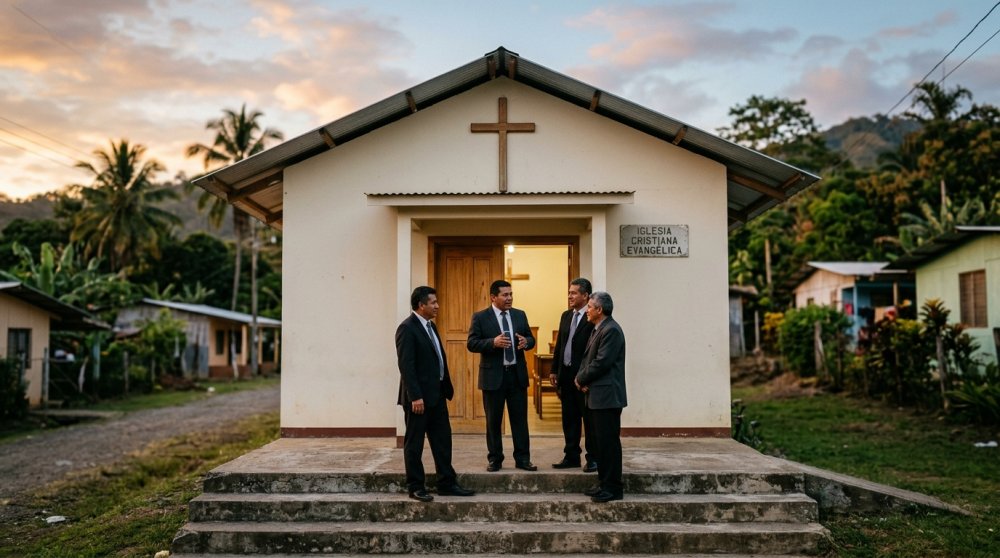
The Costa Rican Evangelical Alliance Federation has taken a firm stand for honesty in politics after an opposition lawmaker publicly claimed that a pastor offered her 42,000 votes in exchange for 420 million colones.
April Gordienko, the lawmaker who made the allegation, said the offer came during the most recent election campaign.
The federation is now insisting that Gordienko name the pastor involved so that the church can deal with the matter openly and biblically.
Evangelical leaders in Costa Rica believe that any attempt to barter spiritual influence for political favor damages the witness of the gospel and must be exposed.
“We cannot allow the name of Christ to be used as a bargaining chip in political transactions,” said a federation spokesperson.
Local pastors have echoed the call for transparency, saying the church must remain separate from any appearance of corruption.
Many Costa Rican believers view this moment as an opportunity for the body of Christ to demonstrate that its loyalty belongs first to God, not to any political party or financial promise.
Let us know what you think, please share your thoughts in the comments below.
Faith Facts
- The Archbishop of Canterbury withdrew an interfaith award from Pakistani cleric Hafiz Muhammad Tahir Mehmood Ashrafi after old remarks praising Osama bin Laden resurfaced.
- Church of Pakistan Moderator Bishop Azad Marshall had recommended Ashrafi for the honor, prompting questions among Pakistani Christians.
- Christian leaders continue to stress the importance of discernment and truth when extending recognition across religious lines.
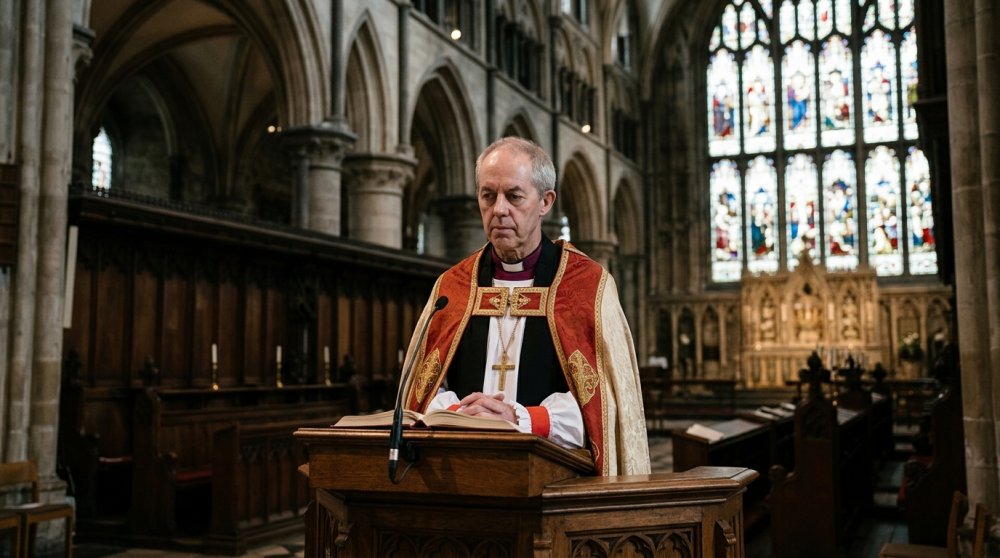
The Archbishop of Canterbury has withdrawn an interfaith award given to Pakistani Muslim cleric Hafiz Muhammad Tahir Mehmood Ashrafi. Past remarks praising Osama bin Laden resurfaced and forced the reversal.
Questions have since arisen in Pakistan about why Church of Pakistan Moderator Bishop Azad Marshall recommended Ashrafi for the honor in the first place. The decision has stirred discussion among local believers who value clarity and moral consistency.
“The Archbishop of Canterbury has withdrawn an interfaith award given to Pakistani Muslim cleric Hafiz Muhammad Tahir Mehmood Ashrafi after past remarks praising Osama bin Laden resurfaced, raising questions in Pakistan about why he was recommended for the honor by Church of Pakistan’s Moderator Bishop Azad Marshall.”
Let us know what you think, please share your thoughts in the comments below.
Faith Facts
- The Evangelical Press Association is currently voting on a proposal to rename the organization to Christian Communicators Network.
- The decision follows a virtual meeting where board members presented the rationale and addressed member concerns about the removal of the term “Evangelical.”
- The outcome will shape how Christian media organizations identify themselves moving forward.
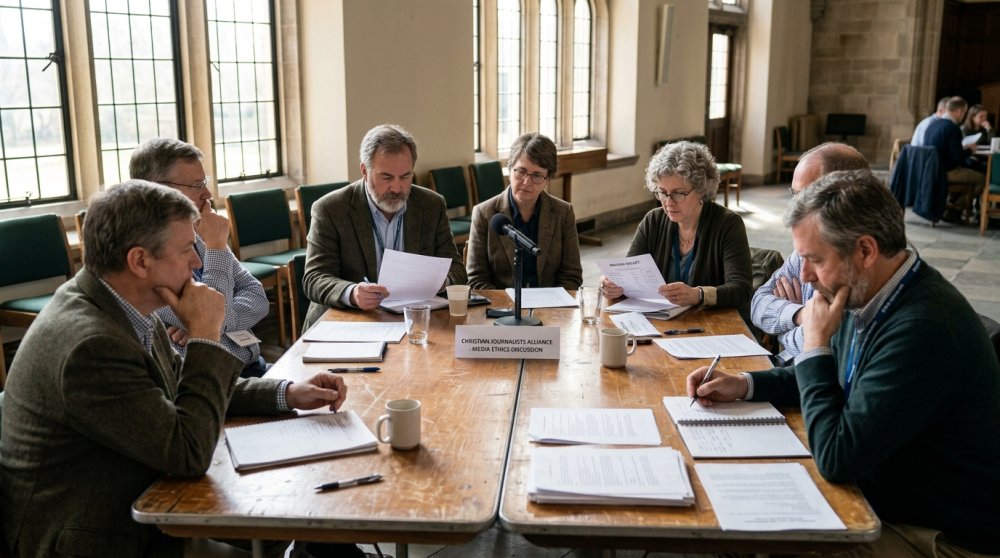
The Evangelical Press Association has begun a formal voting process among its members to determine whether the organization will change its name. The proposed new name is Christian Communicators Network. This vote follows a recent virtual meeting where board members outlined their reasoning and responded to questions from the membership.
Board members addressed concerns about the loss of the word “Evangelical” in the organization’s name. They also discussed the procedures involved in making such a significant change. The vote reflects ongoing conversations within Christian media circles about identity, mission, and public perception.
“Members are being given the opportunity to weigh in on a decision that will affect the organization’s future direction,” a board representative stated during the virtual meeting.
The outcome of this vote will determine whether the Evangelical Press Association continues under its current name or adopts the new title of Christian Communicators Network. Christian communicators across the nation are watching closely as this process unfolds.
Let us know what you think, please share your thoughts in the comments below.


-

 Self-Reliance1 year ago
Trump’s Bold Move Uncovers Massive Social Security Fraud
-

 Faith1 year ago
New Clues Emerge in Noah’s Ark Mystery
-

 News2 years ago
Governor Walz’s Rhetoric Sparks National Controversy
-

 News1 year ago
Mel Gibson’s ‘The Passion of the Christ’ Sequel Title Announced
-

 Family1 year ago
Texas Lawmaker Targets Furries in Schools
-

 Freedom2 years ago
Maine Lawmaker Challenges Sports Fairness Controversy
-

 Family1 year ago
Canada’s Controversial Policy Sparks Ethical Debate
-
Faith10 months ago
Congress Hears Pleas for Nigerian Christians