Connect with us

Faith

Franklin Graham Proclaims True King in Lima

Published

on

Franklin Graham Proclaims True King in Lima
Faith Facts

  • Only 14% of Peruvians have a personal relationship with Christ despite openness to the Gospel, with high rates of anxiety, alcoholism, and drug abuse.
  • Over 2,400 pastors from 700 churches joined preparations, expanding the event from one to two days after the 1998 festival’s lasting impact.
  • Churches are training believers via the Christian Life and Witness Course to share faith, disciple new converts, and build lasting communities.

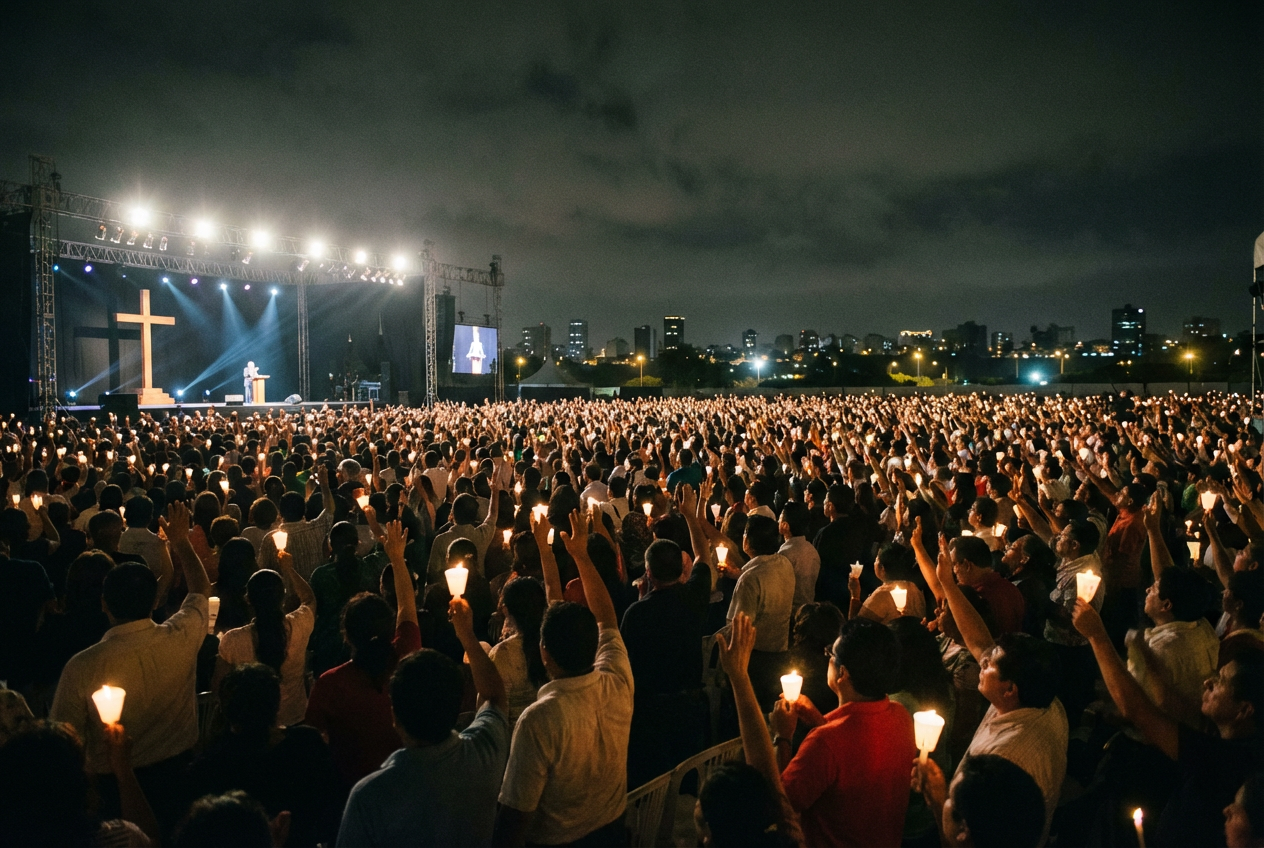
Lima, Peru’s ‘City of Kings,’ prepares to hear about the true King Jesus amid spiritual challenges and declining traditional faith.

The Esperanza Lima festival, led by Franklin Graham of the Billy Graham Evangelistic Association, runs March 7-8, drawing thousands in a city of over 11 million.

Local leaders express growing excitement for this beacon of salvation, forgiveness, and purpose in Christ, echoing the wise men’s Epiphany worship.

Christians worldwide, join in fervent prayer for Lima’s hearts to open to God’s hope and for strength in this evangelistic mission rooted in Biblical truth.

Read more at Christian Daily

Continue Reading
Click to comment

Leave a Reply

Your email address will not be published. Required fields are marked *

Faith

Historic Trail Opens Honoring the Man Who Gave Us the English Bible

Published

on

Faith Facts

  • A new 60-mile walking trail in south-west England celebrates William Tyndale, who translated the Bible into English 500 years ago
  • Tyndale was executed in 1536 for translating Scripture, but his work formed the foundation of the King James Bible
  • The trail connects key sites in Tyndale’s life, offering Christians a pilgrimage experience honoring Biblical literacy

A remarkable new walking route has opened in south-west England, honoring one of Christianity’s greatest heroes—William Tyndale, the scholar who gave English-speaking people direct access to God’s Word. The Tyndale Trail marks 500 years since his revolutionary English New Testament first reached readers in 1526.

The long-distance path traces pivotal locations in Tyndale’s life across the beautiful countryside where he was born and raised. For centuries, ordinary believers were denied Scripture in their own language, forced to depend entirely on clergy who controlled Latin texts.

Tyndale changed everything. His translation work, done in secret and at great personal risk, put the Bible directly into the hands of common people. His phrases and word choices became so deeply embedded in English that they still echo through our language today.

The trail offers modern Christians a chance to walk where this faithful translator once walked, reflecting on the price paid for Biblical accessibility. Tyndale’s commitment to Scripture cost him his life—he was executed by strangulation and burning in 1536, condemned as a heretic for his faithful service to God’s Word.

Yet his legacy endures. Scholars estimate that the King James Bible, which has shaped English-speaking Christianity for over four centuries, draws approximately 80 percent of its New Testament directly from Tyndale’s original translation work.

The new trail provides both a physical journey and a spiritual pilgrimage. Walkers can contemplate the courage required to defy powerful religious and political authorities who sought to keep Scripture locked away from ordinary believers.

This commemoration arrives at a crucial moment when Biblical literacy faces new challenges. While Tyndale risked everything to make Scripture available, many modern believers take that access for granted, leaving Bibles unopened on shelves.

The trail serves as a powerful reminder that the religious freedom Americans cherish—including unfettered access to God’s Word in our own language—came at tremendous cost. Faithful servants like Tyndale endured persecution, exile, and martyrdom so that we might read Scripture for ourselves.

By walking the Tyndale Trail, Christians honor not just one man’s sacrifice, but the transformative power of Scripture made accessible to all. Tyndale believed every plowboy should be able to read the Bible—a revolutionary concept that helped spark both the Reformation and the spread of democratic ideals.

His final prayer, reportedly spoken before his execution, captures his heart: “Lord, open the King of England’s eyes.” Within a year, English Bibles were authorized for public reading in churches throughout England.

Let us know what you think, please share your thoughts in the comments below.
Continue Reading

Faith

Christians Unite for Single Easter Celebration in Middle East

Published

on

Faith Facts

  • Christians in Jordan, parts of Israel, and the West Bank celebrated Easter together on April 12, crossing denominational lines in a rare unified observance.
  • Catholic, Protestant, and Orthodox churches typically celebrate Easter on different dates due to calendar differences, making this unified celebration highly unusual.
  • The coordinated celebration demonstrates the possibility of Christian unity in worship despite traditional denominational and liturgical differences.

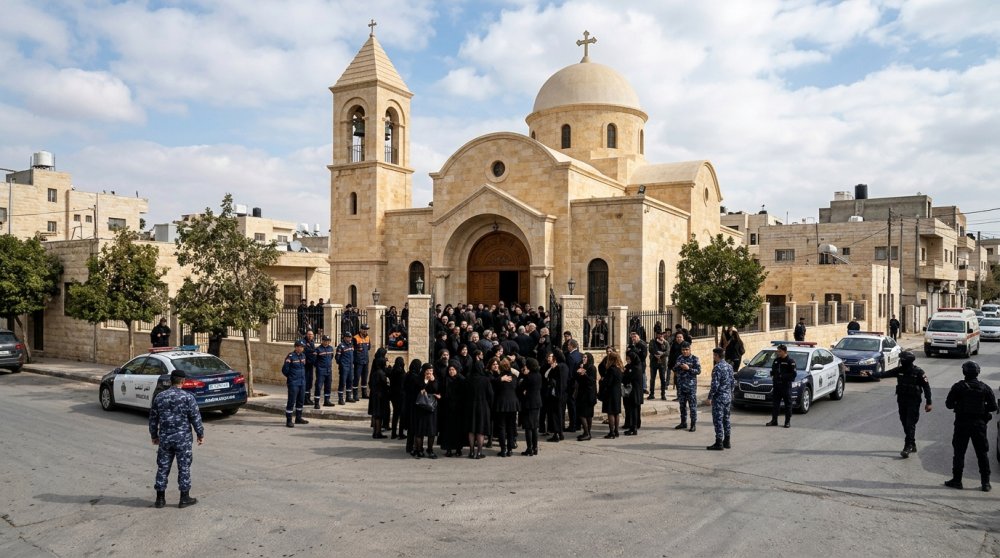
In a remarkable display of Christian unity, believers across Jordan, Israel, and the West Bank came together to celebrate Easter on a single day, April 12. This coordinated observance brought together Catholic, Protestant, and Orthodox congregations in a rare moment of denominational harmony.

The unified Easter celebration stands in sharp contrast to the typical pattern observed globally, where different Christian traditions celebrate the resurrection of Jesus Christ on separate dates. This divergence stems from differences between the Gregorian and Julian calendars, which have historically separated Western and Eastern Christian observances.

The coordinated effort in the Middle East represents a powerful witness to the shared faith that transcends denominational boundaries. For Christians in this historically significant region—the very birthplace of Christianity—the ability to worship together on Easter carries profound symbolic weight.

This unified celebration offers a compelling example of what Christian cooperation can achieve when believers prioritize their common faith over traditional divisions. In an era marked by increasing secularization and hostility toward Christian values in many parts of the world, such displays of unity strengthen the witness of the Church.

The Middle East remains home to ancient Christian communities that have persevered through centuries of challenges. Their commitment to celebrating Easter together demonstrates the enduring power of resurrection faith to unite believers across denominational lines.

While differences in liturgical calendars and worship practices remain part of the rich diversity within Christianity, moments of unified celebration remind us of the central truth that binds all believers together—faith in Jesus Christ as Lord and Savior.

Let us know what you think, please share your thoughts in the comments below.
Continue Reading

Faith

The Question About Hell That Changes Everything

Published

on

Faith Facts

  • The concept of eternal judgment reflects God’s perfect justice and holiness, not human standards of fairness
  • Our discomfort with Hell may reveal more about our understanding of sin’s gravity than about God’s character
  • Biblical teaching presents Hell as the consequence of rejecting God’s grace, not arbitrary punishment

Many believers and skeptics alike wrestle with one of Christianity’s most challenging doctrines: eternal judgment. The question of whether Hell is “fair” has troubled countless hearts and sparked intense theological debates across centuries.

At first glance, the question seems compelling. It appeals to our sense of fairness. It sounds humane. But it also reveals something deeper, something often misjudged.

The discomfort many feel about eternal Hell often stems from comparing divine justice to human justice systems. We think in terms of proportionality—the punishment should fit the crime, with even the worst offenses eventually paid in full. But this framework fundamentally misunderstands the nature of sin and the character of God.

When we question whether Hell is “fair,” we’re placing ourselves as judges over God’s justice. We’re assuming our moral intuitions, shaped by a fallen world, are more reliable than the revealed character of a holy God. This isn’t theological sophistication—it’s the same error made in the Garden of Eden, deciding for ourselves what is right and wrong.

The real question isn’t whether Hell seems fair by human standards. The real question is: What does our sin truly deserve?

Every sin, regardless of how minor it appears to us, is an offense against an infinitely holy God. We’ve grown comfortable with sin, categorizing some as “not that bad” while reserving moral outrage for extreme cases. But Scripture presents a different picture—one where all sin separates us from God and merits judgment.

The cross of Jesus Christ demonstrates both the gravity of sin and the extent of God’s love. If sin could be overlooked or dealt with lightly, the crucifixion would have been unnecessary. The fact that God sent His own Son to die reveals both how seriously He takes sin and how desperately He desires to save sinners.

Hell is not about God being vindictive or cruel. It’s about respecting human choice and the reality of moral accountability. Throughout their lives, people make choices about God—to accept or reject His grace, to acknowledge or deny His authority. Hell represents the culmination of a lifetime of saying “no” to God.

C.S. Lewis famously observed that the doors of Hell are locked from the inside. Those who reject God in this life will not suddenly desire His presence in eternity. Hell is, in one sense, God giving people what they’ve consistently chosen—existence apart from Him.

For Christians, understanding Hell rightly should produce two responses: gratitude and urgency. Gratitude that we’ve been spared the judgment we deserve through Christ’s sacrifice. Urgency to share the gospel with those who remain spiritually lost.

The doctrine of Hell is not peripheral to the Christian faith—it’s central to understanding the gospel. Without judgment, there’s no need for salvation. Without Hell, the cross becomes merely symbolic rather than substitutionary.

Our discomfort with this teaching may actually indicate areas where our thinking needs to be conformed to Scripture rather than contemporary sensibilities. The Bible doesn’t ask us to be comfortable with every doctrine, but to trust that God is both perfectly just and perfectly loving, even when our finite minds struggle to reconcile these truths.

Rather than softening the doctrine of Hell to make it more palatable, we should allow it to sharpen our understanding of grace. The greater the danger we’ve been saved from, the more amazing grace becomes.

If eternal Hell seems unfair, we may be measuring God’s justice by broken human standards rather than recognizing the infinite offense of sin against a holy God. The question isn’t whether Hell fits our sense of fairness—it’s whether we’ll trust God’s character when His ways exceed our understanding.

Let us know what you think, please share your thoughts in the comments below.

Continue Reading

Trending