
Faith
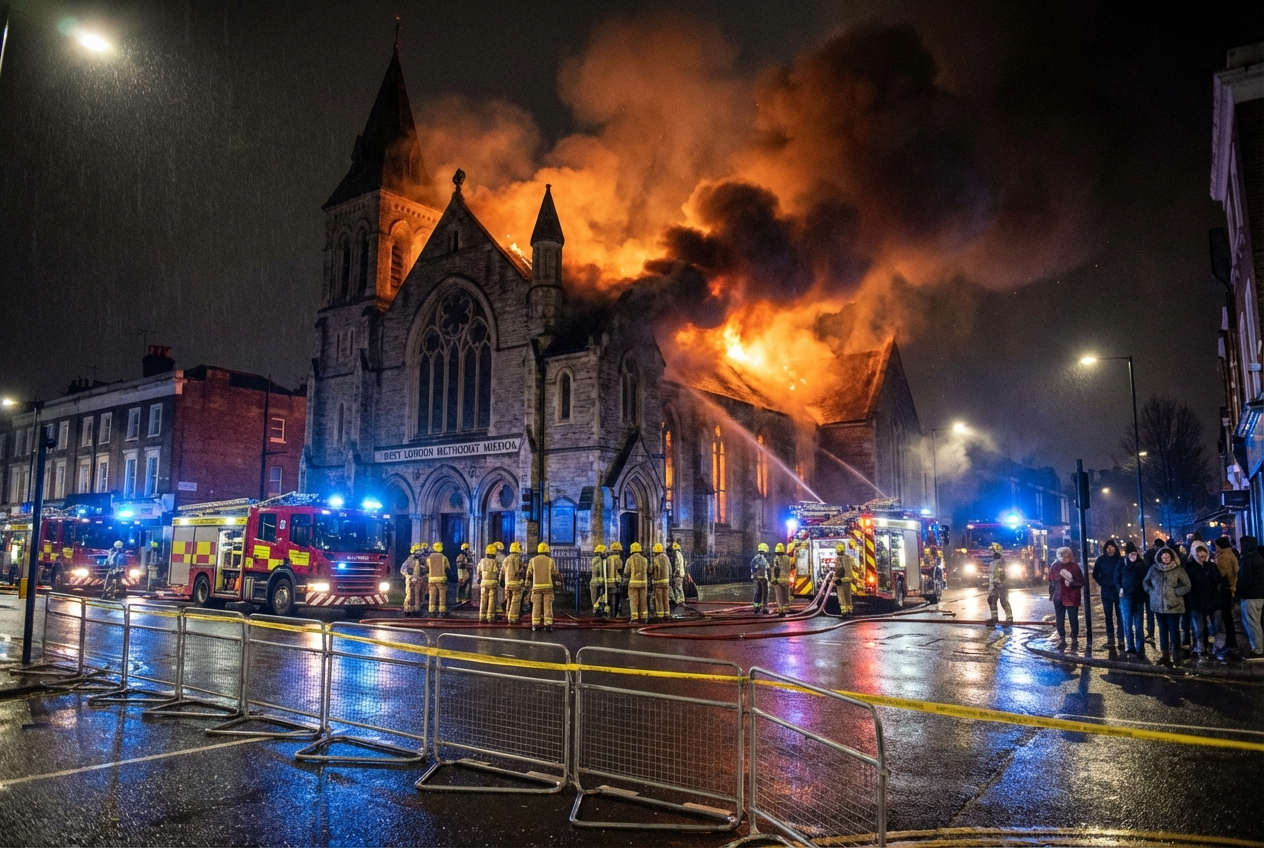
Fire Ravages Historic London Methodist Church

Faith Facts
- A major fire swept through King’s Hall Methodist Church in Southall, west London, on Sunday night.
- Approximately 70 firefighters fought the blaze, which destroyed much of the building.
- The cause of the fire remains under investigation, with no injuries reported.
Faith communities mourn the devastation of this landmark built in 1916, a reminder of Britain’s rich Christian heritage at risk.
Authorities are searching for answers as road closures continue and the neighborhood comes together in prayer for restoration.


Faith Facts
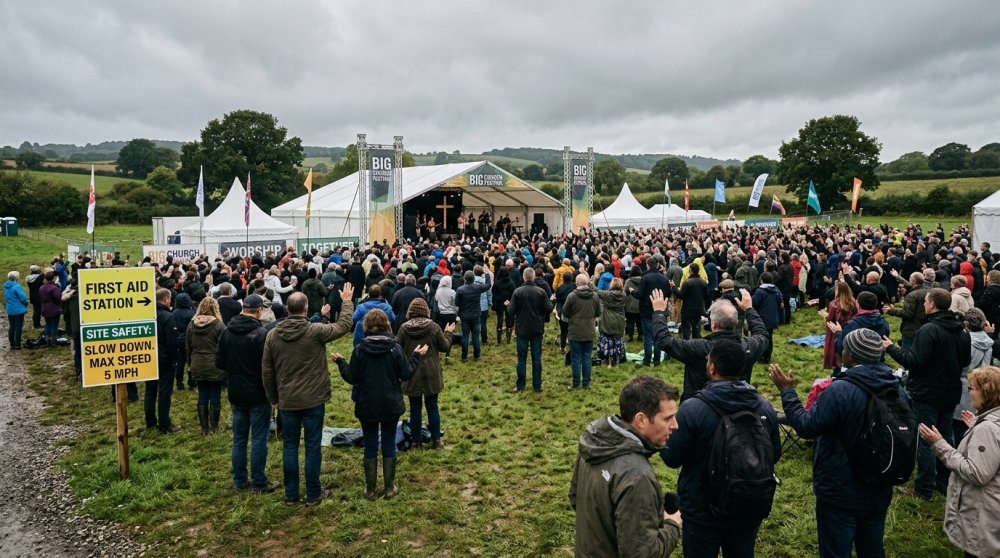
- Rev. Robert Guanco, 41-year-old pastor of Jesus Living Water Church in Eastbourne, died at the Big Church Festival in West Sussex, England on Friday, August 28
- The pastor was killed when a sign fell on him and others during the Christian music festival
- The church community mourns the loss of their shepherd who dedicated his life to serving Christ and his congregation
A tragic accident at a Christian festival in England has taken the life of a devoted pastor, leaving a congregation and community in mourning. The incident serves as a sobering reminder of life’s fragility and the importance of cherishing every moment we have to serve the Lord.
Rev. Robert Guanco, the 41-year-old pastor of Jesus Living Water Church in Eastbourne, was killed when a sign fell on him and others attending the Big Church Festival in West Sussex on Friday, August 28. The festival, which brings together Christians from across the region for worship and fellowship, became the scene of an unexpected tragedy.
The loss of Pastor Guanco has deeply impacted his church family and the wider Christian community in England. At just 41 years old, he was in the prime of his ministry, dedicating his life to spreading the Gospel and shepherding his flock at Jesus Living Water Church.
While the circumstances of the accident remain under investigation, the focus now turns to honoring the memory of a man who devoted his life to serving Christ and others. His sudden passing reminds us that our time on this earth is uncertain, and we must make every day count in our service to God and our fellow man.
The Christian community rallies together in times of tragedy, and this situation is no different. As believers, we find comfort in knowing that Pastor Guanco’s faith in Christ provides eternal hope beyond this earthly loss. His dedication to ministry and his congregation stands as a testament to a life well-lived in service to the Kingdom.
This heartbreaking incident calls us to prayer—for the Guanco family, for the Jesus Living Water Church congregation, and for all who were affected by this tragedy. It also serves as a reminder to hold fast to our faith, knowing that God is present even in our darkest moments of grief.
Let us know what you think, please share your thoughts in the comments below.
Faith Facts
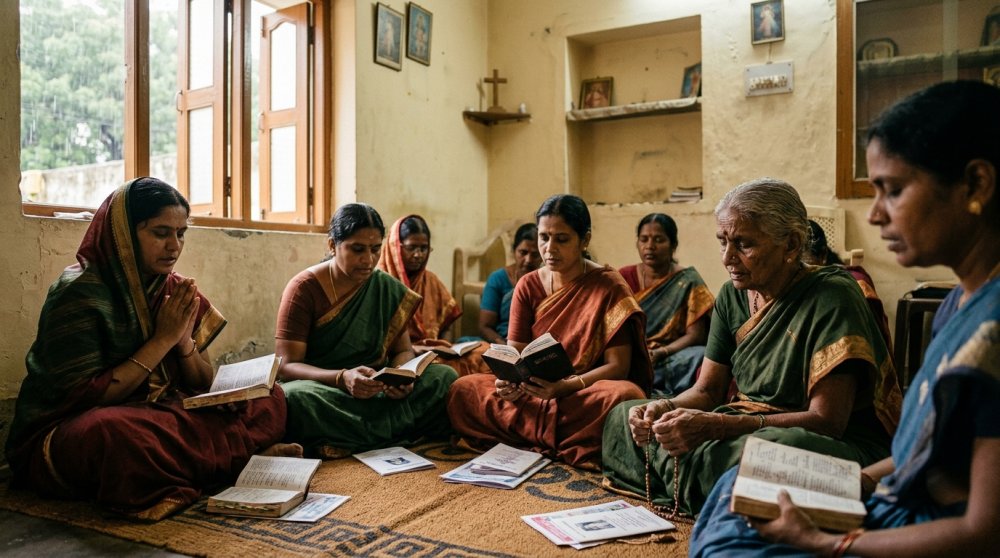
- Twenty-two Christian women were criminally charged in Maharashtra, India, accused of attempting to convert an 18-year-old student
- The charges were filed days before Maharashtra’s new anti-conversion law officially took effect
- Religious freedom advocates warn that anti-conversion laws are increasingly being weaponized against Christian communities across India
A troubling case out of India highlights the growing persecution faced by Christians in the world’s largest democracy. Twenty-two Christian women are now facing serious criminal charges after police in Maharashtra accused them of attempting to convert an 18-year-old student—just days before a stringent new anti-conversion law officially took effect in the state.
The timing of these charges raises serious concerns about the selective enforcement of laws designed to restrict religious freedom. The women were targeted under existing statutes before the new legislation could even be applied, suggesting a coordinated effort to intimidate Christian communities.
Maharashtra’s anti-conversion law is part of a broader pattern across India, where multiple states have enacted similar legislation ostensibly aimed at preventing “forced” conversions. However, religious freedom advocates have consistently warned that these laws are being weaponized against Christians and other religious minorities who peacefully share their faith.
The case involving the 22 women centers around allegations that they attempted to convert a young student. Details remain scarce, but the sheer number of individuals charged suggests a gathering or group Bible study that may have been mischaracterized as coercion.
For Christians in India, such laws create an atmosphere of fear and uncertainty. Sharing one’s faith—a fundamental tenet of Christianity—becomes criminalized when authorities can arbitrarily determine what constitutes “force” or “allurement.” The vague language in these statutes leaves the door wide open for abuse and persecution.
The broader context is equally alarming. Christian communities across India have reported increasing incidents of harassment, false accusations, and violence. Churches have been attacked, pastors beaten, and believers imprisoned on dubious charges. These anti-conversion laws provide a legal veneer to what many observers describe as systematic persecution.
American Christians should take note of what is happening to our brothers and sisters in India. Religious freedom is a God-given right, not a privilege granted by the state. When governments assume the power to regulate belief and the sharing of faith, tyranny inevitably follows.
The United States has long championed religious liberty both at home and abroad. As believers, we must continue to pray for persecuted Christians worldwide and support efforts to hold governments accountable when they violate fundamental human rights.
The situation in Maharashtra serves as a stark reminder that freedom of religion cannot be taken for granted. What begins as restrictions on “forced” conversion often escalates into comprehensive suppression of religious expression and assembly.
Let us know what you think, please share your thoughts in the comments below.
Faith Facts
- Polling data on religious decline may be significantly skewed by methodological issues and uncounted believers
- A massive group labeled “Others” in surveys represents millions of faithful Americans whose beliefs aren’t properly measured
- Religious “switching” often reflects denominational changes rather than abandonment of Christian faith
For years, headlines have proclaimed the death of American Christianity, pointing to rising numbers of “Nones” — those who claim no religious affiliation — as proof that faith is fading from our nation. But what if the story we’ve been told is incomplete, or even misleading?
A closer examination of the data reveals that America’s religious landscape is far more nuanced than the narrative of inevitable decline suggests. The truth is that polling methods may be obscuring the real picture of faith in America.
The so-called “Nones” category has indeed grown in recent decades, but this classification masks important distinctions. Many who check “no religious affiliation” on surveys still hold spiritual beliefs, pray regularly, and identify with Christian values. They may have left institutional churches without abandoning their faith in God.
Even more significant is a massive group that researchers label “Others” — Americans whose religious beliefs don’t fit neatly into pollsters’ predetermined categories. This group includes millions of believers whose faith is very real but simply isn’t captured by conventional survey questions designed for traditional denominational affiliations.
Religious “switching” presents another misunderstood phenomenon. While pollsters count every denominational change as evidence of instability, the reality is often quite different. A Baptist who becomes Presbyterian, or a Methodist who joins a nondenominational church, hasn’t abandoned Christianity — they’ve simply found a different expression of the same faith.
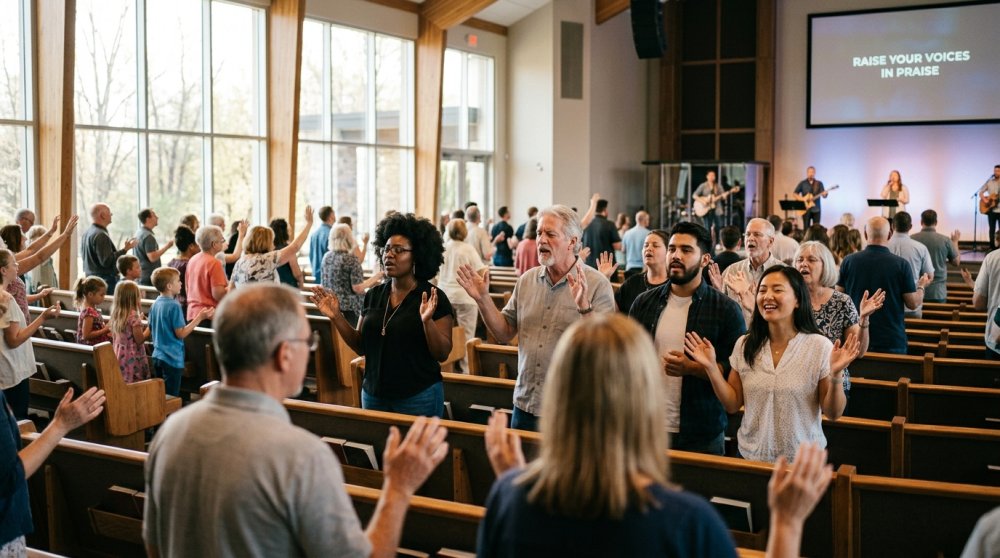
The data also fails to account for the vitality of faith communities that exist outside traditional structures. Home churches, online congregations, and informal fellowship groups have exploded in recent years, particularly among younger believers who value authentic community over institutional affiliation. These believers are deeply committed to their faith, but they’re often invisible to pollsters who equate religious commitment with membership in established denominations.
Furthermore, survey methodology itself introduces bias. Phone surveys increasingly miss younger Americans who rely solely on cell phones and are less likely to participate in lengthy interviews. Online surveys skew toward those with particular demographic characteristics. In-person surveys face their own challenges in an era of declining response rates.
The questions themselves can be problematic. When surveys offer limited options for religious identification, many faithful Americans are forced into categories that don’t accurately represent their beliefs. A charismatic Christian who attends a nondenominational church might not know how to answer questions designed for Lutheran, Catholic, or Baptist respondents.
Immigration patterns also complicate the picture. America continues to welcome immigrants from Latin America, Africa, and Asia — regions where Christian faith remains vibrant and central to daily life. These new Americans bring a strong religious commitment that enriches the nation’s spiritual landscape, yet their contributions are often underrepresented in surveys that focus on traditional American denominational categories.
The evidence suggests that reports of American Christianity’s demise have been greatly exaggerated. While the religious landscape has certainly changed, change doesn’t necessarily mean decline. The faith that has sustained this nation since its founding remains alive and active, even if it looks different than it did in previous generations.
Americans of faith should take heart that the narrative of religious collapse may be built on shaky statistical ground. The polling industry’s methods, designed for a different era, struggle to capture the full complexity of modern American spirituality. The reality is that millions of Americans continue to trust in God, seek His guidance, and live according to biblical principles — even if they don’t fit neatly into pollsters’ boxes.
As we move forward, it’s crucial to look beyond simplistic headlines and examine the deeper realities of American faith. The story is not one of inevitable decline, but of transformation and adaptation as believers find new ways to live out timeless truths in a changing world.
Let us know what you think, please share your thoughts in the comments below.


-

 Self-Reliance1 year ago
Trump’s Bold Move Uncovers Massive Social Security Fraud
-

 Faith1 year ago
New Clues Emerge in Noah’s Ark Mystery
-

 News1 year ago
Governor Walz’s Rhetoric Sparks National Controversy
-

 News1 year ago
Mel Gibson’s ‘The Passion of the Christ’ Sequel Title Announced
-

 Family1 year ago
Texas Lawmaker Targets Furries in Schools
-

 Freedom1 year ago
Maine Lawmaker Challenges Sports Fairness Controversy
-

 Family1 year ago
Canada’s Controversial Policy Sparks Ethical Debate
-
Faith9 months ago
Congress Hears Pleas for Nigerian Christians