
Faith
Finding True Rest for Exhausted Families

Faith Facts
- God established a rhythm of work and rest for our good, inviting us to enter His rest and renewal each week.
- Sabbath rest is an act of faith and obedience, vital for restoring emotional, physical, and spiritual health in families.
- Intentional rest leads to stronger families, improved well-being, and a greater ability to honor God in all areas of life.
Many hardworking families feel worn down by endless responsibilities and struggle to find time for renewal. The relentless pace of modern life can lead to deep fatigue, but Biblical wisdom offers a path to restoration through honoring the Sabbath.
As Scripture says:
“For in six days the Lord made the heavens and the earth, the sea, and all that is in them, and rested on the seventh day. Therefore, the Lord blessed the Sabbath day and made it holy” (Exodus 20:11 ESV).
God has given us a beautiful pattern—setting aside a day for rest is not just beneficial, it is commanded for our good. Embracing a true day of rest allows families to reconnect, reflect on His blessings, and strengthen their faith together.
Practical steps like planning ahead, disconnecting from technology, and prioritizing family worship can bless your home with peace and renewed energy. Reducing activities allows for meaningful time in fellowship, worship, and relaxation that honors God and refreshes your spirit.
Rest restores hearts and minds, preparing us to serve others and pursue godly goals with fresh perspective. By trusting in God’s design for Sabbath, families can build resilience, joy, and financial stability, finding hope and strength to persevere.
Take a bold step toward a life of faithful balance—honor the Lord by making rest a regular part of your family rhythm. Allow God to renew you, so you can serve Him, your loved ones, and your community with grace.



Faith Facts
- A Christian pastor in Indonesia received a two-year prison sentence under the country’s Islamic blasphemy law
- The case has raised concerns about religious freedom and the swift nature of the arrest and trial process
- Indonesia, the world’s largest Muslim-majority nation, maintains strict blasphemy statutes that critics say target religious minorities
A Christian pastor has been sentenced to two years behind bars in Indonesia after being convicted of violating the nation’s blasphemy and hate speech laws, in a case that highlights growing concerns about religious persecution in the world’s largest Muslim-majority country.
The swift arrest and trial have drawn international attention to Indonesia’s controversial blasphemy statutes. These laws are increasingly being used to target Christians and other religious minorities in a nation that once prided itself on religious tolerance.
Indonesia’s blasphemy law, which carries a maximum sentence of five years, has become a tool that threatens the fundamental right to religious freedom. For Christian communities across the archipelago, the message is clear: practicing and sharing their faith openly comes with significant legal risks.
The case underscores a broader pattern of religious intolerance that has accelerated in recent years throughout Indonesia. While the country’s constitution nominally protects religious freedom, Islamic blasphemy laws create a parallel legal framework that often supersedes those protections, particularly when applied to Christian pastors and evangelists.
Religious freedom advocates have long warned that blasphemy laws serve as instruments of persecution rather than protection. These statutes give authorities broad discretion to prosecute religious expression, creating a chilling effect on Christian witness and worship throughout the region.
The speed with which this pastor was arrested, tried, and convicted raises additional concerns about due process and fair treatment under the law. For Christians living as minorities in predominantly Muslim nations, such expedited proceedings often signal predetermined outcomes rather than impartial justice.
This imprisonment serves as a stark reminder that religious persecution remains a daily reality for millions of Christians worldwide. While Americans enjoy constitutionally protected religious liberty, believers in many nations face imprisonment, violence, and even death simply for practicing their faith.
The international Christian community must remain vigilant in supporting persecuted believers and advocating for genuine religious freedom in nations where blasphemy laws silence the Gospel. Prayer, awareness, and diplomatic pressure remain essential tools in defending our brothers and sisters who suffer for their faith.
Let us know what you think, please share your thoughts in the comments below.
Faith Facts
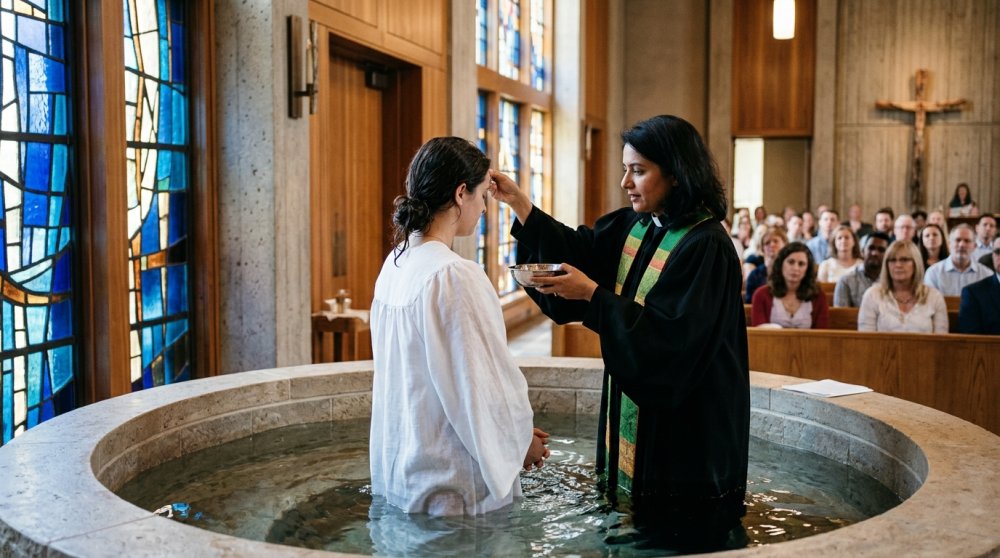
- Recently baptized OnlyFans creator Lily Phillips claims Christianity’s message of grace permits her to continue her lifestyle of sexual promiscuity
- Christian leaders emphasize that biblical grace is not permission to continue in sin, but power to turn away from it
- The fundamental misunderstanding of Christian doctrine highlights the urgent need for clear gospel teaching on repentance and transformation
A recently baptized OnlyFans star has ignited controversy within Christian circles by claiming that the grace of Christianity allows her to continue her lifestyle of extreme sexual promiscuity. Lily Phillips, who has made headlines for sleeping with thousands of men as part of her adult content business, argues that because Christianity emphasizes “non-judgement,” she can maintain both her faith and her career.
This troubling interpretation of Christian doctrine reveals a fundamental misunderstanding of what the gospel actually teaches about grace, repentance, and transformation. While it’s true that Christianity offers radical grace and forgiveness, this grace is never presented in Scripture as permission to continue living in deliberate sin.
The apostle Paul addressed this exact misconception in his letter to the Romans, asking rhetorically:
“What shall we say, then? Shall we go on sinning so that grace may increase? By no means! We are those who have died to sin; how can we live in it any longer?”
Throughout the New Testament, grace is consistently portrayed not as license for continued sin, but as the power to be freed from sin’s bondage. When Jesus encountered the woman caught in adultery, He offered her forgiveness and protection from condemnation—but His final words to her were clear:
“Go now and leave your life of sin.”
This is the pattern of biblical grace: unconditional love paired with a call to transformation. Christ meets us where we are, but His love is too powerful to leave us there. True Christian freedom isn’t the freedom to do whatever we want; it’s freedom from the slavery of sin to live according to God’s good design.
Phillips’ claim that Christianity is fundamentally about “non-judgement” also misrepresents the faith. While Christians are indeed called not to condemn others—recognizing our own sin and need for grace—the faith absolutely requires moral discernment and the ability to identify sin for what it is. Jesus Himself spoke extensively about sin, holiness, and the narrow path that leads to life.
The Christian message has always included both mercy and repentance. John the Baptist prepared the way for Jesus by preaching “a baptism of repentance for the forgiveness of sins.” When Jesus began His public ministry, His message was:
“Repent, for the kingdom of heaven has come near.”
Repentance—a genuine turning away from sin—has always been inseparable from authentic Christian faith. Baptism itself symbolizes dying to the old life and being raised to walk in newness of life. It represents a clean break with the past, not simply adding Jesus to an unchanged lifestyle.
This isn’t to say that Christians achieve instant perfection or never struggle with sin. The Christian life involves ongoing sanctification—a lifelong process of becoming more like Christ. But there’s a vast difference between struggling against sin while desiring to honor God, and willfully continuing in sin while claiming God’s grace as a cover.
The biblical concept of grace is revolutionary precisely because it offers both complete forgiveness and complete transformation. God’s love is powerful enough to forgive the worst sins and to change the hardest hearts. But receiving that grace requires acknowledging our sin, not justifying it.
Phillips’ misunderstanding is unfortunately not unique in contemporary culture. Many have embraced a version of Christianity that emphasizes God’s love while dismissing His holiness, that celebrates His mercy while ignoring His call to righteousness. This selective reading of Scripture creates a false gospel that can neither save nor transform.
The truth is that God’s standards for sexual morality haven’t changed. Throughout Scripture, from Genesis to Revelation, God’s design is clear: sexual intimacy is reserved for the covenant relationship of marriage between one man and one woman. Any sexual activity outside this context—whether fornication, adultery, or prostitution—is identified as sin.
But here’s the beautiful reality of the gospel: no sin is beyond God’s forgiveness, and no sinner is beyond His reach. The same grace that can forgive sexual sin can also free someone from it. The same power that raised Jesus from the dead is available to raise us from our spiritual death and give us new life.
What Phillips needs—what we all need—is not a watered-down Christianity that makes peace with sin, but the full gospel that offers both forgiveness and freedom. She needs to understand that God’s grace is not indifference to her choices, but His loving desire to bring her into the abundant life He designed for her.
True Christianity calls us to count the cost and follow Jesus wholeheartedly. It demands that we surrender our lives completely to Him, trusting that His ways are better than our ways. This isn’t burdensome legalism; it’s the pathway to genuine freedom and joy.
For those who have been living in sexual sin—whether in the sex industry or any other context—the message of Christianity is one of hope. You are not defined by your past. You are not beyond redemption. God’s grace is sufficient to forgive you completely and His power is sufficient to transform you entirely.
But that transformation requires genuine repentance—not just regret for consequences, but a heartfelt turning away from sin and toward God. It requires submitting every area of life, including sexuality, to Christ’s lordship.
The church must speak this truth with both clarity and compassion. We must reject the false choice between truth and love, recognizing that the most loving thing we can do is speak the truth clearly. We must welcome sinners as Jesus did, while also calling them to transformation as Jesus did.
Phillips’ public statements reveal how desperately our culture needs clear, biblical teaching on the nature of grace, repentance, and Christian discipleship. Too many people have heard a gospel without cost, a Christianity without cross-bearing, a grace without transformation.
The real gospel is far more challenging—and far more beautiful—than this counterfeit. It demands everything and offers everything. It calls us to die to ourselves and promises us resurrection life. It requires us to turn from sin and empowers us to walk in holiness.
This is the message Phillips needs to hear, and it’s the message our entire culture needs to hear. Grace is not permission to keep sinning. Grace is the power to stop.
Let us know what you think, please share your thoughts in the comments below.

Faith Facts
- Social media influencer Brian Guan began a 30-day experiment pretending God was real to gain followers
- After 20 days of reading the Bible and praying, Guan experienced a genuine spiritual awakening and became a Christian
- His journey demonstrates how seeking God with an open heart can lead to authentic faith transformation
What started as a social media marketing strategy turned into a life-changing spiritual awakening for influencer Brian Guan. His plan was simple: pretend to believe in God for 30 days, document the journey, and watch the followers roll in. But God had other plans.
Guan committed to reading the Bible daily, maintaining a prayer routine, and practicing gratitude throughout the experiment. Twenty days into his calculated performance, something unexpected happened—the performance became real.
The influencer’s experience raises profound questions about the nature of faith and the power of spiritual disciplines. Can someone genuinely encounter God while initially approaching Him with less than pure motives? Guan’s transformation suggests the answer is yes.
His story echoes the experiences of countless believers throughout history who began their faith journeys with skepticism or ulterior motives, only to encounter the living God. The consistent practice of reading Scripture and prayer created an opening for genuine spiritual transformation.
What makes Guan’s testimony particularly compelling for this generation is its authenticity. He didn’t hide his original intentions or pretend his conversion was part of the plan. Instead, he openly shared how his cynical experiment became a genuine encounter with Christ.
The concept of “fake it ’til you make it” takes on new meaning in the spiritual realm. While authentic faith cannot be manufactured, the spiritual disciplines Guan practiced—Bible reading, prayer, gratitude—created space for the Holy Spirit to work. His heart, initially closed, became receptive to divine truth.
This transformation demonstrates a foundational Christian truth: God meets seekers where they are. He doesn’t require perfect faith or pure motives to begin the journey. He simply asks that hearts remain open to His truth.
For believers, Guan’s story serves as a reminder of the power of consistent spiritual practices. Daily Bible reading and prayer aren’t empty rituals—they’re opportunities for encounter with the living God. What seems like mere routine can become the pathway to transformation.
His journey also offers hope for reaching a generation that approaches faith with skepticism. If someone can begin with complete cynicism and still encounter genuine faith, it suggests God’s ability to reach even the most hardened hearts exceeds our expectations.
The influencer’s testimony challenges both believers and skeptics. For Christians, it reinforces the importance of inviting others to engage with Scripture and prayer, trusting that God can work through these practices. For skeptics, it poses a question: What if you gave God 30 days?
Guan’s experience also highlights the sufficiency of Scripture to transform lives. No elaborate apologetics or philosophical arguments convinced him—simply reading God’s Word opened his eyes to truth. This affirms the Bible’s own claim about its power to penetrate hearts and minds.
As Guan continues sharing his faith journey with his social media following, he’s become an unexpected evangelist. His platform, originally built on secular content, now serves a higher purpose—pointing others toward the same transformative encounter he experienced.
His story reminds us that God can use anything—even a cynical social media experiment—for His glory. No heart is too hardened, no motive too impure, for God to overcome with His grace and truth.
Let us know what you think, please share your thoughts in the comments below.


-

 Self-Reliance1 year ago
Trump’s Bold Move Uncovers Massive Social Security Fraud
-

 Faith1 year ago
New Clues Emerge in Noah’s Ark Mystery
-

 News1 year ago
Governor Walz’s Rhetoric Sparks National Controversy
-

 News1 year ago
Mel Gibson’s ‘The Passion of the Christ’ Sequel Title Announced
-

 Family1 year ago
Texas Lawmaker Targets Furries in Schools
-

 Freedom1 year ago
Maine Lawmaker Challenges Sports Fairness Controversy
-

 Family1 year ago
Canada’s Controversial Policy Sparks Ethical Debate
-
Faith9 months ago
Congress Hears Pleas for Nigerian Christians