
Faith
European Council Accused of Hiding the True Scale of Christian Persecution


Faith Facts
- The European Centre for Law and Justice has called out the Council of Europe for systematically underreporting violent attacks against Christians across the continent
- Official figures from European authorities fail to capture the full extent of anti-Christian violence occurring in churches and Christian communities
- The discrepancy raises serious questions about whether European institutions are deliberately downplaying persecution of the faith
A leading international legal organization dedicated to religious freedom has issued a sharp rebuke to one of Europe’s most prominent governing bodies, accusing it of failing to accurately document the rising tide of attacks against Christians.
The European Centre for Law and Justice has publicly criticized the Parliamentary Assembly of the Council of Europe for what it describes as a systematic pattern of underreporting anti-Christian violence. The allegations suggest that official statistics paint an incomplete picture of the persecution facing believers across the continent.
The ECLJ’s concerns highlight a troubling pattern that has emerged in recent years as churches, religious symbols, and Christian communities have increasingly become targets of vandalism, arson, and physical attacks. While European authorities track various forms of religious intolerance, critics argue that attacks specifically targeting Christianity receive less attention and documentation than violence against other faith communities.
This issue strikes at the heart of religious liberty in a region where Christianity has shaped civilization for nearly two millennia. The underreporting of such incidents not only obscures the reality of what believers face but also hampers efforts to protect churches and congregations from future attacks.
The Parliamentary Assembly of the Council of Europe, which brings together lawmakers from 46 European nations, has positioned itself as a guardian of human rights on the continent. Yet the ECLJ’s allegations suggest this body may be falling short when it comes to defending the rights of Europe’s Christian population.
For American Christians watching developments across the Atlantic, the situation serves as a sobering reminder of the fragility of religious freedom even in historically Christian nations. What happens in Europe today often foreshadows cultural battles that eventually reach American shores.
The discrepancy between actual incidents and official reporting raises questions about whether political correctness or other considerations may be influencing how European institutions document and respond to anti-Christian violence. In an era when some attacks are labeled hate crimes while others receive scant attention, equal protection under the law requires honest accounting of all religious persecution.
As Europe continues to grapple with massive demographic shifts and cultural tensions, the treatment of its Christian heritage will serve as a bellwether for the continent’s future. Whether European institutions will defend religious liberty for all faiths equally, or whether some groups will receive preferential treatment, remains an open question.
Let us know what you think, please share your thoughts in the comments below.

Faith Facts
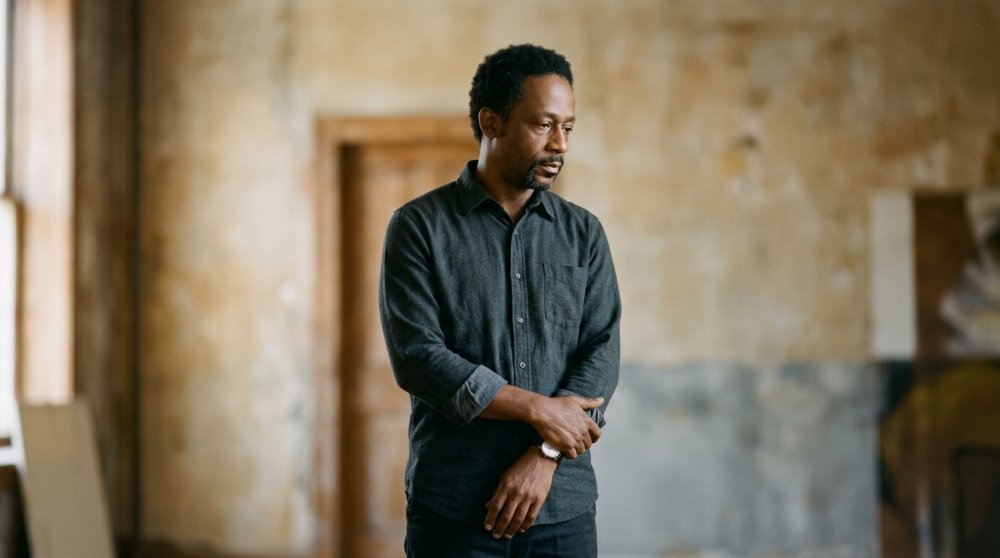
- Katt Williams has publicly shared that his personal relationship with God evolved independently after experiencing childhood abuse.
- The comedian emphasizes that his faith practice is nondenominational and rooted in his understanding of self-worth through God rather than organized religion.
- Williams’ testimony highlights the role of faith in overcoming hardship and finding personal identity beyond family trauma.
Comedian and actor Katt Williams has opened up about his faith journey, revealing that despite a difficult childhood marked by physical abuse, he now finds his self-worth rooted in his personal relationship with God. Williams, known for his stand-up comedy and acting roles, made these comments during a recent interview where he discussed his spiritual evolution.
Though he grew up in a home where he experienced physical abuse from his parents, Williams says his faith has developed independently of any organized religion. He describes his current practice as nondenominational, emphasizing a direct connection to God rather than membership in any particular church or denomination.
“I ain’t religious, but I know who God is to me,”
Williams stated, underscoring that his understanding of faith is personal and self-defined rather than institutional. This approach reflects a growing trend among some Americans who identify as spiritual but not religious, seeking meaning outside traditional church structures while still maintaining belief in God.
The comedian’s remarks come at a time when many Americans are questioning the role of organized religion in their lives. Williams’ story demonstrates how personal faith can serve as a source of healing and identity even for those who have been hurt by family or religious institutions. His testimony offers hope that individuals can find restoration through a direct relationship with God, regardless of past trauma or denominational affiliation.
Let us know what you think, please share your thoughts in the comments below.

Faith Facts
- Christian leaders stressed that science and faith are not at odds but are complementary gifts from God.
- Experts encouraged believers to view scientific discovery as an opportunity to understand God’s creation more deeply.
- The event focused on the intersection of Christian faith, health, and scientific advancement.
Christians should see science as a gift rather than something to fear, experts have said during an event exploring the relationship between Christian faith, health and scientific discovery.
The gathering brought together scientists and theologians who emphasized that pursuing knowledge about the natural world is consistent with honoring the Creator.
“Science helps us understand the intricate design of God’s creation,” one speaker noted.
Attendees were reminded that throughout history, many faithful believers have led significant scientific advancements, showing that faith and reason can work together.
“We are called to be stewards of knowledge,” another expert said.
The discussions highlighted the importance of approaching science with humility and reverence for God’s truth.
Participants left encouraged to engage thoughtfully with scientific developments while remaining anchored in their faith.
Let us know what you think, please share your thoughts in the comments below.
Faith Facts
- Scripture commands believers to pray for all leaders, even those they did not choose.
- God remains sovereign over every election outcome and earthly authority.
- Despair over politics distracts from the Christian duty to intercede in faith.
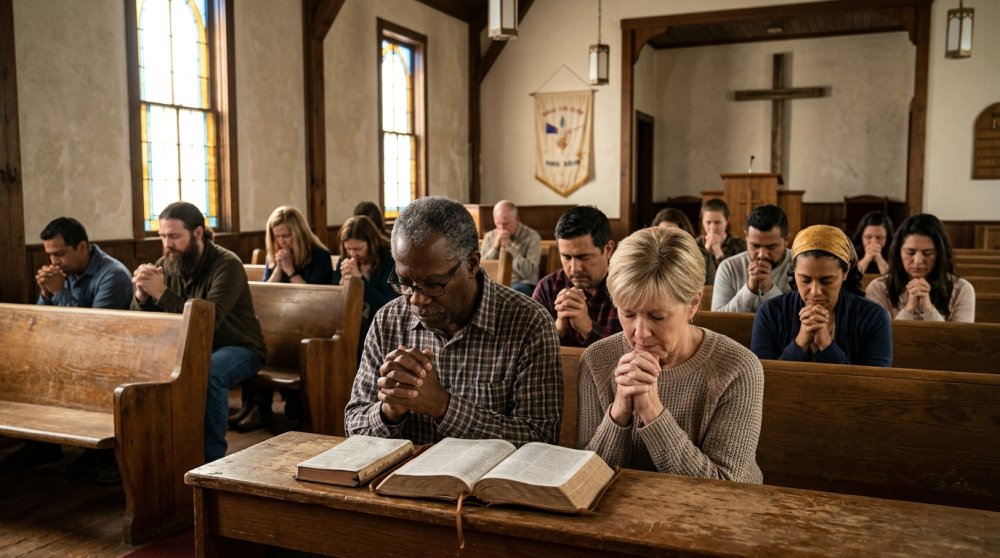
This year’s midterm results left many conservative Christians discouraged. Yet Scripture gives clear direction for moments like these.
Believers are called to pray for every leader placed in authority, regardless of personal preference or political outcome. Despair over election results shifts focus away from the power of prayer and the sovereignty of God.
“I urge, then, first of all, that petitions, prayers, intercession and thanksgiving be made for all people—for kings and all those in authority, that we may live peaceful and quiet lives in all godliness and holiness.”
The verse from 1 Timothy 2 reminds Christians that prayer is not optional but essential. It is the primary response to political disappointment, not anger or withdrawal.
Trusting God’s providence means recognizing that no election result surprises or thwarts His plan. The same Lord who ordains leaders also calls His people to intercede on their behalf.
Despair weakens witness and clouds the Christian’s responsibility to remain steadfast in prayer. Faithful intercession upholds both the nation and the Church in turbulent times.
Let us know what you think, please share your thoughts in the comments below.


-

 Self-Reliance2 years ago
Trump’s Bold Move Uncovers Massive Social Security Fraud
-
 Faith2 years ago
New Clues Emerge in Noah’s Ark Mystery
-
 News2 years ago
Governor Walz’s Rhetoric Sparks National Controversy
-
 News2 years ago
Mel Gibson’s ‘The Passion of the Christ’ Sequel Title Announced
-

 Family2 years ago
Texas Lawmaker Targets Furries in Schools
-

 Freedom2 years ago
Maine Lawmaker Challenges Sports Fairness Controversy
-

 Family1 year ago
Canada’s Controversial Policy Sparks Ethical Debate
-
Faith12 months ago
Congress Hears Pleas for Nigerian Christians