
Faith
Deadly Persecution Sparks Urgent Petition for Colombian Pastors


Faith Facts
- A petition is being presented to Colombia’s newly elected president calling for protection of Christian pastors after multiple murders targeting church leaders
- Violence against pastors in Colombia has increased as Christian ministers serve communities in dangerous regions controlled by armed groups
- The petition seeks government intervention to safeguard religious freedom and prevent further attacks on Christian leaders
Christian leaders in Colombia are mobilizing to protect their pastors following a series of violent attacks that have claimed the lives of multiple church leaders. A formal petition will be presented to the country’s new president, urging immediate action to safeguard religious workers who have become targets in regions plagued by violence and lawlessness.
The situation facing Colombian pastors reflects the dangerous reality of Christian ministry in areas where armed groups maintain control and where spreading the Gospel can carry deadly consequences. These ministers often serve in remote communities where government presence is minimal and where their message of hope challenges the influence of criminal organizations.
The petition represents a critical appeal for the Colombian government to recognize religious persecution within its borders and take concrete steps to protect those who serve their communities in Christ’s name. Christian leaders are calling for enhanced security measures and legal protections that would allow pastors to continue their ministry without fear of violent retaliation.
The murders of these pastors highlight the ongoing challenges facing Christians in regions where faith and freedom are not guaranteed. The courage of these ministers, who continue to preach despite threats to their lives, demonstrates the strength of Christian conviction even in the face of persecution.
As Colombia’s new administration takes office, the Christian community is looking for leadership that will defend religious liberty and protect those who dedicate their lives to spiritual service. The petition serves as both a memorial to those who have fallen and a call to action to prevent further tragedy.
The situation in Colombia serves as a sobering reminder of the persecution Christians face globally and the need for vigilance in protecting religious freedom. For believers in America, it underscores the blessing of worshiping freely and the responsibility to support brothers and sisters in Christ who face persecution abroad.
Let us know what you think, please share your thoughts in the comments below.

Faith Facts
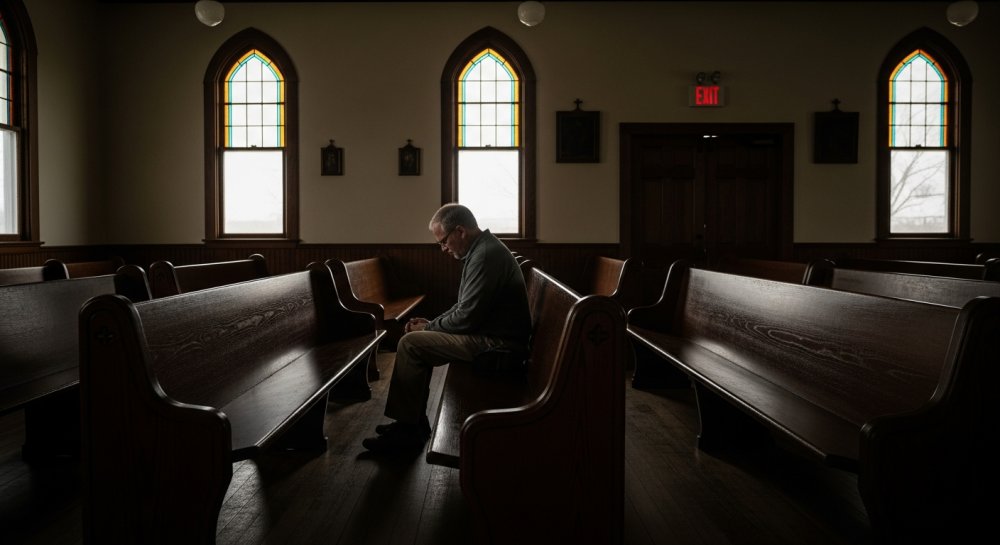
- A Christian leader openly shares his struggle with envy after witnessing widespread church renewal in other congregations while his own ministry remained steady but unchanged
- The reflection challenges popular metrics of church success, questioning whether numerical growth truly measures spiritual health and faithfulness
- A powerful moment in a small group setting reminded the pastor that genuine transformation in individual lives may be the truest marker of ministry effectiveness
In an era when American churches often measure success by attendance numbers and baptism statistics, one pastor’s honest confession is striking a chord with ministry leaders across the nation. Surrounded by testimonies of explosive growth and revival, he found himself confronting an uncomfortable truth that few church leaders dare to discuss publicly: the gnawing ache of spiritual comparison.
Derek Hughes, writing with unusual transparency, describes the emotional tension of celebrating others’ blessings while privately wrestling with questions about his own ministry. The contrast was stark—churches everywhere seemed to be experiencing unprecedented moves of God, while his own congregation continued faithfully but without dramatic transformation.
“I found myself genuinely happy for other churches while quietly wrestling with comparison, envy and the unsettling question: am I doing something wrong?” Hughes admitted.
This kind of vulnerability is rare in Christian leadership circles, where the pressure to project confidence and success can be overwhelming. Yet Hughes’s willingness to name his struggle may resonate with countless pastors and ministry workers who feel the weight of comparison in an age of social media highlight reels and viral revival stories.
The backdrop to this personal crisis was what’s being called “The Quiet Revival”—a season of spiritual awakening reported in churches across America. While others shared stories of packed sanctuaries and life-changing encounters with God, Hughes found himself evaluating his own ministry through an increasingly critical lens.
Traditional American Christianity has always valued both faithfulness and fruitfulness, but the balance between these two virtues can be difficult to maintain. When the culture around us measures everything in numbers—followers, views, attendees—even the most grounded believers can find themselves questioning whether their steady obedience is enough.
Then came a moment of clarity. In the intimacy of his small group, Hughes witnessed something that recalibrated his entire perspective on ministry success. Rather than the spectacular or the numerous, he encountered the profound reality of individual transformation—the kind of change that happens slowly, quietly, in the soil of authentic relationship and consistent faithfulness.
This revelation challenges the prevailing metrics that dominate contemporary church culture. Perhaps the truest measure of ministry effectiveness isn’t found in weekend attendance or social media reach, but in the patient work of discipleship that bears fruit over time, often away from public view.
Hughes’s story offers a corrective to the comparison trap that ensnares so many Christian leaders. In a culture that constantly ranks, rates, and measures, the call to faithfulness over fame becomes countercultural—even within the church.
The Bible itself is filled with examples of faithful servants whose ministries didn’t look impressive by worldly standards. Jeremiah preached for decades with few converts. Noah built an ark for a century before seeing results. Many of Jesus’s own disciples spent years in obscurity, faithfully serving without fanfare.
For Christian conservatives who value both tradition and genuine spiritual transformation, Hughes’s confession serves as an important reminder. The metrics of Madison Avenue and Silicon Valley—growth at all costs, viral moments, and mass appeal—need not define the success of God’s work.
Instead, the measure of a faithful ministry might be found in smaller, harder-to-quantify realities: lives genuinely changed by the gospel, families strengthened through biblical teaching, communities quietly transformed by the presence of salt and light believers.
Hughes’s willingness to expose his struggle with envy also highlights the spiritual danger of the comparison trap. Envy, after all, is listed among the works of the flesh in Galatians 5, standing alongside obvious sins like sexual immorality and idolatry. Yet in ministry contexts, it often goes unexamined and unconfessed.
The antidote to comparison culture isn’t indifference to results or a rejection of growth. Rather, it’s a deeper trust in God’s sovereignty and timing, combined with a renewed commitment to faithfulness regardless of measurable outcomes. It’s the recognition that the Lord’s approval matters more than human accolades.
This perspective aligns with the historic Christian understanding that God calls His people to obedience, not necessarily to observable success. The Puritan pastors of early America often labored for years in small congregations, measuring their effectiveness not by numerical growth but by the depth of biblical understanding and godly character in their flocks.
For American Christians watching revival reports and church growth statistics, Hughes’s story offers both comfort and challenge. The comfort: God is working even when the results aren’t spectacular or visible. The challenge: examining our own hearts for the subtle pride that wants recognition or the envy that resents others’ blessings.
In an age of instant gratification and viral fame, the call to quiet faithfulness remains as countercultural as ever. Hughes’s honest reflection reminds us that the most important work of the Kingdom often happens away from spotlights and social media feeds, in living rooms and coffee shops, through years of patient investment in individual souls.
The question for every believer becomes not “Am I as successful as others?” but rather “Am I faithful to what God has called me to do?” That shift in perspective, while simple to articulate, requires constant vigilance in a culture addicted to comparison.
Hughes’s small group moment—the intimate glimpse of genuine transformation in one person’s life—offers a powerful counter-narrative to our obsession with scale and spectacle. Perhaps revival isn’t always loud, viral, or numerically impressive. Perhaps sometimes it’s simply the quiet work of God’s Spirit changing hearts, one life at a time, through the faithful ministry of His servants.
Let us know what you think, please share your thoughts in the comments below.
Faith Facts
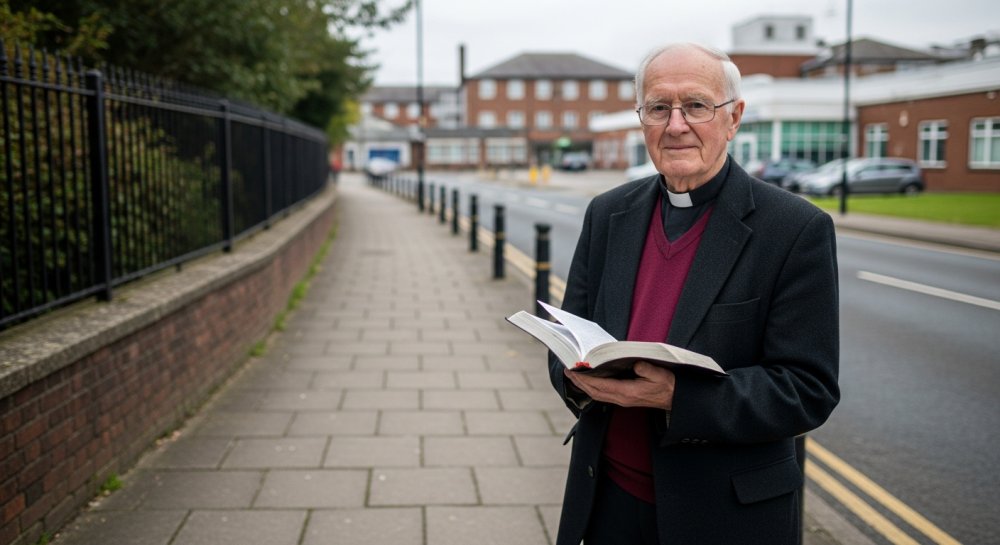
- A retired pastor in Northern Ireland was convicted of a criminal offense for reading John 3:16 from the Bible near a hospital buffer zone
- The prosecution marks a troubling escalation in the enforcement of so-called ‘safe access zones’ that effectively create Christianity-free areas in public spaces
- This case raises urgent questions about religious freedom and free speech rights for Christians throughout the United Kingdom
The conviction of a retired pastor for the simple act of reading Scripture in public represents a disturbing milestone in the erosion of Christian liberty in the United Kingdom. When quoting the most famous verse in the Bible becomes grounds for criminal prosecution, we must ask ourselves: how did we arrive at this place?
The case involves an elderly pastor who was standing on the fringes of a buffer zone near a hospital in Northern Ireland. His offense? Reading aloud John 3:16, the beloved verse that proclaims God’s love for the world. For this act of faith, he now carries a criminal conviction.
Buffer zones, or “safe access zones” as they’re euphemistically called, were ostensibly created to prevent harassment near healthcare facilities. But when the mere reading of Scripture—without confrontation, without blocking access, without any aggressive behavior—becomes criminalized, these zones have clearly overstepped their stated purpose. They have become, in effect, Christianity-free zones where the expression of faith is treated as inherently threatening.
This is not about preventing genuine harassment or obstruction. Those behaviors were already illegal under existing laws. This is about silencing a particular viewpoint in the public square. It’s about creating spaces where Christian witness is presumed guilty before any action is taken.
The implications extend far beyond this single case. If reading the Bible aloud in a public space can trigger criminal prosecution, what other expressions of faith will soon be deemed unacceptable? Will wearing a cross be considered intimidating? Will carrying a Bible be seen as a provocation? Will praying silently be construed as a public disturbance?
We are witnessing the steady construction of an invisible infrastructure of censorship—one that disproportionately targets people of faith, particularly Christians. While other forms of public demonstration and expression are tolerated and even celebrated, Christian speech is increasingly treated as uniquely dangerous and subject to special restrictions.
The pastor in question wasn’t blocking anyone’s path. He wasn’t shouting or causing a scene. He was simply reading Scripture—an act that has been part of Christian practice for two millennia. Yet in modern Britain, this ancient tradition has been redefined as criminal behavior.
This case should alarm every person who values freedom of conscience and expression. Today it’s a retired pastor reading John 3:16. Tomorrow it could be any Christian who dares to live out their faith publicly. The precedent being set is chilling: your religious convictions are acceptable only if you keep them entirely private and never allow them to influence your public presence.
Britain has a long and proud history of religious tolerance and free expression. These freedoms were hard-won and have been jealously guarded for generations. But they are being surrendered piece by piece, not through dramatic announcements, but through incremental restrictions that seem reasonable in isolation but collectively constitute a profound assault on liberty.
Buffer zones that criminalize peaceful religious expression are incompatible with a free society. They represent government overreach of the most troubling kind—the state dictating where and when citizens may practice their faith. This is not the hallmark of a liberal democracy; it’s the behavior of an authoritarian regime.
Christians throughout the United Kingdom must recognize this for what it is: a test case. If this conviction stands unchallenged, it will embolden further restrictions. The boundaries of acceptable Christian expression will continue to shrink until faith becomes something practiced only behind closed doors, never to be seen or heard in the public realm.
We need not accept this trajectory. Laws can be challenged. Precedents can be overturned. Public opinion can be shaped. But it requires Christians to speak up, to refuse to be intimidated into silence, and to insist that their constitutional rights to freedom of religion and speech be respected.
The criminalization of Bible reading is not a minor administrative matter. It is a fundamental assault on the character of British society. Christianity-free zones have no place in the United Kingdom—or in any nation that claims to value freedom. This retired pastor’s conviction should be a wake-up call to all who cherish liberty. The question is: will we heed it?
Let us know what you think, please share your thoughts in the comments below.

Faith Facts
- Finnish Member of Parliament Päivi Räsänen was convicted by Finland’s Supreme Court for sharing biblical teachings on marriage in a 2004 pamphlet
- Räsänen will now appeal to the European Court of Human Rights to defend religious freedom and free speech rights across Europe
- The case has drawn international attention as a test of whether Christians can publicly express biblical views without criminal prosecution
A Finnish grandmother and member of parliament is taking her fight for religious freedom to the European Court of Human Rights after being convicted for publishing a pamphlet that quoted the Bible’s teachings on marriage. Päivi Räsänen’s case has become a rallying point for Christians worldwide who are concerned about the erosion of free speech and religious liberty in Western nations.
Räsänen, a medical doctor and former Interior Minister of Finland, was initially charged in 2019 for three separate instances of expressing her biblical beliefs about marriage and sexuality. These included a 2004 pamphlet she wrote for her church, a 2019 tweet quoting Romans 1:24-27, and comments made during a radio interview. After years of legal battles, Finland’s Supreme Court recently upheld her conviction, setting the stage for her appeal to the ECHR.
The 2004 pamphlet at the center of the case was titled “Male and Female He Created Them: Homosexual Relationships Challenge the Christian Concept of Humanity.” In it, Räsänen cited biblical passages and articulated traditional Christian teaching on marriage as between one man and one woman. Finnish prosecutors argued that these views constituted “hate speech” and violated the country’s ethnic agitation laws.
Throughout the proceedings, Räsänen has maintained that she never intended to defame or harm anyone, but rather was exercising her right as a Christian to share what the Bible teaches.
“I am not guilty of any crime,” Räsänen stated following the Supreme Court’s decision. “My statements were based on the Bible’s teaching on marriage and sexuality. I will not back down from my faith.”
The case has drawn support from religious freedom advocates around the globe. Many see it as a concerning precedent where governments can criminalize the public expression of orthodox Christian beliefs that have been held for two millennia. The implications extend far beyond Finland’s borders, potentially affecting how all European nations balance religious freedom with anti-discrimination laws.
Paul Coleman, Executive Director of Alliance Defending Freedom International, which is representing Räsänen, emphasized the broader significance of the case.
“This case will determine whether Christians can freely express their beliefs or whether they will be silenced through the threat of criminal prosecution,” Coleman said. “What happens to Päivi will affect Christians throughout Europe and beyond.”
Räsänen’s appeal to the European Court of Human Rights will argue that Finland violated Articles 9 and 10 of the European Convention on Human Rights, which protect freedom of thought, conscience, and religion, as well as freedom of expression. Her legal team contends that criminalizing the expression of mainstream Christian doctrine creates a dangerous precedent that threatens the foundations of democratic society.
The timeline for the ECHR appeal remains uncertain, as the court typically takes several years to hear cases. However, Räsänen has expressed her determination to see the process through, regardless of how long it takes. She has become an international symbol of courage for Christians facing increasing pressure to conform to secular ideologies.
For many American Christians watching from across the Atlantic, Räsänen’s case serves as a sobering reminder of what can happen when religious freedom is not vigorously defended. It highlights the importance of protecting First Amendment rights in the United States and supporting believers worldwide who face persecution for their faith.
Despite facing potential fines and a criminal record, Räsänen remains steadfast in her convictions. She has repeatedly stated that she cannot and will not renounce her Christian beliefs, even if it means continuing this legal battle for years to come. Her courage has inspired countless believers to stand firm in their own faith, regardless of cultural pressures or legal threats.
Let us know what you think, please share your thoughts in the comments below.


-

 Self-Reliance1 year ago
Trump’s Bold Move Uncovers Massive Social Security Fraud
-

 Faith1 year ago
New Clues Emerge in Noah’s Ark Mystery
-

 News1 year ago
Governor Walz’s Rhetoric Sparks National Controversy
-

 News1 year ago
Mel Gibson’s ‘The Passion of the Christ’ Sequel Title Announced
-

 Family1 year ago
Texas Lawmaker Targets Furries in Schools
-

 Freedom1 year ago
Maine Lawmaker Challenges Sports Fairness Controversy
-

 Family12 months ago
Canada’s Controversial Policy Sparks Ethical Debate
-
Faith6 months ago
Congress Hears Pleas for Nigerian Christians