
Faith
Dallas Pastor Defends Trump’s Understanding of Biblical Governance Over Vatican Leader

Faith Facts
- Pastor Robert Jeffress publicly stated President Trump demonstrates superior understanding of biblical teachings on government compared to Pope Leo XIV
- The dispute centers on theological differences regarding military action and the proper role of government authority
- President Trump previously criticized the pontiff’s positions on crime and foreign policy matters
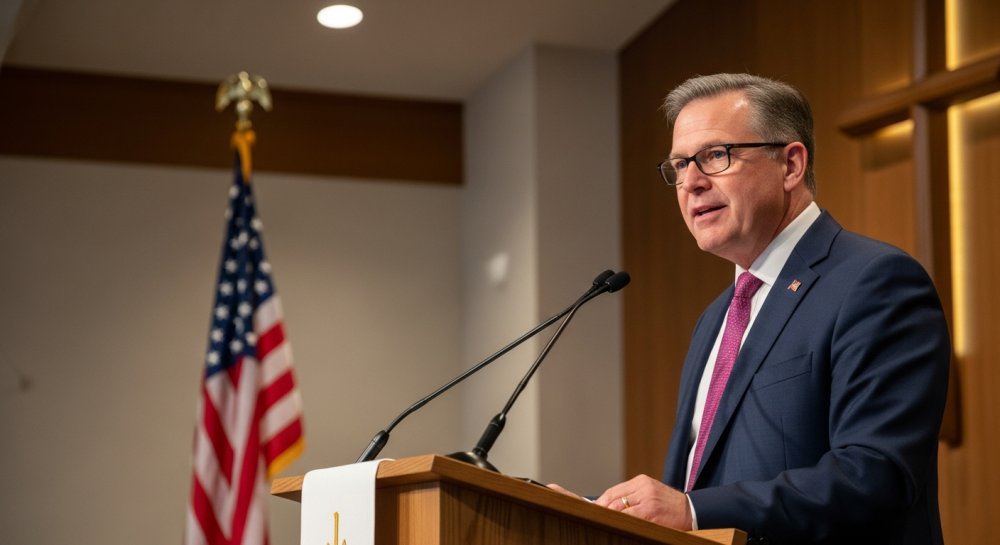
A prominent evangelical leader has entered a growing theological and political debate between the White House and the Vatican, asserting that President Donald Trump exhibits a firmer grasp of Scripture’s teachings on governmental authority than the current pope.
Pastor Robert Jeffress, a well-known Dallas minister and longtime supporter of traditional American values, made clear his position that the president’s understanding of biblical principles regarding government surpasses that of Pope Leo XIV. The statement comes amid heightened tensions between the two leaders over fundamental questions about the proper use of military force and national sovereignty.
The dispute has focused particularly on the question of military action against Iran, an issue that highlights deep philosophical differences about when and how nations should exercise their God-given authority to protect their citizens. These disagreements reflect broader debates within Christianity about the relationship between faith and statecraft.
President Trump has not shied away from expressing his concerns about the Vatican’s current leadership, specifically calling the pontiff weak on matters of crime and foreign policy. These criticisms underscore the administration’s commitment to a robust defense of American interests and security, principles that many conservative Christians believe are grounded in biblical teaching about the proper role of government.
The theological question at the heart of this debate centers on Romans 13 and other biblical passages that address governmental authority and the use of force. Traditional Christian teaching recognizes that governments bear the responsibility to protect their citizens and maintain order, sometimes requiring the use of military power.
Pastor Jeffress’s intervention in this public dispute reflects the strong support President Trump continues to receive from evangelical Christians who appreciate his willingness to defend American sovereignty and take decisive action when national security is threatened. Many faith leaders have praised the president’s understanding that government exists, in part, to protect the innocent and restrain evil.
The disagreement between American evangelical leaders and the current Vatican leadership also highlights broader concerns among conservative Christians about the direction of certain religious institutions. Many believers worry that some church leaders have embraced political positions that prioritize international opinion over biblical principles and national security.
This is not the first time tensions have emerged between the Trump administration and Vatican leadership. Previous disagreements have touched on immigration policy, border security, and America’s role in the world—all issues where conservative Christians see clear biblical principles at stake.
The president’s supporters note that his policies reflect a commitment to protecting American families and upholding the nation’s ability to defend itself against threats. This approach, they argue, aligns with scriptural teaching about the God-ordained role of civil government to bear the sword in defense of justice and order.
As these debates continue, they reveal fundamental differences in how various Christian traditions understand the application of biblical principles to contemporary political challenges. For many American evangelicals, the president’s approach represents a clearer adherence to Scripture’s teachings on governmental authority and national defense.
Let us know what you think, please share your thoughts in the comments below.

Faith Facts
- Christian leaders are responding inappropriately to false prophecies, undermining biblical accountability and discernment
- Three common unhelpful reactions include silence, dismissiveness, and deflection when prophecies fail to materialize
- Scripture calls believers to test all prophecies and hold false prophets accountable according to God’s Word
The American church faces a critical moment in how it handles failed prophecies. Too often, well-meaning believers fall into predictable patterns that undermine biblical truth and weaken the body of Christ.
Rather than applying scriptural standards, many Christians default to responses that protect false prophets while leaving congregations vulnerable to deception.
The first unhelpful response is silence. When bold predictions fail to come to pass, those who made them—and those who promoted them—often say nothing. They move on to the next message, the next conference, the next prophetic word, as if accuracy doesn’t matter.
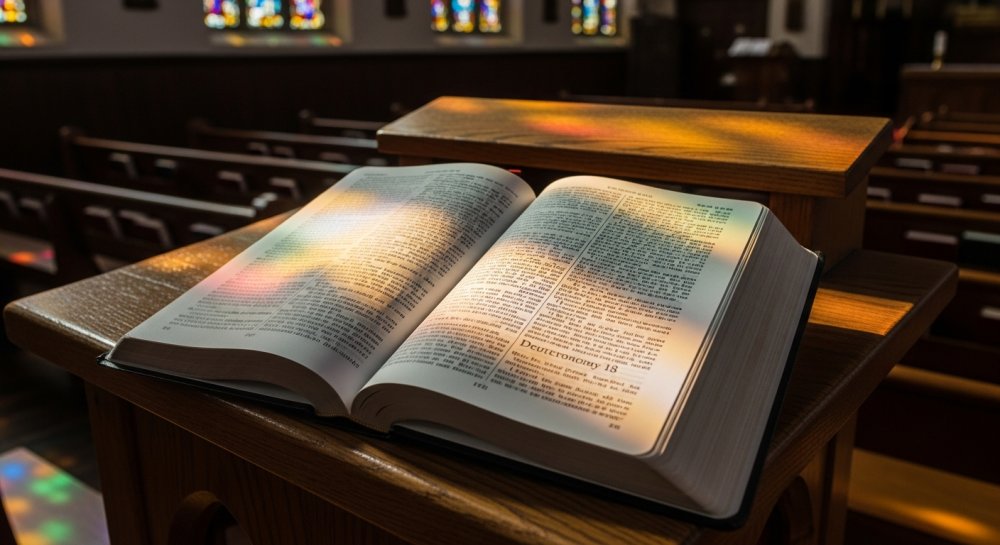
But the Bible holds prophets to a strict standard of truthfulness. Deuteronomy 18:22 makes it clear: if a prophet speaks in the Lord’s name and it doesn’t happen, that word did not come from God.
The second problematic response is dismissiveness—treating failed prophecies as minor mistakes or learning opportunities. This attitude minimizes the seriousness of speaking presumptuously in God’s name.
When leaders claim divine authority for their words, accuracy isn’t optional. God’s reputation is at stake every time someone claims to speak on His behalf.
The third unhelpful pattern is deflection. Some respond to failed prophecies by attacking those who ask for accountability, labeling discernment as divisiveness or legalism. This defensive posture protects the institution rather than the truth.
Jesus warned repeatedly about false prophets. Paul instructed the Thessalonians to test everything and hold fast to what is good. Discernment isn’t unloving—it’s obedient.
American Christians must return to biblical standards for prophecy. This means expecting accuracy, requiring repentance when predictions fail, and prioritizing God’s Word over personal platforms or reputations. The integrity of the church’s witness depends on it.
Faithful believers honor God by upholding truth, even when it’s uncomfortable. The alternative is a church weakened by compromise, where emotional experiences replace biblical authority and feelings trump facts.
Our nation needs a church grounded in Scripture, not swayed by every wind of doctrine or claim of special revelation. Testing prophecies isn’t cynicism—it’s faithfulness to the God who is truth itself.
Let us know what you think, please share your thoughts in the comments below.

Faith Facts
- Christian photographer Chelsey Nelson challenged a city nondiscrimination law that conflicted with her faith-based business practices
- Nelson credits her reliance on God’s sovereignty as the driving force behind her persistence through years of legal challenges
- Her case highlights the ongoing tension between religious freedom and LGBT nondiscrimination ordinances across America
A Christian photographer is sharing how her faith in God’s sovereign plan gave her the strength to persist through a lengthy legal battle over her right to operate her business according to her religious convictions.
Chelsey Nelson faced a significant challenge when a city nondiscrimination ordinance threatened her ability to conduct her photography business in accordance with her deeply held Christian beliefs. Rather than compromise her faith or abandon her calling, she chose to stand firm and challenge the law in court.
“God’s sovereignty” became Nelson’s anchor throughout the legal proceedings, she explained. Her commitment to honoring the Lord in her professional life motivated her to continue fighting even when the path forward seemed uncertain.
The case represents a broader pattern of conflicts emerging across the nation as religious business owners navigate laws designed to prohibit discrimination based on sexual orientation and gender identity. For many Christians like Nelson, these ordinances create an impossible choice between their faith and their livelihoods.
Nelson’s determination to honor God through her work demonstrates the intersection of faith and the marketplace. Christian business owners increasingly find themselves defending their First Amendment rights to free speech and religious exercise in courts of law.
Her reliance on biblical principles of God’s ultimate control and authority provided both comfort and courage during uncertain times. This theological foundation enabled her to view the legal challenge not merely as a personal battle, but as part of a larger divine plan.
The photographer’s case underscores the importance of religious liberty protections in American society. As cultural values shift, Christians committed to traditional biblical teaching on marriage and sexuality face mounting pressure to conform to prevailing social norms or face legal consequences.
Nelson’s willingness to stand for her convictions serves as an example to other Christians navigating similar challenges in their professional lives. Her testimony points to the sustaining power of faith when facing opposition for righteousness’ sake.
The outcome of such cases carries significant implications for the future of religious freedom in America. They test whether people of faith can fully participate in public commerce while maintaining their deeply held beliefs about fundamental moral issues.
Let us know what you think, please share your thoughts in the comments below.
Faith Facts
- The Church of Scotland has experienced a surge in conversions since the COVID-19 pandemic
- Church leaders attribute the growth to a ‘deep spiritual hunger’ emerging in post-pandemic society
- The revival contrasts with declining church attendance trends across much of the Western world
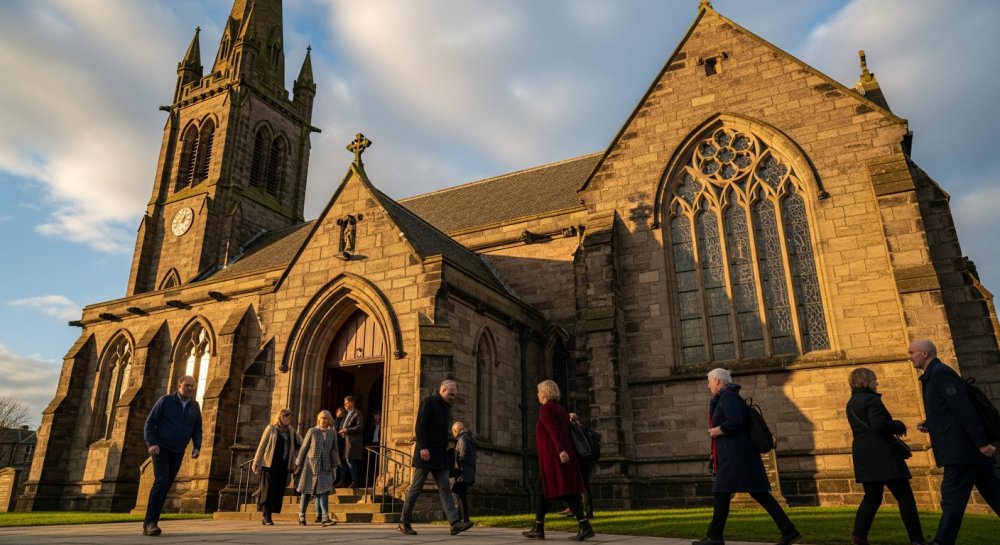
Something remarkable is happening in Scotland. While many Western churches have struggled to maintain their congregations, the Church of Scotland is witnessing an unexpected spiritual awakening that has taken root since the COVID-19 pandemic.
Church leaders across Scotland are reporting a significant increase in the number of people seeking baptism, confirmation, and membership in the historic denomination. The trend represents a dramatic shift from the declining attendance patterns that characterized much of the past decade.
“There is a deep spiritual hunger,” one clergyman explained, speaking to the underlying cause of this spiritual revival.
The pandemic appears to have served as a catalyst for renewed spiritual searching among Scots. During lockdowns and social isolation, many people confronted fundamental questions about life, death, and meaning that had long gone unexamined in their daily routines.
This spiritual awakening comes at a critical time for the Church of Scotland, which like many mainline Protestant denominations had faced years of declining membership and church closures. The recent surge offers hope that traditional Christianity still speaks to the deepest needs of the human heart, even in an increasingly secular age.
The growth isn’t limited to any particular age group or demographic. Church leaders report seeing young families, middle-aged professionals, and retirees all seeking a deeper connection with God and Christian community. Many cite feelings of emptiness despite material success, or a recognition that secular answers fail to satisfy the soul’s deepest longings.
Local congregations have responded by strengthening their discipleship programs and creating welcoming environments for those exploring the Christian faith. Bible studies, prayer groups, and fellowship opportunities have expanded to accommodate the influx of spiritual seekers.
The Scottish revival serves as an encouraging reminder that God’s Word remains powerful and relevant. When people encounter authentic Christianity grounded in Scripture and lived out in loving community, hearts are still transformed just as they were two thousand years ago.
This movement also demonstrates that cultural secularization isn’t inevitable or irreversible. When Christians faithfully proclaim the Gospel and live out their faith with integrity, the Holy Spirit can work powerfully to draw people to Christ, even in societies that seem thoroughly post-Christian.
As America faces its own spiritual crossroads, the Scottish experience offers important lessons. Authentic faith communities that hold fast to biblical truth while showing genuine love and hospitality can still attract those searching for meaning and purpose in an uncertain world.
Let us know what you think, please share your thoughts in the comments below.


-

 Self-Reliance1 year ago
Trump’s Bold Move Uncovers Massive Social Security Fraud
-

 Faith1 year ago
New Clues Emerge in Noah’s Ark Mystery
-

 News1 year ago
Governor Walz’s Rhetoric Sparks National Controversy
-

 News1 year ago
Mel Gibson’s ‘The Passion of the Christ’ Sequel Title Announced
-

 Family1 year ago
Texas Lawmaker Targets Furries in Schools
-

 Freedom1 year ago
Maine Lawmaker Challenges Sports Fairness Controversy
-

 Family12 months ago
Canada’s Controversial Policy Sparks Ethical Debate
-
Faith6 months ago
Congress Hears Pleas for Nigerian Christians