
Freedom
Court Ruling Sparks Conservative Outrage Over Teacher’s Gender Biology Book


Faith Facts
- Ryan Bomberger, pro-life advocate and founder of The Radiance Foundation, condemned an appeals court decision upholding the firing of an Oregon school employee for displaying books affirming biological gender.
- The employee was terminated for displaying materials including books that promote the biological gender binary, such as ‘She is She,’ in a public school setting.
- The ruling represents a growing trend of public institutions penalizing employees who affirm traditional, biological definitions of gender based on Christian values.
Ryan Bomberger, a prominent pro-life advocate and founder of The Radiance Foundation, has publicly condemned a recent appeals court ruling that upheld the termination of an Oregon public school employee. The employee was fired for displaying books that affirm the biological gender binary, including titles like “She is She.”
The case has drawn national attention from Christian conservatives who view the ruling as another example of religious and scientific viewpoints being suppressed in public institutions. The employee’s decision to display materials affirming biological gender was deemed incompatible with school policies, leading to termination.
Bomberger, known for his outspoken advocacy on life issues and traditional values, denounced the court’s decision as an attack on both free speech and scientific truth. He argues that biological reality and Christian principles should not be punishable offenses in American schools.
The appeals court ruling has intensified debates over gender ideology in public education and the rights of employees to express views grounded in biological science and religious conviction. Many Christian parents and educators see the decision as part of a broader effort to marginalize traditional beliefs about gender and sexuality.
Conservative legal organizations have expressed concern that the ruling sets a dangerous precedent for religious liberty and free expression in the workplace. They argue that employees should not face termination for affirming what millions of Americans consider scientific and moral truth.
The case underscores the ongoing cultural battle over gender ideology in American schools, where policies increasingly conflict with traditional Christian teaching. Parents and faith leaders continue to push back against curricula and policies that contradict biblical principles about human identity.
Bomberger’s criticism reflects growing frustration among Christian conservatives who believe their values are being systematically excluded from public life. The Oregon case represents one of many recent incidents where employees have faced professional consequences for expressing traditional views on gender.
Let us know what you think, please share your thoughts in the comments below.


Faith Facts
- Michigan has agreed to stop enforcing its ban on counseling services for minors seeking help with unwanted same-sex attraction or gender confusion following a federal lawsuit.
- The state’s consent decree requires officials to notify all licensed counselors that the ban will not be enforced while legal challenges proceed.
- Christian counselors and families argued the ban violated their First Amendment rights to religious freedom and free speech.
In a significant victory for religious liberty, Michigan has agreed to halt enforcement of a controversial law that prohibited counseling services for minors struggling with unwanted same-sex attraction or gender identity issues. The development comes as part of a consent decree filed in federal court, marking a retreat by state officials in the face of constitutional challenges.
The ban, which targeted licensed therapists who provide counsel aligned with biblical teachings on sexuality and gender, had faced immediate legal opposition from Christian counselors and faith-based organizations. Critics of the law argued it infringed on the fundamental rights of parents to seek care consistent with their religious convictions and denied minors access to counseling they voluntarily requested.
Under the terms of the agreement, Michigan officials must formally notify all licensed mental health professionals in the state that the ban will not be enforced during ongoing litigation. This notification requirement ensures that counselors who offer biblically-based guidance on matters of sexuality and gender identity can continue their work without fear of state punishment or license revocation.
The case highlights the ongoing tension between aggressive LGBT activism in state legislatures and the constitutional protections afforded to religious Americans. Supporters of the ban characterized traditional Christian counseling as harmful, while defenders argued that the law represented government overreach into matters of faith, family, and personal conscience.
For families seeking to raise their children according to Christian principles, the agreement represents an important affirmation that the state cannot compel them to accept ideologies that contradict their deeply held beliefs. Parents maintain the right to pursue counseling options that align with their faith when their children experience confusion about sexuality or gender.
The consent decree does not resolve the underlying constitutional questions, which will continue to be litigated in federal court. However, it provides immediate relief to counselors and families who faced the threat of state sanctions for pursuing care rooted in traditional Christian teaching about human sexuality and God’s design for male and female.
Legal experts following the case note that similar bans in other states have faced constitutional scrutiny, with courts increasingly skeptical of laws that target specific viewpoints or religious perspectives. The First Amendment protects both the free exercise of religion and freedom of speech, principles that extend to private conversations between counselors and willing clients.
Michigan’s decision to suspend enforcement suggests state attorneys recognized the legal vulnerabilities of the ban. Rather than risk an unfavorable ruling that could establish binding precedent, officials opted to stand down while the case proceeds through the courts.
Faith-based counseling organizations have celebrated the development as a win for families and religious freedom. They emphasize that the counseling services in question are entirely voluntary, sought by minors and their parents who share traditional Christian convictions about sexuality and gender.
Let us know what you think, please share your thoughts in the comments below.
Faith Facts
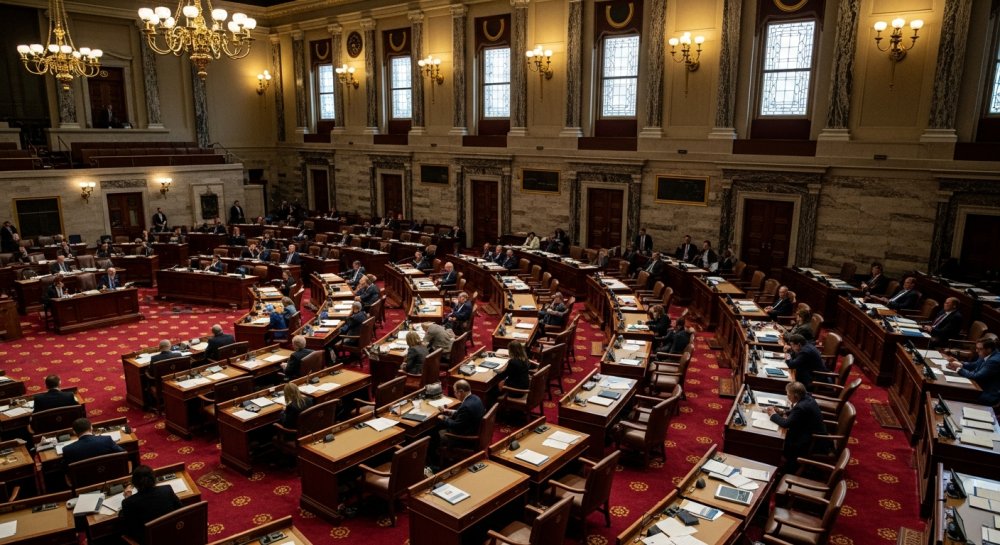
- A bipartisan pair of U.S. senators are joining forces to protect the Senate filibuster from elimination efforts
- The filibuster requires a 60-vote supermajority to advance most legislation, forcing compromise and preventing hasty lawmaking
- George Washington reportedly compared the Senate to a coffee saucer — designed to cool down legislation just as a saucer cools hot coffee
In an era of intense political polarization, a Democrat and Republican have found common ground on preserving one of the Senate’s most contentious procedural tools. The filibuster, which requires 60 votes to move forward with most legislation, has become a flashpoint in Washington — but these unlikely allies argue it serves a vital constitutional purpose.
According to Richard Land, the filibuster embodies the Founders’ vision for the Senate as a deliberative body. The often-told story of George Washington and the coffee saucer illustrates this perfectly: just as a saucer cools hot coffee before drinking, the Senate was designed to cool the passions of hastily passed House legislation.
This safeguard has taken on new significance as partisan tensions run high. Many progressives have called for eliminating the filibuster entirely, arguing it obstructs their legislative agenda. Yet some Democrats are resisting those calls, recognizing that today’s majority could become tomorrow’s minority.
The bipartisan defense of the filibuster reflects a deeper truth about American governance: our constitutional system was never meant to enable swift, unchecked power. The checks and balances our Founders established — including Senate procedures that require supermajority support — protect against the tyranny of bare majorities.
For Americans who value constitutional restraints on government power, the filibuster represents more than parliamentary procedure. It embodies the wisdom of limited government and the protection of minority rights — principles that transcend party politics.
The current push to preserve the filibuster shows that some lawmakers still understand the difference between winning elections and governing wisely. While eliminating the rule might provide short-term legislative victories, it would fundamentally alter the Senate’s role as the more deliberative chamber of Congress.
As our nation grapples with division and distrust, institutional safeguards like the filibuster serve as reminders that stability and thoughtful governance matter more than partisan expediency.
Let us know what you think, please share your thoughts in the comments below.
Freedom
NYC Mayor’s Call to Arrest Foreign Leader Exposes Global Court Threat to American Sovereignty

Faith Facts
- NYC Mayor Zohran Mamdani called on the federal government to enforce an International Criminal Court warrant, despite the U.S. never ratifying the ICC treaty
- The ICC operates without U.S. Senate approval, raising constitutional concerns about foreign tribunals exercising authority over American sovereignty
- Constitutional scholars warn that submitting to unratified international courts undermines American self-government and the rule of law
When New York City Mayor Zohran Mamdani publicly acknowledged he lacked the authority to arrest Israeli Prime Minister Benjamin Netanyahu under an International Criminal Court warrant, he didn’t leave it at that. Instead, he took the extraordinary step of calling on the federal government to carry out the arrest on behalf of a court the United States never joined.
That single comment has ignited a larger debate that transcends one warrant or one world leader. At its core, the question is this: should any international tribunal wield authority over American citizens or on American soil when the U.S. Senate has never ratified the treaty that created it?
For those who believe in constitutional self-government and the sovereignty of the United States, the answer must be a resounding no. America’s founding principles are rooted in the consent of the governed and the rule of law as determined by the American people through their elected representatives. Submitting to the jurisdiction of a global bureaucracy that operates outside the framework of U.S. constitutional authority is not just legally questionable — it’s a direct threat to national independence.
The International Criminal Court was established in 2002 by the Rome Statute, a treaty that the United States signed but never ratified. Without Senate ratification, the ICC has no binding authority over the United States or its citizens. Yet the court has repeatedly attempted to assert jurisdiction over American military personnel and allied nations, raising alarm among defenders of American sovereignty.
Mayor Mamdani’s call for federal enforcement of an ICC warrant represents a troubling willingness to subordinate American law to international authority. It signals a broader ideological shift among some political leaders who view global institutions as superior to national governance. This perspective is fundamentally at odds with the principles that founded this nation and the constitutional protections that safeguard American freedoms.
The implications extend far beyond one controversial warrant. If the United States were to recognize the ICC’s authority, it would set a dangerous precedent. American soldiers, political leaders, and citizens could be subjected to prosecutions by foreign judges operating under standards and procedures that may conflict with U.S. constitutional protections. The very concept of due process, enshrined in the Fifth and Fourteenth Amendments, could be compromised.
Supporters of international courts often argue that global cooperation requires shared legal frameworks. But cooperation does not require capitulation. The United States can and does work with other nations on matters of justice and security without surrendering its constitutional authority to unelected foreign bodies. Treaties must be ratified through the proper constitutional process, ensuring that the American people, through their representatives, have a voice in any commitment that affects their sovereignty.
The Bible speaks to the importance of just governance and the accountability of leaders to their people. Proverbs 29:2 reminds us that “when the righteous are in authority, the people rejoice; but when the wicked beareth rule, the people mourn.” Self-government under God’s principles, not submission to distant tribunals, is the foundation of just authority.
Mayor Mamdani’s statement should serve as a wake-up call. The quiet encroachment of international institutions on American sovereignty is real, and it’s accelerating. From climate agreements to economic regulations to judicial overreach, global bureaucracies are seeking to impose their will on sovereign nations. For Americans who cherish freedom, faith, and constitutional order, this is a line that must not be crossed.
The defense of sovereignty is not isolationism — it is patriotism. It is a recognition that the freedoms we enjoy as Americans were hard-won and must be vigilantly protected. Our Constitution is not a suggestion or a starting point for negotiation with foreign powers. It is the supreme law of the land, and no international body has the right to supersede it.
As this debate continues, Americans must ask themselves what kind of nation they want to leave to their children. Will it be one that governs itself according to its own laws and values, or one that defers to the whims of international courts and foreign officials? The answer will shape the future of freedom in America.
Let us know what you think, please share your thoughts in the comments below.


-

 Self-Reliance1 year ago
Trump’s Bold Move Uncovers Massive Social Security Fraud
-

 Faith1 year ago
New Clues Emerge in Noah’s Ark Mystery
-

 News1 year ago
Governor Walz’s Rhetoric Sparks National Controversy
-

 News1 year ago
Mel Gibson’s ‘The Passion of the Christ’ Sequel Title Announced
-

 Family1 year ago
Texas Lawmaker Targets Furries in Schools
-

 Freedom1 year ago
Maine Lawmaker Challenges Sports Fairness Controversy
-

 Family1 year ago
Canada’s Controversial Policy Sparks Ethical Debate
-
Faith8 months ago
Congress Hears Pleas for Nigerian Christians