
News
Ancient Coin Discovered on Israeli Beach Reveals Biblical-Era Trade Routes


Faith Facts
- A 2,500-year-old coin from Cyprus was discovered on an Israeli beach, providing evidence of biblical-era commerce
- The ancient artifact confirms trade and travel networks between Mediterranean regions during the time of Old Testament events
- The discovery offers tangible archaeological support for the historical accuracy of Scripture’s descriptions of ancient economic activity
A remarkable archaeological discovery on the shores of Israel is shedding new light on the bustling trade networks that existed during biblical times. Researchers have uncovered a 2,500-year-old coin, originally minted in Cyprus, that washed ashore on an Israeli beach.
This ancient artifact provides compelling evidence of the commercial connections between these Mediterranean lands during the era when the prophets walked the earth and the events of the Old Testament unfolded.
The coin’s discovery reinforces the historical reliability of Scripture, which frequently references trade, commerce, and international connections in the ancient world. From Solomon’s trading ventures to the merchant ships mentioned throughout biblical texts, God’s Word has always painted a picture of an interconnected ancient economy.
For believers, such archaeological finds serve as powerful reminders that the Bible describes real places, real people, and real events. The coin represents more than just an ancient form of currency—it’s a tangible link to the world our spiritual ancestors inhabited.
The discovery on Israel’s coast demonstrates how God’s chosen land served as a crossroads of civilizations, perfectly positioned for the spread of His truth throughout the known world. Cyprus itself appears in the New Testament as the birthplace of Barnabas and as one of Paul’s missionary destinations.
This small piece of metal, preserved for millennia, now offers modern researchers invaluable insights into the economic systems, travel patterns, and cultural exchanges that characterized the biblical era. It stands as yet another confirmation that archaeology continues to validate the historical framework of Scripture.
As technology advances and more discoveries emerge from the sands of time, we can expect additional evidence supporting the accuracy and authenticity of God’s Word. Each artifact uncovered serves to strengthen faith and silence critics who question the Bible’s historical credibility.
Let us know what you think, please share your thoughts in the comments below.


Faith Facts
- Sports gambling legalization has coincided with a 61% increase in diagnosed gambling disorders across America
- The widespread availability of betting apps has led to rising bankruptcies, debt delinquency, and domestic violence cases
- What began as entertainment has become a crisis threatening families and financial stability nationwide
A troubling pattern is emerging across the nation as families grapple with the consequences of decisions made in state legislatures just a few years ago. The legalization of sports gambling, once promoted as harmless entertainment and a source of tax revenue, has unleashed devastating consequences that are tearing apart households and destroying lives.
New research confirms what pastors, counselors, and financial advisors have been witnessing firsthand: the normalization of sports betting has created a public health crisis. Since states began legalizing sports gambling in recent years, diagnosed gambling disorders have surged by an alarming 61%.
But the damage extends far beyond clinical diagnoses. The ripple effects are destroying the financial foundations of American families.
Bankruptcy filings linked to gambling have increased dramatically. Debt delinquency rates are climbing as individuals chase losses with money they cannot afford to lose. Credit scores are plummeting, home foreclosures are rising, and savings accounts built over decades are being wiped out in moments of poor judgment.
Perhaps most heartbreaking is the connection between gambling addiction and domestic violence. Law enforcement and social workers are reporting increased incidents of family conflict and abuse tied directly to gambling losses and the financial strain they create. Spouses are discovering hidden debts, children are going without necessities, and the trust that holds marriages together is being shattered.
The ubiquity of sports gambling advertising during family viewing hours has normalized an activity that the Bible clearly warns against. Scripture teaches us to be good stewards of what God provides and to avoid the love of money that leads to destruction. Proverbs 13:11 reminds us that “wealth gained hastily will dwindle, but whoever gathers little by little will increase it.”
The gambling industry has exploited modern technology to make betting as easy as checking the weather. Smartphone apps bring the casino into every pocket, available 24 hours a day, seven days a week. What once required a trip to Las Vegas now happens during commercial breaks, lunch hours, and even church services.
Young men appear particularly vulnerable to this crisis. The constant barrage of advertising featuring sports heroes and celebrities has created the false impression that gambling is a normal part of being a sports fan. College campuses report students gambling away tuition money, and young fathers are jeopardizing their families’ futures chasing the illusion of easy money.
Financial experts point out that the house always wins in gambling operations. The business model depends on the majority of participants losing money over time. Yet the advertising focuses on the rare winners, creating false hope and unrealistic expectations that lead people deeper into debt.
Churches and faith-based organizations are stepping up to address this crisis with counseling services, financial education, and addiction support groups. Many pastors report seeing gambling addiction as frequently as they once saw alcohol or drug dependencies. The shame and secrecy surrounding gambling problems often prevent individuals from seeking help until their situations become dire.
Some state lawmakers who initially supported legalization are now expressing regret as the social costs become clear. The tax revenue generated has proven far less significant than projected, while the societal damage—measured in broken families, financial ruin, and lost productivity—vastly exceeds any benefit to state coffers.
Christian financial counselors emphasize that biblical stewardship requires planning, saving, and wise decision-making—principles completely incompatible with gambling. The temporary thrill of placing a bet stands in stark contrast to the lasting satisfaction of building wealth through diligent work and prudent management of resources.
As this crisis deepens, the question facing Americans of faith is how to respond. Prayer for those trapped in addiction, support for families affected by gambling losses, and advocacy for stronger protections and restrictions represent starting points. Some are calling for advertising limitations during family programming and enhanced warnings about addiction risks.
The American family has faced many threats over recent decades, but the gambling epidemic represents a uniquely insidious danger. It operates quietly, often hidden from view, until the damage becomes catastrophic. Unlike other vices, gambling addiction can completely destroy a family’s financial future in a matter of weeks or even days.
Communities of faith must recognize this crisis for what it is: a spiritual battle with very real consequences. The enemy seeks to destroy families, and gambling addiction has proven to be an effective weapon. But through God’s grace, recovery is possible, families can be restored, and individuals can find freedom from the chains of addiction.
Let us know what you think, please share your thoughts in the comments below.

Faith Facts
- Indiana Fever guard Sophie Cunningham publicly defended two teenage girls who say they were cursed at by Seattle Storm co-owner Celeste Keaton for supporting biological women’s sports.
- The incident allegedly occurred after the teens expressed support for a WNBA player who stated it’s “common sense” to bar men from women’s sports.
- Keaton reportedly invoked Jesus during her confrontation with the young fans, according to their account.
A professional basketball player is standing up for two young women who say they faced verbal abuse simply for believing in fair competition for female athletes. Indiana Fever guard Sophie Cunningham has publicly defended the teenagers after they reported being confronted by a team owner over their views on women’s sports.
The controversy centers on an alleged incident involving Seattle Storm co-owner Celeste Keaton, who the teens claim cursed at them during a confrontation. The catalyst for the exchange was the girls’ support for a WNBA player who had voiced what many Americans consider obvious: that biological males should not compete in women’s sports.
The teens say Keaton not only used profanity toward them but also invoked Jesus during the heated encounter. For many Christian conservatives, the idea of using the Lord’s name while berating young people for holding traditional views on gender and athletics represents a troubling disconnect between faith and actions.
Cunningham’s willingness to speak out highlights a growing divide within women’s sports. On one side are those who believe in protecting opportunities specifically created for biological women. On the other are those who prioritize gender ideology over fairness in competition.
The incident raises serious questions about how adults in positions of power treat young people who hold different viewpoints. That two teenage girls would reportedly be subjected to such treatment for expressing support for common-sense policies speaks to the increasingly hostile environment surrounding discussions of sex and gender.
For Christian families, this situation underscores the importance of teaching young people to stand firm in their convictions even when faced with opposition from authority figures. The girls’ willingness to share their experience, and Cunningham’s decision to defend them, demonstrate the courage required to uphold traditional values in contemporary culture.
The growing debate over biological males in women’s sports continues to resonate with Americans who believe in fairness, safety, and the preservation of opportunities for female athletes. As more voices within the sports world itself speak up for common sense, the conversation appears far from over.
Let us know what you think, please share your thoughts in the comments below.
Faith Facts
- Over 120,000 ethnic Armenian Christians were forcibly displaced from Nagorno-Karabakh by Azerbaijan in 2023
- Former International Criminal Court prosecutors have characterized the mass displacement as genocide
- A travel company licensed to use Marriott’s brand name is now selling tours through the ethnically cleansed region
A major international hotel chain is facing mounting criticism after a travel company operating under its brand license began selling tours through a region recently emptied of its Christian population. The controversy centers on Nagorno-Karabakh, a historically Armenian Christian enclave in the South Caucasus where Azerbaijan forcibly displaced more than 120,000 ethnic Armenians in 2023.
Prosecutors who formerly served at the International Criminal Court have characterized the mass displacement as genocide. The ethnic cleansing of this Christian population represents one of the most significant religious and humanitarian crises in recent years, with an entire ancient Christian community uprooted from their ancestral homeland.
Critics are now accusing the travel company of engaging in what they call “genocide tourism” by offering tours through territories where systematic ethnic cleansing occurred just over a year ago. The marketing of these tours has raised serious moral and ethical questions about profiting from regions where mass atrocities against Christians have taken place.
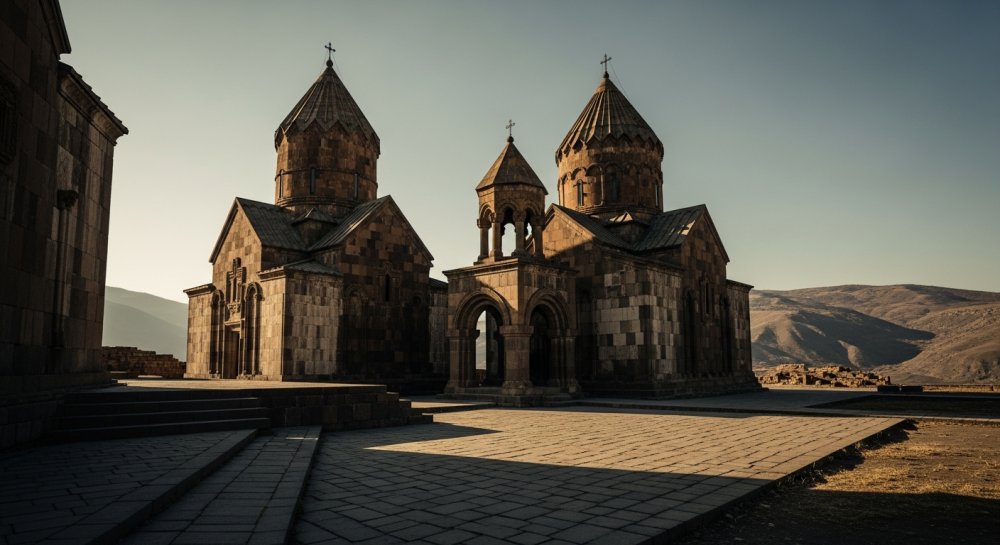
The Nagorno-Karabakh region had been home to Armenian Christians for centuries, with deep historical and religious ties to the land. Churches, monasteries, and Christian heritage sites dot the landscape, bearing witness to generations of faithful believers who called this region home until Azerbaijan’s military action forced their exodus.
The forced displacement unfolded rapidly in 2023, with the entire ethnic Armenian Christian population fleeing to Armenia proper as Azerbaijani forces took control. Families abandoned homes, communities, and sacred sites that had been maintained by their ancestors for generations.
The characterization of these events as genocide by former ICC prosecutors adds significant weight to the accusations against the tourism initiative. Under international law, genocide includes acts committed with intent to destroy, in whole or in part, a national, ethnic, racial, or religious group.
Advocacy groups supporting persecuted Christians worldwide have expressed outrage at the tourism offerings. They argue that promoting travel to recently cleansed territories trivializes the suffering of displaced Christians and normalizes ethnic cleansing.
The hotel chain has not yet issued a comprehensive response to the criticism. Questions remain about what oversight the company exercises over travel agencies licensed to use its brand name and whether such licensing agreements include ethical guidelines regarding sensitive historical sites.
The situation in Nagorno-Karabakh represents part of a broader pattern of Christian persecution in the Middle East and Central Asia regions. Armenian Christians, in particular, have faced recurring threats throughout history, including the Armenian Genocide of 1915 in which an estimated 1.5 million Armenians perished.
Religious freedom advocates emphasize that the international community must not allow the displacement of Christian populations to be forgotten or normalized through commercial activities like tourism. They call for accountability and recognition of what occurred in Nagorno-Karabakh.
The controversy raises important questions about corporate responsibility when it comes to human rights and religious persecution. Companies face increasing scrutiny over how their business practices intersect with areas where minorities, particularly religious minorities, have suffered systematic oppression.
For the 120,000 displaced Armenian Christians, many now living as refugees, the promotion of tours through their former homeland adds insult to injury. These families lost everything when forced to flee and continue to face uncertain futures in displacement.
Christian communities worldwide are watching how this situation develops and whether the hotel chain will take action to distance itself from what critics call genocide tourism. The outcome may set precedents for how international corporations respond to similar ethical challenges.
Let us know what you think, please share your thoughts in the comments below.


-

 Self-Reliance1 year ago
Trump’s Bold Move Uncovers Massive Social Security Fraud
-

 Faith1 year ago
New Clues Emerge in Noah’s Ark Mystery
-

 News1 year ago
Governor Walz’s Rhetoric Sparks National Controversy
-

 News1 year ago
Mel Gibson’s ‘The Passion of the Christ’ Sequel Title Announced
-

 Family1 year ago
Texas Lawmaker Targets Furries in Schools
-

 Freedom1 year ago
Maine Lawmaker Challenges Sports Fairness Controversy
-

 Family1 year ago
Canada’s Controversial Policy Sparks Ethical Debate
-
Faith8 months ago
Congress Hears Pleas for Nigerian Christians