
Faith
Council of Nicaea Severed Christianity From Jewish Roots, Scholar Claims

Faith Facts
- A German theologian argues the Council of Nicaea in 325 A.D. marked a deliberate institutional separation of Christianity from its Jewish foundations
- The essay suggests political motivations, not just theological debate, drove the church’s break from its Hebraic origins
- This historical analysis raises important questions about how early church councils shaped modern Christian identity and practice
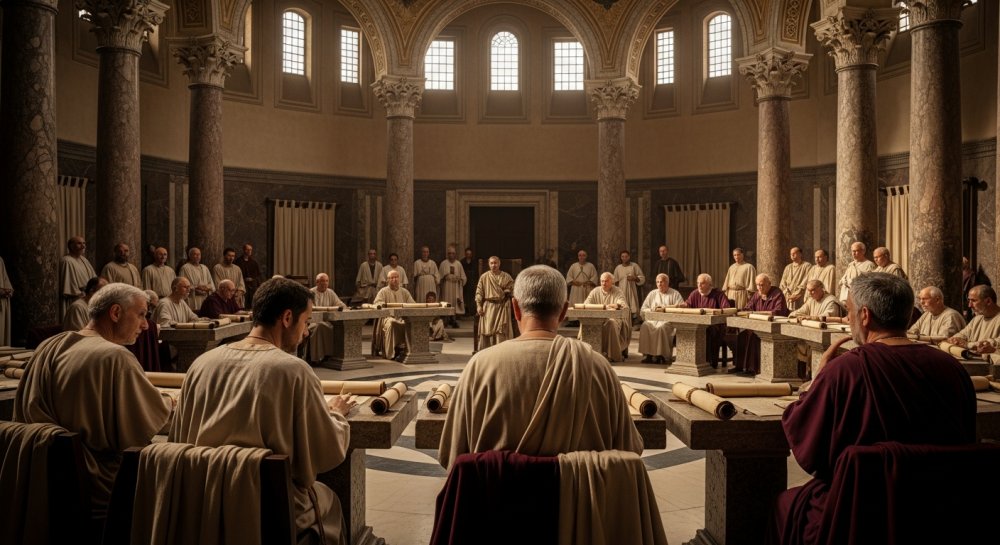
A newly published scholarly essay is challenging conventional understanding of one of Christianity’s most pivotal moments. The Council of Nicaea in 325 A.D., long recognized for establishing foundational Christian doctrine, may have also represented a calculated turning point in the church’s institutional separation from its Jewish roots.
According to the German theologian’s analysis, this separation was not merely a natural theological evolution. Instead, it was shaped significantly by political forces of the era, raising questions about how power and policy influenced the early church’s identity.
The Council of Nicaea, convened by Emperor Constantine, is best known for addressing the Arian controversy and producing the Nicene Creed. However, this new research suggests the council’s impact extended far beyond clarifying the nature of Christ’s divinity.
The essay argues that decisions made at Nicaea accelerated a institutional break from the Jewish context in which Christianity was born. Early Christians, including the apostles themselves, were Jewish believers who observed many traditional practices while proclaiming Jesus as the promised Messiah.
For Christian conservatives who value both biblical fidelity and historical awareness, this analysis presents important considerations. Understanding how political pressures may have influenced early church decisions helps believers distinguish between scriptural truth and human tradition.
The relationship between Christianity and its Jewish foundations has long been a subject of theological discussion. Scripture clearly shows that Jesus and His disciples were Jewish, and that the early church in Jerusalem maintained connections to Jewish worship and practice.
This scholarly work invites believers to examine whether some separations that occurred in church history were truly biblically mandated or whether they reflected the political and cultural pressures of their time. Such examination does not undermine Christian faith but rather strengthens it by distinguishing eternal truth from temporal tradition.
The essay’s publication comes at a time when many American Christians are rediscovering the Jewish roots of their faith. Understanding the Hebraic context of Scripture has enriched biblical interpretation for countless believers.
While the Council of Nicaea’s theological contributions remain foundational to orthodox Christianity, this analysis encourages thoughtful consideration of how institutional decisions were made in the early centuries of the church. Discernment requires understanding both what Scripture teaches and how history has shaped current practice.
Let us know what you think, please share your thoughts in the comments below.

Faith Facts
- Tony Rucinski urges Christian men to embrace courage, self-control, and sacrificial service as the foundation of biblical masculinity.
- The call emphasizes a return to traditional manhood grounded in Scripture and family responsibility.
- Churches are challenged to raise men willing to speak truth in a culture that often rejects these values.
Tony Rucinski is calling on Christian men to recover a biblical vision of masculinity centered on courage, self-control, and sacrificial service. He believes the church needs men who are unafraid to speak up for truth in a time when such convictions are increasingly under attack.
According to Rucinski, modern culture has distorted the role of men, leaving many confused about their God-given responsibilities. He argues that true masculinity is not defined by cultural trends but by the clear teachings of Scripture.
“The church needs men willing to speak up,” Rucinski stated, stressing that silence is no longer an option for faithful believers.
His message challenges husbands and fathers to lead their families with conviction, modeling self-control and sacrificial love as Christ did for the church. Rucinski sees this as essential for restoring strong homes and communities.
The campaigner also warns that when men abandon their biblical roles, society suffers. He points to rising fatherlessness and moral confusion as evidence of what happens when traditional manhood is dismissed.
Rucinski calls on pastors and church leaders to boldly teach these truths rather than soften them to fit cultural preferences. He believes that a renewed commitment to biblical masculinity will strengthen both families and the wider body of Christ.
Let us know what you think, please share your thoughts in the comments below.
Faith Facts
- Pastor Gary Hamrick leads Cornerstone Chapel in Leesburg, Virginia, and affirms unwavering U.S. support for Israel based on biblical principles.
- The pastor directly counters Vice President JD Vance’s suggestion that the U.S.-Israel relationship harmed Republican midterm results.
- Christian conservatives continue to view America’s alliance with Israel as both a strategic and moral imperative rooted in Scripture.
Pastor Gary Hamrick of Cornerstone Chapel in Leesburg, Virginia, spoke out strongly against Vice President JD Vance’s recent comments suggesting the U.S.-Israel alliance played a role in the Republican Party’s midterm losses.
Hamrick labeled the assertion “nonsense” and insisted that the relationship between the two nations must remain strong.
“The United States must continue to support Israel,” Hamrick stated.
The pastor’s comments reflect a broader commitment among many evangelical leaders to maintain the biblical and strategic alliance between America and Israel.
“The nature of the U.S.-Israeli alliance contributed to the Republican Party’s midterm wipeout” is the claim Hamrick rejected outright.
“It’s discouraging.” Pastor Gary Hamrick reacts to comments President Trump made on 60 Minutes over the weekend. “This, to me, looks like he’s backpedaling” on his previous “bold” support for Israel. “I’m troubled…” https://t.co/HgyAncQy4n
— Tony Perkins (@tperkins) November 9, 2026
Faithful believers across the nation are urged to stand firm on the truth that supporting Israel aligns with both Scripture and national interest.
Let us know what you think, please share your thoughts in the comments below.
Faith Facts
- Bob Dylan publicly embraced Christianity in 1979 after a reported spiritual encounter.
- Dylan has released three gospel albums and written numerous faith-inspired songs.
- His Christian conversion is widely regarded as a defining moment in his artistic and personal life.
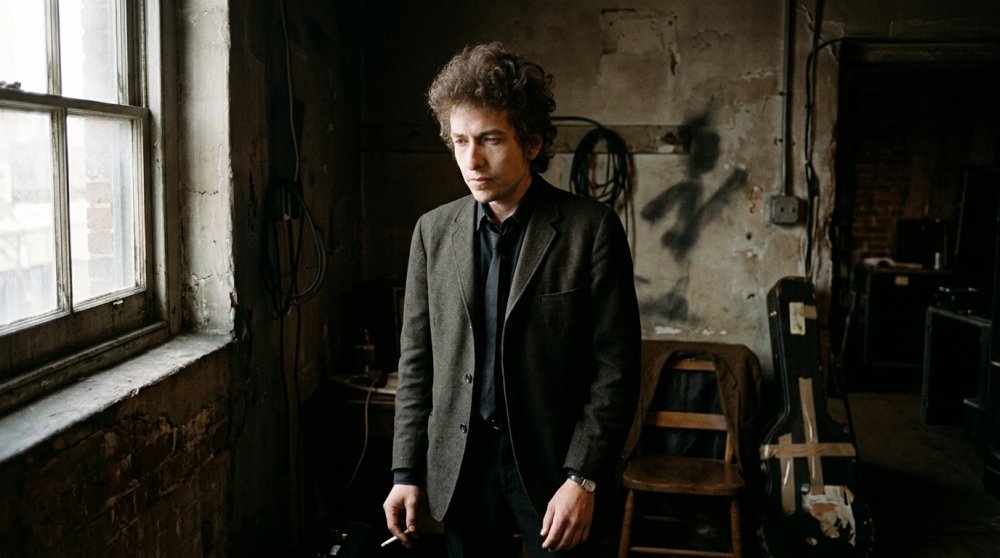
Bob Dylan’s recent meeting with Pope Leo has sparked attention for more than just his attire. Observers have turned their focus toward the legendary singer-songwriter’s long-held Christian faith.
In 1979, Dylan experienced a life-changing spiritual awakening. He openly declared his belief in Jesus Christ and began incorporating biblical themes into his songwriting.
“There was a little voice inside me saying, ‘Don’t be a prophet, don’t be a prophet,'” Dylan once reflected on his early reluctance to speak openly about faith.
Three gospel albums followed his conversion. Slow Train Coming, Saved, and Shot of Love showcased a man unashamed to sing about redemption and the power of Scripture.
“Jesus tapped me on the shoulder,” Dylan later explained, “and said, ‘Bob, why are you resisting me?'”
Critics questioned the sincerity of his conversion, yet Dylan continued to weave Christian imagery throughout his later work. Songs such as Every Grain of Sand and Pressing On revealed a heart still rooted in biblical truth.
“I believe in the Book of Revelation,” Dylan stated plainly in interviews, underscoring his enduring trust in God’s Word.
While the world often remembers Dylan as a cultural icon, his personal testimony points to a deeper story of grace and transformation. For many believers, his journey remains a powerful reminder that even the most celebrated voices can find their true purpose in Christ.
Let us know what you think, please share your thoughts in the comments below.


-

 Self-Reliance2 years ago
Trump’s Bold Move Uncovers Massive Social Security Fraud
-
 Faith2 years ago
New Clues Emerge in Noah’s Ark Mystery
-

 News2 years ago
Governor Walz’s Rhetoric Sparks National Controversy
-

 News2 years ago
Mel Gibson’s ‘The Passion of the Christ’ Sequel Title Announced
-

 Family2 years ago
Texas Lawmaker Targets Furries in Schools
-

 Freedom2 years ago
Maine Lawmaker Challenges Sports Fairness Controversy
-

 Family1 year ago
Canada’s Controversial Policy Sparks Ethical Debate
-
Faith12 months ago
Congress Hears Pleas for Nigerian Christians