
Faith
Colombian Pastor Receives Highest Honor From Senate for Lifelong Service to Faith and Nation

Faith Facts
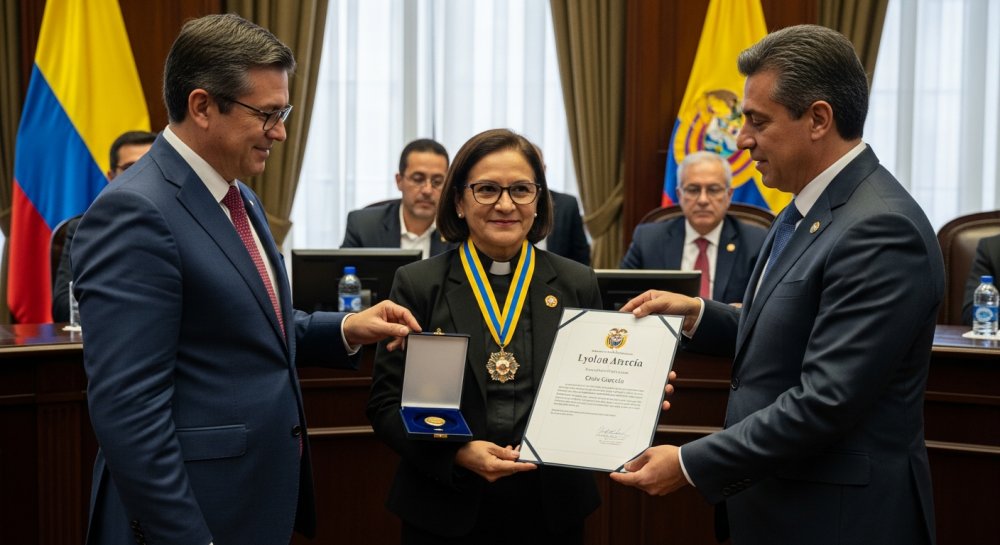
- Pastor Lyda Elena Arias de García, president of the Evangelical Confederation of Colombia (CEDECOL), was awarded the Order for Women and Democracy “Policarpa Salavarrieta” by the Colombian Senate on July 3.
- The prestigious congressional honor recognizes women who have made significant contributions to Colombian society through service and leadership.
- Pastor Arias de García leads CEDECOL, Colombia’s largest evangelical confederation, representing thousands of churches and millions of believers across the nation.
In a powerful affirmation of Christian leadership, Colombia’s Senate has recognized one of the nation’s most influential evangelical voices with its highest honor for women. The award ceremony demonstrates the growing respect for faith-based leadership in Latin American public life.
Pastor Lyda Elena Arias de García has dedicated her life to advancing the Gospel and serving the Colombian people through the Evangelical Confederation of Colombia. Her recognition comes at a time when evangelical Christians are increasingly playing vital roles in shaping their nations’ moral and civic directions.
The Order for Women and Democracy “Policarpa Salavarrieta” represents the Senate’s recognition of exceptional service to Colombian democracy and society. The honor is named after a revolutionary heroine who fought for Colombia’s independence, symbolizing courage and dedication to the nation.
CEDECOL represents a broad coalition of evangelical churches and ministries throughout Colombia, providing spiritual guidance and community service to millions of believers. Under Pastor Arias de García’s leadership, the organization has strengthened its voice on issues affecting families, religious freedom, and traditional values.
The recognition of an evangelical leader by Colombia’s legislature reflects a broader trend across Latin America, where Christian values are increasingly informing public policy debates. Evangelical Christians have become key voices advocating for family protection, religious liberty, and moral clarity in government.
Pastor Arias de García’s honor serves as an encouragement to Christian leaders worldwide who faithfully serve their communities while maintaining biblical principles. Her example demonstrates that unwavering commitment to faith and service can earn respect even in secular government institutions.
Let us know what you think, please share your thoughts in the comments below.

Faith Facts
- More than half of Protestant pastors in the United States report needing help with their physical and mental health
- Pastors identify sabbaticals and role changes as the most effective burnout relief, yet most cannot access these solutions
- New research from Barna Group reveals a crisis of care among America’s spiritual shepherds
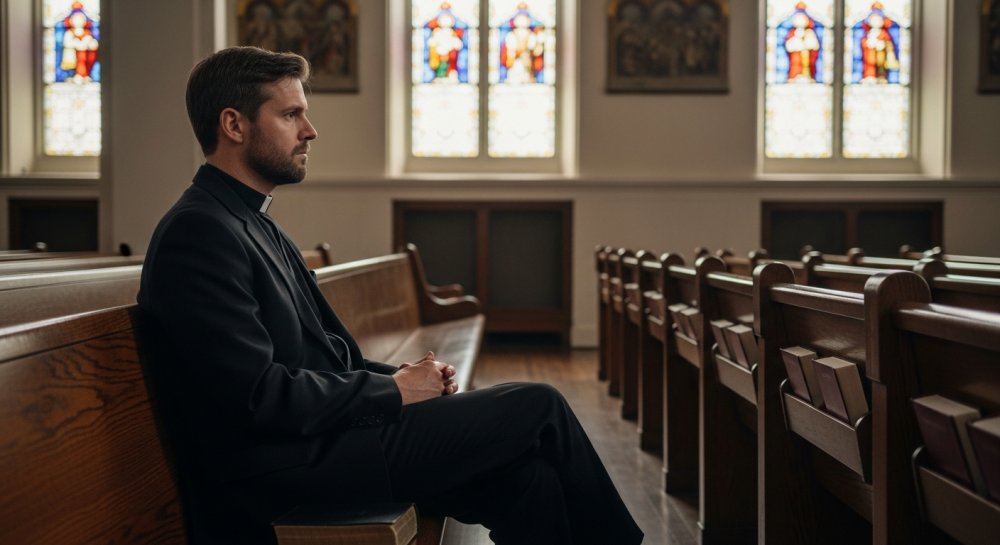
The men and women called to shepherd America’s churches are facing a mounting crisis. More than half of Protestant pastors across the nation say they desperately need help with their physical and mental health, yet the very solutions they believe could restore them remain frustratingly out of reach.
According to new research from Barna Group, the burnout-relief measures pastors say would work best—sabbaticals and role changes—are rarely available to those who need them most. This growing gap between pastoral need and congregational support threatens the spiritual health of communities nationwide.
The findings paint a sobering picture of ministry in modern America. Pastors, tasked with caring for their flocks through crisis after crisis—from pandemic shutdowns to cultural upheaval—have found themselves running on empty. The demands of ministry have intensified while resources and support have often remained stagnant.
Many pastors report feeling trapped between their calling and their wellbeing. The expectation to always be available, to counsel the hurting, to prepare sermons, to manage church operations, and to maintain their own family life creates an unsustainable burden. Yet stepping away, even temporarily, often feels impossible in smaller congregations with limited staff and tight budgets.
The research highlights a critical disconnect: while church members rely on their pastors for spiritual guidance and emotional support, many congregations lack the structures or resources to reciprocate that care. Sabbaticals, which could provide crucial time for rest and renewal, remain a luxury few pastors can afford or access.
This pastoral burnout crisis has profound implications for the broader Christian community. When shepherds are depleted, entire congregations suffer. The quality of preaching, counseling, and spiritual leadership diminishes when pastors operate from a place of exhaustion rather than renewal.
The need for role changes—another top request among struggling pastors—suggests that many feel misaligned with their current ministry positions. Whether due to church size, congregational culture, or specific job demands, these pastors recognize that their current roles may not be sustainable long-term. Yet moving to a different position often requires difficult conversations and transitions that seem equally daunting.
Christian communities must reckon with this reality: investing in pastoral health is not optional—it’s essential. Churches that prioritize their pastors’ wellbeing through practical support, adequate compensation, sabbatical policies, and realistic expectations will be better positioned to fulfill their mission in an increasingly challenging cultural landscape.
The data serves as a wake-up call for church boards, denominational leaders, and congregations. Supporting those who serve in ministry is not merely about retention or efficiency—it’s about honoring the biblical mandate to care for one another, especially those who labor in teaching and preaching.
As America faces mounting spiritual challenges, the health of our pastors becomes even more critical. These findings demand a response rooted in both compassion and practical action—providing the resources, rest, and restructuring necessary to sustain those called to lead God’s people.
Let us know what you think, please share your thoughts in the comments below.
Faith Facts
- African migrants in America often face subtle and overt discrimination in predominantly white churches, leading them to establish their own congregations
- Biblical theology demands that the church welcome all believers regardless of ethnic or national origin
- Christian leaders are being called to examine how their congregations can better reflect the unity Christ commanded among His followers
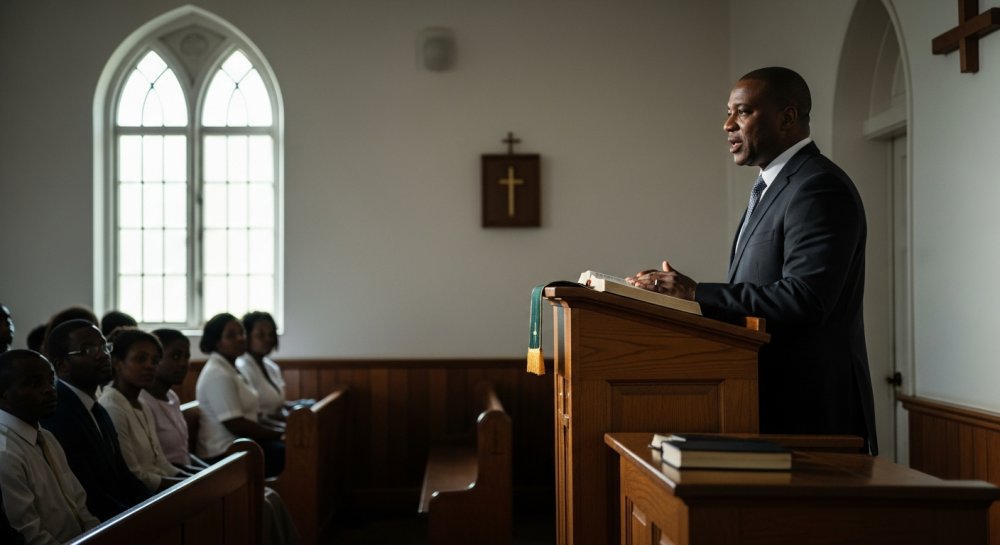
Across America, a quiet trend is reshaping the landscape of Christian worship. African believers, having come to this nation seeking opportunity and freedom, are increasingly choosing to worship apart from established American congregations. The reason? Too many have felt the sting of being treated as outsiders in the very places that should exemplify Christian brotherhood.
This isn’t every migrant’s experience, but it happens often enough to reveal a troubling pattern. When believers repeatedly sense they don’t fully belong in a church, they naturally seek fellowship where they do belong. It’s a human response to a spiritual problem that contradicts everything Scripture teaches about the Body of Christ.
Churches should be different from the broader culture. While society may struggle with questions of belonging and integration, the church has a higher calling. The Bible doesn’t merely suggest unity among believers—it demands it.
Christ Himself prayed that His followers would be one, just as He and the Father are one. The Apostle Paul declared that in Christ there is neither Jew nor Greek, slave nor free. These aren’t suggestions for a more comfortable church experience; they’re foundational truths about what it means to be the people of God.
When African Christians feel compelled to start separate congregations, it reveals that many American churches have failed to live out these biblical principles. The formation of what some call “migrant churches” is not primarily about language barriers or cultural preferences. It’s about seeking the authentic Christian fellowship that should have been available in existing congregations.
Pastors across this nation face a crucial question: Are their churches genuinely welcoming to all believers, or do subtle barriers keep certain brothers and sisters at arm’s length? These barriers might include everything from worship styles that exclude rather than include, to social dynamics that favor long-standing members over newcomers, to outright prejudice based on accent, appearance, or national origin.
The solution requires intentional leadership. Pastors who desire to mature their congregations into the full stature of Christ must actively work to break down walls of division. This means teaching biblical truth about the unity of believers, modeling genuine welcome and friendship across ethnic lines, and creating space for diverse expressions of faith within orthodox Christianity.
It also means examining church structures and practices that may unintentionally communicate “you don’t belong.” Are leadership positions accessible to qualified believers regardless of background? Does the congregation celebrate the gifts that believers from different cultures bring to the Body? Are there opportunities for genuine relationship, not just polite Sunday morning greetings?
The American church has a rich history of welcoming people from many nations. At its best, it has demonstrated that the Gospel transcends human divisions and creates a new family bound by faith in Christ. But when African believers feel they must worship separately to experience true Christian community, something has gone badly wrong.
This isn’t a call for political correctness or cultural compromise. It’s a call to biblical faithfulness. The church that Christ is building includes people from every tribe, tongue, and nation. American congregations that fail to reflect this reality are missing something essential about what it means to be the church.
For African Christians who have established their own congregations, there is both loss and gain. They gain the comfort of worship among those who share their background and understand their experience. But the broader Body of Christ loses the richness their presence and participation would bring to existing churches.
The answer isn’t to insist that migrants simply assimilate or to pretend that real differences and difficulties don’t exist. Rather, it’s to recognize that Christian unity requires work, humility, and a commitment to see every believer as a full member of God’s family. It requires American Christians to examine their own hearts for prejudice they may not realize they hold.
This is ultimately about much more than making people feel welcome, though that matters. It’s about whether American churches will be faithful to Scripture’s vision of what the church should be. A divided church, whether divided by race, ethnicity, or national origin, contradicts the Gospel it claims to proclaim.
Let us know what you think, please share your thoughts in the comments below.
Faith Facts
- Guatemala’s evangelical leaders are united in defending the biblical definition of marriage as between one man and one woman
- LGBTQ activists have filed a petition with Guatemala’s Constitutional Court seeking to overturn the nation’s traditional marriage law
- The challenge represents a critical test for religious freedom and traditional values in Central America
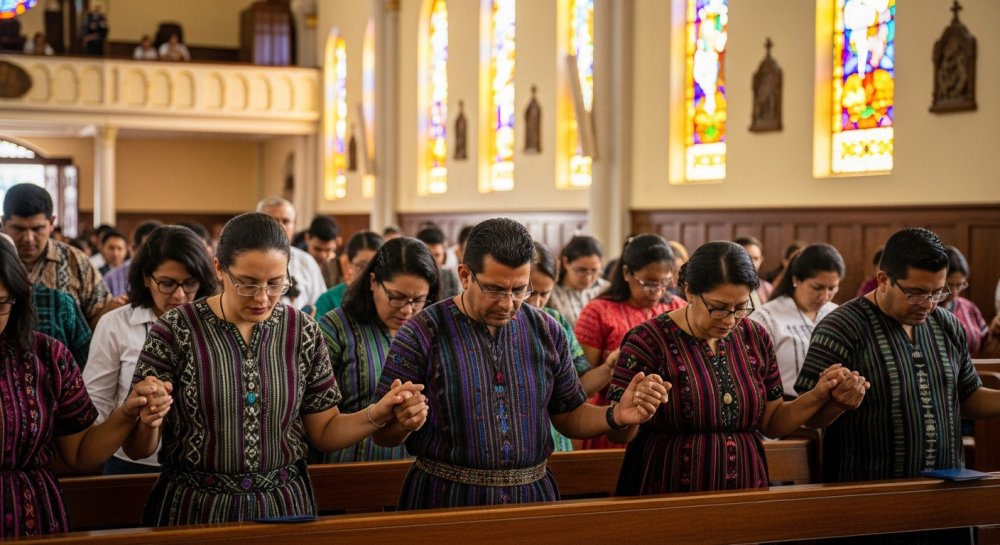
Guatemala’s Christian community is mobilizing to defend the biblical definition of marriage after activists filed a legal petition seeking to redefine this sacred institution. The challenge targets a provision in the Civil Code that upholds marriage as exclusively between one man and one woman—a definition rooted in Scripture and traditional values.
Evangelical leaders across the nation are responding with unified opposition to the attempted redefinition. They recognize this legal maneuver as part of a broader cultural assault on faith-based values that have anchored Guatemalan society for generations.
The petition, filed with Guatemala’s Constitutional Court, seeks to strike down legal protections for traditional marriage. If successful, it would force the nation to abandon its commitment to the institution of marriage as established by God and recognized throughout human history.
Guatemala’s stand for biblical marriage comes at a critical moment when nations across Latin America face similar pressure to abandon traditional values. The outcome of this legal battle will have far-reaching implications for religious freedom and the rights of people of faith to maintain their deeply held convictions.
The evangelical community in Guatemala represents a significant portion of the population and has been growing steadily. These believers understand that marriage is not merely a social construct to be redefined by activist courts, but a covenant instituted by God with a specific purpose and design.
Christian leaders emphasize that defending traditional marriage is not about discrimination, but about preserving an institution that serves as the foundation of family life and social stability. They point to the clear teaching of Scripture and the natural order as the basis for their position.
The Constitutional Court’s decision will determine whether Guatemala maintains its commitment to biblical values or succumbs to the same cultural pressures that have eroded traditional marriage protections in other nations. Faith communities are watching closely and preparing to make their voices heard.
As this legal challenge unfolds, believers across Guatemala are being called to prayer and action. They understand that what is at stake is not just a legal definition, but the very foundation of family life and the freedom to live according to Christian principles.
Let us know what you think, please share your thoughts in the comments below.


-

 Self-Reliance1 year ago
Trump’s Bold Move Uncovers Massive Social Security Fraud
-

 Faith1 year ago
New Clues Emerge in Noah’s Ark Mystery
-

 News1 year ago
Governor Walz’s Rhetoric Sparks National Controversy
-

 News1 year ago
Mel Gibson’s ‘The Passion of the Christ’ Sequel Title Announced
-

 Family1 year ago
Texas Lawmaker Targets Furries in Schools
-

 Freedom1 year ago
Maine Lawmaker Challenges Sports Fairness Controversy
-

 Family1 year ago
Canada’s Controversial Policy Sparks Ethical Debate
-
Faith8 months ago
Congress Hears Pleas for Nigerian Christians