
News
Citi’s Bold Move for Political Fairness in Banking


In a significant move towards ensuring fairness and equality in the financial sector, Citi, one of America’s largest banking institutions, has taken a commendable step by pledging not to discriminate based on political affiliation. This announcement comes amid growing concerns over the practice of “debanking,” where conservative and Christian groups have reportedly faced discriminatory account closures by some financial giants.
Citi’s decision to update its corporate policy to explicitly state non-discrimination based on political affiliation is a breath of fresh air in today’s polarized environment. Edward Skyler, Head of Enterprise Services & Public Affairs for Citi, emphasized, “Citi has always been fully committed to treating all current and potential clients fairly and we have policies, procedures and controls in place for this express purpose.”
This stance is particularly important as it follows allegations earlier this year, where financial leaders were publicly criticized for allegedly “debanking” conservatives. In a world where financial access is crucial for the exercise of free speech and religious freedom, Citi’s move is a step in the right direction.
After a thorough review of their policies and practices, Citi has committed to codifying these changes and conducting trainings to ensure compliance. This proactive approach is a testament to their dedication to fairness and transparency. Skyler noted, “These changes reinforce our commitment to serve all clients fairly, and we will continue to work with regulators and elected officials on ways to improve transparency and trust in the banking sector.”
The issue of debanking has been a significant concern for conservative and Christian communities. Sam Brownback, a former U.S. senator and a staunch advocate for religious freedom, stated, “Americans should not be denied access to banking services simply because their interests might be unpopular in some social circles. Businesses protected by the Second Amendment should not be punished by Big Banks.”
Brownback’s words resonate deeply with those who value the principles of faith, family, and freedom. The right to access financial services should not be contingent upon one’s political or religious beliefs. It is a matter of individual responsibility and the preservation of biblical principles that have long shaped American society.
The National Committee for Religious Freedom (NCRF), founded by Brownback, experienced firsthand the challenges of debanking when their account was abruptly closed by a major bank. Such actions raise serious questions about the motives behind these closures and underscore the need for vigilance and accountability in the financial sector.
In a world where traditional values are often under siege, it is heartening to see institutions like Citi take a stand for fairness and equality. This move not only aligns with the principles of faith and freedom but also serves as a reminder of the importance of upholding the values that have made America a beacon of hope and opportunity.
As we navigate these challenging times, let us continue to champion the cause of freedom, defend our rights, and uphold the principles that define us as a nation. With faith as our guide and freedom as our goal, we can build a future where every American, regardless of their beliefs, has the opportunity to thrive.
Let us know what you think, please share your thoughts in the comments below.


Faith Facts
- The FTC and four states filed a lawsuit against the World Professional Association for Transgender Health for allegedly deceiving the public about medical treatments for gender-confused children
- The complaint marks the first time federal regulators have taken enforcement action against a major organization promoting transgender medical interventions for minors
- Christian family advocates have long warned about the dangers of these experimental treatments that can cause permanent harm to vulnerable young people
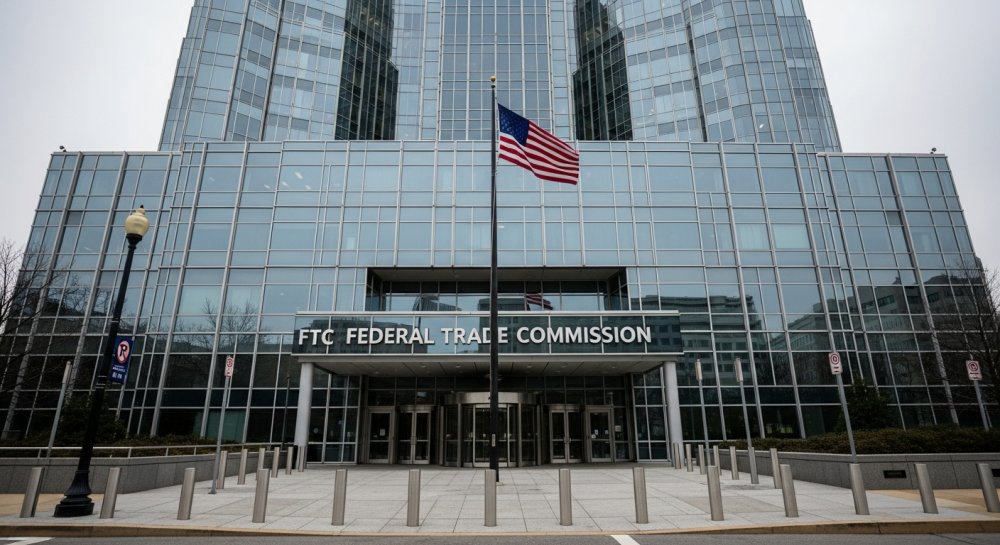
The Federal Trade Commission has joined forces with four state attorneys general in an unprecedented legal challenge against the World Professional Association for Transgender Health, filing suit over what they allege are deceptive practices related to the treatment of children experiencing gender dysphoria.
The complaint, filed Wednesday, represents a significant shift in federal oversight of the controversial medical protocols being pushed on American children. For years, concerned parents and faith-based organizations have raised alarm bells about the rapid expansion of gender transition treatments for minors, only to be dismissed or silenced by activists and complicit medical establishments.
WPATH has positioned itself as the leading authority on so-called “gender-affirming care,” publishing guidelines that have been used to justify life-altering medical interventions on children too young to make such permanent decisions. These treatments can include puberty blockers, cross-sex hormones, and even surgical procedures that leave young people sterile and physically altered for life.
The lawsuit signals growing recognition among government officials that these practices may not be based on sound science or honest representation of risks. Christian medical professionals and child welfare advocates have consistently argued that children experiencing gender confusion need compassionate counseling and support, not experimental treatments that can cause irreversible harm.
This legal action comes as more Americans are waking up to the reality that vulnerable children have been used as guinea pigs in a massive social experiment. Parents who questioned these protocols have been branded as bigots, while medical professionals who raised concerns have faced professional retaliation.
The involvement of multiple state attorneys general alongside federal regulators demonstrates a coordinated effort to protect children from practices that prioritize ideology over genuine medical care. Families across America deserve transparency and honesty from medical organizations, especially when the wellbeing of their children hangs in the balance.
As this case moves forward, it may finally bring long-overdue scrutiny to an industry that has operated with minimal oversight while promoting treatments that conflict with biological reality and common sense. The protection of children must always come before political correctness or activist pressure.
Let us know what you think, please share your thoughts in the comments below.
Faith Facts
- Juneteenth commemorates the end of slavery in America, a victory made possible by courageous abolitionists of all races who fought for freedom.
- Many African-American abolitionists risked their lives to end the evil institution of slavery, driven by deep Christian faith and conviction.
- These seven lesser-known heroes demonstrated extraordinary courage and faith in their fight for liberty and human dignity.
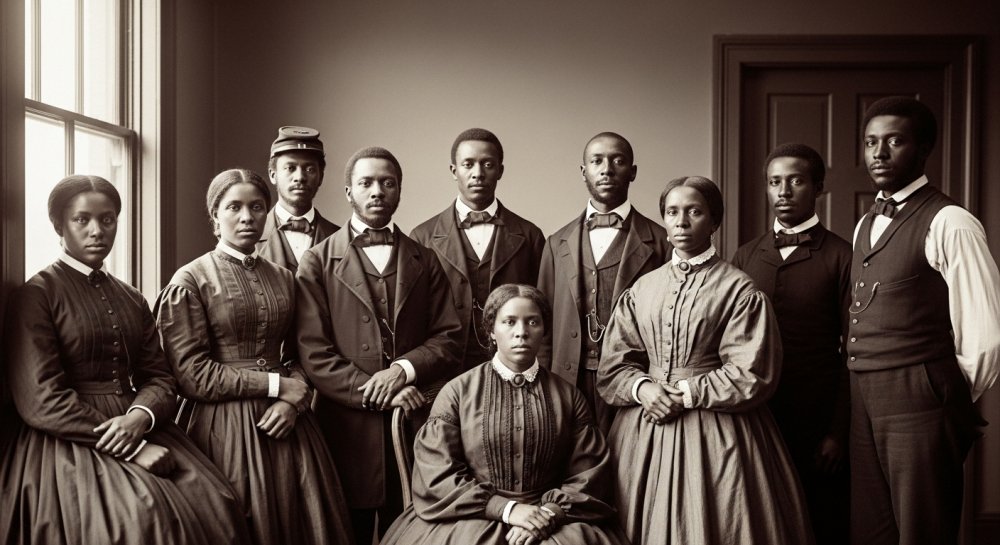
As our nation observes Juneteenth, celebrating the end of slavery in America, it’s important to remember the faithful men and women who fought tirelessly to end this grave moral evil. While names like Frederick Douglass and Harriet Tubman are well-known, countless other African-American abolitionists risked everything for freedom.
These seven remarkable individuals deserve recognition for their courage and unwavering commitment to justice. Their stories remind us that faith and determination can overcome even the darkest chapters of our history.
Many of these brave souls were motivated by deep Christian conviction, believing that all people are created in God’s image and deserving of liberty. Their legacy continues to inspire those who fight for human dignity and freedom today.
By honoring their memory, we remember that America’s greatest strength has always been our commitment to the principles of freedom and equality under God. These abolitionists helped our nation live up to its founding ideals.
Their sacrifices paved the way for the freedom we celebrate on Juneteenth, a testament to the power of faith-driven activism and moral courage. We owe them a debt of gratitude for helping to end one of history’s greatest injustices.
Let us know what you think, please share your thoughts in the comments below.

Faith Facts
- A conservative Christian conference recently came under fire for allowing a controversial vendor in its exhibition hall
- The incident has sparked debate within Christian circles about event vetting procedures and ideological boundaries
- Church leaders and attendees expressed shock and concern upon discovering the vendor’s materials promoting extremist ideology
A conservative Protestant conference found itself at the center of controversy this week after attendees and online observers discovered that the event’s vendor hall included a table hosted by what has been identified as a well-known publisher of extremist materials. The booth displayed materials that glorified Adolf Hitler and promoted Nazi ideology.
The discovery sent shockwaves through the Christian community, with many believers expressing outrage that such content would be allowed at a faith-based gathering. Social media erupted with criticism as photos and reports from the conference circulated online.
The incident raises serious questions about the vetting processes used by Christian conference organizers when selecting vendors and exhibitors. Many attendees expressed confusion about how such a vendor could have been approved to participate in an event designed to strengthen and encourage believers.
Christian leaders and commentators have been quick to point out that Nazi ideology stands in complete opposition to biblical teaching. The Christian faith affirms the inherent dignity and worth of every human being, created in the image of God, which directly contradicts the hateful and murderous philosophy of National Socialism.
The controversy highlights the ongoing challenge facing Christian organizations as they navigate an increasingly polarized cultural landscape. While believers are called to engage with difficult cultural and political questions, there remains a clear line between legitimate conservative Christian discourse and extremist ideologies that have no place in the church.
Conference organizers have not yet issued a public statement addressing how the vendor was approved or what steps will be taken to prevent similar incidents in the future. Many in the Christian community are calling for greater transparency and accountability in the planning of future events.
This incident serves as a reminder of the importance of discernment and vigilance within Christian spaces. Believers must be watchful to ensure that events and organizations claiming to represent Christian values actually uphold the teachings of Scripture and honor the name of Christ.
The broader Christian conservative movement has long stood against totalitarianism in all its forms, recognizing that human rights and dignity flow from our creation in God’s image. Any ideology that diminishes human worth or promotes hatred stands in direct opposition to the Gospel message.
Let us know what you think, please share your thoughts in the comments below.


-

 Self-Reliance1 year ago
Trump’s Bold Move Uncovers Massive Social Security Fraud
-

 Faith1 year ago
New Clues Emerge in Noah’s Ark Mystery
-

 News1 year ago
Governor Walz’s Rhetoric Sparks National Controversy
-

 News1 year ago
Mel Gibson’s ‘The Passion of the Christ’ Sequel Title Announced
-

 Family1 year ago
Texas Lawmaker Targets Furries in Schools
-

 Freedom1 year ago
Maine Lawmaker Challenges Sports Fairness Controversy
-

 Family1 year ago
Canada’s Controversial Policy Sparks Ethical Debate
-
Faith7 months ago
Congress Hears Pleas for Nigerian Christians