
Faith
Church Growth Requires More Than a Welcoming Smile


Faith Facts
- Churches that rely solely on being ‘friendly’ often fail to retain new visitors and achieve sustainable growth
- Modern churchgoers expect genuine community, spiritual depth, and meaningful connection beyond surface-level greetings
- Successful church growth requires intentional discipleship, authentic relationships, and clear pathways for newcomers to engage
In an era where visitors have countless options for spiritual engagement, many churches are learning a difficult truth: being friendly is no longer enough to build and sustain a thriving congregation. While warmth and hospitality remain foundational Christian values, today’s seekers are looking for something deeper than a handshake and a smile at the door.
Church leaders across America are recognizing that what once differentiated a welcoming congregation has become the bare minimum expectation. Visitors now arrive anticipating friendly greeters and warm coffee in the fellowship hall. What they’re truly searching for is authentic community, spiritual transformation, and a place where they can grow in their faith alongside fellow believers.
The shift reflects broader changes in how Americans approach church involvement. With declining institutional trust and increased spiritual curiosity, newcomers want to see evidence that a church community can genuinely impact their lives. They’re seeking congregations that offer more than Sunday pleasantries—they want biblical teaching that challenges and encourages, relationships that extend beyond weekend services, and opportunities to serve that align with their God-given gifts.
Successful churches are responding by creating intentional pathways for newcomers to move from visitor to committed member. This includes structured discipleship programs, small group ministries that foster deeper relationships, and clear communication about beliefs and values. Rather than assuming friendliness alone will integrate new people, these congregations actively invest in helping visitors find their place in the body of Christ.
The emphasis on going beyond surface-level hospitality also addresses a critical gap many churches face: the disconnect between an enthusiastic first visit and long-term commitment. Too often, guests receive a warm welcome on Sunday morning but struggle to find meaningful connection in the weeks that follow. Without deliberate follow-up and genuine relationship-building, even the friendliest churches see visitors slip away.
Church growth experts emphasize that authentic community requires vulnerability and investment from both newcomers and existing members. This means moving past comfortable small talk to engage in real conversations about faith, struggles, and spiritual growth. It means existing members must be willing to open their circles and make space for new relationships, even when it feels uncomfortable.
Additionally, growing churches are focusing on clarity of mission and purpose. Visitors want to understand what a church stands for, what it believes, and how it applies biblical truth to everyday life. Congregations that articulate their vision clearly and demonstrate it through their ministries attract people who resonate with that mission and are ready to commit.
The call to transcend mere friendliness doesn’t diminish the importance of Christian hospitality—it elevates it. True biblical hospitality goes far beyond greeting guests warmly; it involves welcoming strangers as Christ would, investing in their spiritual journey, and incorporating them into the family of God. This kind of radical welcome requires intentionality, prayer, and a genuine desire to see lives transformed by the Gospel.
For churches seeking growth, the message is clear: friendliness is the starting point, not the finish line. Sustainable growth comes from creating environments where people encounter the living God, build authentic relationships, and discover their calling within the body of Christ. It’s about offering not just a friendly face, but a transformative community centered on Jesus.
Let us know what you think, please share your thoughts in the comments below.

Faith Facts
- God examines the heart rather than outward gestures during worship.
- Scripture teaches that authentic faith is shown through obedience and love, not visible enthusiasm.
- Believers are called to honor every sincere heart that worships in spirit and truth.
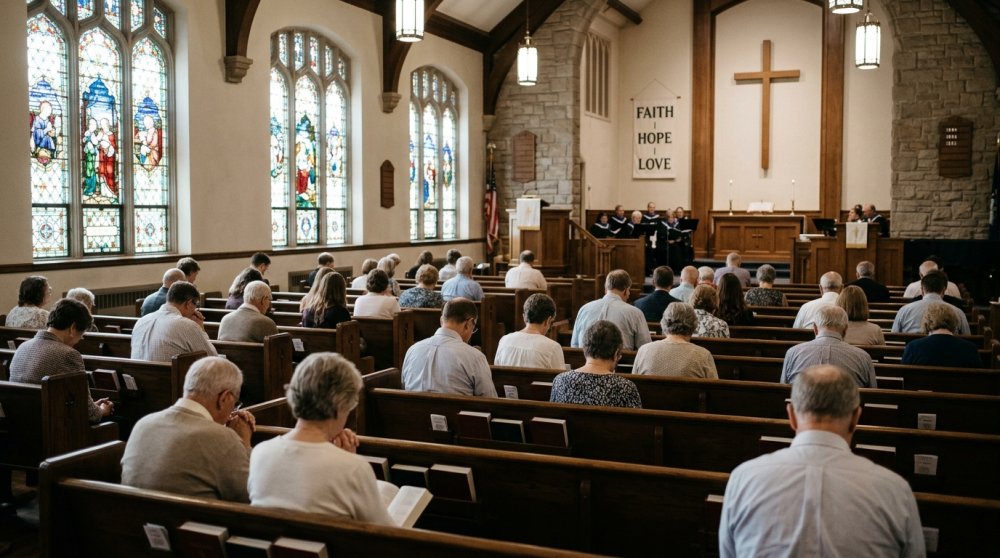
Too often, outward expressions of enthusiasm are mistaken for spiritual maturity. But God looks at the heart, not whether we’re standing, sitting or raising our hands, says Dawn Butler.
“God looks at the heart, not whether we’re standing, sitting or raising our hands,”
Churches across America have seen a growing emphasis on physical expressions during worship. This trend can unintentionally pressure believers who prefer quieter reverence. The result is that some faithful Christians feel judged for their personal style of worship.
“Too often, outward expressions of enthusiasm are mistaken for spiritual maturity.”
True worship flows from a surrendered heart that seeks to honor God in every area of life. Scripture consistently points to inward devotion rather than external performance. When congregations focus on visible actions, they risk overlooking the quiet strength of those who serve faithfully in the background.
Christian liberty allows room for both raised hands and bowed heads. The key is whether each believer approaches the Lord with reverence and sincerity. Families benefit when churches encourage unity over uniformity in worship practices.
“God looks at the heart, not whether we’re standing, sitting or raising our hands.”
Let us know what you think, please share your thoughts in the comments below.

Faith Facts
- The Restoration Movement produced three distinct fellowships by 1906, with Churches of Christ emerging as a conservative, Bible-focused body
- Early 20th-century leaders in Indiana, Tennessee, and Texas held differing convictions on the Holy Spirit, millennial teaching, and church institutions
- The conservative Texas tradition ultimately shaped the doctrinal identity that guided Churches of Christ for much of the twentieth century
A new book from Abilene Christian University Press offers a detailed look at the doctrinal battles that forged the identity of Churches of Christ in the decades after 1906. The volume, the first of three planned works, draws on essays by eight authors who trace how congregations navigated questions of Scripture, worship, and church order.
By the early twentieth century, the Restoration Movement had separated into three distinct groups. Churches of Christ stood apart for their commitment to congregational autonomy and a plain reading of the New Testament.
The collection opens with Daniel Sommer’s 1889 Address and Declaration, which set the tone for separation from the Disciples of Christ. Subsequent chapters highlight the contributions of David Lipscomb and respected African-American leaders such as Preston Taylor, S.W. Womack, and Marshall Keeble.
“Allen and Hicks are to be commended for editing a splendid and illuminating volume. Readers interested in the history of Churches of Christ will eagerly anticipate the next installment in the series.”
Three regional traditions emerged, each with its own convictions. Leaders in Tennessee upheld belief in miraculous divine action and a future millennial kingdom, while Indiana voices favored noninstitutional simplicity and resisted Bible colleges. The Texas tradition, emphasizing the Word alone and strict obedience to positive commands, gradually gained dominance.
Through influential publications like R.L. Whiteside and C.R. Nichol’s Sound Doctrine series and N.B. Hardeman’s Tabernacle Sermons, the Texas perspective reached congregations across the nation. By the 1930s, the Gospel Advocate had become its leading voice.
The book closes with primary source excerpts that allow readers to hear the founders in their own words. Christian families and church libraries will find this careful history both instructive and encouraging for the challenges of today.
Let us know what you think, please share your thoughts in the comments below.

Faith Facts
- Bank of America closed a Christian ministry’s account in 2020 citing internal policies against certain business types.
- Multiple ministries and faith-based organizations have reported similar account closures from major financial institutions.
- Faith-based groups are increasingly facing challenges accessing traditional banking services across the United States.
In 2020, Bank of America informed a Christian ministry that its account was being closed because the institution had chosen not to service certain types of businesses. The ministry initially believed this decision was isolated to their organization alone.
Further investigation revealed that other faith-based groups had encountered the same treatment from the same financial institution. The pattern suggests a broader policy affecting religious organizations seeking banking services.
“I thought we were the only ones. We weren’t.”
This experience highlights growing concerns among Christian ministries about access to essential financial services. Many traditional banks appear to be reevaluating their relationships with faith-based organizations.
The closure of accounts for religious ministries raises questions about religious liberty and equal access to financial services. Christian organizations across the country are exploring alternative banking options that align with their values and mission.
Let us know what you think, please share your thoughts in the comments below.


-

 Self-Reliance2 years ago
Trump’s Bold Move Uncovers Massive Social Security Fraud
-

 Faith2 years ago
New Clues Emerge in Noah’s Ark Mystery
-

 News2 years ago
Governor Walz’s Rhetoric Sparks National Controversy
-

 News2 years ago
Mel Gibson’s ‘The Passion of the Christ’ Sequel Title Announced
-

 Family2 years ago
Texas Lawmaker Targets Furries in Schools
-

 Freedom2 years ago
Maine Lawmaker Challenges Sports Fairness Controversy
-

 Family1 year ago
Canada’s Controversial Policy Sparks Ethical Debate
-
Faith11 months ago
Congress Hears Pleas for Nigerian Christians