
Faith
Christians Risk Everything to Save Neighbors After Venezuela Tragedy

Faith Facts
- Devastating back-to-back earthquakes killed at least 4,490 people in Venezuela, with thousands more homeless, injured or missing
- Christian relief workers are digging through rubble with bare hands, praying with survivors, and risking their own lives to serve earthquake victims
- Despite devastating losses in their own communities, Venezuelan churches have baptized eight new believers while serving in disaster zones
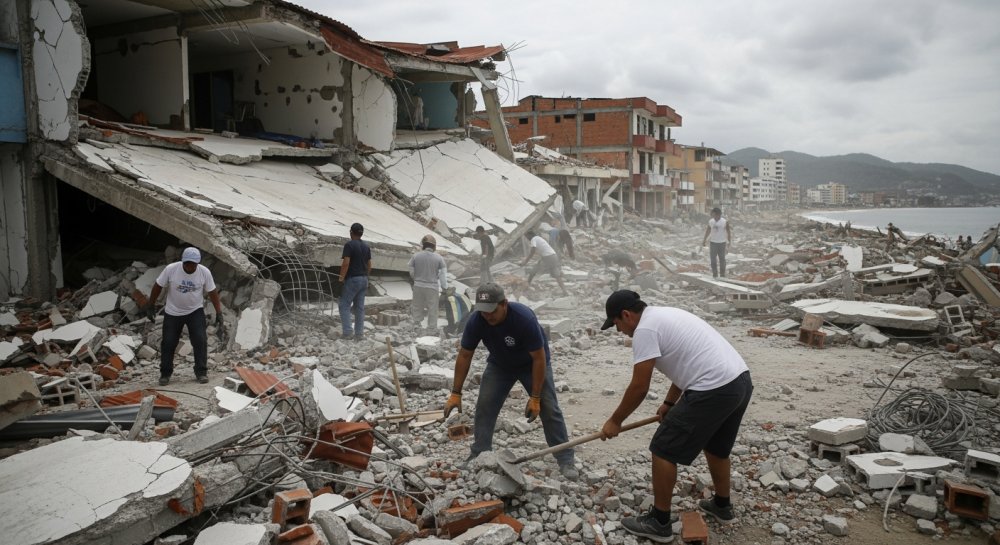
Digging through the remains of collapsed buildings, Christians in Venezuela searched for survivors after back-to-back devastating earthquakes shook the troubled South American nation. What they found tested their faith—but also revealed God’s power to bring hope from tragedy.
José Antonio Quinones, who ministers for a Church of Christ in Venezuela’s capital, Caracas, described the heroic efforts of his fellow believers. His sons and other church members traveled north to La Guaira, a city on the coast of the Caribbean Sea, where the damage is severe.
“Many of them, including my two sons, are working with their bare hands moving stones and debris,” Quinones said.
“The pharmacies in La Guaira were looted, so supplies aren’t readily available,” Quinones said.
The late-June earthquakes followed more than a decade of economic and political turmoil in Venezuela. More than 7 million Venezuelans have left the country since 2014, and those who remain struggle with unemployment and rising crime rates. Now, on top of these ongoing trials, the nation faces one of its darkest hours.
The quakes killed at least 4,490 people, according to numbers from Venezuela’s government at press time. Thousands more are homeless, injured or missing.
Members of Churches of Christ are among the dead, including six of 12 Christians who recently planted a new church in the La Llanada neighborhood of La Guaira, Carlos León told ministry partners. León, a minister in San Antonio de los Altos, Venezuela, is working on relief efforts in La Guaira and its neighboring state, Miranda.
As the tremors and aftershocks subsided, the disaster continued to claim lives—even among relief workers. Joaquín Rodríguez, a minister and one of the leaders of the La Guaira Church of Christ, suffered a heart attack and died after working for three straight days.
“He was helping others and looking for survivors,” said Germán Chirinos, a minister in Falcón state in northwest Venezuela. “Some brothers told me that they prayed together with him, and while he was driving, he died.”
Rodríguez “was a humble man with a big heart,” Chirinos said, adding that the minister was “very concerned and committed to the church in La Guaira.”
At least four other members of the La Guaira church are among the dead, Chirinos said. The loss has been devastating, but believers are pressing forward with the work of the Gospel.
Casualties weren’t confined to the coast. In San Antonio de los Altos, about 30 minutes south of Caracas, church members were meeting for a Wednesday night Bible study when the quakes began, León said. They prayed quickly before taking the stairs out of the building and helping others.
Church member Adela Maqueda and her granddaughter perished when a wall collapsed on top of them, León said. Another church member suffered a skull fracture. Friends carried him on a bicycle to the nearest hospital.
In Caracas, at least two church members died, minister H. Jose Silencio said. The losses continue to mount, yet the Christian community refuses to surrender to despair.
“The situation is critical,” Silencio said. “There are many dead, many injured and many missing. Many people have died in the rubble, and many survivors are left without hope.”
Helping with ‘the Lord’s loving hands’
León and other church members, including fellow ministers Diego Orea and José Bello, are coordinating relief shipments and serving quake victims in Miranda state, La Guaira state and the city of La Guaira. Silencio and others are serving quake victims in Caracas.
Nonprofits associated with Churches of Christ, including Healing Hands International and One Kingdom, are collecting funds and organizing relief shipments for Venezuela. Great Cities Missions, a ministry that plants Churches of Christ across the Latin world, also is collecting for Venezuela aid.
Congregations across Venezuela are collecting funds and supplies for relief efforts, despite their own needs. Chirinos applauded church members who work tirelessly to help the earthquake victims.
“They are doing an amazing job,” Chirinos said. “They just travel every day carrying supplies and food, connecting with the people in tents, praying and preaching to them—and they’ve even baptized some of them, too. I consider them as our Lord’s loving hands spreading not only his Word but his love.”
In La Guaira, relief efforts have resulted in two new mission points, León said.
“One is in Los Corales, where six people have already been baptized, and another in Naiguatá, where two have been baptized.”
‘There’s mourning, but there’s hope of something beyond’
As they begin the long task of rebuilding their lives, earthquake victims take comfort in the divine promise of peace amid suffering, León said. The Christian response to this disaster demonstrates what faith looks like when everything else has been shaken.
He sees God “in the peace that we have. … In spite of the difficult situation that we’re living through, we have a peace that passes all understanding. There’s sadness because of the pain people are suffering, that our brothers and sisters are suffering, and for the loss. There’s mourning, but there’s hope of something beyond.”
For León, the earthquakes in Venezuela call to mind the earthquake Elijah experienced in the Old Testament book of 1 Kings, Chapter 19. When the prophet was overcome with grief, God told him to get out of the cave where he had sought refuge.
“An earthquake appeared, but God wasn’t there in either the earthquake or the hurricane-force winds,” León said, “but rather God was in the peaceful and gentle whisper that gives us peace, that gives us confidence.”
For the Venezuelan minister, Christians are called in a time of suffering not to offer easy answers but comfort. This is the ministry of presence—being the hands and feet of Christ in the darkest hours.
León believes that God wants us to “listen to victims and pray with them … cry with them and be there … be there serving them, so they feel our love and our empathy.”
Chirinos thanked his fellow Christians around the globe for their prayers. The body of Christ is proving once again that borders and distance cannot separate believers united in faith.
“The whole congregation, nationally and worldwide, are together in this trying to help any way they can,” the minister said. “So thanks to God and to all of you.”
Let us know what you think, please share your thoughts in the comments below.

Faith Facts
- God examines the heart rather than outward gestures during worship.
- Scripture teaches that authentic faith is shown through obedience and love, not visible enthusiasm.
- Believers are called to honor every sincere heart that worships in spirit and truth.
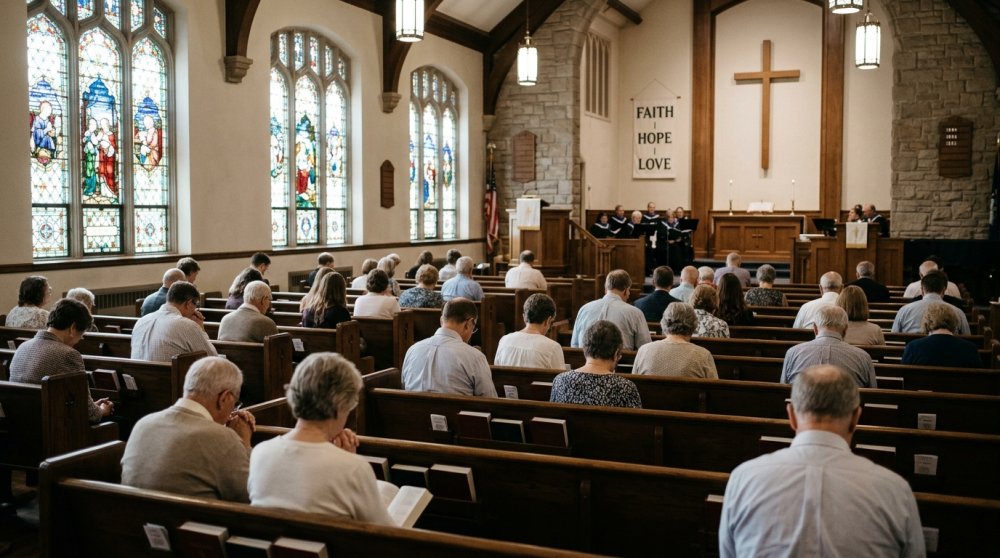
Too often, outward expressions of enthusiasm are mistaken for spiritual maturity. But God looks at the heart, not whether we’re standing, sitting or raising our hands, says Dawn Butler.
“God looks at the heart, not whether we’re standing, sitting or raising our hands,”
Churches across America have seen a growing emphasis on physical expressions during worship. This trend can unintentionally pressure believers who prefer quieter reverence. The result is that some faithful Christians feel judged for their personal style of worship.
“Too often, outward expressions of enthusiasm are mistaken for spiritual maturity.”
True worship flows from a surrendered heart that seeks to honor God in every area of life. Scripture consistently points to inward devotion rather than external performance. When congregations focus on visible actions, they risk overlooking the quiet strength of those who serve faithfully in the background.
Christian liberty allows room for both raised hands and bowed heads. The key is whether each believer approaches the Lord with reverence and sincerity. Families benefit when churches encourage unity over uniformity in worship practices.
“God looks at the heart, not whether we’re standing, sitting or raising our hands.”
Let us know what you think, please share your thoughts in the comments below.
Faith Facts
- The Restoration Movement produced three distinct fellowships by 1906, with Churches of Christ emerging as a conservative, Bible-focused body
- Early 20th-century leaders in Indiana, Tennessee, and Texas held differing convictions on the Holy Spirit, millennial teaching, and church institutions
- The conservative Texas tradition ultimately shaped the doctrinal identity that guided Churches of Christ for much of the twentieth century
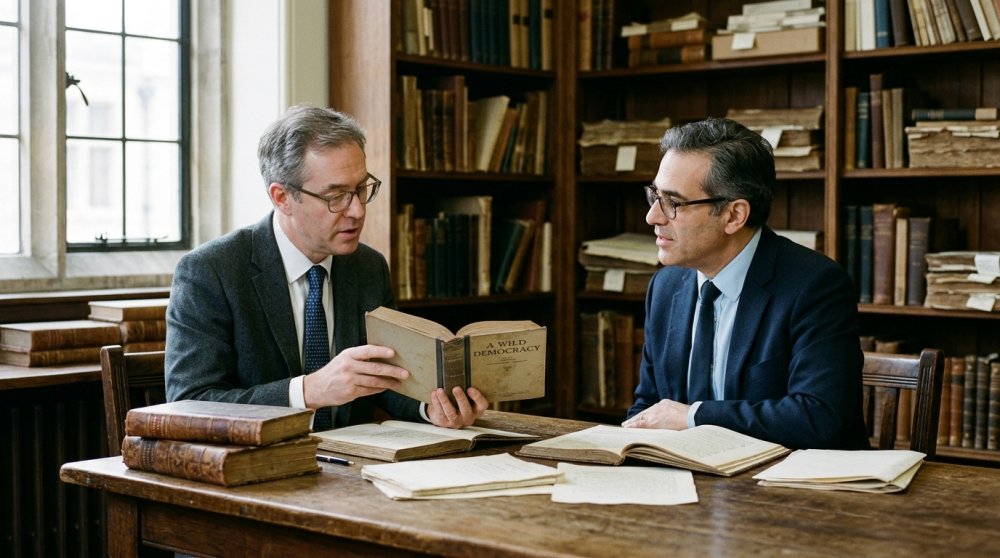
A new book from Abilene Christian University Press offers a detailed look at the doctrinal battles that forged the identity of Churches of Christ in the decades after 1906. The volume, the first of three planned works, draws on essays by eight authors who trace how congregations navigated questions of Scripture, worship, and church order.
By the early twentieth century, the Restoration Movement had separated into three distinct groups. Churches of Christ stood apart for their commitment to congregational autonomy and a plain reading of the New Testament.
The collection opens with Daniel Sommer’s 1889 Address and Declaration, which set the tone for separation from the Disciples of Christ. Subsequent chapters highlight the contributions of David Lipscomb and respected African-American leaders such as Preston Taylor, S.W. Womack, and Marshall Keeble.
“Allen and Hicks are to be commended for editing a splendid and illuminating volume. Readers interested in the history of Churches of Christ will eagerly anticipate the next installment in the series.”
Three regional traditions emerged, each with its own convictions. Leaders in Tennessee upheld belief in miraculous divine action and a future millennial kingdom, while Indiana voices favored noninstitutional simplicity and resisted Bible colleges. The Texas tradition, emphasizing the Word alone and strict obedience to positive commands, gradually gained dominance.
Through influential publications like R.L. Whiteside and C.R. Nichol’s Sound Doctrine series and N.B. Hardeman’s Tabernacle Sermons, the Texas perspective reached congregations across the nation. By the 1930s, the Gospel Advocate had become its leading voice.
The book closes with primary source excerpts that allow readers to hear the founders in their own words. Christian families and church libraries will find this careful history both instructive and encouraging for the challenges of today.
Let us know what you think, please share your thoughts in the comments below.
Faith Facts
- Bank of America closed a Christian ministry’s account in 2020 citing internal policies against certain business types.
- Multiple ministries and faith-based organizations have reported similar account closures from major financial institutions.
- Faith-based groups are increasingly facing challenges accessing traditional banking services across the United States.
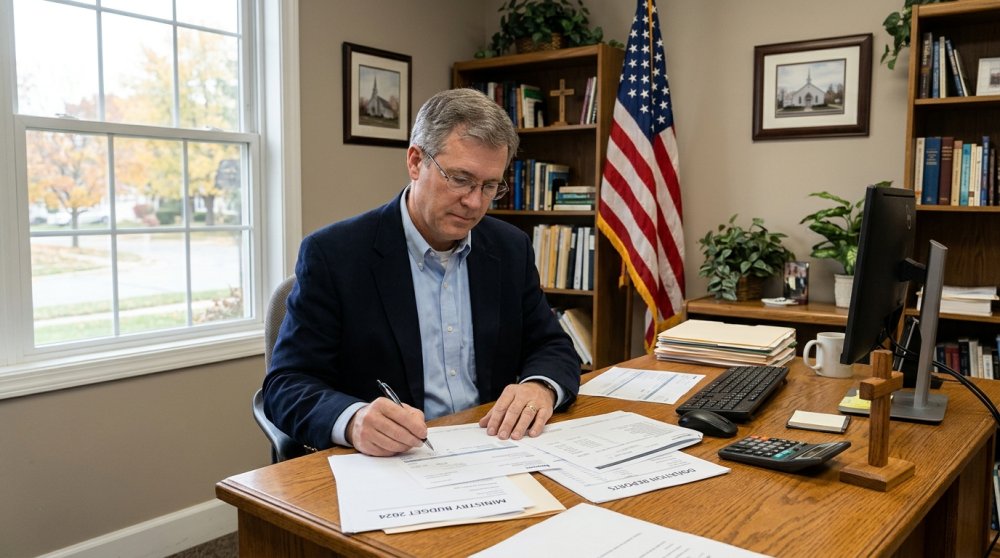
In 2020, Bank of America informed a Christian ministry that its account was being closed because the institution had chosen not to service certain types of businesses. The ministry initially believed this decision was isolated to their organization alone.
Further investigation revealed that other faith-based groups had encountered the same treatment from the same financial institution. The pattern suggests a broader policy affecting religious organizations seeking banking services.
“I thought we were the only ones. We weren’t.”
This experience highlights growing concerns among Christian ministries about access to essential financial services. Many traditional banks appear to be reevaluating their relationships with faith-based organizations.
The closure of accounts for religious ministries raises questions about religious liberty and equal access to financial services. Christian organizations across the country are exploring alternative banking options that align with their values and mission.
Let us know what you think, please share your thoughts in the comments below.


-

 Self-Reliance2 years ago
Trump’s Bold Move Uncovers Massive Social Security Fraud
-

 Faith2 years ago
New Clues Emerge in Noah’s Ark Mystery
-

 News2 years ago
Governor Walz’s Rhetoric Sparks National Controversy
-

 News2 years ago
Mel Gibson’s ‘The Passion of the Christ’ Sequel Title Announced
-

 Family2 years ago
Texas Lawmaker Targets Furries in Schools
-

 Freedom2 years ago
Maine Lawmaker Challenges Sports Fairness Controversy
-

 Family1 year ago
Canada’s Controversial Policy Sparks Ethical Debate
-
Faith11 months ago
Congress Hears Pleas for Nigerian Christians