Connect with us

Faith

Christians Mobilize for Historic National Mall Prayer Event

Published

on

Faith Facts

  • A massive prayer and worship event called Rededicate 250 is planned for the National Mall on May 17, 2026
  • The gathering aims to unite Americans in prayer, Scripture, and rededication to God ahead of the nation’s 250th birthday
  • Organizers are calling Christians from every background across the country to participate in this historic jubilee

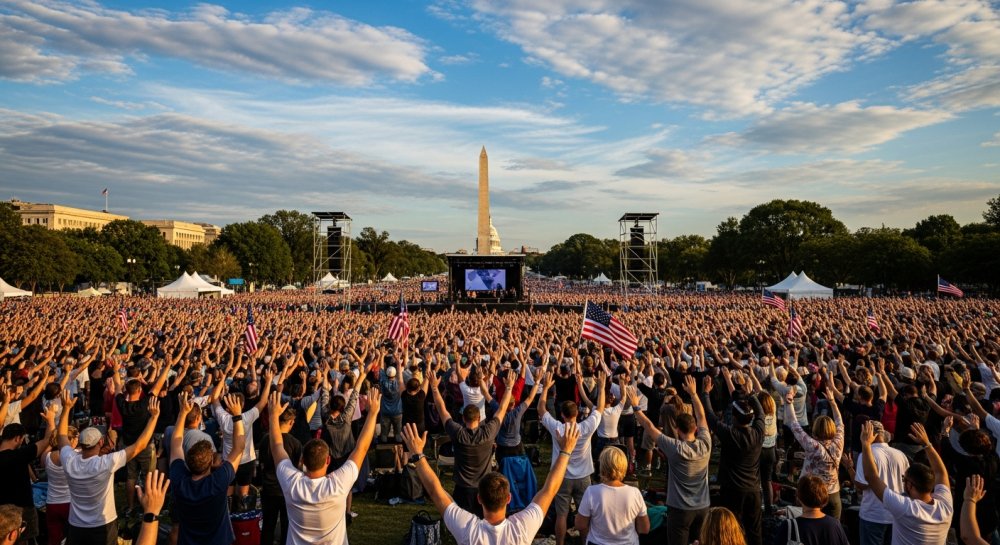
A groundbreaking initiative is taking shape as faith leaders prepare for what could become one of the most significant Christian gatherings in American history. Rededicate 250: A National Jubilee of Prayer, Praise & Thanksgiving is set to transform the National Mall into a place of spiritual renewal and national rededication.

Scheduled for Sunday, May 17, 2026, this historic event comes at a pivotal moment in our nation’s timeline. As America approaches its 250th birthday, believers are being called to gather in our nation’s capital for a day centered on Scripture, testimony, prayer, and the rededication of our country as One Nation under God.

The vision behind Rededicate 250 reflects a growing movement among American Christians who recognize the critical need for spiritual revival and national renewal. By choosing the National Mall—a location steeped in American history and symbolism—organizers are making a powerful statement about the foundational role of faith in our republic.

This jubilee represents more than just another event. It’s a call to return to the biblical principles upon which this nation was founded. The gathering aims to unite Americans of every background in common purpose: seeking God’s continued blessing on our land and recommitting ourselves to the values that have sustained our freedom for nearly two and a half centuries.

The timing is particularly significant. As cultural challenges mount and traditional values face increasing opposition, this national gathering offers an opportunity for believers to stand together in public witness. The event promises to combine worship, prayer, and testimony in a format designed to both honor our heritage and seek divine guidance for our future.

For those unable to attend in person, plans are being made to livestream the entire event, ensuring that Christians across the nation can participate in this historic moment of rededication and prayer.

As preparations continue, the organizers are inviting believers from coast to coast to join in what they envision as a watershed moment for American Christianity—a public declaration that this nation still seeks to honor God and uphold the timeless truths that have made America a beacon of freedom.

Let us know what you think, please share your thoughts in the comments below.

Continue Reading
Click to comment

Leave a Reply

Your email address will not be published. Required fields are marked *

Faith

When Church Structures Reveal More Than Our Words About Unity

Published

on

Faith Facts

  • Christian organizational structures often reflect deeper theological beliefs about authority, community, and partnership than official statements suggest
  • True mutuality in church relationships requires more than rhetoric—it demands structural accountability and reciprocal commitment
  • The global Church faces critical questions about whether its institutional frameworks genuinely embody biblical principles of unity and equality

The way we organize our churches and ministries speaks volumes about what we actually believe—often more than our carefully crafted mission statements or theological declarations. Our structures are our theologies embodied, revealing what our communities truly believe about God, the Church, authority, and one another.

If our structures do not embrace true mutuality, they proclaim a theology that no amount of rhetoric about unity and partnership can conceal. This disconnect between what we say and what we do represents one of the most pressing challenges facing Christian institutions today.

For the well-being of the Church globally, believers must honestly examine the nature of their commitments. Are we building relationships based on genuine partnership, or are we perpetuating hierarchies that contradict the servant leadership Christ modeled?

The call to Christian unity runs throughout Scripture, from Jesus’s prayer in John 17 that His followers “may be one” to Paul’s exhortations for believers to bear with one another in love. Yet unity without mutuality becomes a hollow imitation—words without the substance of sacrificial, reciprocal relationship.

When church structures concentrate power and decision-making in the hands of a few, when international partnerships flow in only one direction, when voices from certain communities are consistently marginized, the organizational framework itself preaches a message contrary to the Gospel. True Christian unity requires structures that reflect mutual submission, shared authority, and reciprocal blessing.

The question facing American Christians—particularly those in positions of leadership and influence—is whether we are willing to examine our institutional arrangements through this lens. Do our denominational structures, mission partnerships, and organizational hierarchies genuinely reflect biblical mutuality? Or do they preserve inequities we would never openly defend?

Building authentically mutual relationships requires humility, sacrifice, and the willingness to relinquish control. It means creating space at decision-making tables for voices historically excluded. It demands listening before speaking, learning before teaching, and recognizing that the Body of Christ is enriched by its diversity.

As the global Church continues to grow—with the majority of Christians now living outside the West—the imperative for structural mutuality becomes even more urgent. American Christians must ask whether their institutions are prepared to embrace genuine partnership or whether they will cling to outdated models that centralize authority and resources.

The integrity of our witness depends on alignment between our words and our structures. When what we build reflects what we believe about the inherent worth and dignity of every believer, we demonstrate the transformative power of the Gospel in practical, observable ways.

Let us know what you think, please share your thoughts in the comments below.
Continue Reading

Faith

What Christians Can Learn from Dolly Parton’s Faith Journey

Published

on

Faith Facts

  • Dolly Parton grew up in poverty in Tennessee’s Smoky Mountains, attending a Pentecostal church where her grandfather was pastor
  • She has described her relationship with God as deeply personal, crediting faith for sustaining her through career challenges and personal struggles
  • Throughout her career, Parton has recorded gospel albums and openly shared how Christian values shaped her generosity and character

The Queen of Country music’s legacy extends far beyond her chart-topping hits and glamorous persona. For those who looked closely, Dolly Parton’s life revealed a genuine Christian faith that guided her extraordinary generosity and humble spirit.

Born into a large family in rural Tennessee, Parton’s earliest memories were shaped by the Pentecostal church where her grandfather served as pastor. The Smoky Mountain church community instilled values of faith, family, and service that would remain central throughout her seven-decade career.

“I was brought up in the Church of God, which is a Holiness church,” Parton explained in past interviews. “We believed in the power of prayer and the presence of the Holy Spirit.”

Despite achieving global fame and fortune that could have easily pulled her away from her roots, Parton maintained her connection to Christian faith. She recorded multiple gospel albums throughout her career, treating these projects not as commercial ventures but as personal expressions of worship and testimony.

Her faith manifested most visibly through her philanthropic work. From her Imagination Library program, which has distributed millions of free books to children, to her significant donations supporting medical research and disaster relief, Parton exemplified Christian generosity without seeking recognition.

“I’ve always believed that if God blesses you financially, you should share it,” she often said, putting Jesus’s teachings into practical action.

Christian songwriter Philippa Hanna, who studied Parton’s faith journey, noted how the country icon balanced worldly success with spiritual authenticity. Parton never compromised her Christian values to achieve mainstream acceptance, yet she approached all people with grace and compassion.

Throughout interviews spanning decades, Parton spoke openly about prayer, reading Scripture, and seeking God’s guidance in major decisions. She credited her relationship with Jesus for providing strength during difficult seasons and keeping her grounded amid extraordinary success.

“My faith has always been very important to me,” Parton shared. “It’s personal, and it’s between me and God.”

Her family’s statement announcing her passing reflected the faith that defined her life, saying she has been welcomed into “the arms of Jesus.” For believers, this serves as a reminder that earthly success, no matter how spectacular, pales in comparison to eternity with Christ.

Parton’s life demonstrates that Christians can engage culture, achieve excellence in their fields, and maintain authentic faith simultaneously. Her legacy challenges believers to consider how they’re using their own gifts and resources to serve others and glorify God.

In an entertainment industry often hostile to Christian values, Dolly Parton stood as a remarkable example of someone who never hid her faith yet won the respect and admiration of people across all backgrounds. Her genuine love for people reflected the heart of Christ in practical, tangible ways.

Let us know what you think, please share your thoughts in the comments below.
Continue Reading

Faith

Church Defends Decision to Remove Longtime Food Ministry Amid Troubling Safety Concerns

Published

on

Faith Facts

  • A Washington state church ended a decades-long partnership with a food ministry over serious concerns about drug use and safety on church property
  • The ministry operated under a month-to-month lease arrangement that gave the church flexibility to address growing problems
  • Church leadership cited their responsibility to protect the congregation and maintain a safe worship environment

A Washington state church is standing firm on its decision to end a longstanding relationship with a food charity that had served meals from its property for over 30 years. The decision comes amid serious allegations that the ministry’s operations had created an environment enabling drug abuse on church grounds.

Church leadership emphasized their primary duty to protect their congregation and maintain the sanctity of their worship space. The food ministry had been operating under a month-to-month lease agreement, which provided the church with the legal authority to terminate the arrangement when concerns arose.

The pastor defended the difficult decision, explaining that while the church values charitable outreach and serving those in need, they cannot compromise the safety and security of their members. The situation highlights the complex challenges churches face when balancing their mission to serve the community with their responsibility to protect their congregations.

Church officials reported observing troubling patterns of behavior on the property that went beyond the intended purpose of providing meals to those experiencing food insecurity. The alleged drug activity created an unsafe environment that threatened to undermine the church’s ministry and witness in the community.

The decision was not made hastily, according to church representatives. Leadership spent considerable time attempting to address the concerns with the food ministry before ultimately determining that ending the lease was the most responsible course of action for the safety of all involved.

This situation underscores the importance of proper oversight and accountability in ministry partnerships. Churches must maintain clear boundaries and expectations when allowing outside organizations to operate on their property, ensuring that all activities align with the church’s mission and values.

While compassion for the hungry and homeless remains a biblical mandate, church leaders must also exercise wisdom and discernment in how they fulfill that calling. The protection of the flock is a sacred trust that pastors and elders cannot abdicate, even in the face of criticism for making difficult decisions.

The church has expressed its continued commitment to serving those in need through other ministries and partnerships that maintain appropriate safeguards and accountability measures. They remain open to finding alternative ways to support food security in their community while ensuring the safety of their property and people.

Let us know what you think, please share your thoughts in the comments below.
Continue Reading

Trending