
News
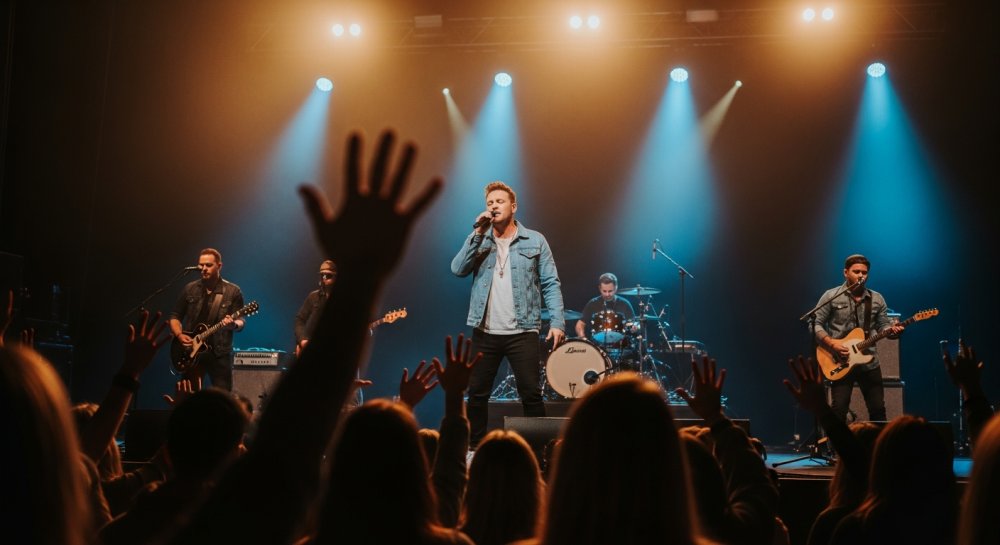
Christian Music Industry Giants Accused of Coordinated Campaign Against Iconic Band

Faith Facts
- Newsboys and owner Wes Campbell filed a federal lawsuit alleging defamation and antitrust violations against major Christian music industry figures
- The lawsuit names MercyMe, concert promoters, and media outlets as defendants in an alleged scheme to push Newsboys out of the concert market
- The band claims coordinated efforts involving defamation and anticompetitive practices threatened their decades-long ministry
A bombshell federal lawsuit has rocked the contemporary Christian music world, with legendary band Newsboys and their owner Wes Campbell alleging a coordinated campaign by industry powerhouses to eliminate them from the concert circuit.
The lawsuit, filed in Tennessee federal court, names several major players in Christian music, including the popular band MercyMe, concert promoters, and media outlets. According to the complaint, these defendants allegedly engaged in defamation and violated antitrust laws in an orchestrated effort to force Newsboys out of the market.
Newsboys, known for hits like “God’s Not Dead” and “We Believe,” has been a staple of Christian music for decades, ministering to millions through their concerts and recordings. The band’s influence extends beyond entertainment, having played a significant role in strengthening the faith of countless believers across generations.
The allegations suggest a troubling pattern within an industry built on Christian principles. Campbell and Newsboys claim the defendants worked together to damage the band’s reputation and business relationships, threatening their ability to continue their ministry through music.
Details of the specific defamatory statements and anticompetitive actions remain under legal scrutiny. However, the lawsuit represents a serious challenge to what plaintiffs describe as improper collusion among major industry stakeholders.
The case raises important questions about fairness and integrity within Christian music circles. For an industry founded on biblical values of honesty and love, accusations of coordinated schemes to harm a ministry organization strike at the heart of what Christian business practices should represent.
Industry observers note that the contemporary Christian music market has become increasingly competitive and commercialized in recent years. Multi-million dollar tours and lucrative recording contracts have transformed what was once primarily a ministry-focused field into big business.
Antitrust violations, if proven, could have serious legal and financial consequences for the defendants. Federal antitrust laws prohibit conspiracies to restrain trade and eliminate competition, regardless of the industry involved.
The lawsuit also highlights tensions that can arise when ministry and commerce intersect. While Christian artists rightfully deserve compensation for their work, the allegations suggest some may have prioritized market dominance over kingdom values.
Newsboys has maintained a consistent presence in Christian music since the 1980s, weathering various lineup changes while continuing to produce music that points listeners to Christ. Their longevity and influence make the allegations against industry peers particularly significant.
Legal experts will be watching closely as the case proceeds through federal court. The outcome could set important precedents for how Christian organizations conduct business and resolve disputes within their community.
For fans and supporters of Christian music, the lawsuit serves as a reminder to pray for all involved. Whether artist, promoter, or media professional, those working in Christian entertainment need wisdom, integrity, and commitment to biblical principles above personal or financial gain.
The defendants have not yet publicly responded to the specific allegations in the lawsuit. As the legal process unfolds, more details about the claimed defamation and anticompetitive conduct are expected to emerge.
Let us know what you think, please share your thoughts in the comments below.

Faith Facts
- Multiple members of Churches of Christ in Venezuela died when powerful earthquakes struck the nation Wednesday, with at least 164 total deaths reported
- Adela Maqueda and her niece perished when a wall collapsed on them in Caracas, while another church member sustained a skull fracture and had to be carried to a hospital by bicycle
- Church members were meeting for prayer when the quakes hit, quickly evacuating their building and helping elderly neighbors and those in wheelchairs escape
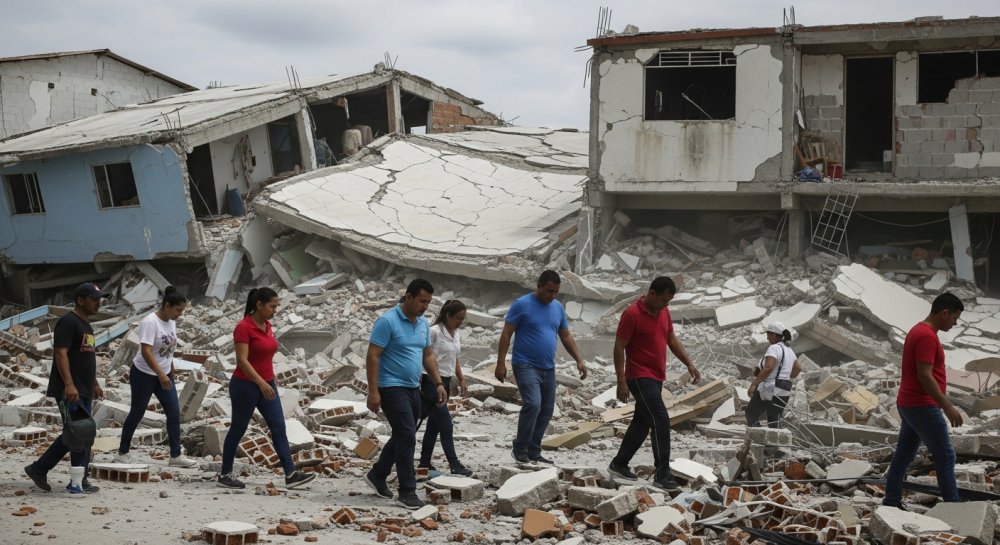
Believers in Venezuela are mourning the loss of fellow church members following a series of catastrophic earthquakes that struck the South American nation Wednesday, claiming lives and leaving communities desperate for help amid widespread destruction.
“It’s a terrible situation,” said Germán Chirinos, a minister in the nation’s capital, Caracas. “Communications are down. There are places without electricity. Some people are trapped under buildings.”
Among the victims were Adela Maqueda, who worshiped with a Church of Christ in Caracas, and her niece, who died when a wall collapsed on top of them. Another church member named Edgar sustained a skull fracture in the disaster. In a testament to the dire circumstances facing Venezuelans, friends were forced to carry him on a bicycle to the nearest hospital.
In Caracas, the devastation was widespread.
“Many buildings collapsed partially, but others completely,” Chirinos said.
The destruction near the earthquakes’ epicenters was even more severe. The first earthquake struck near the town of San Felipe, about 100 miles west of the capital, around 5 p.m. Wednesday. A second, larger quake followed less than a minute later near the town of Yumare. The quakes represent the strongest to strike Venezuela in more than a century, according to the U.S. Geological Survey.
At least 164 people died and nearly 1,000 more were injured, according to initial reports from Venezuela’s government. Among the hardest-hit regions are communities in Venezuela’s La Guaira state, north of Caracas. At least one couple who worshiped with a Church of Christ there died in the quakes, church members reported. Several other members in La Guaira are missing, Chirinos said.
Carlos León, who ministers for a Church of Christ in San Antonio de los Altos, south of Caracas, described how a group of church members were meeting in an apartment when the earthquakes began. They prayed quickly before taking the stairs out of the building and helping others.
“There are many elderly people in that building, people in wheelchairs,” León said.
Those at the service “began to help people get out and to carry people.”
León sent a voicemail message as his cellphone was losing its charge. The minister has been without power for a day, he said. The loss of basic infrastructure has compounded the tragedy, making rescue and recovery efforts even more challenging.
“It’s been sad and difficult because we have lost church members, particularly here in San Antonio,” León said, “but also brothers and sisters we know from other congregations, some of whom remain trapped.”
Some, including Edgar, are recovering from their injuries.
“But there are other brothers… we’re trying to pull out of the rubble,” León said, “hoping they’re also alive.”
The natural disaster follows more than a decade of economic and political turmoil in Venezuela. More than 7 million Venezuelans have left the country since 2014, and those who remain struggle with unemployment and rising crime rates. In January, the U.S. attacked Caracas and seized the country’s president, Nicolás Maduro, and his wife, indicting them on charges of narcoterrorism. Delcy Rodríguez serves as Venezuela’s acting president, but uncertainty hangs over the country’s future and its relationship with the U.S.
Now, León said, “the earthquake complicates everything.”
The tragedy in Venezuela reminds us of the fragility of life and the importance of faith in times of crisis. These believers faced unimaginable loss yet immediately turned to prayer and service, helping their neighbors escape danger. Their example demonstrates the power of Christian community and sacrificial love even in the darkest moments.
Let us know what you think, please share your thoughts in the comments below.
Faith Facts
- The Supreme Court ruled that asylum seekers denied entry before crossing into U.S. territory cannot claim legal ‘arrival’ status
- The high court authorized the Trump administration to end Temporary Protected Status for Haitian and Syrian nationals
- The decisions affirm executive authority over immigration policy and border enforcement procedures
The United States Supreme Court issued two landmark rulings Thursday that significantly strengthen executive control over immigration enforcement and border security. The decisions mark a major legal victory for policies aimed at restoring order to America’s immigration system.
In the first ruling, the Court determined that asylum seekers who are turned away at the border before physically entering United States territory cannot claim they have legally “arrived” in the country. This distinction carries enormous implications for how asylum claims are processed and adjudicated.
The second decision grants the administration authority to terminate Temporary Protected Status for immigrants from Haiti and Syria. TPS has allowed certain foreign nationals to remain in the United States when their home countries face ongoing armed conflict, natural disasters, or other extraordinary conditions.
These rulings clarify the boundaries of executive authority in managing immigration policy, a power explicitly granted to the president under the Constitution. For Americans concerned about border security and the rule of law, the decisions represent a return to common-sense interpretation of immigration statutes.
The Court’s asylum ruling addresses a critical loophole that had encouraged illegal border crossings. By establishing that physical entry into the United States is required for legal “arrival,” the justices have reinforced the principle that America’s borders are real and meaningful.
The TPS decision acknowledges that while humanitarian concerns matter, immigration policy must balance compassion with national interest and the capacity to absorb newcomers. Temporary Protected Status was designed as an emergency measure, not a pathway to permanent residency.
Christian conservatives have long advocated for immigration policies that honor both biblical commands to welcome the stranger and the biblical principle that nations have legitimate authority to secure their borders and govern entry. These Supreme Court decisions support that balanced approach.
Legal experts note that Thursday’s rulings provide much-needed clarity for immigration enforcement officials who have struggled with conflicting lower court decisions. The Supreme Court has now established clear precedents that will guide future cases.
Immigration remains one of the most contentious issues facing the nation, with Americans deeply divided over how to balance security, humanitarian concerns, and economic impacts. These decisions empower elected officials to make those policy choices rather than having courts impose solutions.
The rulings also demonstrate the lasting impact of judicial appointments on American governance. The composition of the Supreme Court directly affects how constitutional powers are interpreted and applied to critical national questions.
Let us know what you think, please share your thoughts in the comments below.
Faith Facts
- Two major earthquakes measuring 7.2 and 7.5 magnitude struck northern Venezuela on Wednesday, claiming at least 32 lives
- More than 700 people were injured as tremors caused widespread damage across Caracas and surrounding regions
- The disaster adds to the mounting challenges facing the Venezuelan people, who continue to endure economic and humanitarian crises
Northern Venezuela experienced two catastrophic earthquakes on Wednesday, bringing tragedy and destruction to a nation already suffering under severe hardship. The powerful tremors measured 7.2 and 7.5 on the magnitude scale, striking fear into communities across the region.
Officials confirmed that at least 32 people lost their lives in the disaster, with more than 700 individuals sustaining injuries. The death toll may continue to rise as rescue teams work through damaged structures and reach remote areas affected by the quakes.
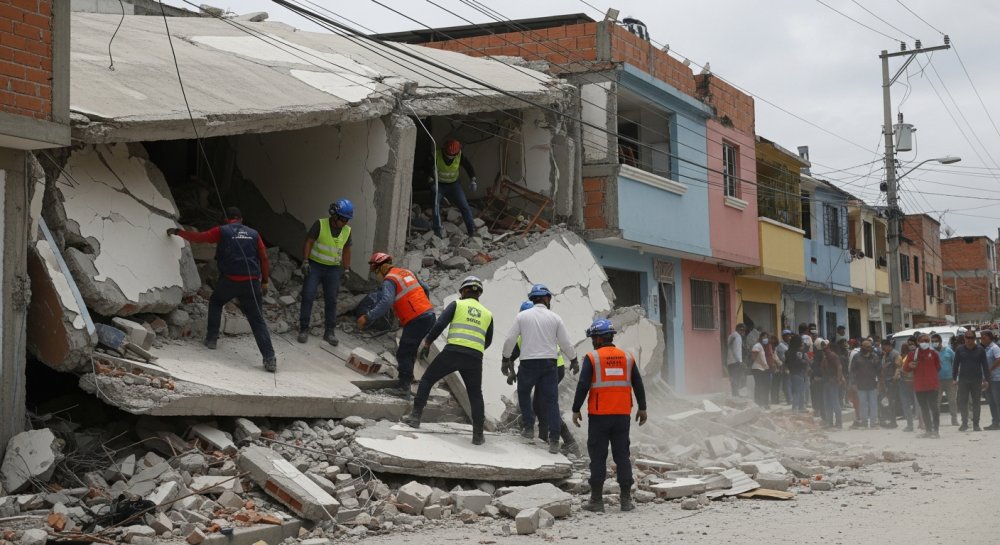
Caracas, Venezuela’s capital city, bore significant damage from the seismic events. Buildings collapsed, infrastructure crumbled, and families found themselves displaced from their homes. The widespread destruction extended beyond the capital, affecting numerous communities throughout northern Venezuela.
The earthquakes present yet another trial for the Venezuelan people, who have endured years of economic collapse, political turmoil, and humanitarian crisis. This natural disaster compounds the difficulties facing families who were already struggling to meet basic needs.
Emergency response teams mobilized quickly to search for survivors trapped in rubble and provide medical care to the injured. Hospitals and medical facilities, already strained by the country’s ongoing crisis, now face the additional burden of treating hundreds of earthquake victims.
The international community watches as Venezuela grapples with this latest catastrophe. Many faith-based organizations and relief agencies are assessing how to provide humanitarian assistance to those affected by the devastating earthquakes.
As rescue operations continue, the focus remains on locating survivors and providing emergency shelter, food, and medical care to those impacted. The Venezuelan people face a long road to recovery as they rebuild homes, businesses, and communities shattered by these powerful natural forces.
This disaster serves as a reminder of our need to depend on God’s strength in times of crisis and to extend compassion to those suffering. Americans of faith are called to remember the Venezuelan people in prayer during this difficult time.
Let us know what you think, please share your thoughts in the comments below.


-

 Self-Reliance1 year ago
Trump’s Bold Move Uncovers Massive Social Security Fraud
-

 Faith1 year ago
New Clues Emerge in Noah’s Ark Mystery
-

 News1 year ago
Governor Walz’s Rhetoric Sparks National Controversy
-

 News1 year ago
Mel Gibson’s ‘The Passion of the Christ’ Sequel Title Announced
-

 Family1 year ago
Texas Lawmaker Targets Furries in Schools
-

 Freedom1 year ago
Maine Lawmaker Challenges Sports Fairness Controversy
-

 Family1 year ago
Canada’s Controversial Policy Sparks Ethical Debate
-
Faith7 months ago
Congress Hears Pleas for Nigerian Christians