
News
Scotland Faces Crossroads as Voters Head to Polls


Faith Facts
- Scotland is experiencing significant political, economic, and social challenges after years of SNP governance
- Critical elections this week could determine the direction of the nation’s future
- Failed policy choices have contributed to widespread decline across multiple sectors
Scotland stands at a pivotal moment as voters prepare to cast their ballots in elections that could reshape the nation’s trajectory. After years under Scottish National Party (SNP) governance, the country faces mounting challenges across political, economic, and social spheres.
The decline has been marked by policy failures that have affected everyday Scots. From economic stagnation to social fragmentation, the consequences of misguided governance have become increasingly apparent to citizens across the nation.
This week’s elections represent more than a routine political exercise—they offer an opportunity for course correction. Voters will decide whether to continue down the current path or embrace change that could restore stability and prosperity.
The SNP’s tenure has been characterized by policies that prioritize political ideology over practical governance. Traditional values and institutions that once formed the bedrock of Scottish society have been undermined by progressive experiments that have failed to deliver promised results.
Economic indicators paint a troubling picture. Business growth has stagnated, investment has declined, and opportunities for hardworking families have diminished under policies that discourage enterprise and innovation.
The social fabric of Scotland has also suffered. Communities that once thrived on shared values and mutual support now find themselves divided by policies that emphasize differences rather than common bonds.
For Christians and people of faith in Scotland, the stakes are particularly high. Religious liberty and traditional moral values have faced increasing pressure under current leadership, raising concerns about the future of faith communities in public life.
The elections this week will test whether Scottish voters are ready for new leadership that respects tradition, promotes economic freedom, and honors the values that built their nation. The choice before them is clear: continue the decline or chart a new course toward renewal.
As results come in, observers will be watching to see if Scotland chooses a path that prioritizes family, faith, and freedom—or whether the current trajectory will persist despite mounting evidence of its failures.
Let us know what you think, please share your thoughts in the comments below.


Faith Facts
- The Waldo Church of Christ in Arkansas has launched a two-year revitalization plan focusing on children’s ministry despite attendance dropping from 150 to 20 members.
- Forty-two members of Abilene Christian University’s football team were baptized during a Christ-centered boot camp before fall practice began.
- Multiple Christian educators and ministry leaders across Arkansas, Tennessee, Texas, Alabama, and Nebraska have been appointed to new positions serving churches and Christian institutions.
Arkansas Church Chooses Faith Over Closure
The Waldo Church of Christ has launched a two-year revitalization plan through outreach and a renewed focus on children’s ministry. The congregation, which once had 150 attendees, now averages 20 worshipers on Sunday mornings.
The decline mirrors challenges facing the surrounding community, where the population fell from 1,400 residents in 2010 to 1,100 in 2024, while the poverty rate reached 23.7 percent, according to the U.S. Census. Rather than accept defeat, the church is investing in children through rebuilding relationships within the community.
“If you reach the children, you’ll reach their parents,” Waldo minister H.L. Shirley said.
Through the vision titled “Come Over and Help Us,” based on Acts 16:9, church leaders are seeking financial support for part-time teachers and youth ministry workers. The churchwide initiative hopes to provide children’s ministry materials, meals and other outreach resources to attract families.
“We’re letting too many congregations close their doors. I’d rather be an optimist than a pessimist. We ought to believe there’s still work to do.”
Massive Baptism at Christian University Football Camp
Few besides Abilene Christian University head football coach Keith Patterson knew what to expect for the program’s Christ-centered, identity-focused boot camp right before the beginning of fall camp. Even if the players did, it would have been hard to imagine the results.
Forty-two members of the team — 40 current players, one former player and one assistant coach — were baptized in Jesus Christ during the intensive summer gathering. The ACU football staff partnered with the Beltway Park Church’s men’s ministry to lead players in worship, lessons and small group discussions.
“It will be two days that I’ll never forget. Probably my best two days I’ve ever had in my life, and it was very impactful for me.”
Quarterback Marcos Davila was one of the players immersed on campus at Jacob’s Dream. Linebacker Bryce Morton witnessed the transformative power of the event.
“I started tearing up a little bit seeing everyone getting baptized. It made me say, ‘I’ll give my life to Christ.’ He deserves it. He’s changed my life.”
Christian Leaders Step Into New Roles
Spencer Adcock received Coach of the Year honors by Natural State Baseball. Adcock coaches for Crowley’s Ridge College in Paragould, Ark., which is associated with Churches of Christ. CRC Pioneers players Lawson DeVault and Aiden Smith earned honorable mention recognition on the 2026 All-Arkansas Collegiate Team.
Curtis Janz was named NCAA Division II Athletics Director of the Year. Janz is director of athletics for the University of Arkansas, Fort Smith. He spent more than 30 years at Oklahoma Christian University as a student, assistant coach and administrator.
Chris McCurley received honorary membership in the Dickson Firefighters Association Local 3145 in Tennessee. McCurley, preaching minister for the Walnut Street Church of Christ in Dickson, is chaplain for the Dickson Fire Department.
Scott Adair was named dean of the College of Bible and Ministry at Harding University, beginning in the 2027-28 academic year. Kevin Burr will serve as assistant dean. Garret Best becomes assistant dean of the College of Bible and Ministry and director of the Hazelip School of Theology at Lipscomb University in Nashville, Tenn.
Tim Hall is the new preacher for the Grassy Church of Christ in Arab, Ala. Leon Lewis begins service as campus minister for York University in Nebraska. Sam Marshall joins Ezell-Harding Christian School in Nashville, Tenn., as elementary and middle school Bible teacher. Marshall is a recent graduate of Lipscomb University in Nashville and worships with the Owen Chapel Church of Christ in Brentwood, Tenn.
Cary and Ginger Richie have been named houseparents at Cherokee Home for Children in Texas. Cary is retiring after 32 years with the Wichita Falls Fire Department in Texas. Ginger taught grades pre-K through high school for more than 25 years. Cary recently earned a degree from Sunset International Bible Institute in Lubbock, Texas.
Let us know what you think, please share your thoughts in the comments below.

Faith Facts
- A coffee shop owner reportedly received threats after comparing pro-life advocates to the KKK and refusing service to a pro-life group
- The incident highlights growing tensions over religious freedom and discrimination in public accommodations
- Pro-life advocates continue to face hostility in public spaces despite their constitutionally protected speech and assembly rights
A coffee shop owner claims he has been receiving threats following his controversial decision to eject a pro-life group from his establishment and his subsequent comparison of pro-life advocates to the Ku Klux Klan. The incident has sparked a heated debate about religious freedom, free speech, and the boundaries of service refusal in public businesses.
The coffee shop owner reportedly asked a group of pro-life advocates to leave his business when they attempted to hold a meeting on the premises. Following the incident, he publicly compared those who hold pro-life views to members of the KKK, a statement that drew immediate criticism from Christian and conservative communities nationwide.
According to the owner, his remarks and actions have resulted in what he describes as “nonstop death threats.” While threats of violence are never acceptable and should be condemned regardless of the circumstances, the incident raises important questions about the current climate surrounding religious expression and traditional values in America.
The situation bears resemblance to other recent cases where business owners have claimed the right to refuse service based on their personal beliefs, though typically those cases have involved Christian business owners declining to participate in activities that conflict with their religious convictions. This case presents an inverse scenario, where a business owner has refused service to customers based on their pro-life beliefs.
Pro-life advocates have long maintained that the protection of unborn human life is a fundamental human rights issue grounded in the belief that all life is sacred and created in the image of God. The comparison to the KKK—a hate organization with a history of violence and racial terrorism—has been widely criticized as inflammatory and inaccurate.
Religious freedom advocates point out that peaceful pro-life activism represents the exercise of constitutionally protected rights to free speech, assembly, and religious expression. They argue that characterizing such advocacy as equivalent to hate groups creates a hostile environment for people of faith and undermines civil discourse.
The incident also highlights the challenging legal and cultural landscape surrounding public accommodations and discrimination. While some argue that business owners should have broad discretion in serving customers, others contend that certain forms of discrimination based on political or religious views should not be permitted.
As tensions continue to mount over abortion and pro-life advocacy in the wake of recent Supreme Court decisions returning abortion regulation to the states, incidents like this underscore the deep divisions in American society on fundamental questions of life, faith, and freedom.
Christian conservatives continue to advocate for the protection of both religious liberty and the right to life, viewing these as inseparable pillars of American freedom. They maintain that respectful dialogue and peaceful advocacy, rather than hostility and exclusion, should characterize public discourse on these crucial moral issues.
Let us know what you think, please share your thoughts in the comments below.
Faith Facts
- Cambridge University professor Jason Arday’s academic credentials are under scrutiny after allegations emerged of plagiarism and questionable qualifications
- The case reveals how modern institutions prioritize diversity narratives over academic excellence and truth-telling
- Christian values teach that grace must be balanced with truth, and lowering standards ultimately harms those it claims to help
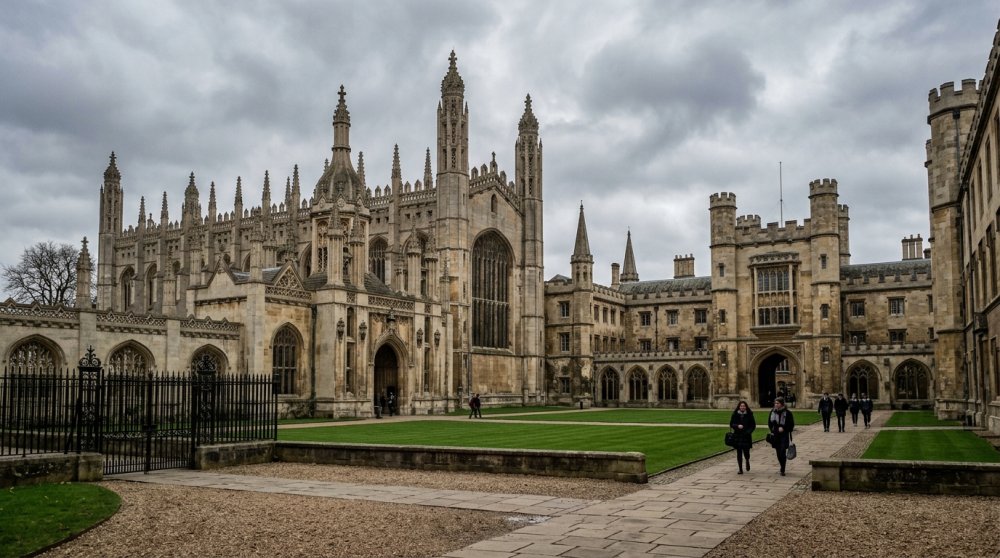
The unfolding controversy surrounding Cambridge University professor Jason Arday offers a sobering lesson about what happens when institutions abandon objective standards in favor of identity-driven narratives. While mainstream coverage focuses on race, the deeper issue concerns institutional integrity and our society’s dangerous departure from truth-based evaluation.
Dr. Arday, who rose rapidly through academia to become Cambridge’s youngest black professor, now faces serious questions about plagiarism and the legitimacy of his academic work. The allegations include copying substantial portions of others’ research and presenting questionable credentials.
What makes this case particularly significant is not the individual failings—we are all sinners in need of redemption—but rather the institutional response. Rather than conducting rigorous vetting, prestigious universities appeared more concerned with achieving diversity benchmarks than maintaining academic excellence.
This represents a fundamental misunderstanding of both grace and justice. As Christians, we understand that true compassion doesn’t mean abandoning standards or truth. Scripture teaches us that “grace and truth came through Jesus Christ” (John 1:17)—the two must work together.
When institutions lower standards in the name of inclusion, they ultimately harm everyone involved. They rob deserving candidates of opportunities earned through genuine merit, they set up others for failure by placing them in positions they’re unprepared for, and they undermine public trust in the entire academic enterprise.
The case also reveals something deeper: a culture of narcissism where personal advancement takes precedence over integrity. When we remove the guardrails of objective truth and replace them with subjective narratives, we create environments ripe for exploitation.
Our Christian heritage understood this danger. Traditional institutions—universities, churches, civic organizations—were built on the foundation that truth exists independent of our feelings about it. Standards weren’t arbitrary obstacles but protective structures ensuring excellence and fairness.
Today’s progressive ideology rejects this framework, viewing objective standards as inherently oppressive. But the Arday case demonstrates the logical conclusion of this thinking: a system where credentials mean nothing, achievement is performative, and everyone suffers except those skilled at manipulating the new rules.
Real compassion demands both grace and accountability. It means creating pathways for all people to succeed while maintaining rigorous standards that ensure success is meaningful. It means being honest about qualifications rather than pretending everyone is equally prepared for every role.
The Bible teaches that the truth sets us free (John 8:32). When we abandon truth—even with good intentions—we don’t create freedom but rather new forms of bondage. Students denied honest feedback cannot improve. Professors advanced beyond their competence face inevitable exposure. Institutions that prioritize narratives over facts lose credibility.
This doesn’t mean rejecting diversity or refusing to address past injustices. It means doing so honestly, with programs that genuinely prepare people for excellence rather than simply placing them in positions for optics. It means celebrating real achievement rather than manufactured credentials.
The solution isn’t to eliminate grace but to properly balance it with truth. We can offer second chances, mentorship, and genuine support while still maintaining standards that ensure quality and fairness. This is the Christian way—extending mercy without abandoning justice.
As this case unfolds, we should resist the temptation to make it solely about race or politics. Instead, we must recognize it as a warning about what happens when any society—including our academic institutions—loses its moral compass and abandons the biblical principle that grace without truth leaves us blind to both our own failings and the path forward.
Let us know what you think, please share your thoughts in the comments below.


-

 Self-Reliance1 year ago
Trump’s Bold Move Uncovers Massive Social Security Fraud
-

 Faith1 year ago
New Clues Emerge in Noah’s Ark Mystery
-

 News1 year ago
Governor Walz’s Rhetoric Sparks National Controversy
-

 News1 year ago
Mel Gibson’s ‘The Passion of the Christ’ Sequel Title Announced
-

 Family1 year ago
Texas Lawmaker Targets Furries in Schools
-

 Freedom1 year ago
Maine Lawmaker Challenges Sports Fairness Controversy
-

 Family1 year ago
Canada’s Controversial Policy Sparks Ethical Debate
-
Faith9 months ago
Congress Hears Pleas for Nigerian Christians