
Faith
Christian Man Targeted After Mysterious Quran Incident Sparks Mob Violence in Pakistan

Faith Facts
- A Christian man and his mother were framed when unknown individuals sent desecrated Quran pages to a Muslim shopkeeper with their photos attached
- Violent mobs erupted in Karachi following the incident, targeting the Christian community based on false accusations
- Pakistan’s blasphemy laws are frequently weaponized against religious minorities, particularly Christians, often resulting in mob violence and death sentences
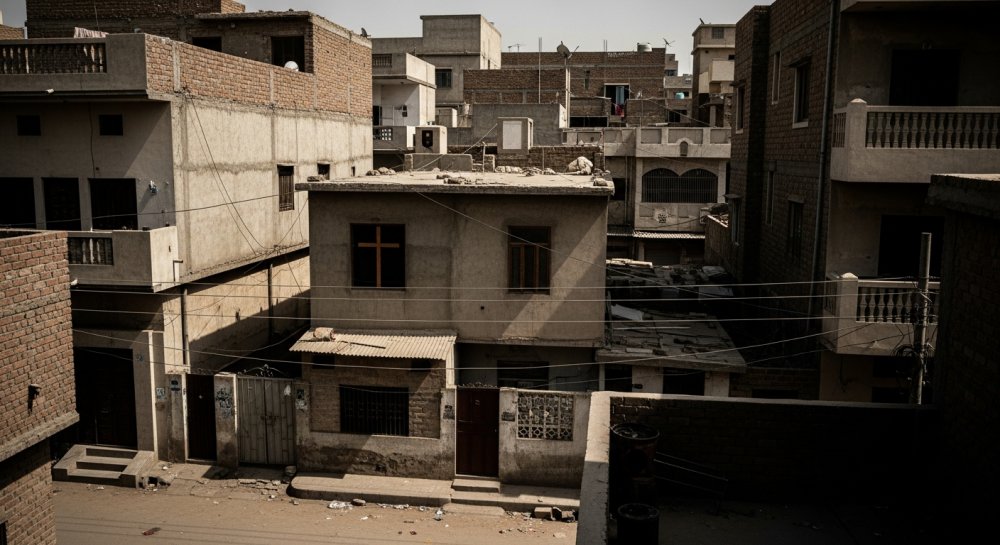
A violent uprising against a Christian family has exposed the dangerous reality facing believers in Pakistan, where accusations of blasphemy can be manufactured to destroy innocent lives. The incident unfolded in Karachi when unidentified individuals orchestrated a deliberate scheme to frame a Christian man and his mother.
Unknown perpetrators mailed a desecrated page of the Quran to a Muslim shopkeeper, along with photographs of the Christian man and his mother. The malicious act was designed to falsely implicate the Christian family in blasphemy, one of the most serious and deadly accusations in Pakistan.
The scheme immediately triggered violent protests throughout the area. Mobs took to the streets, placing the targeted Christian family in grave danger despite having no involvement in the desecration.
Pakistan’s blasphemy laws have become a weapon of persecution against Christians and other religious minorities. These laws carry severe penalties, including death sentences, and accusations alone often result in vigilante mob violence before any legal proceedings can occur.
The incident highlights the vulnerability of Pakistan’s Christian community, which faces systemic discrimination and violence. False accusations of blasphemy are commonly used to settle personal disputes, seize property, or simply target religious minorities for their faith.
The Christian family at the center of this incident now faces mortal danger. Even proven innocence often fails to protect accused individuals, as mob mentality and religious fervor override legal processes and evidence.
This case demonstrates the urgent need for international pressure on Pakistan to protect its religious minorities and reform laws that enable persecution. Christians around the world must continue to pray for and advocate on behalf of their persecuted brothers and sisters facing such threats.
The weaponization of blasphemy accusations represents a grave injustice and a direct assault on religious freedom. When laws designed to protect faith are twisted to destroy the innocent, the fundamental principles of justice are violated.
Let us know what you think, please share your thoughts in the comments below.

Faith Facts
- The European Evangelical Alliance has released a major statement aimed at correcting widespread misunderstandings about evangelical Christians worldwide
- The document seeks to counter media-driven caricatures largely shaped by American political coverage
- EEA leaders believe the statement can help believers everywhere better articulate their faith in the public square
A groundbreaking statement from the European Evangelical Alliance (EEA) is making waves across the Christian world, offering a clear and compelling vision of evangelical identity that stands apart from distorted media narratives. The declaration comes at a crucial time when believers face increasing misrepresentation in public discourse.
The EEA’s carefully crafted document addresses a pressing concern: the gap between who evangelicals truly are and how they are portrayed in mainstream media. For too long, secular outlets have painted a caricature of Bible-believing Christians based primarily on American political controversies, ignoring the rich diversity and theological depth of the global evangelical movement.
This comprehensive statement provides much-needed clarity on evangelical engagement in public life, rooted in biblical principles rather than partisan politics. The European perspective offers valuable insights that transcend national boundaries and cultural contexts, reminding Christians everywhere of their primary calling to live out the Gospel with integrity and conviction.
The timing of this declaration is significant. As religious liberty faces mounting challenges across Western nations and Christians find themselves increasingly marginalized in public conversations, the EEA statement equips believers with thoughtful, scripturally grounded responses to cultural pressures.
Church leaders and theologians are praising the document for its theological soundness and practical application. The statement emphasizes that evangelical identity centers on core biblical truths: the authority of Scripture, the necessity of personal conversion through faith in Jesus Christ, the importance of sharing the Gospel, and the transformative work of the Holy Spirit in believers’ lives.
By articulating these foundational principles clearly, the EEA helps Christians navigate complex social and political landscapes without compromising their witness. The document reminds evangelicals that their ultimate allegiance belongs to Christ and His Kingdom, transcending earthly political movements or national identities.
The statement also addresses how believers should engage with contemporary issues while maintaining gospel priorities. Rather than retreating from public life or being co-opted by secular ideologies, Christians are called to be salt and light—influencing society through faithful presence and prophetic witness.
What makes this declaration particularly valuable is its global perspective. European evangelicals have wrestled with questions of faith and public engagement in contexts quite different from American culture, offering wisdom that enriches the worldwide body of Christ.
For American believers especially, the EEA statement provides helpful perspective on how Christians in other parts of the world approach their civic responsibilities. It challenges the assumption that evangelical faith must align with any particular political party or cultural movement, instead pointing back to timeless biblical truths.
The document’s influence extends beyond Europe. Christian leaders from Africa, Asia, Latin America, and North America are already citing the statement as a helpful resource for discipleship and public witness. Its clear articulation of evangelical essentials provides common ground for believers across diverse cultural contexts.
As the statement gains traction, it offers hope that Christians worldwide can reclaim the narrative about who evangelicals truly are. Rather than allowing hostile media or political operatives to define evangelical identity, believers themselves can point to this thoughtful, biblically faithful declaration.
The EEA’s work reminds us that the global church is much larger and more diverse than any single national expression. When European brothers and sisters in Christ speak with clarity and conviction, believers everywhere benefit from their insights and experience.
This statement arrives as a gift to the worldwide evangelical movement—a tool for teaching, a framework for engagement, and a testimony to the unity that exists among believers committed to biblical truth. Its impact will likely be measured not in immediate headlines but in the long-term strengthening of Christian witness across nations and cultures.
Let us know what you think, please share your thoughts in the comments below.
Faith Facts
- Cardinal Robert W. McElroy removed a prominent Catholic exorcist from active ministry in his archdiocese, citing concerns over the increasingly public nature of his work.
- The exorcist had gained attention for statements connecting UFO phenomena to demonic activity, though the Cardinal insists this was not the reason for the removal.
- The decision has sparked debate within Catholic circles about the proper boundaries between exorcism ministry and public engagement.
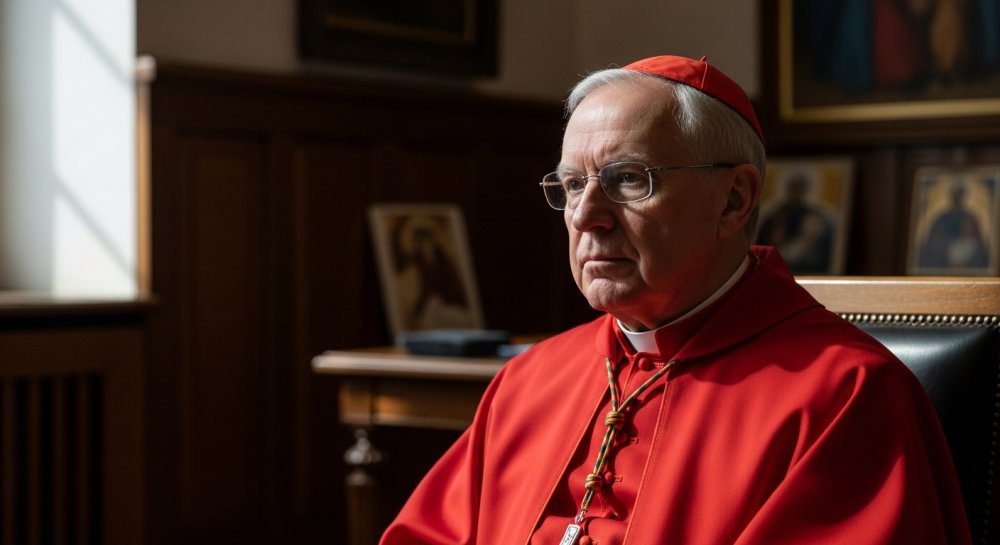
Cardinal Robert W. McElroy has clarified his decision to remove a well-known exorcist from ministry in his archdiocese, addressing speculation that has circulated within Christian communities. In a recent interview, the Cardinal emphasized that his concerns centered on the public profile of the ministry rather than theological disagreements.
The exorcist in question had developed a significant following through public appearances and statements about spiritual warfare. Among his more controversial positions was the assertion that many UFO sightings and phenomena have demonic origins—a view that has found support among some Christians who see spiritual explanations for unexplained events.
Exorcist Stephen Rossetti: “Most UFO sightings are likely Demons” ????????
A Catholic Priest for the Archdiocese of Washington, he explains that demons hide to manipulate us more effectively. “Demons like to hide. They don’t want us to know they’re out… they can kind of get into… pic.twitter.com/qrbt7I3WzI
— Interstellar (@InterstellarUAP) May 31, 2026
Cardinal McElroy stated that the removal was not motivated by these theological opinions. Instead, he expressed concern that the increasingly public nature of the exorcism ministry was creating issues that warranted intervention. The Cardinal’s decision reflects ongoing tensions within the Catholic Church about how spiritual deliverance ministries should be conducted and promoted.
The controversy highlights broader questions about the role of exorcism in modern Christian ministry. Many believers recognize the reality of spiritual warfare and demonic activity, viewing exorcism as a legitimate and necessary aspect of pastoral care. However, church leaders must balance this conviction with concerns about sensationalism and proper ecclesiastical oversight.
The exorcist’s views on UFOs and demons resonate with some Christians who see contemporary phenomena through a spiritual lens. This perspective holds that not all unexplained events have purely natural explanations, and that demonic deception may manifest in various forms including alleged extraterrestrial encounters.
The Cardinal’s explanation appears designed to address concerns from those who worried the removal represented a dismissal of traditional beliefs about spiritual warfare. By clarifying that his objections were procedural rather than theological, McElroy seeks to maintain respect for exorcism ministry while asserting episcopal authority over how such ministries are conducted.
This situation underscores the delicate balance church leaders must strike between affirming traditional Christian teachings about spiritual combat and maintaining appropriate boundaries for public ministry. As interest in spiritual warfare grows among believers, questions about proper practice and oversight will likely continue.
Let us know what you think, please share your thoughts in the comments below.
Faith
A Life of Unwavering Faith: Remembering Ann Widdecombe’s Courageous Stand for Christian Values
Faith Facts
- Former British MP Ann Widdecombe has passed away at age 78, leaving behind a legacy of principled Christian conservative leadership
- Widdecombe converted to Catholicism in 1993 and never compromised her faith-based convictions, even when it cost her career advancement
- Throughout her political career, she stood firm on traditional values including pro-life positions and opposition to social liberalism
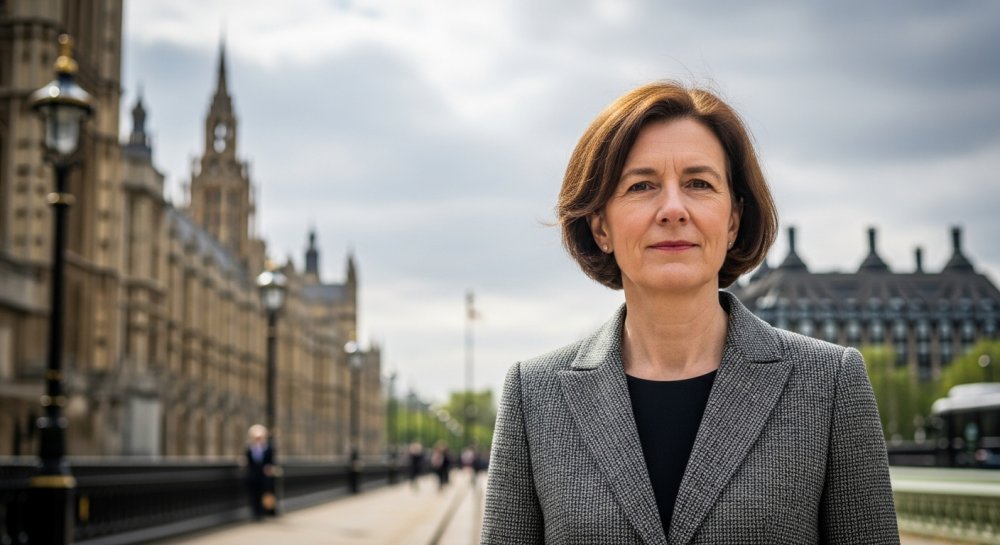
The Christian conservative movement has lost one of its most courageous voices. Ann Widdecombe, former British Member of Parliament and unwavering defender of traditional Christian values, has died at the age of 78. Her passing marks the end of an era when politicians were willing to sacrifice career advancement for the sake of deeply held convictions rooted in faith.
Widdecombe’s political career was defined by a rare quality in modern politics: the willingness to stand alone when principle demanded it. In an age when so many public figures bend to the prevailing cultural winds, she remained steadfast in her Christian beliefs, regardless of the personal or professional cost.
Her conversion to Catholicism in 1993 was not a quiet, private affair but a public declaration of faith that would shape every subsequent decision in her political life. This conversion came after the Church of England’s decision to ordain women priests, a move Widdecombe could not reconcile with her understanding of Scripture and tradition.
Throughout her time in Parliament, Widdecombe championed causes that reflected her Christian worldview. She was uncompromising in her defense of the unborn, consistently voting for pro-life measures and speaking out against the culture of death that has claimed millions of innocent lives. Her voice was a beacon of hope for those who believe in the sanctity of human life from conception to natural death.
What set Widdecombe apart from many of her political contemporaries was her refusal to moderate her views for the sake of popularity or advancement. While others calculated their positions based on polling data and focus groups, she calculated hers based on Scripture, tradition, and conscience. This approach earned her respect even from those who disagreed with her.
Her courage extended beyond the abortion issue. Widdecombe stood firm against the erosion of traditional marriage and family values, understanding that these institutions are the bedrock of a healthy society. She recognized that when we abandon God’s design for marriage and family, we don’t just harm individuals—we undermine the very foundations of civilization.
In later years, Widdecombe became a vocal critic of the European Union, seeing it as a threat to national sovereignty and traditional British values. Her support for Brexit was consistent with her lifelong commitment to self-determination and the preservation of Christian heritage in public life.
Critics often labeled her as “controversial” or “divisive,” but these terms merely revealed the discomfort that secularists feel when confronted with someone who takes Christian teaching seriously. Widdecombe understood that being salt and light in a darkening culture means being willing to be unpopular, misunderstood, and sometimes ridiculed.
Her television appearances in later years introduced her to a new generation of Britons who may not have followed her parliamentary career. Whether on reality shows or political commentary programs, she never shed her convictions or compromised her witness. She demonstrated that it’s possible to engage popular culture without being absorbed by it.
Widdecombe’s legacy challenges contemporary Christians in politics and public life. How many of us are willing to sacrifice advancement for principle? How many would choose conviction over career? In an era of calculated political positioning, her example of courage and consistency stands as a rebuke to the compromising spirit that has infected both church and state.
The tributes pouring in from across the political spectrum testify to the respect she commanded, even from ideological opponents. This respect was earned not through compromise or triangulation, but through the consistent application of Christian principles to public policy, regardless of the personal cost.
As we remember Ann Widdecombe, we should not merely celebrate her courage—we should be inspired to emulate it. The challenges facing Christians in the public square today are greater than ever. Religious liberty is under assault, traditional values are scorned, and faith is increasingly marginalized in public discourse.
We need more Ann Widdecombes—men and women who will stand firm in their faith, speak truth to power, and refuse to compromise on matters of conscience. We need leaders who fear God more than they fear public opinion, who value eternal truth more than temporal approval.
Her life reminds us that faithful Christian witness in the political arena is possible. It may not lead to the highest offices or the warmest press coverage, but it leads to something far more valuable: the ability to look in the mirror each morning knowing you have remained faithful to the One who called you.
As we mourn her passing, we should also celebrate a life well-lived in service to God and country. Ann Widdecombe fought the good fight, finished the race, and kept the faith. May her example inspire a new generation of Christian conservatives to stand firm in their convictions, no matter the cost.
Let us know what you think, please share your thoughts in the comments below.


-

 Self-Reliance1 year ago
Trump’s Bold Move Uncovers Massive Social Security Fraud
-

 Faith1 year ago
New Clues Emerge in Noah’s Ark Mystery
-

 News1 year ago
Governor Walz’s Rhetoric Sparks National Controversy
-

 News1 year ago
Mel Gibson’s ‘The Passion of the Christ’ Sequel Title Announced
-

 Family1 year ago
Texas Lawmaker Targets Furries in Schools
-

 Freedom1 year ago
Maine Lawmaker Challenges Sports Fairness Controversy
-

 Family1 year ago
Canada’s Controversial Policy Sparks Ethical Debate
-
Faith8 months ago
Congress Hears Pleas for Nigerian Christians