
News
Christian Leaders Defend Just War Doctrine Amid Iran Tensions


Faith Facts
- Fox News host Sean Hannity and evangelist Franklin Graham invoked biblical and World War II principles to defend U.S. military action against Iran
- Graham cited Old Testament examples of just war, referencing God’s commands to Israel and Romans 13’s teaching on government authority
- The discussion addressed Pope Leo XIV’s criticism of military intervention, with both men defending the moral grounds for protecting American lives
In a compelling discussion that bridged faith and national security, Fox News host Sean Hannity and evangelist Franklin Graham made a robust biblical case for just war doctrine in response to Iran tensions. The exchange, which aired Thursday evening, reflected deep Christian engagement with questions of military force and moral authority.
Graham, son of legendary evangelist Billy Graham and president of the Billy Graham Evangelistic Association, drew upon Scripture to explain when military action can be justified. He pointed to Old Testament passages where God commanded Israel to defend itself and referenced the Apostle Paul’s teaching in Romans 13 about governmental authority bearing the sword for justice.
“God has given government the responsibility to protect its citizens,” Graham explained during the program. “There are times when war is necessary to stop evil and protect innocent lives.”
The discussion arose amid criticism from Pope Leo XIV, who has questioned the morality of military intervention in Iran. Hannity defended the American position by invoking World War II, when Allied forces confronted Nazi aggression and imperial Japanese expansion.
“If we had listened to appeasers before World War II, millions more would have died under tyranny,” Hannity argued. “Sometimes peace requires the willingness to confront evil with strength.”
Graham reinforced this perspective with biblical examples, noting that throughout Scripture, God’s people were sometimes called to military action to protect the innocent and confront wickedness. He emphasized that just war theory, developed by Christian theologians like Augustine and Aquinas, provides moral guidelines for when force is justified.
The conversation highlighted a fundamental tension in Christian thought about war and peace. While Jesus taught His followers to be peacemakers, Scripture also recognizes the government’s God-given responsibility to protect citizens and punish evildoers.
For many Christian conservatives, the Iran situation represents exactly the type of scenario where just war principles apply. Iran’s regime has threatened American interests, supported terrorism, and persecuted Christians and religious minorities within its borders.
Graham stressed that Christians should pray for peace while recognizing that government leaders have different responsibilities than individual believers. While Christians are called to love their enemies personally, civil authorities have a biblical mandate to protect their citizens from external threats.
The discussion between Hannity and Graham reflected a long American tradition of wrestling with faith-based approaches to national security. From the Revolutionary War through modern conflicts, Christian Americans have sought to balance Jesus’s call to peacemaking with the practical realities of defending freedom and confronting tyranny.
Both men emphasized that any military action should be undertaken with careful consideration, proper authority, and just cause. They rejected reckless warmongering while defending the principle that sometimes force is necessary to protect innocent lives and preserve freedom.
Let us know what you think, please share your thoughts in the comments below.


Faith Facts
- Over the past decade, the transgender movement has rapidly expanded its influence over medical institutions, schools, and public policy despite lacking long-term scientific evidence.
- Children are being subjected to irreversible medical interventions based on ideology rather than proven medical necessity, raising serious ethical concerns for Christians and parents nationwide.
- The suppression of dissenting voices—including medical professionals, researchers, and faith leaders—reveals an orchestrated campaign to silence debate and override parental rights and religious freedom.
For ten years, journalists and concerned citizens have watched the transgender movement transform from a fringe social theory into a powerful cultural force reshaping American institutions. What began as calls for tolerance has evolved into mandates that challenge biological reality, parental authority, and religious conviction.
The evidence accumulated over this decade paints a troubling picture. Medical professionals who once urged caution now face career destruction for questioning the rush to medicalize gender confusion in children.
Schools have adopted policies allowing biological males into girls’ bathrooms and locker rooms, often without parental notification or consent. Christian parents who object on religious or safety grounds are labeled bigots and threatened with loss of custody.
The medical establishment has embraced so-called “gender-affirming care” despite the absence of long-term studies proving safety or efficacy. Puberty blockers, cross-sex hormones, and surgical interventions are being performed on minors—some as young as elementary school age—with devastating and irreversible consequences.
What makes this movement particularly dangerous is its rejection of scientific inquiry and open debate. Researchers who publish findings questioning transgender ideology face professional retribution. Therapists who practice anything other than immediate affirmation risk losing their licenses.
The speed and scope of this cultural transformation didn’t happen organically. Well-funded advocacy groups, complicit media outlets, and activist judges have worked in concert to normalize what previous generations recognized as psychological disturbance requiring compassionate treatment, not celebration.
Children struggling with gender confusion deserve genuine help—not experimental drugs and surgeries that leave them sterile and physically altered for life. Families deserve the freedom to raise their children according to their faith and values without government interference.
The past decade has revealed that this movement was never about compassion or civil rights. It’s about power—the power to redefine reality itself and punish anyone who refuses to comply. Christians and conservatives who value truth, protect children, and defend parental rights must continue speaking out, regardless of the cost.
The battle over biological reality and the protection of children represents one of the defining moral issues of our time. The evidence is clear: ideology cannot change biology, and children are suffering the consequences of adults’ refusal to acknowledge this truth.
Let us know what you think, please share your thoughts in the comments below.
Faith Facts
- The Smithsonian National Museum of American History director appeared before Congress to defend controversial exhibits critics say push radical ideology on visitors.
- House Republicans confronted the museum over exhibits suggesting Mickey Mouse and American symbols are rooted in racism.
- The museum’s historical credibility has come under fire for prioritizing divisive political narratives over traditional American history.
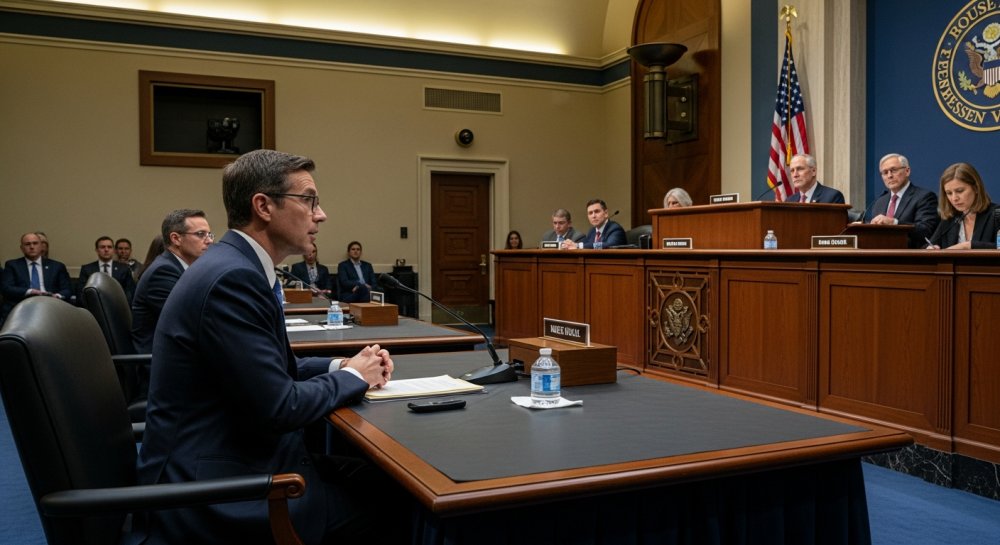
The director of America’s most prominent history museum faced sharp questioning from House lawmakers who say the institution has abandoned its mission to celebrate our nation’s heritage in favor of divisive political messaging.
Anthea Hartig, director of the Smithsonian National Museum of American History, testified Tuesday before the House Oversight Subcommittee on Delivering on Government Efficiency. Republicans on the panel challenged her leadership amid growing concerns that taxpayer-funded exhibits have become vehicles for radical left-wing ideology.
The contentious hearing exposed deep divisions over how America’s story should be told to millions of visitors, including schoolchildren, who walk through the museum’s doors each year. At issue is whether the institution remains faithful to its founding purpose or has been captured by activists seeking to undermine traditional American values.
Republican lawmakers presented specific examples of exhibits they say cross the line from education into indoctrination. Questions centered on displays that frame beloved American icons and symbols through a lens of racial grievance and systemic oppression — narratives that many conservatives believe distort history and divide rather than unite Americans.
One particularly striking example raised during the hearing involved Mickey Mouse. Committee members questioned whether the museum presents America’s most iconic cartoon character as a symbol of racism — a characterization that would represent a dramatic departure from the museum’s traditional role.
The inquiry comes as parents and educators nationwide have raised alarms about revisionist history being taught in schools and presented in public institutions. Many Americans believe their tax dollars should support museums that honor the nation’s achievements and complex history without filtering everything through contemporary political ideology.
Critics of the museum’s current direction argue that while America’s history includes both triumphs and failures, the institution has become unbalanced in its presentation. They contend the exhibits disproportionately emphasize narratives of oppression while downplaying the unprecedented freedom, opportunity, and prosperity the American experiment has provided to millions.
The Smithsonian Institution receives substantial federal funding, making accountability to Congress and the American people essential. Lawmakers questioned whether the museum’s leadership has lost sight of its responsibility to serve all Americans rather than advancing a particular ideological agenda.
Conservative advocates have long warned about the infiltration of progressive ideology into America’s cultural institutions. They view the museum controversy as part of a broader pattern in which traditional American values and history are being systematically deconstructed and replaced with narratives that present the nation primarily as a source of shame rather than pride.
The debate reflects fundamental disagreements about American identity and history that have intensified in recent years. While honest examination of historical complexities serves the public interest, many conservatives believe current museum leadership has crossed into activism that undermines the institution’s credibility and educational mission.
Director Hartig defended her stewardship of the museum during the hearing, though she faced persistent questions about specific exhibits and the overall direction of the institution under her leadership. The testimony marked the first time she faced public congressional scrutiny since taking the helm.
As the nation continues to grapple with questions about how to present American history in public spaces, the oversight hearing signals that federal museums will face increased accountability from elected representatives concerned about ideological imbalance in taxpayer-funded institutions.
The House subcommittee’s examination of the Smithsonian represents a growing willingness among conservatives to challenge progressive control of cultural institutions. Many see such oversight as essential to ensuring that America’s national museums serve their proper educational function rather than advancing partisan political agendas.
Let us know what you think, please share your thoughts in the comments below.

Faith Facts
- Prime Video’s ‘House of David’ has been renewed for a third season after attracting more than 40 million viewers worldwide
- Season 3 will focus on David’s years as a fugitive fleeing from King Saul
- The series continues to demonstrate strong global appetite for biblically faithful storytelling
Prime Video has renewed the biblical drama “House of David” for a third season, the streaming service announced Friday. The renewal comes after the series attracted more than 40 million viewers worldwide, signaling a powerful hunger for faith-based content in the entertainment marketplace.
The third season will chronicle one of the most dramatic periods in King David’s life: his years as a fugitive fleeing from King Saul. This narrative arc represents a pivotal chapter in biblical history, showing how God’s anointed leader endured persecution and hardship before ascending to the throne of Israel.
The success of “House of David” reflects a broader trend of audiences seeking content that honors Scripture and presents biblical narratives with authenticity and reverence. In an entertainment landscape often hostile to traditional faith, the show’s remarkable viewership numbers demonstrate that quality programming rooted in biblical truth can compete with—and often surpass—secular alternatives.
The series joins other successful faith-based productions in proving that there is substantial demand for entertainment that upholds Christian values and biblical accuracy. The show’s international reach, with millions of viewers across multiple continents, underscores the universal appeal of stories drawn from God’s Word.
Season 3’s focus on David’s fugitive years will explore themes of faith under trial, divine protection, and God’s sovereignty even in the midst of injustice. These are lessons that resonate deeply with believers who face their own trials and persecution in an increasingly secular world.
The renewal represents not just a commercial success but a cultural victory for those who believe entertainment can uplift rather than degrade, inspire rather than corrupt. As streaming platforms recognize the viability of faith-based content, opportunities grow for stories that honor our Creator and teach biblical principles.
Let us know what you think, please share your thoughts in the comments below.


-

 Self-Reliance1 year ago
Trump’s Bold Move Uncovers Massive Social Security Fraud
-

 Faith1 year ago
New Clues Emerge in Noah’s Ark Mystery
-

 News1 year ago
Governor Walz’s Rhetoric Sparks National Controversy
-

 News1 year ago
Mel Gibson’s ‘The Passion of the Christ’ Sequel Title Announced
-

 Family1 year ago
Texas Lawmaker Targets Furries in Schools
-

 Freedom1 year ago
Maine Lawmaker Challenges Sports Fairness Controversy
-

 Family1 year ago
Canada’s Controversial Policy Sparks Ethical Debate
-
Faith8 months ago
Congress Hears Pleas for Nigerian Christians