
Faith
Christian Apologists Expose Fatal Flaws in Viral Noah’s Ark Discovery

Faith Facts
- Christian apologists Wesley Huff and Jeremiah Johnston publicly refute viral claims about Noah’s Ark’s location being discovered
- Experts label the recent findings as rooted in “sensationalism and non-credible archeology”
- The controversy highlights ongoing tensions between authentic biblical archaeology and media-driven speculation
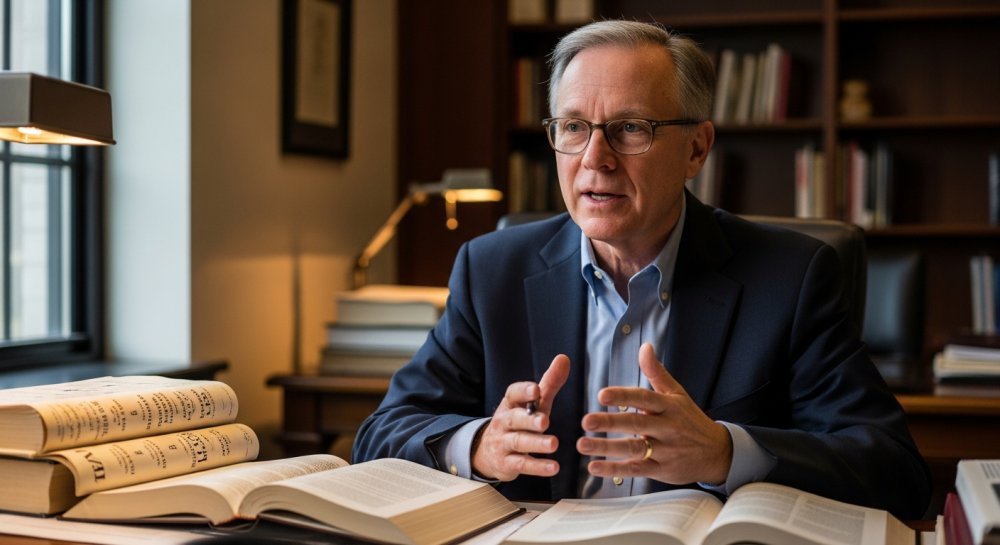
Two prominent Christian apologists are sounding the alarm about viral claims suggesting that modern technology has pinpointed the exact location of Noah’s Ark. Wesley Huff and Jeremiah Johnston are urging believers to exercise discernment when evaluating these sensational reports.
Huff directly addressed the latest wave of Noah’s Ark discovery claims, describing the purported evidence as “not legit.” He characterized the findings as stemming from “sensationalism and non-credible archeology” rather than rigorous scientific investigation.
The apologists’ critique comes amid renewed media attention to alleged discoveries related to the biblical account of Noah and the Great Flood. These claims typically generate significant public interest among Christians seeking archaeological validation of Scripture.
Both Huff and Johnston have built reputations as defenders of biblical truth who emphasize the importance of solid evidence and scholarly integrity. Their willingness to publicly challenge these popular claims demonstrates a commitment to protecting believers from misleading information that could ultimately harm Christian credibility.
The debate over Noah’s Ark’s location has persisted for generations, with various expeditions and researchers proposing different sites in the mountains of Ararat and surrounding regions. While many Christians maintain confidence in the biblical account, responsible apologists caution against embracing unverified archaeological claims simply because they appear to support Scripture.
Huff and Johnston’s intervention serves as a reminder that genuine faith doesn’t require sensationalized discoveries to validate God’s Word. The Bible stands on its own authority, and believers should approach extraordinary archaeological claims with both hope and healthy skepticism.
Their critique also highlights a broader concern within Christian apologetics: the tension between defending biblical truth and avoiding the trap of promoting dubious evidence that can later discredit legitimate faith claims. When Christians uncritically share sensational but unverified discoveries, it can undermine the credibility of more substantial apologetic arguments.
The apologists encourage believers to pursue biblical archaeology with integrity, supporting only those findings that meet rigorous academic standards. This approach protects the faith community from embarrassment when sensational claims inevitably fall apart under scrutiny.
As media outlets continue to circulate stories about potential Noah’s Ark discoveries, Huff and Johnston’s cautionary message provides important guidance for discerning Christians. Their counsel reminds us that our faith rests on the solid foundation of God’s revealed Word, not on the latest viral discovery claim.
Let us know what you think, please share your thoughts in the comments below.

Faith Facts
- 2025 is reported as the deadliest year for antisemitic violence in thirty years, with attacks in Sydney, Manchester, and Washington, D.C.
- The pattern of hatred against the Jewish people traces back thousands of years to biblical accounts including the Book of Esther
- Christian Americans must understand that biblical warnings about persecution of God’s covenant people carry urgent relevance today
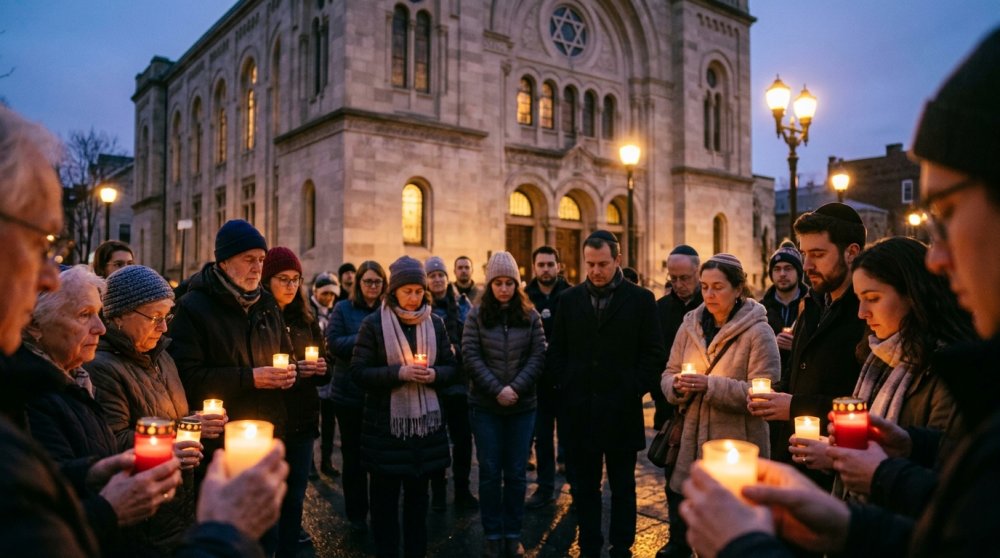
A disturbing pattern of violence has emerged across the Western world, targeting Jewish communities with a ferocity not seen in generations. At Bondi Beach in Sydney, fifteen people lost their lives. In Manchester, two were killed at a synagogue. In our nation’s capital, two were shot at a Jewish museum.
According to a new report, 2025 marks the deadliest year for antisemitic violence in three decades. But this is not merely a contemporary crisis — it is the resurgence of an ancient evil that Christians must recognize and confront.
The hatred directed at the Jewish people is not new. From the genocidal plot of Haman in the Book of Esther to the pogroms of Europe, the pattern repeats itself across history. Each generation believes it has moved past such darkness, yet the darkness returns, often cloaked in new ideologies and political movements.
For Christians, this matters deeply. Our faith is rooted in God’s covenant with Abraham, Isaac, and Jacob. The Scriptures we cherish were written primarily by Jewish hands. Our Savior was born, lived, and ministered as a Jew. To stand silent in the face of antisemitism is to deny our own spiritual heritage.
Three critical factors explain why this ancient hatred has resurged in our time.
First, moral relativism has weakened the West’s ability to recognize evil. When truth becomes subjective and all beliefs are deemed equally valid, societies lose the capacity to identify and condemn genuine wickedness. Antisemitism thrives in environments where clarity about right and wrong has been abandoned. The Judeo-Christian moral framework that once served as a bulwark against such hatred has been systematically dismantled in our schools, media, and public square.
Second, political radicalization on both extremes has provided cover for hate. Far-left ideologies have repackaged ancient antisemitic tropes as “anti-Zionism,” while fringe elements on the far right have revived older forms of racial and religious bigotry. Both threaten Jewish communities and both must be condemned by Christians who value truth over tribal loyalty.
Third, spiritual warfare intensifies when God’s purposes advance. The Jewish people remain central to God’s redemptive plan. Their miraculous preservation as a distinct people, their return to their ancestral homeland, and their ongoing role in biblical prophecy make them targets of demonic opposition. This is not merely sociology or politics — it is a cosmic conflict between the Kingdom of God and the forces of darkness.
The Book of Esther reveals a timeless truth: when the enemies of God’s people plot destruction, God raises up defenders. Mordecai and Esther risked everything to stand against genocide. Today, Christians must ask ourselves if we possess the same courage.
This is not a call to uncritical acceptance of every policy decision made by any government. It is a call to recognize that attacks on Jewish people — whether physical violence or ideological assault — represent an attack on the God who chose them as His covenant people.
American Christians have a particular responsibility in this moment. Our nation has been blessed with religious freedom precisely because it was founded on Judeo-Christian principles. If we allow those principles to erode, if we permit antisemitism to flourish unchallenged, we participate in our own spiritual and cultural destruction.
The violence in Sydney, Manchester, and Washington should serve as a wake-up call. These are not isolated incidents but manifestations of a growing darkness that will not stop with the Jewish community. History demonstrates that societies which tolerate antisemitism eventually turn on all people of faith.
We must speak boldly in our churches, our communities, and our public discourse. We must educate ourselves and our children about the unique dangers of antisemitism and its role throughout history. We must support policies that protect religious minorities while defending the freedom of all people to worship according to conscience.
Above all, we must pray. Prayer moves the hand of God and aligns our hearts with His purposes. The same God who preserved the Jews through Haman’s plot, Pharaoh’s oppression, and Hitler’s Final Solution remains sovereign today.
Antisemitism is not merely a Jewish problem. It is a test of Christian faithfulness, a measure of our commitment to truth, and a sign of the spiritual condition of our civilization. How we respond will determine not only the safety of our Jewish neighbors but the moral integrity of our own witness.
Let us know what you think, please share your thoughts in the comments below.
Faith Facts
- Sen. Darline Graham publicly thanked “the good Lord” and supporters who prayed for her after winning the special Republican primary runoff
- Graham will replace her late brother, Lindsey Graham, on the November general election ballot for U.S. Senate
- The senator’s open acknowledgment of faith and prayer highlights the role of Christian values in conservative politics
In a powerful display of faith-centered leadership, Sen. Darline Graham credited divine intervention and the prayers of supporters following her victory in the special Republican primary runoff election. The senator will now advance to the November general election ballot, seeking to fill the U.S. Senate seat previously held by her late brother, Lindsey Graham.
Graham’s public acknowledgment of God’s role in her political success stands as a refreshing reminder of the faith foundation that has historically guided American leadership. In an era when many politicians shy away from open expressions of Christianity, her willingness to thank “the good Lord” demonstrates the enduring connection between conservative values and biblical principles.
“The good Lord” and “everyone who prayed” for her received direct thanks from the senator, underscoring the critical role that prayer warriors play in supporting godly candidates. This recognition affirms what many Christian conservatives have long understood: that electoral outcomes are not merely the result of campaign strategies, but are ultimately in God’s hands.
The special election runoff represented more than just a political contest—it became a testament to the power of faith-driven civic engagement. Graham’s victory demonstrates that candidates who openly embrace their Christian faith can still succeed in American politics, despite increasing cultural pressure to privatize religious conviction.
As Graham prepares for the November general election, her faith-first approach to campaigning offers hope to Christians across the nation who long for leaders willing to acknowledge God’s sovereignty. Her willingness to publicly attribute success to divine providence rather than personal achievement reflects the humility that Scripture calls believers to demonstrate.
The senator’s triumph also carries particular significance given the family legacy she now carries forward. Stepping into the role previously held by her brother represents both a personal calling and a public responsibility—one that she has framed explicitly in terms of faith and service to others.
Christian conservatives watching this race understand that Graham’s commitment to thanking God first sends a powerful message about priorities and values. In a political landscape often dominated by self-promotion and personal ambition, her focus on gratitude and prayer marks a distinctive approach rooted in biblical wisdom.
Let us know what you think, please share your thoughts in the comments below.

Faith Facts
- Legendary singer-songwriter Dolly Parton has passed away at age 80, prompting an outpouring of grief from Christian artists and fans nationwide
- Parton’s career spanned decades, touching millions through her music, philanthropy, and unmistakable voice that became synonymous with American values
- Christian musicians and ministry leaders have taken to social media to honor her memory and celebrate her impact on faith and culture
The nation mourns the loss of a true American treasure. Dolly Parton, whose voice echoed through generations and whose heart touched countless lives, has passed away at 80. Her death marks the end of an era in American music and culture.
Christian artists across the country have responded with heartfelt tributes. Their messages reflect not only professional admiration but deep personal connection to a woman who embodied traditional values while reaching the highest pinnacles of success.
“We will miss you down here,” expressed one sentiment that captured the collective grief sweeping through the faith community.
Parton’s influence extended far beyond the stage. Her philanthropic work, particularly in literacy and education, demonstrated the kind of servant leadership that resonates deeply with Christian values. She gave generously, spoke kindly, and lived authentically—qualities that made her a role model for millions.
Her music bridged divides in ways few artists ever achieve. From country to gospel, pop to bluegrass, Parton’s versatility never compromised her authenticity. She remained true to her roots, her faith, and her values throughout a career that spanned more than six decades.
The outpouring of love on social media reveals the profound impact one life can have when lived with purpose and grace. Christian musicians, many of whom grew up listening to her songs or were inspired by her example, shared memories and expressed gratitude for her legacy.
Parton’s passing reminds us that even the brightest stars eventually return home. Yet her influence—through music, charity, and unwavering commitment to lifting others—will continue to inspire future generations. She lived a life that mattered, touching hearts and changing lives through talent given by God and used for good.
In an entertainment industry often marked by fleeting fame and compromised values, Parton stood as a beacon of consistency. She proved that success and integrity need not be mutually exclusive, that fame could be wielded for good, and that staying true to one’s roots was not a limitation but a strength.
Let us know what you think, please share your thoughts in the comments below.


-

 Self-Reliance1 year ago
Trump’s Bold Move Uncovers Massive Social Security Fraud
-

 Faith1 year ago
New Clues Emerge in Noah’s Ark Mystery
-

 News1 year ago
Governor Walz’s Rhetoric Sparks National Controversy
-

 News1 year ago
Mel Gibson’s ‘The Passion of the Christ’ Sequel Title Announced
-

 Family1 year ago
Texas Lawmaker Targets Furries in Schools
-

 Freedom1 year ago
Maine Lawmaker Challenges Sports Fairness Controversy
-

 Family1 year ago
Canada’s Controversial Policy Sparks Ethical Debate
-
Faith9 months ago
Congress Hears Pleas for Nigerian Christians