
Faith
Broadway Star Reveals Surprising Gospel Message Hidden in Classic Musical


Faith Facts
- Actress Francesca Mehrotra identifies Christ-like themes of mercy and redemption in “The Phantom of the Opera”
- The production’s “Masquerade” explores betrayal, forgiveness, and sacrificial love central to Christian faith
- Mehrotra plays Christine Daaé, the heroine who demonstrates grace toward the tormented Phantom
Christine Daaé is the heroine of one of theatre’s most beloved productions, “The Phantom of the Opera,” which has enchanted audiences for decades through spectacle and stunning musical numbers. But for Francesca Mehrotra, Christine’s story of betrayal, mercy and love also carries an unmistakable echo of the Gospel.
Mehrotra, who portrays Christine in the touring production, sees profound spiritual depth in what many consider simply a romantic thriller. The actress has openly shared how the character’s journey reflects core Christian principles that resonate with believers.
“The Phantom of the Opera” tells the story of a disfigured musical genius who becomes obsessed with Christine, a young soprano. The Phantom manipulates and terrorizes those around him, yet Christine ultimately responds with compassion rather than condemnation.
For Mehrotra, this response mirrors the Christian call to extend grace even to those who harm us. The story’s themes of redemption, forgiveness, and seeing the humanity in broken people align with biblical teachings about mercy triumphing over judgment.
The production’s famous “Masquerade” sequence, with its elaborate costumes and hidden identities, serves as a metaphor for the masks people wear to hide their brokenness. Christine’s willingness to look beyond the Phantom’s mask—both literal and figurative—demonstrates the transformative power of unconditional love.
This Christian perspective offers audiences a fresh lens through which to view the classic tale. Rather than merely entertainment, the story becomes an exploration of how grace can penetrate even the darkest hearts.
Mehrotra’s interpretation highlights how faith can inform artistic expression and reveal spiritual truths in unexpected places. Her testimony serves as a reminder that God’s messages of love and redemption often appear where we least expect them.
The actress’s willingness to publicly connect her craft to her faith demonstrates the importance of Christians engaging thoughtfully with culture. By identifying biblical themes in mainstream entertainment, believers can bridge conversations about eternal truths with contemporary audiences.
“The Phantom of the Opera” has touched millions since its debut, but viewing it through a Christian lens adds profound meaning to its enduring appeal. The story’s resolution—where love and mercy triumph over fear and manipulation—reflects the Gospel’s central promise of redemption.
Let us know what you think, please share your thoughts in the comments below.

Faith Facts
- More than 70 Christian teachers and school staff members have been denied entry permits by Israeli authorities, forcing multiple Christian schools in Jerusalem to delay their start date.
- The schools, operated by the Latin Patriarchate, serve approximately 2.6 million students who would otherwise begin classes today across Israel.
- Church leaders and Christian educators are calling for immediate intervention to restore religious educational access in the Holy City.
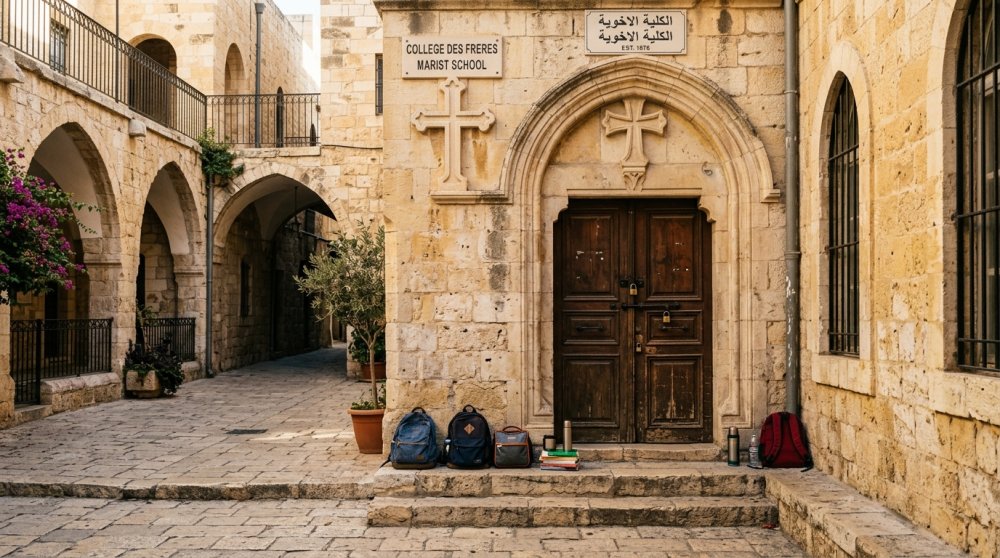
As millions of Israeli students returned to classrooms across the nation today, Christian families in Jerusalem faced closed school doors. Multiple Christian schools operating under the Latin Patriarchate have been forced to cancel classes indefinitely after Israeli government officials refused to renew entry permits for more than 70 teachers and staff members.
The permit denials have effectively shut down schools that serve thousands of Christian students in Jerusalem, leaving families scrambling for educational alternatives. While 2.6 million students nationwide began their academic year as scheduled, Christian children in the Holy City remain without access to their faith-based education.
The Latin Patriarchate schools have long served as pillars of Christian education in Jerusalem, providing instruction rooted in traditional values and biblical principles. These institutions represent centuries of Christian presence and educational ministry in the region, dating back generations.
Church authorities have expressed deep concern over the timing and scope of the permit denials. Without access to their teaching staff, school administrators have been left with no choice but to delay the start of the academic year, creating hardship for Christian families who depend on these institutions.
The situation highlights broader challenges facing Christian communities in the Middle East, where religious minorities often navigate complex bureaucratic systems. For these Jerusalem families, education grounded in Christian faith and values is not merely a preference but a fundamental expression of their religious freedom.
Parents and educators are now calling on government officials to reconsider the permit decisions and allow qualified Christian teachers to return to their classrooms. The extended closure threatens not only this academic year but the long-term viability of Christian education in one of Christianity’s most historic cities.
As this situation develops, it serves as a reminder of the ongoing need to protect religious liberty and educational access for Christian communities worldwide. The ability of parents to choose faith-based education for their children remains a cornerstone of religious freedom.
Let us know what you think, please share your thoughts in the comments below.
Faith Facts
- Vice President JD Vance shared his personal experiences sensing spiritual darkness while meeting with world leaders
- Vance defended President Trump’s controversial AI-generated Jesus image, calling it a reference to believers being created in God’s image
- The Vice President emphasized the importance of spiritual discernment in leadership and international diplomacy
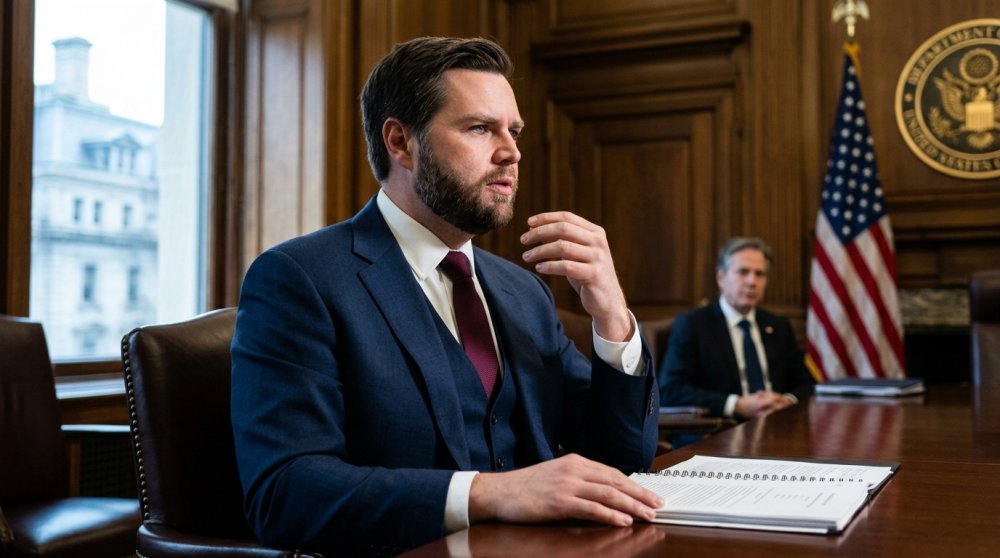
Vice President JD Vance opened up about his faith journey and the spiritual realities he has encountered on the world stage during a candid conversation on a recent podcast with Bryce Crawford. His remarks offer a rare glimpse into how Christian leaders navigate the intersection of faith and global politics.
During the wide-ranging discussion, Vance spoke about the spiritual dimension of his interactions with international figures. He revealed that he has personally sensed what he describes as spiritual darkness emanating from certain world leaders during diplomatic encounters.
Q: Trump tweeted that AI photo of him as God. As a Christian, that photo made me upset. I don’t know how he thought he was a doctor. What do you think?
Vance: He didn’t mean any offense. Did Trump mean to post a meme of himself as God? No pic.twitter.com/zYgchCrJoX
— Headquarters (@HQNewsNow) September 1, 2026
“There’s a real spiritual component to this work,” Vance explained, noting that his Christian faith informs how he approaches leadership and discernment in political settings.
The Vice President’s comments come at a time when many Christian conservatives have called for greater spiritual awareness among American leaders. His willingness to discuss these matters publicly resonates with believers who view the cultural and political battles of our time as fundamentally spiritual in nature.
Vance also addressed the recent controversy surrounding President Trump’s sharing of an AI-generated image depicting him alongside a Jesus-like figure. While the post drew criticism from some quarters, Vance offered a theological defense of the President’s action.
According to Vance, the image should be understood as a reference to the biblical truth that believers are created in the image of God. Rather than seeing it as blasphemous or inappropriate, he framed it within the context of Christian identity and the call for leaders to reflect godly character.
“I think people are reading too much into it,” Vance suggested, encouraging critics to consider the deeper spiritual message rather than rushing to judgment.
The Vice President’s perspective reflects a broader evangelical understanding that political leadership carries spiritual weight and responsibility. His comments underscore the belief that those in positions of power must remain vigilant against spiritual deception while standing firm in biblical truth.
For many Christian conservatives, Vance’s openness about spiritual warfare and discernment in leadership is refreshing. In an era when faith is often relegated to the private sphere, his public acknowledgment of spiritual realities serves as an encouragement to believers across the nation.
The discussion also highlights the ongoing tension between secular and Christian worldviews in American public life. While mainstream media may dismiss talk of spiritual darkness as religious extremism, millions of faithful Americans understand that the battles we face extend beyond the merely political or cultural.
Vance’s willingness to speak candidly about these experiences demonstrates the importance of maintaining a Christian perspective even in the highest offices of government. His remarks remind believers that spiritual discernment remains essential, particularly when engaging with leaders whose values may oppose biblical principles.
As Christians navigate an increasingly complex cultural landscape, leaders like Vance who openly discuss faith and spiritual realities provide both guidance and reassurance. Their example encourages believers to remain steadfast in prayer, to exercise discernment, and to trust that God remains sovereign over the affairs of nations.
Let us know what you think, please share your thoughts in the comments below.

Faith Facts
- InterVarsity Christian Fellowship has filed a lawsuit against SUNY Broome Community College over religious leadership requirements
- The college demanded the Christian group allow non-Christian leaders as a condition for official campus recognition
- InterVarsity operates on hundreds of college campuses across America as an evangelical, interdenominational ministry
A prominent Christian campus ministry is taking legal action after a New York community college demanded it abandon its faith-based leadership standards. InterVarsity Christian Fellowship has filed suit against SUNY Broome Community College, challenging the school’s insistence that the group permit non-Christian leaders in order to maintain official campus recognition.
The case represents yet another flashpoint in the ongoing tension between religious freedom and institutional non-discrimination policies on American campuses. InterVarsity, an evangelical and interdenominational organization with a presence on hundreds of colleges and universities nationwide, maintains that requiring Christian leaders is essential to preserving the integrity and mission of a faith-based organization.
SUNY Broome’s position effectively forces the Christian group into an impossible choice: compromise core religious beliefs or lose the benefits of official campus recognition. Such recognition typically includes access to meeting spaces, funding opportunities, and participation in campus activities.
The lawsuit highlights a growing pattern across American higher education where Christian student organizations face pressure to conform to policies that undermine their religious identity. Many faith-based groups argue that requiring them to accept non-believing leaders fundamentally contradicts their purpose and violates constitutional protections for religious expression and association.
Similar cases have emerged at universities across the country in recent years. Christian organizations have consistently maintained that leadership requirements based on shared faith are no different than any other student group selecting leaders who share its core mission and values.
The outcome of this legal challenge could have significant implications for religious student organizations throughout the State University of New York system and potentially beyond. It raises fundamental questions about whether public institutions can compel religious groups to abandon their faith standards as a condition of equal campus access.
InterVarsity’s decision to pursue legal action demonstrates the organization’s commitment to protecting religious freedom rights for Christian students. The lawsuit seeks to ensure that faith-based groups can maintain their religious identity without facing discrimination or exclusion from campus life.
Let us know what you think, please share your thoughts in the comments below.


-

 Self-Reliance1 year ago
Trump’s Bold Move Uncovers Massive Social Security Fraud
-

 Faith1 year ago
New Clues Emerge in Noah’s Ark Mystery
-

 News1 year ago
Governor Walz’s Rhetoric Sparks National Controversy
-

 News1 year ago
Mel Gibson’s ‘The Passion of the Christ’ Sequel Title Announced
-

 Family1 year ago
Texas Lawmaker Targets Furries in Schools
-

 Freedom1 year ago
Maine Lawmaker Challenges Sports Fairness Controversy
-

 Family1 year ago
Canada’s Controversial Policy Sparks Ethical Debate
-
Faith9 months ago
Congress Hears Pleas for Nigerian Christians