
Faith
Vance Reveals Spiritual Darkness He Sensed Among World Leaders

Faith Facts
- Vice President JD Vance shared his personal experiences sensing spiritual darkness while meeting with world leaders
- Vance defended President Trump’s controversial AI-generated Jesus image, calling it a reference to believers being created in God’s image
- The Vice President emphasized the importance of spiritual discernment in leadership and international diplomacy
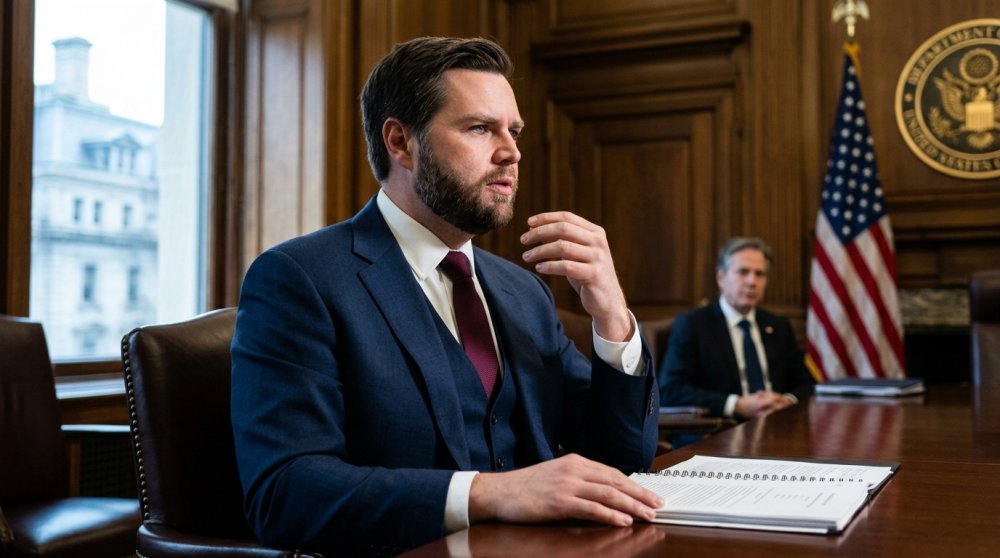
Vice President JD Vance opened up about his faith journey and the spiritual realities he has encountered on the world stage during a candid conversation on a recent podcast with Bryce Crawford. His remarks offer a rare glimpse into how Christian leaders navigate the intersection of faith and global politics.
During the wide-ranging discussion, Vance spoke about the spiritual dimension of his interactions with international figures. He revealed that he has personally sensed what he describes as spiritual darkness emanating from certain world leaders during diplomatic encounters.
Q: Trump tweeted that AI photo of him as God. As a Christian, that photo made me upset. I don’t know how he thought he was a doctor. What do you think?
Vance: He didn’t mean any offense. Did Trump mean to post a meme of himself as God? No pic.twitter.com/zYgchCrJoX
— Headquarters (@HQNewsNow) September 1, 2026
“There’s a real spiritual component to this work,” Vance explained, noting that his Christian faith informs how he approaches leadership and discernment in political settings.
The Vice President’s comments come at a time when many Christian conservatives have called for greater spiritual awareness among American leaders. His willingness to discuss these matters publicly resonates with believers who view the cultural and political battles of our time as fundamentally spiritual in nature.
Vance also addressed the recent controversy surrounding President Trump’s sharing of an AI-generated image depicting him alongside a Jesus-like figure. While the post drew criticism from some quarters, Vance offered a theological defense of the President’s action.
According to Vance, the image should be understood as a reference to the biblical truth that believers are created in the image of God. Rather than seeing it as blasphemous or inappropriate, he framed it within the context of Christian identity and the call for leaders to reflect godly character.
“I think people are reading too much into it,” Vance suggested, encouraging critics to consider the deeper spiritual message rather than rushing to judgment.
The Vice President’s perspective reflects a broader evangelical understanding that political leadership carries spiritual weight and responsibility. His comments underscore the belief that those in positions of power must remain vigilant against spiritual deception while standing firm in biblical truth.
For many Christian conservatives, Vance’s openness about spiritual warfare and discernment in leadership is refreshing. In an era when faith is often relegated to the private sphere, his public acknowledgment of spiritual realities serves as an encouragement to believers across the nation.
The discussion also highlights the ongoing tension between secular and Christian worldviews in American public life. While mainstream media may dismiss talk of spiritual darkness as religious extremism, millions of faithful Americans understand that the battles we face extend beyond the merely political or cultural.
Vance’s willingness to speak candidly about these experiences demonstrates the importance of maintaining a Christian perspective even in the highest offices of government. His remarks remind believers that spiritual discernment remains essential, particularly when engaging with leaders whose values may oppose biblical principles.
As Christians navigate an increasingly complex cultural landscape, leaders like Vance who openly discuss faith and spiritual realities provide both guidance and reassurance. Their example encourages believers to remain steadfast in prayer, to exercise discernment, and to trust that God remains sovereign over the affairs of nations.
Let us know what you think, please share your thoughts in the comments below.

Faith Facts
- James Talarico is a member of the Presbyterian Church (U.S.A.)
- Rev. Jim Rigby serves as Talarico’s longtime pastor
- Talarico describes his Senate campaign as a form of ministry
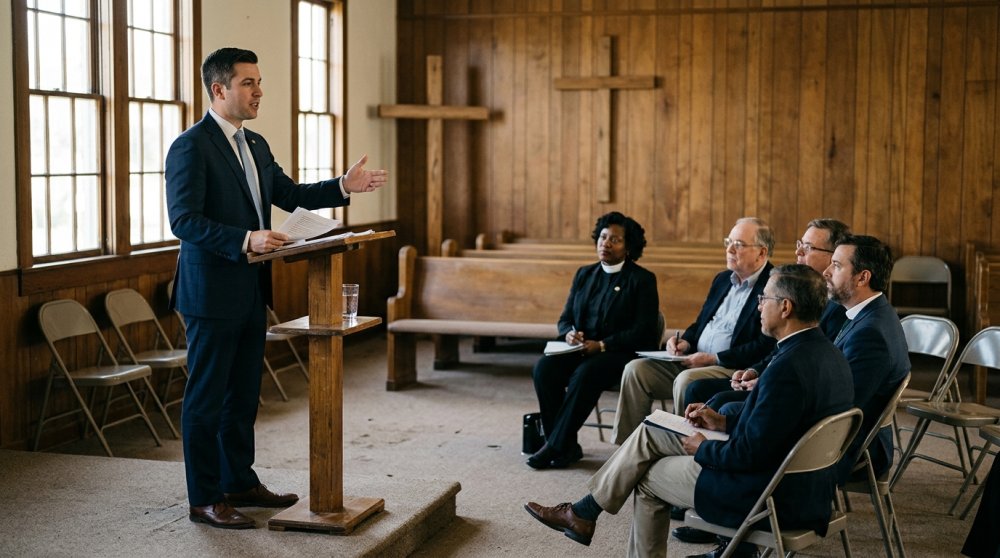
Democratic Texas state Rep. James Talarico addressed a gathering of faith leaders on Monday evening. The lawmaker shared how his pastor encouraged him to seek higher office.
Talarico credited the Rev. Jim Rigby with shaping his decision to run for the U.S. Senate. He presented the campaign as an extension of his Christian calling.
“A form of ministry.”
The PCUSA pastor reportedly framed political service as a faithful response to God’s calling. Talarico embraced this view in his remarks to the audience.
The Presbyterian Church (U.S.A.) has long maintained a progressive stance on social and political issues. Talarico’s comments align with that denominational direction.
Texas voters will soon weigh whether this interpretation of ministry resonates with their understanding of Christian citizenship. The race promises to test competing visions of faith and public service.
Let us know what you think, please share your thoughts in the comments below.
Faith Facts
- The Moulton Church of Christ in Alabama recently celebrated its 200th anniversary of gospel preaching and worship.
- Church records trace the congregation’s roots to the early 19th century Restoration Movement led by Barton W. Stone and evangelist Benjamin F. Hall.
- Five generations of the Hardin family continue to worship and serve together, preserving a legacy of faith and community leadership.
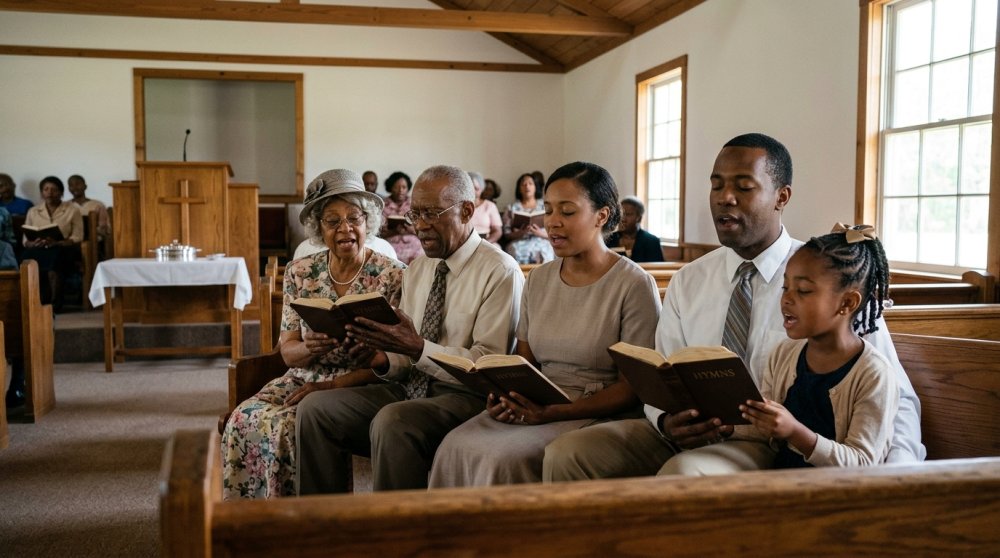
Two hundred years ago, evangelist Benjamin F. Hall planted a congregation of the Lord’s church in rural Moulton, Alabama. The congregation recently gathered to thank God for His faithfulness and to look forward with hope.
Church records credit Hall, influenced by Restoration Movement leader Barton W. Stone, with establishing the Moulton Church of Christ in 1826. Other historical sources mention Tolbert Fanning’s involvement in 1830 or a 1843 debate that brought twenty-two baptisms.
“I rejoice in such triumphs no little myself; but oh Lord, to Thee, and thy precious word, I am indebted for all that I have witnessed in Moulton,” the evangelist wrote of the church. “The brethren are strong in numbers, talent and influence, and I pray God they may be kept humble.”
Local deacon and historian Michael Strickland returned to his childhood congregation to teach its chronology and preach on the importance of remembrance. Two hundred ten members and guests attended the bicentennial worship service.
“Our mission, brothers and sisters, is to show the love of God to everyone,” Strickland told the congregation. “I want to suggest that God has been showing his love in this congregation for 200 years. And I pray he gives us 200 years more.”
Third-generation member Cindy Henry traveled from Hope Hull, Alabama, to celebrate with her family. Her grandfather and father served as elders, and her son Mitchell now serves as a deacon.
“This is still home in a lot of ways,” Henry said. “There’s new faces, but there’s still people that helped raise me.”
Her father, 88-year-old Clint Hardin, has worshiped at Moulton for most of his life. He recalls godly Sunday school teachers and parents who passed on their dedication to the word of God.
“We’ve had good preachers, and we’ve had good leadership,” Hardin said. “Really good leadership carried us through the problems I guess that all churches have.”
Young mother Ashley Nelson joined the church ten years ago through her husband Ross, whose grandfather once preached at Moulton. She now helps lead the children’s ministry known as the Sun Shiners.
“We have so many young kids now,” Nelson said. “We have a big, strong little kids group. And so, anytime we have an event, we usually have about 20 to 30 kids at those events.”
Through every season of growth and challenge, the Moulton Church of Christ has remained rooted in Scripture and committed to passing the faith to the next generation.
Let us know what you think, please share your thoughts in the comments below.

Faith Facts
- Christians in Essex are taking legal action to defend their right to share the Gospel in public spaces.
- A local council has banned the use of loudspeakers and prohibited street preaching about Hell.
- The church maintains that sharing the Gospel belongs on the streets and is a core expression of faith.
Christians at a church in Essex are fighting in court for the right to share the Gospel on British streets after a city council banned their use of loudspeakers and ordered them to stop warning people about Hell.
The case highlights growing tensions between traditional Christian witness and local government restrictions on public preaching.
“The Gospel belongs on the streets,” church leaders declared in their legal challenge.
Faithful believers see this as part of a broader pattern of restrictions aimed at silencing biblical truth in the public square.
“We will not be silenced from proclaiming the truth that saves,” a church spokesperson stated.
Let us know what you think, please share your thoughts in the comments below.


-

 Self-Reliance2 years ago
Trump’s Bold Move Uncovers Massive Social Security Fraud
-

 Faith2 years ago
New Clues Emerge in Noah’s Ark Mystery
-

 News2 years ago
Governor Walz’s Rhetoric Sparks National Controversy
-

 News2 years ago
Mel Gibson’s ‘The Passion of the Christ’ Sequel Title Announced
-

 Family2 years ago
Texas Lawmaker Targets Furries in Schools
-

 Freedom2 years ago
Maine Lawmaker Challenges Sports Fairness Controversy
-

 Family1 year ago
Canada’s Controversial Policy Sparks Ethical Debate
-
Faith11 months ago
Congress Hears Pleas for Nigerian Christians