
Faith
Britain Tells Asylum Seekers Rape Is Wrong—And the Backlash Reveals a Deeper Truth

Faith Facts
- Britain’s new guidance explicitly tells asylum seekers that rape and abuse are wrong, sparking debate about universal moral truths
- The backlash against the booklet reveals deep confusion about whether right and wrong are objective or merely cultural preferences
- The controversy underscores the Christian teaching that moral law is written on every human heart by God, not invented by societies
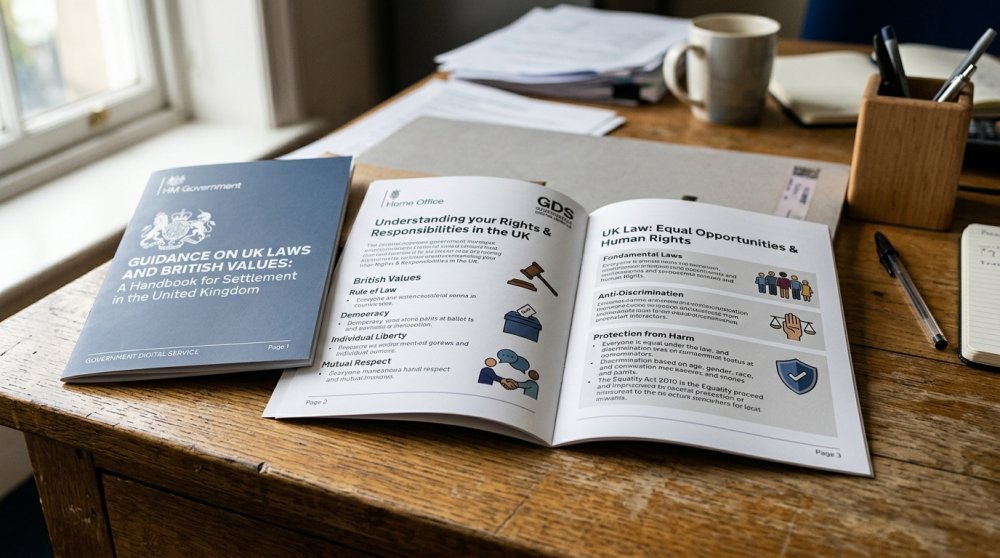
A new British government booklet aimed at asylum seekers has ignited fierce debate—not because it says anything controversial, but because it states what should be obvious: rape and abuse are wrong.
The guidance, designed to help newcomers understand British laws and values, explicitly tells asylum seekers that sexual violence, forced marriage, and abuse have no place in the United Kingdom. For many, this seems like common sense worth communicating clearly to those arriving from cultures with different norms.
But the backlash has been swift. Critics have denounced the booklet as offensive, condescending, or even racist—suggesting that stating such moral absolutes implies some cultures don’t already know these things. The outrage reveals something far more significant than a policy dispute: it exposes the West’s deep confusion about the very nature of right and wrong.
For centuries, Christian teaching has held that certain moral truths are universal—not because any government declares them, but because God has written His law on human hearts. The Apostle Paul described this in Romans 2:14-15, explaining that even those without Scripture show “the work of the law written on their hearts, their conscience also bearing witness.”
This is the doctrine of natural law: the idea that human beings, made in God’s image, have an innate sense of justice, mercy, and basic morality. Murder is wrong not merely because Britain says so, but because it violates the divine design for human life. Rape is evil not because of cultural preference, but because it desecrates the dignity God grants every person.
Yet modern secularism has systematically dismantled this foundation. If there is no Creator, then there is no created moral order—only competing preferences and power struggles. Right and wrong become matters of opinion, subject to cultural negotiation rather than divine decree.
This philosophical shift has profound consequences. If morality is merely cultural, then who are we to tell newcomers that their practices are wrong? If truth is relative, then insisting rape is universally evil becomes an act of cultural imperialism rather than moral clarity.
The controversy over Britain’s booklet thus becomes a window into our civilization’s spiritual crisis. We want to maintain moral standards—to say that some things really are wrong—but we’ve abandoned the only foundation that makes such claims coherent.
Christians have long understood what secular philosophy cannot explain: that conscience is real because God is real. We can recognize evil across cultures because evil is an objective reality, not a social construct. We recoil at injustice because we are made for justice by a just Creator.
The truth is that there are things we “can’t not know”—moral realities so fundamental that no honest person can entirely escape them. C.S. Lewis called this the “Tao” or natural law, the basic moral framework common to civilizations throughout history. Even those who deny God’s existence still appeal to concepts like fairness, dignity, and rights—borrowing from a moral capital they claim doesn’t exist.
Britain’s decision to explicitly teach asylum seekers that rape is wrong shouldn’t be controversial—it should be obvious. The fact that it has become a flashpoint reveals how far our culture has drifted from its moral moorings.
We live in a time when stating moral absolutes is considered offensive, yet we still expect people to behave as if those absolutes exist. We reject the idea of God-given conscience while demanding that everyone follow their conscience. We deny natural law while appealing to human rights that make no sense without it.
This incoherence cannot hold indefinitely. A society that refuses to name the source of its moral convictions will eventually lose those convictions altogether. Without the anchor of divine truth, we drift toward a world where might makes right and the powerful define morality for everyone else.
The Christian response is not to retreat from moral clarity but to ground it where it belongs—in the character of God Himself. Right and wrong are not arbitrary rules imposed by governments or cultures. They reflect the eternal nature of a holy, loving Creator who designed human beings for goodness and holds us accountable when we choose evil.
Britain’s booklet may seem like a small administrative matter, but the debate surrounding it touches the deepest questions of human existence. Where does morality come from? Is conscience real? Can we truly say anything is wrong?
The answers matter—not just for policy, but for the soul of civilization itself. And the Christian tradition offers what secular philosophy cannot: a coherent foundation for the moral truths we can’t not know, rooted in the God we can’t finally escape.
Let us know what you think, please share your thoughts in the comments below.


Faith Facts
- A Colombian pastor was murdered in Cartagena for refusing to allow gang members he had evangelized to use his motorcycle.
- The pastor’s death highlights the dangers faced by Christians boldly sharing the Gospel in violent urban areas.
- His sacrifice serves as a sobering reminder of the cost of faithfulness to Christ in regions controlled by criminal gangs.
A Colombian pastor was beaten to death by members of a criminal gang he had been evangelizing in the city of Cartagena.
The gang members attacked the pastor after he refused to allow them to use his motorcycle, according to a report.
Let us know what you think, please share your thoughts in the comments below.

Faith Facts
- Research from the Institute for Family Studies shows couples with different last names divorce at a 50% higher rate.
- A shared family name reflects the biblical call for husband and wife to become one flesh in covenant marriage.
- Taking a husband’s last name serves as a visible sign of leaving, cleaving, and surrender within Christian marriage.
New research is shining a light on a simple yet profound tradition many Christian couples continue to embrace.
Couples who choose to keep separate last names after marriage face a divorce rate 50% higher than those who share one name, according to findings from the Institute for Family Studies.
“A shared name is an outward sign of the leaving, cleaving and covenantal surrender at the heart of biblical marriage,” the report notes.
This practice aligns with Scripture’s description of marriage as a lifelong union where two become one, both in spirit and in name.
Christian wives who adopt their husband’s surname often see it as an act of unity and humility that strengthens their household witness.
Let us know what you think, please share your thoughts in the comments below.

Faith Facts
- The Message Bible paraphrase author Eugene Peterson passed away this week in Christian history.
- The Edict of Nantes, which granted religious freedom to French Protestants, was revoked in the seventeenth century.
- Christian history continues to record both faithful perseverance and grave setbacks for believers.
Christian history is filled with moments that shaped the Church, from milestones and triumphs to tragedies and controversies, as well as the lasting impact of influential believers. These events remind believers of the enduring cost of standing for the faith once delivered to the saints.
Each week brings fresh reminders that the Church has weathered storms and celebrated victories for centuries. Remembering these milestones helps strengthen the resolve of Christians today to hold fast to biblical truth.
Let us know what you think, please share your thoughts in the comments below.


-

 Self-Reliance2 years ago
Trump’s Bold Move Uncovers Massive Social Security Fraud
-

 Faith2 years ago
New Clues Emerge in Noah’s Ark Mystery
-

 News2 years ago
Governor Walz’s Rhetoric Sparks National Controversy
-

 News2 years ago
Mel Gibson’s ‘The Passion of the Christ’ Sequel Title Announced
-

 Family2 years ago
Texas Lawmaker Targets Furries in Schools
-

 Freedom2 years ago
Maine Lawmaker Challenges Sports Fairness Controversy
-

 Family1 year ago
Canada’s Controversial Policy Sparks Ethical Debate
-
Faith11 months ago
Congress Hears Pleas for Nigerian Christians