
Faith
Border Crisis: Over 145,000 Missing Children Located


Faith Facts
- Authorities have located over 145,000 children who went missing under the Biden administration.
- More than 300,000 unaccompanied children remain unaccounted for, fueling urgent recovery efforts.
- Federal agencies have prioritized reuniting these children with their families, aiming to safeguard vulnerability and prevent exploitation.
Border czar Tom Homan announced significant developments as federal agencies have recovered over 145,000 missing children who entered the country during the recent border crisis. Faith-driven leaders have called for greater accountability and the protection of these vulnerable children.
“Through their outstanding efforts, they have so far been able to locate more than 145,000! President Trump promised that we would find these children, and under his strong leadership and with his unwavering support, the patriots at these, and other partner agencies have been — and will continue to do — just that,” said Tom Homan.
A Department of Homeland Security report from August 2024 revealed that over 323,000 children remain unaccounted for after crossing the border. Christian values call us to defend every innocent life and restore families torn apart by these failures.
U.S. leaders and officials across multiple agencies remain steadfast in the effort to find these lost children and ensure their safety. “Too many of these children were exploited, trafficked, and abused. We will continue to ramp up efforts and will not stop until every last child is found,” said DHS Secretary Kristi Noem.
People of faith are urged to pray for the recovery of every child and to stand firm for national security, family restoration, and the sanctity of life.


Faith Facts
- Small church pastors worldwide are being shaped through lived experience, prayer, and suffering rather than formal theological degrees
- Character formation through faithful discipleship and biblical mentoring often proves more valuable than academic credentials
- Responsibility, failure, and even persecution are proving to be powerful teachers in global Christian leadership development
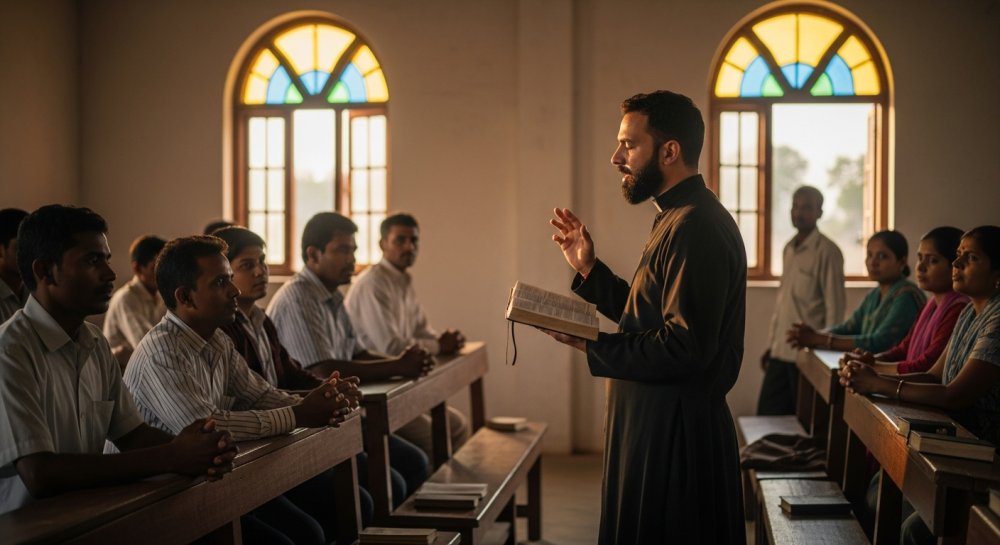
Across India and throughout the developing world, a quiet revolution in Christian leadership is taking place—one that challenges Western assumptions about what truly prepares a pastor to shepherd God’s people.
Thousands of faithful pastors leading small congregations lack the formal theological education that many in the West consider essential. Yet these men and women are being profoundly shaped by forces that no classroom can replicate.
Responsibility molds them as they care for their flocks with limited resources. Failure refines them as they learn to depend on God’s grace rather than their own competence. Suffering deepens them in ways that academic study alone never could.
Prayer becomes their seminary, persecution their crucible of faith. Character formation occurs not through curriculum but through walking faithfully with Jesus, guided by the Bible and trustworthy mentors who have traveled the same difficult road.
This form of education doesn’t result in a diploma suitable for framing. It produces no measurable outcomes that satisfy institutional assessment requirements. Yet its value in preparing shepherds for Christ’s church may exceed what many formal programs deliver.
The distinction matters profoundly as Western mission organizations and denominations consider how to support the global church. Programs designed to replicate Western seminary models may miss what’s already happening—the Holy Spirit forming leaders through the ancient pattern of discipleship, testing, and faithful endurance.
This doesn’t diminish the value of theological education. Sound doctrine matters immensely, and formal training provides irreplaceable benefits when done well. But it does challenge the assumption that credentialed education must precede or validate ministry effectiveness.
The early church operated without seminaries for centuries, relying instead on mentorship, apprenticeship, and the school of hard experience. Today’s global church is rediscovering that model by necessity—and often finding it produces leaders of deep faith, biblical wisdom, and proven character.
As the center of Christianity continues shifting to the Global South, Western believers might learn from brothers and sisters who understand that formation cannot be measured by the metrics we’ve grown comfortable with. Sometimes the best education comes not from what can be programmed, but from what can only be lived.
Let us know what you think, please share your thoughts in the comments below.

Faith Facts
- Two prominent evangelical professors are urging seminary faculty worldwide to address artificial intelligence’s growing influence on theological education
- Experts warn that AI poses both unprecedented opportunities and serious risks to how Christian students learn, write, and develop critical thinking skills
- The call comes as AI tools rapidly transform traditional classroom dynamics and academic integrity standards across Christian higher education
As artificial intelligence continues its rapid integration into every corner of American life, two leading voices in evangelical theological education are sounding the alarm about its transformative impact on seminary classrooms. Their message is clear: Christian educators must engage with this technology now, understanding both its potential benefits and its serious limitations.
The professors are urging seminary faculty across the globe to take seriously the challenge AI presents to traditional Christian education. The technology is already reshaping fundamental aspects of how students approach their studies—from writing assignments to theological reasoning itself.
This isn’t simply about detecting plagiarism or monitoring academic dishonesty. The deeper concern involves how AI may fundamentally alter the way future pastors, missionaries, and Christian leaders develop their capacity for critical thinking and theological discernment. These skills have traditionally been honed through rigorous study, prayerful reflection, and intellectual struggle—processes that AI threatens to short-circuit.
The rapid adoption of AI tools by students has created an urgent need for Christian institutions to establish clear guidelines and theological frameworks. Without proper guardrails, there’s risk that seminarians may become overly dependent on technology that cannot replicate the spiritual dimension of theological study or the formation of godly character.
Yet the professors also recognize that AI isn’t going away. Rather than simply resisting the technology, they advocate for a balanced approach that acknowledges legitimate educational applications while maintaining the irreplaceable human and spiritual elements of preparing men and women for ministry.
The challenge for Christian educators is to discern how AI can serve theological education without supplanting the essential work of the Holy Spirit in forming faithful servants of Christ. This requires wisdom, discernment, and a commitment to upholding traditional Christian values even as technology evolves.
For conservative Christians who value both intellectual rigor and spiritual formation, this conversation couldn’t be more timely. The question isn’t whether AI will impact Christian education—it already has. The question is whether Christian institutions will lead in establishing faithful, biblically-grounded approaches to this technology, or simply react to changes imposed from secular culture.
As these professors make clear, the stakes are high. The next generation of Christian leaders is being trained today, and the methods and tools they use will shape the church for decades to come. Faithful stewardship demands that Christian educators engage thoughtfully with AI, neither embracing it uncritically nor rejecting it out of fear.
Let us know what you think, please share your thoughts in the comments below.
Faith Facts
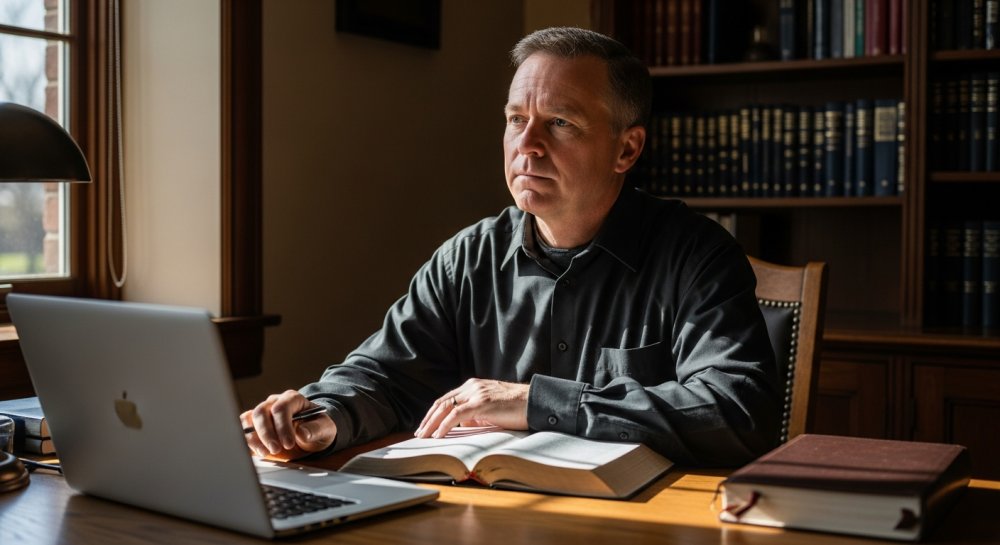
- A new study shows Americans are deeply divided on whether pastors should use AI technology to prepare sermons.
- Most Americans remain skeptical that artificial intelligence can help deepen understanding of Scripture and biblical truth.
- The research highlights growing concerns about the role of technology in matters of faith and spiritual leadership.
As artificial intelligence continues to reshape American life, a new study is shedding light on how believers feel about this technology entering the sacred space of the church. The findings reveal a nation uncertain about whether AI belongs in the pulpit or the pews.
According to recent research, Americans are split down the middle when it comes to pastors utilizing AI tools to help craft their Sunday sermons. The division reflects broader anxieties about whether machine-generated content can truly speak to matters of the soul and spiritual truth.
Even more telling, the majority of Americans express doubt that artificial intelligence can genuinely assist believers in understanding the Bible more deeply. This skepticism suggests that many still view Scripture study as an inherently human and spiritually-guided endeavor that requires divine wisdom rather than algorithmic processing.
The wariness around AI in faith contexts stands in contrast to its rapid adoption in business, education, and everyday communication. While Americans have embraced AI assistants for scheduling and shopping, they’re drawing a line when it comes to spiritual guidance and biblical interpretation.
This hesitation may stem from fundamental questions about the nature of preaching and teaching God’s Word. For generations, the sermon has been understood as more than information delivery—it’s a moment when a called and anointed shepherd speaks truth into the lives of the congregation, guided by prayer and the Holy Spirit.
The concerns raised by this research point to deeper theological questions about whether technology can truly supplement or replace the human element in spiritual leadership. Can an algorithm understand the movement of the Spirit or discern what a specific congregation needs to hear in a particular moment?
Many church leaders and theologians have long emphasized that effective preaching requires not just knowledge of Scripture, but also pastoral wisdom, personal relationship with God, and sensitivity to the spiritual needs of the flock. These are qualities that, at least for now, seem to lie beyond the reach of even the most sophisticated AI systems.
As churches navigate an increasingly digital age, these findings suggest that congregants want their pastors to remain authentically human in their approach to ministry. The research indicates that while technology may have a place in church operations, Americans aren’t ready to see it replace the traditional role of the pastor as a Spirit-led shepherd.
The study arrives at a critical moment when many industries are wrestling with how to integrate AI responsibly. For the church, the stakes feel particularly high—the spiritual formation of believers and the faithful transmission of biblical truth are not areas where most Americans are comfortable experimenting with untested technology.
This resistance to AI in spiritual contexts may actually represent a healthy instinct to preserve what is most sacred and irreplaceable about the Christian faith. While innovation has its place, some aspects of church life may be better served by maintaining traditional, human-centered approaches.
Let us know what you think, please share your thoughts in the comments below.


-

 Self-Reliance1 year ago
Trump’s Bold Move Uncovers Massive Social Security Fraud
-

 Faith1 year ago
New Clues Emerge in Noah’s Ark Mystery
-

 News1 year ago
Governor Walz’s Rhetoric Sparks National Controversy
-

 News1 year ago
Mel Gibson’s ‘The Passion of the Christ’ Sequel Title Announced
-

 Family1 year ago
Texas Lawmaker Targets Furries in Schools
-

 Freedom1 year ago
Maine Lawmaker Challenges Sports Fairness Controversy
-

 Family1 year ago
Canada’s Controversial Policy Sparks Ethical Debate
-
Faith7 months ago
Congress Hears Pleas for Nigerian Christians