
Faith
Australian Law Bans Prayer for Sexual Struggles

Faith Facts
- The New South Wales government has enacted a law banning prayer for individuals seeking help with their sexuality or gender identity.
- Requests for prayer related to same-sex attraction or gender confusion now risk government sanction under this law.
- Family First Australia has pledged to restore the right to pray for anyone who asks, defending religious freedom.
In New South Wales, Australia, the government has made it illegal to pray with someone for issues related to sexuality, even if that person requests support in accordance with their faith.
This legislation, known as the Conversion Practices Ban Act, directly impacts parents, pastors, and friends who seek to support loved ones through prayer.
“If a mum, dad, pastor, or friend prays with someone who asks for help to follow God’s word, they could face sanction,” Lyle Shelton, national director of Family First Australia, warned.
The law has sparked concern among believers who see prayer as a foundational expression of religious liberty and a personal right.
“Prayer is at the heart of religious freedom,” Shelton affirmed. “If someone asks for prayer to live in line with their faith, it is an extraordinary overreach for the government to make that illegal.”
Attorney General Michael Daley confirmed the government’s position, stating, “Praying with or over a particular person in an attempt to try to change or suppress that person’s sexuality or gender is unlawful… If it’s an unlawful prayer, then it’s not a lawful prayer.”
Faith leaders and political advocates call this government move a troubling intrusion into the spiritual practices of citizens and have urged the faithful not to lose heart.
“The early church prayed for boldness in the face of threats (Acts 4:29),” Shelton encouraged. “That remains our call today.”
People of faith must continue to stand for the freedom to pray and uphold Christian values in the face of government overreach. Stay informed and pray for religious liberty to remain protected.


Faith Facts
- Israel denied entry to 13 American citizens, including United Methodist clergy, who planned to visit Palestinian Christian communities in the West Bank
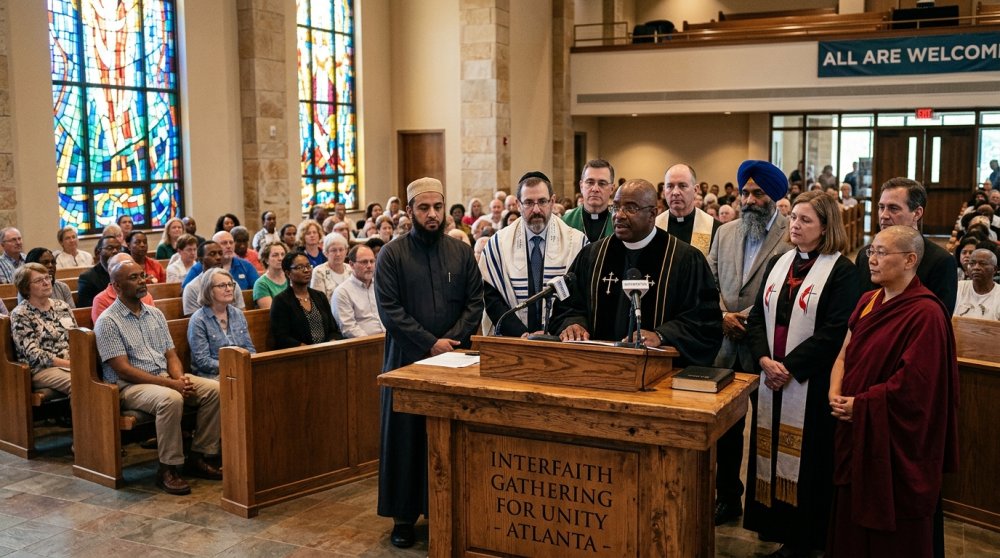
- The group gathered at a progressive Atlanta church to protest the denial and express concern about access to Christian sites
- The incident raises questions about freedom of movement and religious liberty in the Holy Land
A group of American citizens, including United Methodist clergy members, found themselves barred from entering Israel as they sought to visit Palestinian Christian communities. The denied entry has sparked conversations among faith leaders about access to religious sites and freedom of movement in the contested region.
On Monday, interfaith leaders and advocates assembled at a progressive church in Atlanta to address the situation. The gathering brought together voices concerned about restrictions on Americans attempting to visit Christian communities in the West Bank and East Jerusalem.
The 13 Americans had planned to travel to Palestinian Christian villages, a journey that would have allowed them to connect with fellow believers living in the region. Their denied entry highlights ongoing tensions surrounding access to religious sites and communities in areas under dispute.
The incident touches on broader concerns about religious freedom and the ability of Christians to maintain connections with their brothers and sisters in faith living in the Holy Land. For many American Christians, visiting the birthplace of Christianity and meeting with fellow believers in the region holds deep spiritual significance.
Questions remain about the specific reasons for the denial of entry and what criteria Israeli authorities used in making their determination. The situation underscores the complex political and security considerations that affect travel to the region.
The gathering in Atlanta reflects growing concern among some American faith communities about access to Christian populations in Palestinian territories. These communities trace their roots to the earliest days of Christianity and maintain a continuous presence in the land where Jesus walked.
American Christians from various denominations have long maintained relationships with Palestinian Christian communities through visits, partnerships, and solidarity efforts. These connections help sustain minority Christian populations in a region where they face mounting pressures.
The denied entry also raises questions about the treatment of American citizens seeking to exercise their religious freedom to visit holy sites and fellowship with believers abroad. Such restrictions can strain diplomatic relationships and test commitments to religious liberty principles.
For the 13 Americans turned away, the experience represents not just a missed opportunity for travel, but a barrier to fulfilling what many consider a spiritual calling to visit and support Christians in the Holy Land. Their inability to complete their planned visit has resonated with faith communities across the United States.
Let us know what you think, please share your thoughts in the comments below.

Faith Facts
- Christian public theology emphasizes serving all people as image-bearers of God, not merely as potential converts
- Authentic incarnational faith requires believers to actively engage in society, bringing Christian values to everyday life
- Biblical compassion extends to every person based on their inherent dignity as God’s creation, not contingent on their spiritual status
For Christians committed to living out their faith authentically, a crucial question emerges: Are we called to serve others only as a means to evangelism, or does our faith demand something deeper? The answer reveals the heart of what it means to bring incarnational Christianity into the public square.
Public theology rooted in biblical truth makes a compelling case for the latter approach. Every person we encounter bears the imago Dei—the image of God.
This foundational truth transforms how believers engage with their communities, workplaces, and civic institutions. Our calling extends beyond the church building into every sphere of influence where God has placed us.
When Christians embrace this incarnational approach, they don’t compartmentalize their faith into “spiritual” and “secular” categories. Instead, they recognize that Christ’s lordship extends over all creation, and that our service to others reflects God’s own character of love and justice.
This perspective doesn’t diminish the Great Commission or the urgency of sharing the Gospel. Rather, it enriches our witness by demonstrating that Christian compassion isn’t transactional.
We serve the poor, defend the vulnerable, and work for justice not merely as evangelistic strategy, but because God’s image in every person demands our respect and care. Our actions become a testimony to the transforming power of Christ working through His people.
The implications for American Christians are profound. In our polarized culture, incarnational faith calls us to engage political, economic, and social issues with both conviction and compassion—holding firmly to biblical truth while extending Christ’s love to all.
This approach challenges both the retreat into private spirituality and the reduction of faith to political activism. Instead, it calls believers to be salt and light, bringing kingdom values into every corner of society while maintaining the primacy of the Gospel message.
Let us know what you think, please share your thoughts in the comments below.
Faith Facts
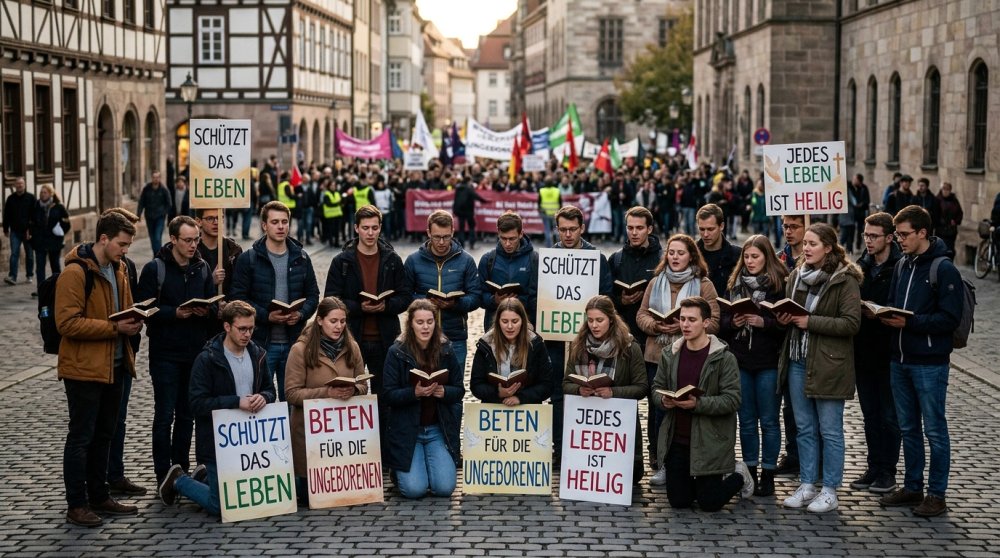
- About 200 counter-protesters attempted to attack 20 young Christians leaving a peaceful pro-life prayer event in Germany on August 15
- The Christians were participating in a prayer gathering opposing abortion when the attack was attempted
- The incident highlights growing hostility toward Christian values and religious freedom in Western Europe
A troubling incident in Germany has exposed the increasing violence and intolerance facing Christians who stand for the sanctity of life. About 200 counter-protesters attempted to attack 20 young Christians as they peacefully departed from a prayer gathering against abortion on August 15, according to a rights group report.
The young believers had gathered to pray and peacefully demonstrate their opposition to abortion, exercising their fundamental rights to religious expression and peaceful assembly. Their simple act of faith-based witness, however, was met with an overwhelming show of hostility from those who oppose the Christian worldview on the protection of unborn life.
The attempted attack represents a stark 10-to-1 numerical advantage by those seeking to silence Christian voices through intimidation and violence. This dramatic imbalance underscores the courage required for believers to stand publicly for biblical values in increasingly hostile secular environments across Europe.
The incident in Germany is part of a broader pattern of aggression against Christians and pro-life advocates throughout Western nations. As traditional Christian values come under mounting pressure from secular progressive movements, believers who maintain biblical convictions about the sanctity of life from conception often face social ostracism, legal challenges, and now physical threats.
The targeting of these young Christians sends a chilling message about religious freedom in modern Europe. What was once considered the heartland of Christian civilization now increasingly treats faithful believers as outsiders whose values are unwelcome in the public square.
For American Christians, this incident serves as a sobering reminder of the importance of protecting First Amendment freedoms at home. The ability to gather peacefully, pray publicly, and advocate for biblical values without fear of violent reprisal represents a precious heritage that must be vigilantly defended.
The courage demonstrated by these 20 young German Christians stands as an inspiration to believers worldwide. Despite being vastly outnumbered and facing a hostile crowd, they chose to stand for life and exercise their God-given conscience in the public arena.
As persecution of Christians intensifies globally, including in Western nations once considered safe havens for religious liberty, the Church must remain steadfast in proclaiming truth with both courage and compassion. The gospel message affirms the infinite value of every human life, including the unborn, and no amount of societal pressure can change this eternal truth.
Let us know what you think, please share your thoughts in the comments below.


-

 Self-Reliance1 year ago
Trump’s Bold Move Uncovers Massive Social Security Fraud
-

 Faith1 year ago
New Clues Emerge in Noah’s Ark Mystery
-

 News1 year ago
Governor Walz’s Rhetoric Sparks National Controversy
-

 News1 year ago
Mel Gibson’s ‘The Passion of the Christ’ Sequel Title Announced
-

 Family1 year ago
Texas Lawmaker Targets Furries in Schools
-

 Freedom1 year ago
Maine Lawmaker Challenges Sports Fairness Controversy
-

 Family1 year ago
Canada’s Controversial Policy Sparks Ethical Debate
-
Faith9 months ago
Congress Hears Pleas for Nigerian Christians