
Faith
Assisted Suicide Bill Faces Strong House of Lords Opposition

Faith Facts
- The Assisted Suicide Bill has encountered significant resistance in the House of Lords, with many members voicing concerns based on moral and ethical grounds.
- A majority of peers who spoke during the debate expressed strong opposition, highlighting cross-party agreement on the sanctity of life.
- Critics argue that the bill sends a troubling message about the value of life and contradicts Britain’s suicide prevention efforts.
The controversial Assisted Suicide Bill is meeting serious obstacles in the House of Lords, raising hopes among defenders of life that it may not become law. Nearly two-thirds of peers speaking in Friday’s debate opposed the bill, emphasizing the enduring importance of protecting vulnerable people.
The legislation, brought forward as a private member’s bill by Labour MP Kim Leadbeater, was not included in Labour’s official platform and has divided government leaders. Both Prime Minister Keir Starmer and Health Secretary Wes Streeting took opposing sides on the vote, reflecting the wider national debate.
“It is not an assisted dying bill. It is an assisted suicide bill,” stated former Prime Minister Theresa May during the debate.
“As a society we believe suicide is wrong. The government has a national suicide prevention strategy. We bemoan the number of young people who are lured into committing suicide by social media and what they read on the internet.
This week is world suicide awareness week. Suicide is wrong. But this Bill effectively says that suicide is okay. What message does that send to our society? Suicide is not okay. Suicide is wrong. This Bill is wrong and in my opinion it should not pass.”
Lord Jackson of Peterborough noted that strong opposition at the bill’s second reading cast doubt on its future, with momentum shifting away from approval.
Supporters of faith and family values believe the debate underscores the need to champion compassionate, life-affirming care over legislation that undermines the worth of every individual. As Christians, we are called to uphold the dignity of all people and advocate for policies rooted in the sanctity of life. Stay vigilant in prayer and advocacy as the debate continues, standing firm for biblical principles in public policy.



Faith Facts
- Jesus teaches that true disciples recognize and follow only His voice, not the voices of strangers or false authorities.
- Sheep in Scripture are not passive but called to live righteously, act justly, and defend truth with courage.
- Faithful believers bear moral responsibility to walk after Christ even when earthly leaders demand conflicting loyalty.
In the Gospel of John, Jesus presents a clear picture of the relationship between the Good Shepherd and His flock. The sheep are not depicted as helpless or unaware.
They actively know the Shepherd’s voice. They distinguish it from every competing sound. They refuse to follow strangers who would lead them astray.
“The sheep are not passive recipients of leadership.”
Instead, Scripture places moral responsibility squarely on the shoulders of the faithful. When shepherds falter or stray from truth, the sheep must still live righteously and act justly.
This calling demands courage in the face of pressure from earthly authorities who seek to pull believers away from Christ. The faithful witness does not bend to demands that contradict God’s Word.
“Sheep carry a responsibility as faithful moral witnesses: to live righteously, act justly, and defend truth with great courage.”
Believers today face the same test. Cultural and institutional voices often compete with the clear teaching of Scripture. The call remains unchanged.
“Walk after Christ even when other authorities demand their loyalty.”
Standing firm requires discernment and the willingness to choose obedience to the Shepherd above the approval of men. The cost may be high, but the reward is eternal.
Let us know what you think, please share your thoughts in the comments below.

Faith Facts
- Three major fantasy franchises are returning within the next 16 months, including Narnia, Lord of the Rings, and Harry Potter.
- Christians have long debated whether these stories support or undermine biblical truth.
- The Church has an opportunity to guide families in discerning entertainment that reflects biblical values.
Three beloved fantasy series are returning to screens and shelves over the next sixteen months. Narnia, Tolkien’s Middle-earth, and the wizarding world of Harry Potter will all make comebacks.
Each of these stories has shaped the imagination of millions of young readers and viewers. They have sparked conversations about good and evil, courage and sacrifice, and the battle between light and darkness.
“The question is not whether these stories will return, but how the Church will respond,”
Some believers have embraced these tales for their clear moral lessons. Others have warned against elements they believe conflict with Scripture.
The Church must decide how to engage with these returning worlds. Parents and pastors have a responsibility to teach discernment rather than avoidance or uncritical acceptance.
“We cannot simply ignore the cultural influence these stories carry,”
Christian families can use these returns as teaching moments. They can discuss biblical truth alongside the themes presented in the stories.
“Let us know what you think, please share your thoughts in the comments below.”
Faith Facts
- Scripture teaches that God is the ultimate owner of every resource and blessing.
- Faithful giving flows from gratitude and trust rather than obligation or guilt.
- Irregular income streams require intentional planning and prayerful discernment.
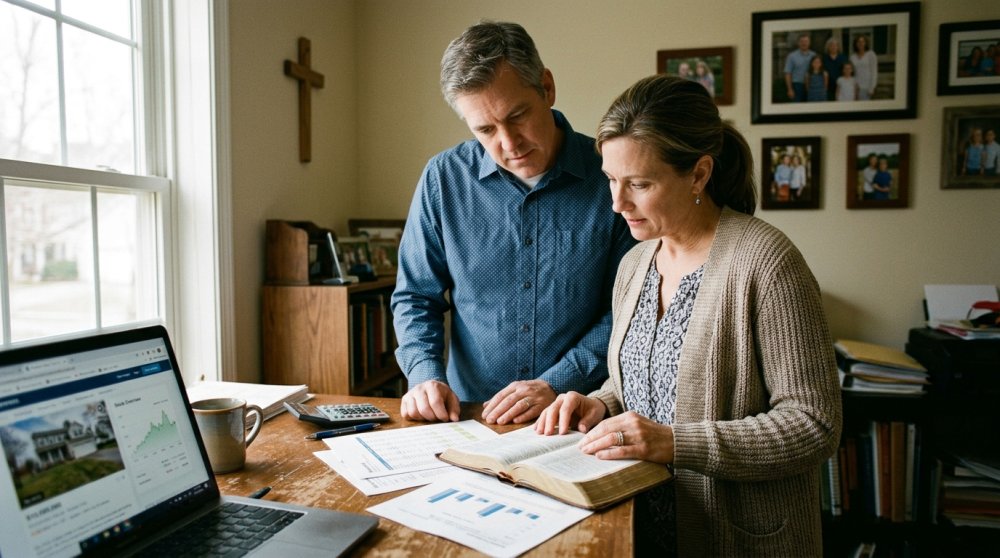
After years of financial strain a Christian couple now finds their real estate holdings and dividend income producing more than enough to meet their needs.
They are asking a question many believers face once debt is cleared and margins appear: how do we give faithfully when the money arrives in uneven amounts throughout the year.
The couple’s first step was to settle the foundational truth that everything they possess belongs to the Lord.
“God blessed us with plenty,” the husband said. “Now we want to give it away wisely.”
They began by setting aside a percentage of every deposit that arrived in their accounts rather than waiting until year-end to decide what to share.
This practice keeps their giving tied to each blessing as it comes instead of treating generosity as an afterthought once personal spending is finished.
They also chose to support local churches and ministries that preach the full counsel of Scripture and demonstrate clear accountability for the funds they receive.
The wife noted that irregular income once felt like an obstacle to consistent generosity.
“We used to think we couldn’t give until we knew exactly what was coming,” she said. “Now we see each deposit as another opportunity to trust God with the math.”
The couple encourages other believers in similar seasons to begin with prayer, set a percentage, and give from the first dollar rather than the leftovers.
Let us know what you think, please share your thoughts in the comments below.


-

 Self-Reliance2 years ago
Trump’s Bold Move Uncovers Massive Social Security Fraud
-

 Faith1 year ago
New Clues Emerge in Noah’s Ark Mystery
-

 News2 years ago
Governor Walz’s Rhetoric Sparks National Controversy
-

 News2 years ago
Mel Gibson’s ‘The Passion of the Christ’ Sequel Title Announced
-

 Family2 years ago
Texas Lawmaker Targets Furries in Schools
-

 Freedom2 years ago
Maine Lawmaker Challenges Sports Fairness Controversy
-

 Family1 year ago
Canada’s Controversial Policy Sparks Ethical Debate
-
Faith11 months ago
Congress Hears Pleas for Nigerian Christians